
2D Pellet Die Set for Wheels, Squares, Shells & Tubes Wholesale Supplier
- By Jinan MT Machinery

Most buyers assume die failure stems from poor steel quality, but the real culprit is often improper anti-rust packaging during transit or a mismatched compression ratio for the specific formula.
Selecting the right 2D pellet die set requires matching the specific shape—wheels, squares, shells, or tubes—with the correct compression ratio for your formula, while ensuring rigorous vacuum packaging to prevent transit corrosion. This combination guarantees stable extrusion, prevents screw jamming, and maintains consistent pellet quality across your production line.
Early in my sales career, I shipped a batch of shell and tube molds to a client in Dubai. Focused purely on rushing the shipment to catch the vessel, I overlooked the moisture control inside the wooden crates. By the time the ocean freight arrived, the molds were completely rusted. When the client started the machine, the rusted dies instantly jammed the screw, resulting in a mid-six-figure loss. Since that disaster, I have obsessively focused on anti-rust packaging and hole compression ratios, personally supervising the vacuum sealing process in the workshop before every dispatch. What buyers truly need is not just a few iron blocks, but a worry-free solution for stable pellet extrusion.

Let us break down how to configure your 2D pellet die set for maximum stability and output.
What Are the Key 2D Pellet Die Shapes and Their Applications?
Choosing the correct shape from the 2D pellet die set directly dictates the texture, density, and market appeal of your final product, whether for pet food, aquaculture, or snacks.
Different shapes serve distinct functional and aesthetic purposes. Wheels and squares are typically used for standard pet food and snack applications where uniform density is required. Shells and tubes, however, are specialized for creating hollow or intricately textured pellets, which are highly prized in premium aquaculture feed and novelty snacks.
Here is a specification comparison matrix to guide your selection:
| Shape Profile | Texture & Density | Primary Application | Flow Resistance | Maintenance Complexity |
|---|---|---|---|---|
| Wheels | Solid, uniform | Standard pet food, basic snacks | Low | Basic |
| Squares | Solid, sharp edges | Cereal, textured vegetable protein | Low | Basic |
| Shells | Hollow, thin-walled | Premium aquaculture, novelty snacks | High | Advanced |
| Tubes | Fully hollow core | High-end aquatic feed, specialized treats | Very High | Advanced |
When switching between solid shapes like squares and complex hollow shapes like tubes, the extrusion line experiences noticeable capacity fluctuations. A client in Southeast Asia producing floating fish feed noticed that changing from a standard square die to a complex shell mold extended their mold changeover time significantly, while the hourly output dropped noticeably due to the increased flow resistance.

How to Match the Compression Ratio with Your Formula?
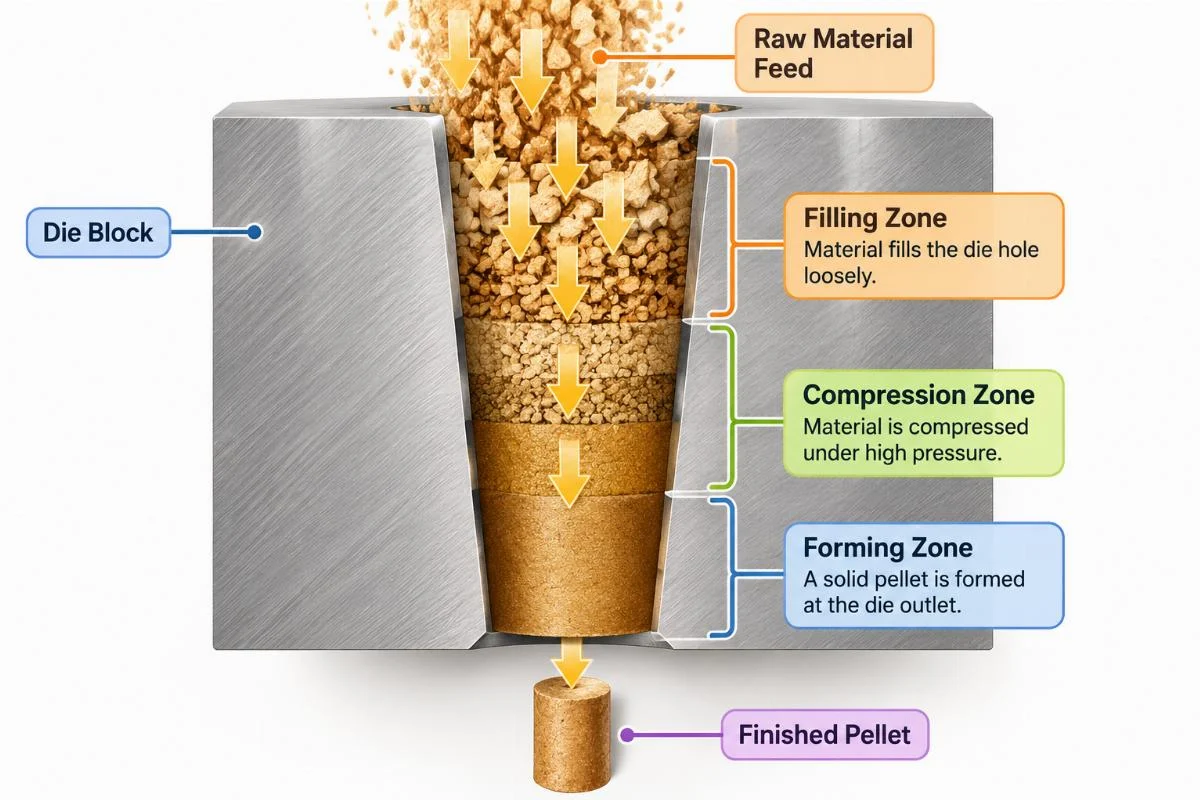
A higher compression ratio does not automatically mean better pellets; in fact, an excessively high ratio for a specific formula is the primary cause of screw jamming and motor overload.
The compression ratio in a 2D pellet die set determines how much the material is compressed as it passes through the die hole. If the ratio is too low, the pellets will be loose and disintegrate. If it is too high, the friction generates excessive heat, and the motor torque load spikes, eventually locking the screw.
Matching the compression ratio requires analyzing the protein and fiber content of your formula. High-protein or high-fiber materials require different compression zones compared to starch-heavy recipes.
| Formula Characteristic | Recommended Compression Level | Expected Extrusion Behavior | Risk of Mismatch |
|---|---|---|---|
| High Starch / Low Protein | Standard | Smooth flow, good expansion | Low |
| High Protein / High Fiber | Elevated | Firm pellets, requires higher torque | Screw jamming if excessive |
| High Fat / Moisture Sensitive | Controlled | Prevents separation, stable output | Pellet collapse if too low |
During a twin screw extruder die customization project for a plant-based meat startup, the initial formula contained a high proportion of textured vegetable protein. The client initially requested the maximum possible compression ratio, assuming it would yield the firmest texture. However, during the trial, the screw torque load reached critical levels, and the machine stalled repeatedly. By adjusting the compression ratio to a more moderate level suited for high-protein matrices, we eliminated the jamming issue and achieved a stable成型率 (formation rate).
Why Is Anti-Rust Packaging Crucial for Die Sets?
Vacuum sealing and moisture-proof wooden crates are not optional extras; they are critical defenses against transit rust that can render a precision 2D pellet die set useless before it even reaches your factory.
Ocean freight exposes machinery parts to extreme humidity fluctuations and salt-laden air. A standard wooden crate offers zero protection against moisture ingress. When a die rusts internally within the microscopic extrusion channels, the surface roughness increases dramatically. This not only ruins the pellet surface finish but also creates friction points that accelerate wear during operation.
We implement strict vacuum packaging standards for every 2D pellet die set. The process involves multiple layers of anti-rust oil application, followed by heavy-duty vacuum sealing, and finally, placement in a fumigated, moisture-controlled wooden crate.
| Packaging Method | Moisture Protection | Transit Rust Risk | Post-Unpacking Condition |
|---|---|---|---|
| Standard Wooden Crate Only | None | Vulnerable | Severe internal channel rust |
| Plastic Wrap + Crate | Basic | Resistant | Surface oxidation possible |
| Multi-Layer Vacuum + Desiccant | Robust | Minimal | Pristine, ready for installation |
Recall the Dubai incident I mentioned earlier. The lack of proper vacuum sealing allowed humidity to penetrate the wood during the long sea voyage. The resulting corrosion was so severe that the client’s screw was damaged upon startup. Since then, our facility enforces mandatory vacuum packaging for all international shipments, ensuring that the precision machining of the die is preserved until the moment of installation.

How to Maintain and Store 2D Dies for Maximum Lifespan?
Proper cleaning, thorough drying, and climate-controlled storage are essential to extend die life and maintain pellet consistency across multiple production runs.
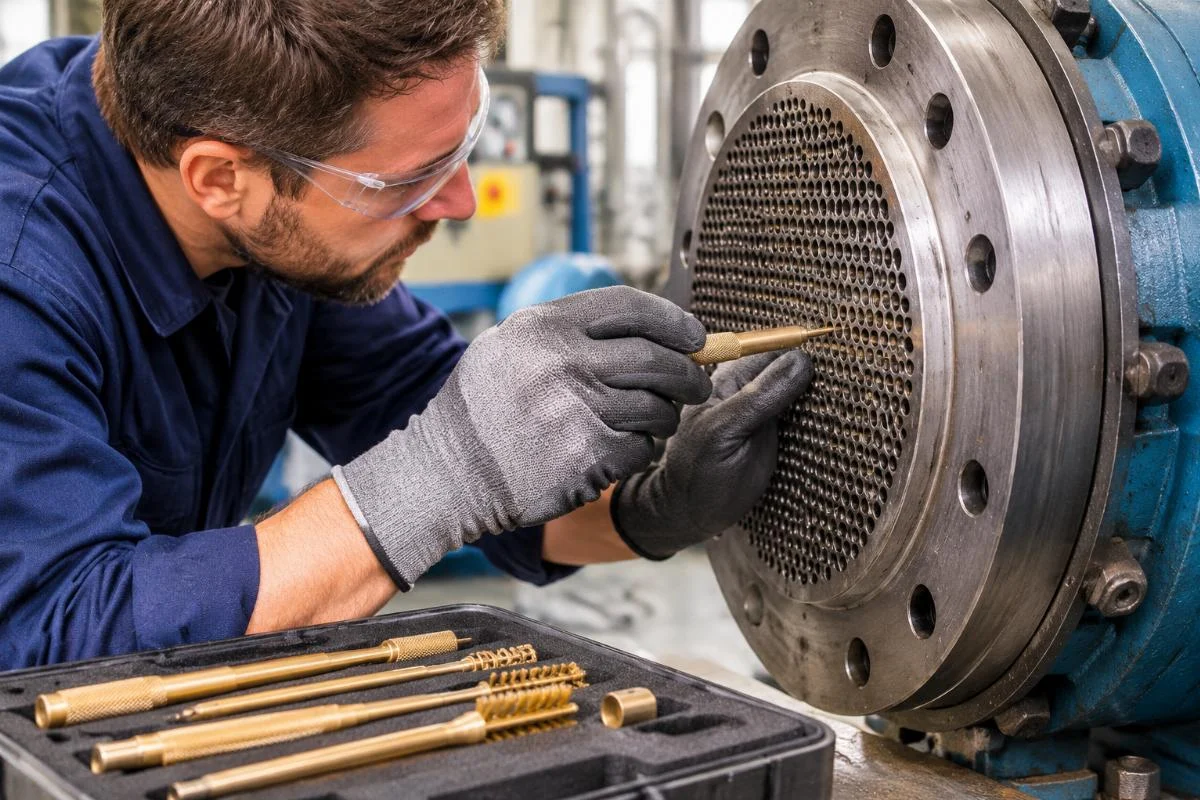
Even the highest quality 2D pellet die set will degrade rapidly if subjected to improper post-production handling. Residual moisture and organic matter left*en like concrete, making subsequent cleaning nearly impossible without damaging the internal geometry.
Follow these maintenance steps to ensure longevity:
- Immediate Purging: Run a high-moisture, abrasive-free purging compound through the extruder immediately after production stops to clear residual formula from the die face and holes.
- Manual Extraction: Carefully remove the die from the extruder barrel while it is still warm, using appropriate protective gear.
- Deep Cleaning: Use specialized soft brass drills or ultrasonic cleaning to remove any remaining debris from the microscopic channels. Never use hardened steel tools that can scratch the surface.
- Complete Drying: Ensure the die is entirely dry. Any trapped moisture will initiate rust within hours.
- Protective Coating: Apply a food-grade, anti-rust coating evenly across all surfaces, paying special attention to the hole entries.
- Climate-Controlled Storage: Store the coated die in a dry, temperature-controlled environment, preferably in its original vacuum-sealed packaging if not in immediate use.
A snack food manufacturer in Latin America struggled with inconsistent pellet sizes after the first few weeks of using a new die. Investigation revealed that operators were simply washing the dies with water and leaving them on the production floor to air dry. The resulting micro-rust altered the flow dynamics inside the holes. After implementing a strict drying and vacuum storage protocol, their pellet consistency stabilized, and the die lifespan extended substantially.
Conclusion
Stable extrusion relies on the precise alignment of die geometry, formula-specific compression ratios, and uncompromising transit protection. By understanding the functional differences between wheels, squares, shells, and tubes, and by respecting the critical balance of compression ratios, you can prevent costly screw jamming and capacity drops. Furthermore, treating anti-rust packaging as a non-negotiable standard ensures your investment arrives in perfect condition, ready to deliver consistent, high-quality pellets from the very first run.
Equipment Mentioned in This Article
 3D papad machine
2D 3D Snack Pellet Production Line Manufacturer
2D 3D Snack Pellet Production Line for Diverse Shapes from Starches — twin-screw extrusion handles wheat, corn, and cassava. The… View Machine Details 3D papad machine
3D Snack Pellet Production Line Fried Extruder Machine
3D Snack Pellet Production Line for Starch-Based Snacks — twin-screw extrusion processes potato, cassava, and corn starch into diverse shapes.… View Machine Details 3D papad machine
Fully Automatic 3D Snack Pellets Extruder Making Machine for Chips
Chips 3D Snack Pellet Extruder Line for 2D/3D Shapes — co-rotating twin-screw extrusion processes potato and cassava starches into papad,… View Machine Details 3D papad machine
Automatic 3D Pellet Extruded Corn Puffed Snack Food Production Line
3D Pellet Extruded Snack Food Production Line for Starch Pellets — processes potato, corn, and cassava starch into papad and… View Machine DetailsRelated Applications

Engineering Perspective
An In-House R&D Team Behind Every Line
Jinan MT Machinery develops its process technology in-house. The team concentrates on the four areas that decide pellet shape, expansion and line stability.
- Expansion technology
- Twin-screw extrusion
- Die design
- PLC/MCC automation
Related Articles
 Nov 16, 2026 · Product & Series Guides
DS Line Rotary Cutter for 2D Snack Pellets Manufacturer
Optimizing Rotary Cutter Options for 2D Snack Pellets eliminates edge burrs and reduces scrap rates by synchronizing cutter speed with extruder screw speed. Selecting… Read This Article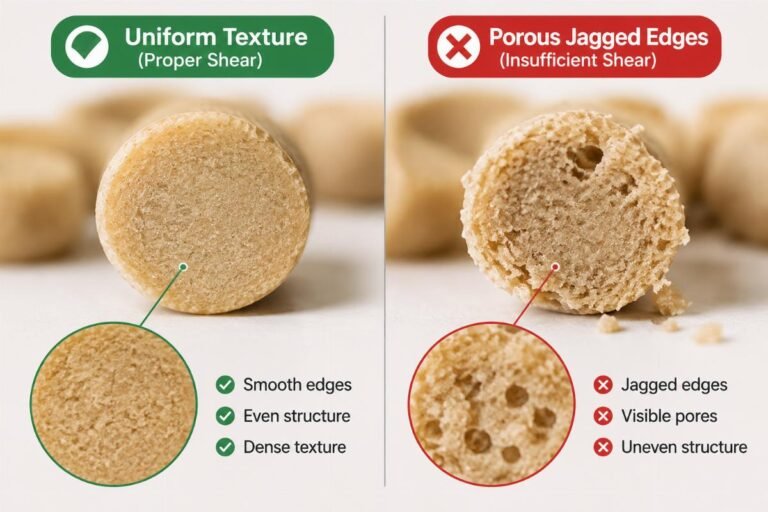 Nov 16, 2026 · Product & Series Guides
DS85 vs DS95 Pellet Chips Extruder Manufacturer for Sale
Choosing the right DS85 vs DS95 extruder prevents barrel blockage when processing high-meat pellet chip formulas. The DS85 delivers energy efficiency for standard recipes,… Read This Article Nov 16, 2026 · Product & Series Guides DS65 vs DS70 Twin-Screw Extruders for Snack Pellet Lines Manufacturer
Choosing between the DS65 vs DS70 Twin-Screw Extruders depends on matching torque to recipe viscosity rather than just initial equipment budget. High-fat formulas and… Read This ArticleFree Process Check
Send Your Recipe for a Process Check
Jinan MT Machinery engineers review your recipe and return a free process plan within 24 hours. Tell us the product, output, raw material, local voltage and heat source.
Send Your Recipe on WhatsApp