


 Product & Series Guides · Nov 15, 2026 DS50 Small Snack Pellet Line Manufacturer for Startups & Pilot Plants Startups face batch failures from thermal drift and poor moisture control during continuous runs, making the DS50 Small Snack Pellet Line essential for validating…
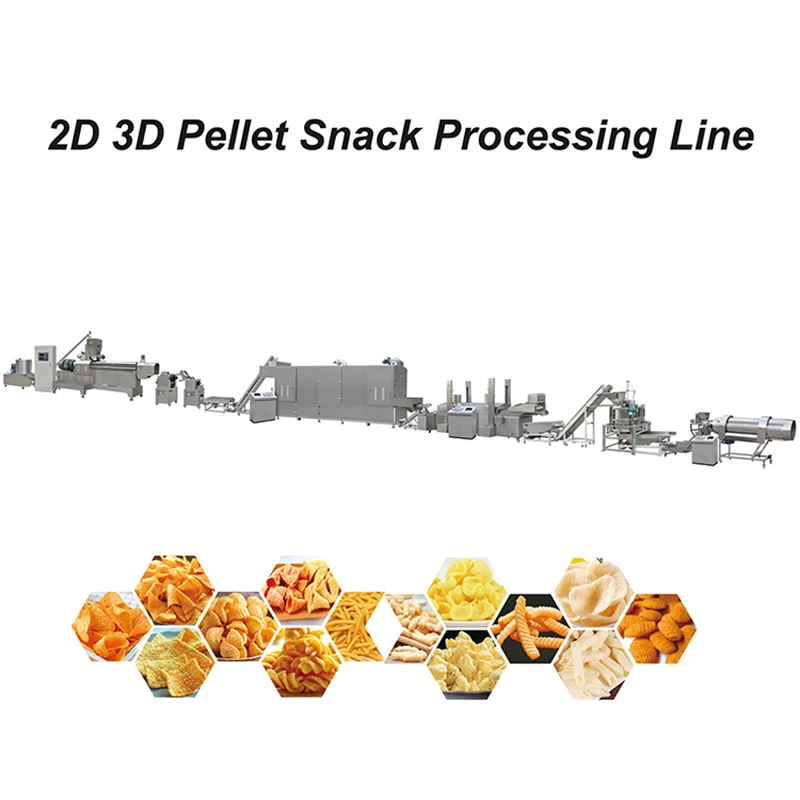
Machine Overview
Product Details
Customized screw and die — We configure the MT75 co-rotating twin-screw extruder specifically for your local starch properties and target 3D shapes.
Technical Specifications
| Parameter | Value |
|---|---|
| Product Type | 2D/3D Snack Pellet Production Line |
| Capacity | 100-200 kg/h, 200-350 kg/h, 350-500 kg/h |
| Main Extruder | Twin-screw extruder |
| Screw Type | Co-rotating twin-screw |
| Main Motor Power | 80 kW, 100 kW, 120 kW |
| Control System | PLC / MCC |
| Material of Construction | Food-grade stainless steel |
| Raw Materials | Potato starch, corn starch, cassava starch, wheat flour, corn flour |
| Certification | CE, ISO 9001:2015 |
| Origin | Shandong, China |
Application Suitability
| Industry | Typical Products |
|---|---|
| Snack Factories | 3D shapes, papad, fryums, mesh and spiral pellets |
| Pellet Producers | Semi-finished 2D/3D dried pellets for frying plants |
| Fried Snack Brands | Potato and wheat chips, integrated frying and flavoring lines |
Why Half the 3D Fryums Crack Before Frying
Inconsistent moisture removal and poor starch gelatinization cause uneven expansion and structural failure.
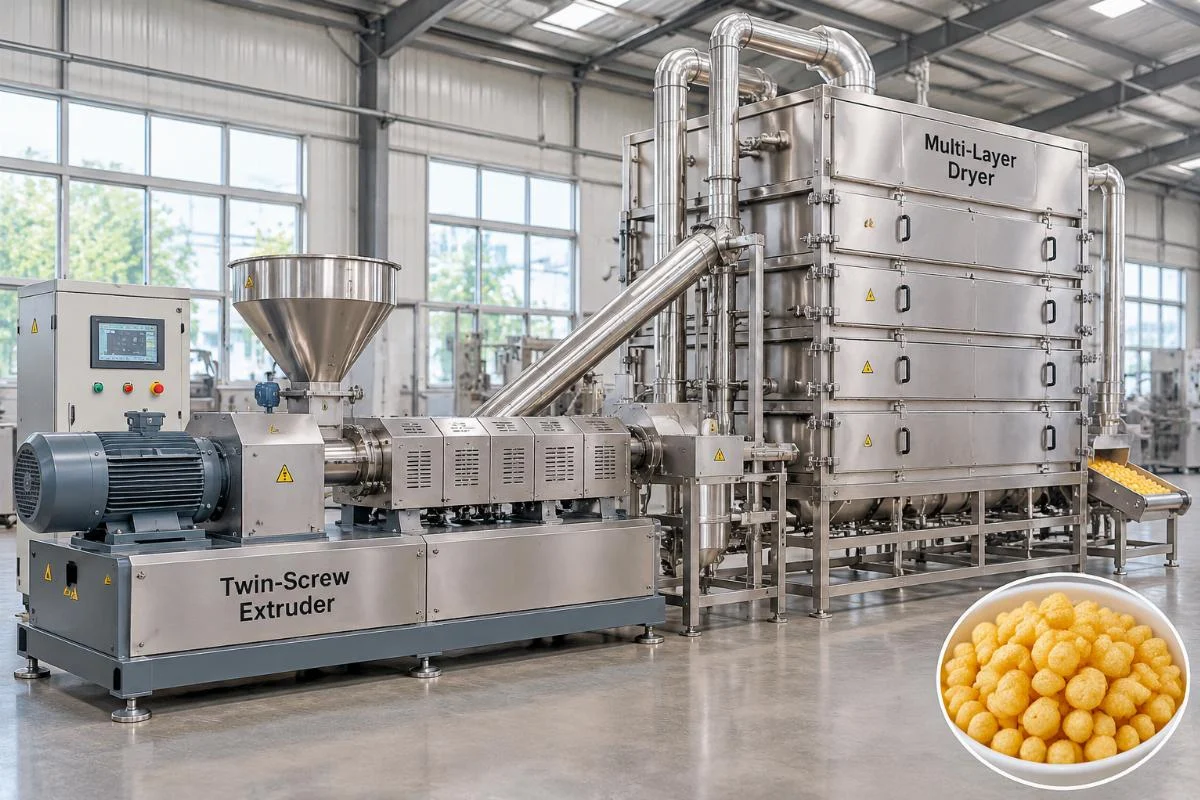
I recall a project in Bangladesh where we processed 3D fryums using local cassava starch without proper pre-testing. The pellets dried unevenly in the multi-layer dryer, leading to severe cracking during storage and a complete failure to puff up during frying. Local raw materials possess unique amylose and amylopectin ratios that demand precise thermal and mechanical profiling. When the extrusion and drying parameters do not match the specific starch characteristics, the final fried product suffers from high oil residue, shape deformation, and unacceptable breakage rates.
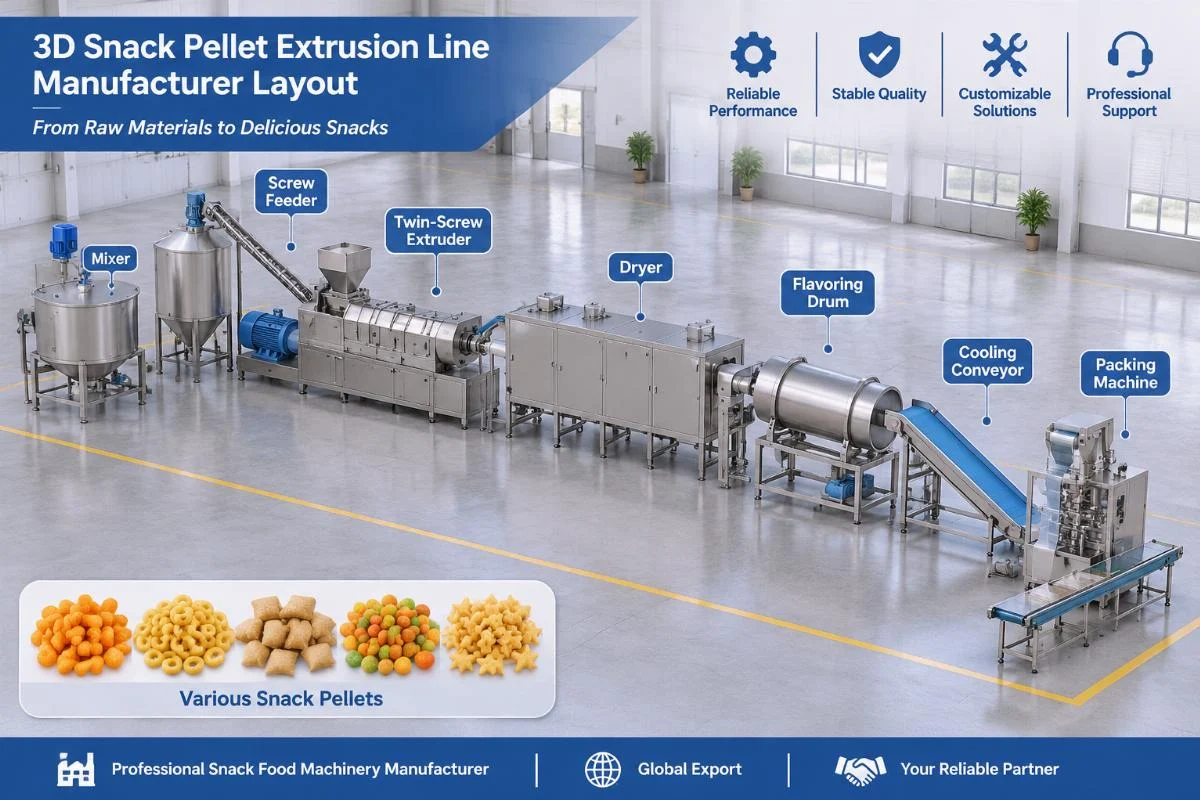
Integrating the 3D snack pellet extrusion line manufacturer into your workflow
A complete 3D snack pellet extrusion line manufacturer solution bridges the gap between raw material preparation and final seasoned packaging. We design the flow from mixing to packing based on your specific facility constraints and production goals. Before finalizing the setup, we insist on running trials with your exact materials on our MT75 to validate the extrusion and drying curves. This turnkey approach also accommodates OEM/ODM customization, ensuring every section aligns with your local utility standards and product recipes.
Navigating raw material variations and processing challenges
Starch sources like cassava, potato, and wheat behave differently under high temperature and shear. Moisture content must be tightly controlled during mixing to ensure uniform gelatinization inside the barrel. The drying phase requires multi-zone temperature management to remove moisture without causing surface case-hardening, which traps internal water and leads to cracking. Furthermore, the oil absorption rate during frying is heavily influenced by the pellet's internal porosity and surface texture formed during extrusion. Switching between different starch blends or 3D shapes frequently requires adjusting the screw profile and die specifications to maintain consistent bulk density.
Core processing sections for 2D/3D pellets
The mixer ensures homogeneous blending of starches and water before extrusion. The MT75 co-rotating twin-screw extruder utilizes combined functional screws to cook and form the dough into precise 3D shapes, papad, or fryums. Following extrusion, the sheet forming and cutting section shapes the continuous dough strand into specific geometries. The multi-layer dryer then reduces the moisture content to a safe level for storage and transport. For fully finished snacks, the automatic continuous fryer features digital temperature control and auto slag discharge, followed by a flavoring drum that applies oil and seasoning evenly.
Hidden costs of selecting the wrong processing setup
Purchasing an incorrectly configured line often results in sinking or poorly expanded pellets that fail retail quality checks. Inadequate drying capacity creates a bottleneck, causing wet pellets to develop mold during storage before they even reach the fryer. Irregular shapes and inconsistent thickness lead to uneven frying, producing oily chips with burnt edges and pale centers. A mismatched fryer design fails to maintain stable oil temperatures, drastically increasing oil consumption and reducing the shelf life of the final product. These operational inefficiencies quickly erode profit margins and damage brand reputation.
Why partner with us for your extrusion project
We operate as a direct manufacturer with an in-house testing workshop, allowing us to validate your local cassava or potato starch formulations before shipping. Every 3D snack pellet extrusion line manufacturer project undergoes a full run-test to verify the PLC/MCC control logic and mechanical stability. Our engineers handle on-site installation and commissioning, training your operators on specific screw configurations and die changes for various 3D shapes. We provide comprehensive CAD and 3D plant layouts to optimize your floor space and utility routing. Lifetime remote technical support ensures rapid troubleshooting for your frying and seasoning sections via video calls.
Documentation & Delivery
- CE certificate and ISO 9001:2015 quality management records.
- Factory test-run video demonstrating your specific 3D shapes.
- Trial report using your provided raw materials on the MT75.
- Third-party inspection reports available prior to shipment.
- Packing list, commercial invoice, and customs documents.
- Export wooden crates with anti-rust and moisture protection.
Installation, Utilities & Maintenance
- Confirm power supply and voltage compatibility for the 80-120 kW main motors.
- Arrange steam or gas connections for the multi-layer dryer and fryer heating.
- Verify floor layout, load-bearing capacity, and ceiling height for the dryer.
- Ensure stable water and compressed air supply for the pneumatic cutting and control systems.
- Schedule regular die and cutter blade replacement to maintain precise 3D shape definitions.
- Conduct routine screw element wear checks to preserve extrusion pressure and gelatinization.
- Clean the oil and seasoning system thoroughly to prevent flavor cross-contamination.
- Complete operator training covering daily maintenance and safety protocols.
Requesting a customized line proposal
To receive an accurate technical proposal, please provide your target 3D shapes or chip types, desired hourly capacity, and preferred raw material formulations. Include details regarding your local power voltage, available heating sources, and factory dimensions. In return, you will receive a comprehensive line proposal, detailed CAD/3D layout designs, and an itemized technical quotation. We also invite you to visit our facility to conduct live extrusion and frying trials with your own materials.
Frequently Asked Questions
Q: How do you determine the complete line configuration based on target products?
A: We analyze your target 3D shapes, capacity requirements, and raw material properties to select the appropriate MT75 extruder model and screw profile. The dryer and fryer sizes are then scaled to match the extruder output, ensuring a balanced continuous flow from mixing to packing without bottlenecks.
Q: Can the extruder process local raw materials like cassava or potato starch?
A: Yes, the co-rotating twin-screw design handles various starches effectively. However, local cassava or potato starch requires specific moisture levels and barrel temperature profiles. We always conduct factory trials with your exact materials to adjust the screw combination and ensure proper gelatinization and expansion.
Q: What is the difference between twin-screw and single-screw extruders for snack pellets?
A: Twin-screw extruders offer superior mixing, self-cleaning, and precise control over shear and temperature, which is critical for complex 3D shapes and diverse starch formulations. Single-screw machines rely more on friction and are generally limited to simpler shapes and specific raw materials like pure potato starch.
Q: How long does it take to change molds and cutters for different 3D shapes?
A: Changing the die and cutter assembly on the MT75 extruder is designed for quick release. Operators can typically complete the mechanical swap and adjust the cutting speed within a short timeframe, minimizing downtime when switching between spiral, mesh, or papad shapes.
Q: What does the on-site installation and operator training cover?
A: Our engineers oversee the mechanical assembly, electrical wiring, and utility connections of the entire line. The training program covers PLC/MCC control panel operations, recipe parameter adjustments, routine maintenance, die changing procedures, and safety protocols for the frying and seasoning sections.
Trial Run
Test Your Own Raw Material Before You Commit
Jinan MT Machinery runs trials on your own potato, cassava or wheat material at our factory in Shandong, China, so you see the result on your recipe before the order is placed.

Your flour, your recipe, our test workshop
Local raw material often behaves differently from a standard formula. Recipe testing shows how yours extrudes, sheets and expands.
- Bring potato, cassava or wheat material from your own supplier.
- Our R&D team tunes die design and screw combination to the recipe.
- Specify 2D or 3D pellets, papad or fried chips for your market.
"They configured the line around our local cassava flour, not a generic recipe, and expansion is even across the whole belt."

Watch the complete line run
Every line runs end to end in our test workshop before shipment, from mixing and extrusion through to the final section you ordered.
- Visit our CNC, welding, assembly and painting lines in person.
- Third-party inspection can be arranged before dispatch.
- Sections are matched as one line, so mixing, drying and frying connect.
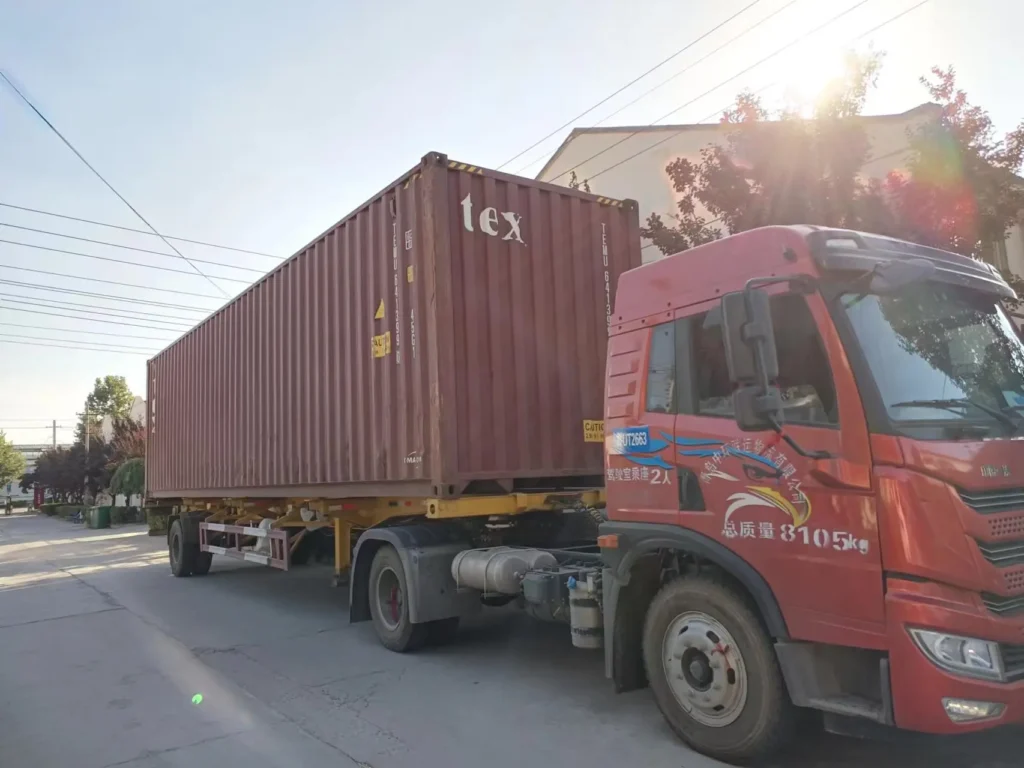
Built in Our Own Factory, Crated for Export
Jinan MT Machinery has built twin-screw extrusion equipment since 2013 and ships in rust-proof, moisture-proof wooden cases with CE certificate, packing list, invoice and customs documents.
- 20,000 m²
- Production base
- 60+
- Export countries
- 1,000+
- Production lines
- 500+
- Global customers
Same Category
Related Machines
These Meiteng machines belong to the same product family and can be combined into one matched production line.
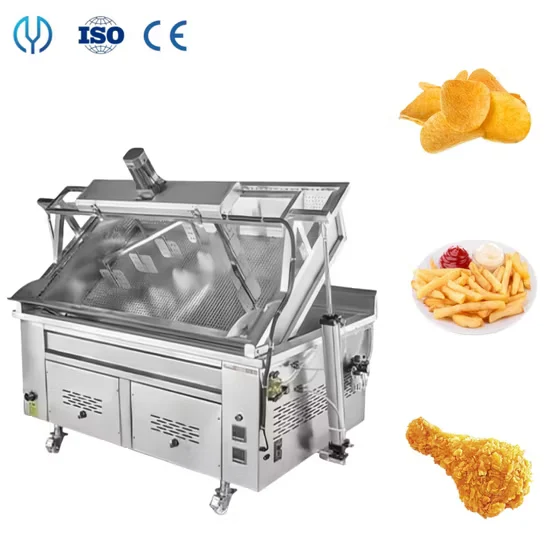 frying chips machine Industrial Deep Frying Machine Chicken French Fries Donut Doughnut Fryer View Machine
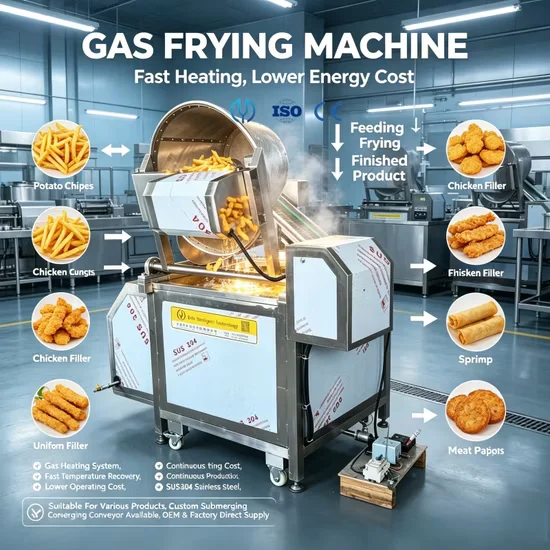 frying chips machine Gas Deep Fryer Chicken Wings Onion Rings Seafood Processing Machine View Machine
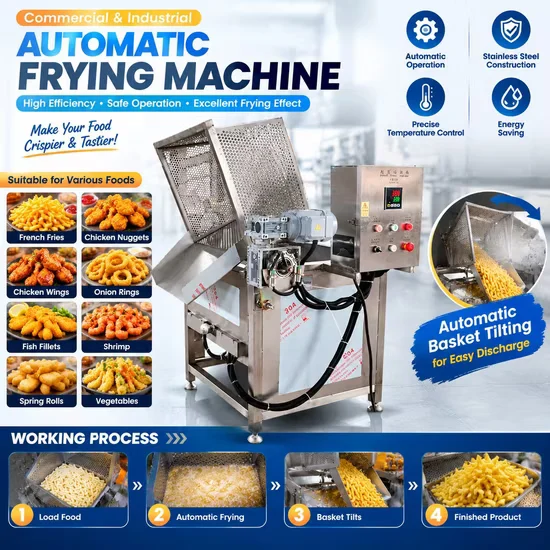 frying chips machine 200L Electric Deep Fryer for Chips and Fried Chicken Machine View Machine
 frying chips machine Potato Plantain Chips Frying Machine Industrial Continuous Deep Fryer View Machine
Where It Works
Applications
This machine serves snack factories, pellet producers and snack brands across South Asia, Southeast Asia, the Middle East, Africa and Latin America.
Buying Knowledge
Selection Guides
These guides help owners, process engineers and purchasing teams compare options for pellet and snack production.
Product & Series Guides · Nov 15, 2026 DS50 Small Snack Pellet Line Manufacturer for Startups & Pilot Plants Startups face batch failures from thermal drift and poor moisture control during continuous runs, making the DS50 Small Snack Pellet Line essential for validating… 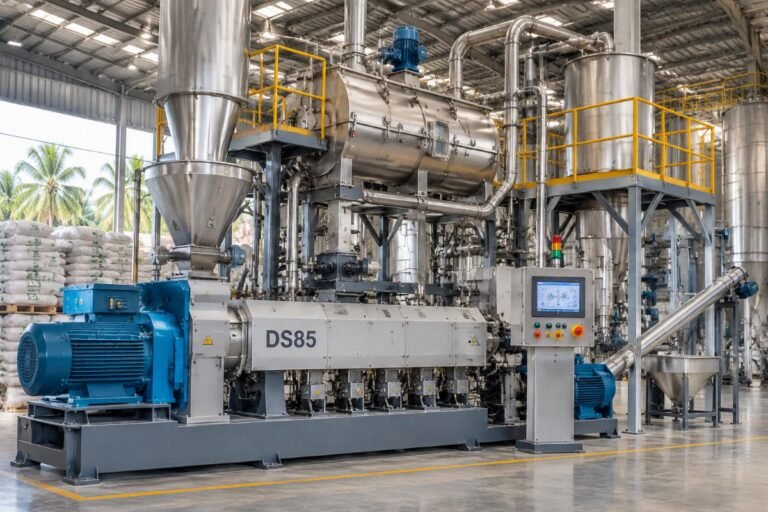 Product & Series Guides · Nov 15, 2026 DS85 Twin-Screw Extruder Manufacturer for Medium-Scale Pellet Chips Plants Overcoming poor conditioning temperature and uneven moisture distribution is essential to unlock the true capacity of a DS85 Twin-Screw Extruder in medium-scale pellet plants.…
 Applications & Industries · Nov 15, 2026 Puffed Corn Snacks & Pellet Chips Line Manufacturer Meiteng Combining puffed corn snacks and pellet chips production line maximizes equipment utilization and reduces initial capital expenditure for startup manufacturers. Real yield depends on…
FAQ
Questions Buyers Ask
Here are direct answers on raw materials, lead time, payment and installation for Meiteng food machines.
Can this machine run on my local raw material?
Yes, our lines process potato, cassava and wheat. You can visit the factory and test your own material, and we can run recipe tests. Output, die, screw combination, heating method and recipe are configured to your product.
What is the lead time?
Common standard models are in stock and delivered within 10 days. Custom solutions take 30–50 working days. We also help arrange export logistics.
Which payment terms do you accept?
We accept T/T, L/C (usually at sight) and Alibaba Trade Assurance. PayPal is available for small orders and Western Union for sample orders. D/P and D/A are considered for long-term customers with good credit.
Do you send engineers for installation and training?
Yes, our engineers install and commission the line at your plant and train your operators. The warranty is 12 months, with spare parts supplied at cost with priority. Remote support by video, WhatsApp and email continues for life.
How we pack and ship your order
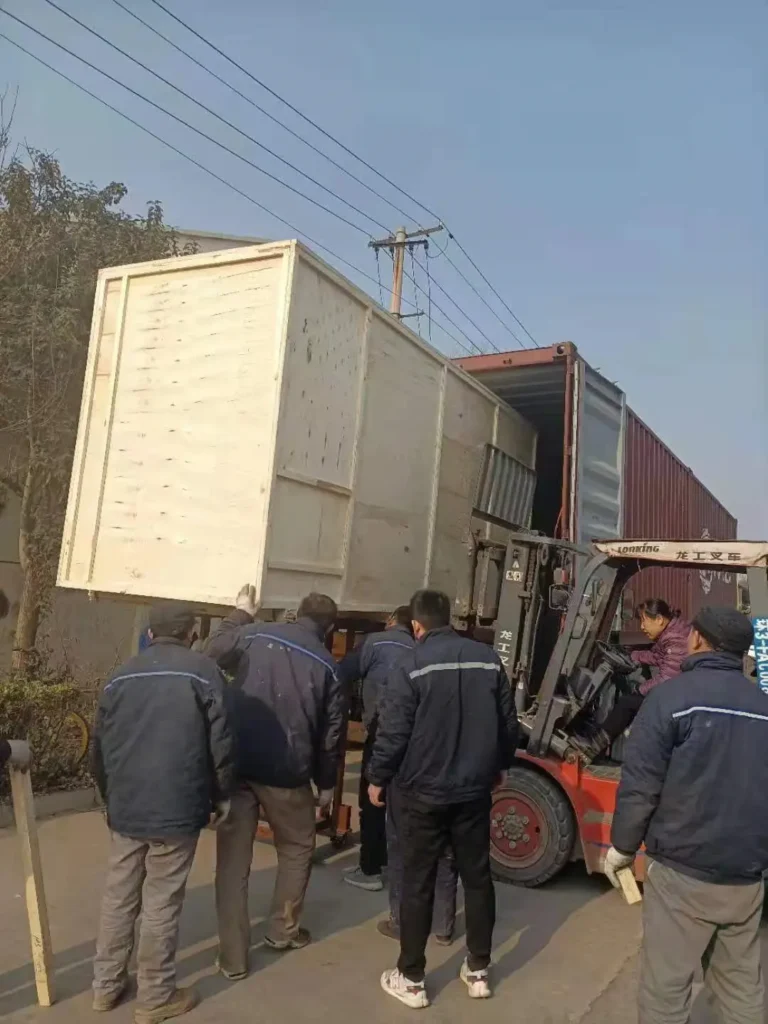
Export packing
Packed for international transport. Tell us if you need custom labels, marks or packing.
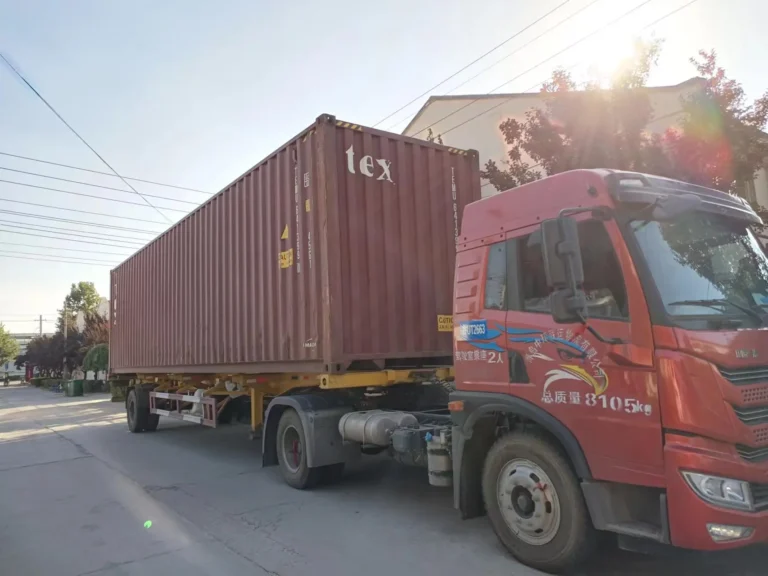
Shipping to you
Tell us your port or delivery address and we will quote the freight and lead time for your order.
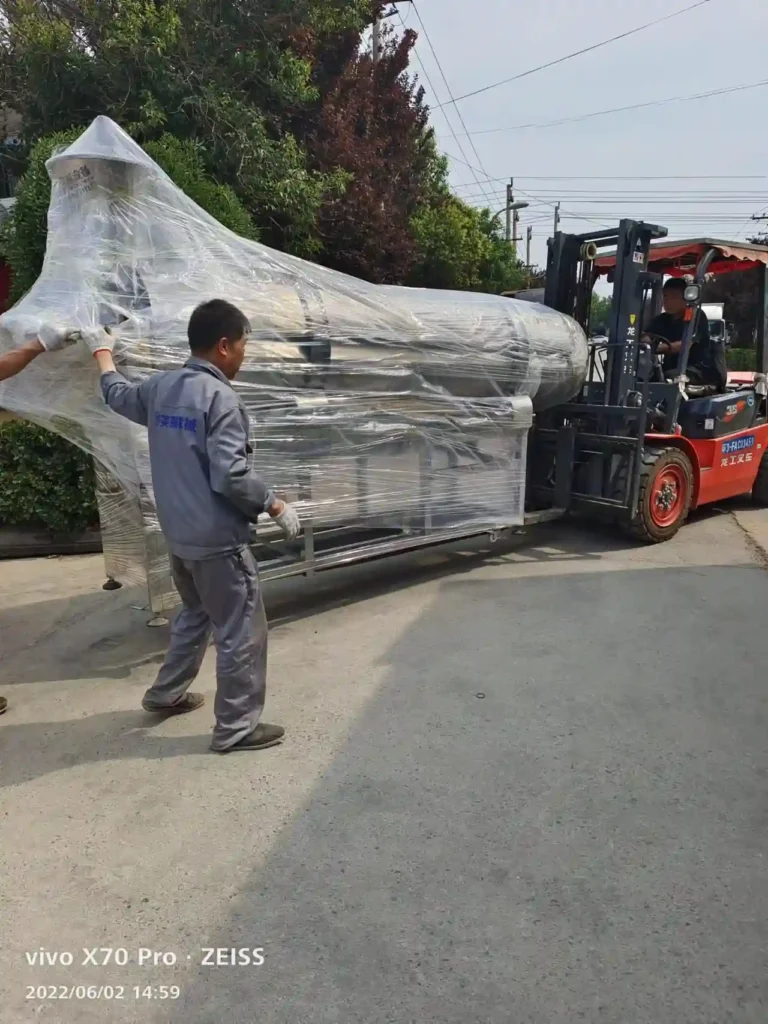
Shipping documents
Commercial invoice and packing list come with every shipment; ask us for any other documents your customs needs.
What our customers say
★★★★★
“Papad and 3D pellets in different shapes without a mould per shape. Dies swap in 20 minutes and the shape stays crisp after frying.”
★★★★★
“Drying was our biggest loss - pellets cracked after two weeks in the warehouse. With the multi-stage dryer, breakage dropped to almost none.”
★★★★★
“Potato and cassava based chips at six points lower oil content than our old fryer line, thanks to the de-oiling section.”
Inquiry
Get a Quote for Fully Automatic 3D Snack Pellets Extruder Making Machine for Chips
We reply within 24 hours with a free process proposal, CAD and 3D workshop layout, and an itemized technical quotation.