
DS85 Twin-Screw Extruder Manufacturer for Medium-Scale Pellet Chips Plants
- By Jinan MT Machinery
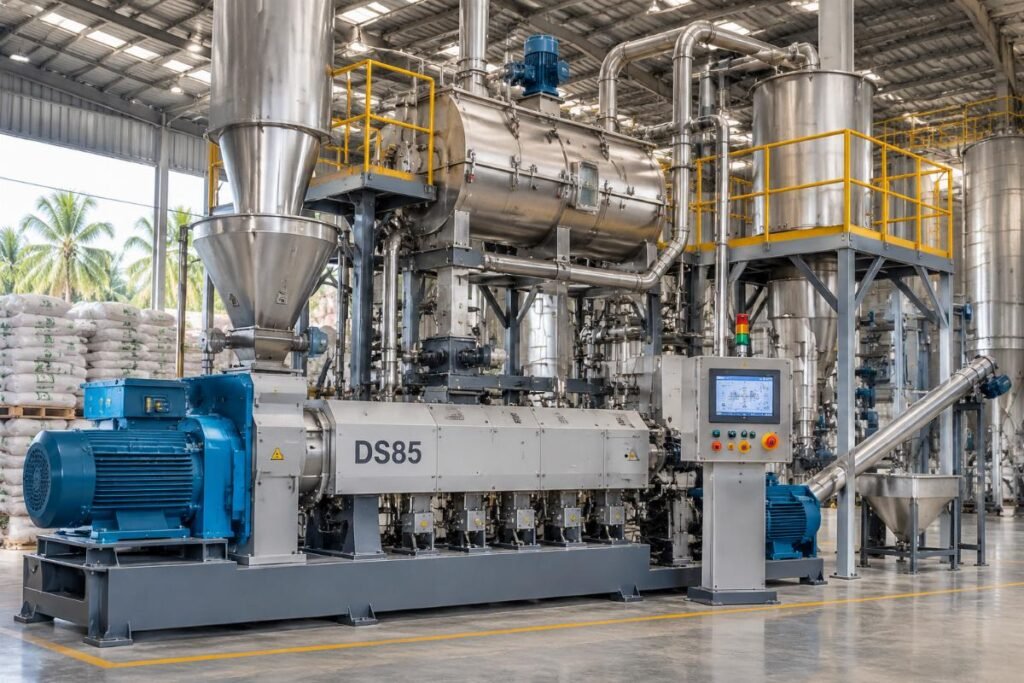
Nameplate capacity is an illusion if your conditioning temperature misses the mark.
Maximizing the actual output of a DS85 Twin-Screw Extruder relies entirely on integrated temperature control and precise moisture management across the entire line, rather than just relying on single-machine mechanical specs.
I still remember standing on a humid factory floor in Jakarta, watching a frustrated plant manager point at a stalled DS85 Twin-Screw Extruder. The medium-scale pellet chips plant was supposed to be running smoothly, but the output was barely a fraction of what was promised. When we finally opened the feeder, the root cause was glaringly obvious: the conditioning temperature had dropped significantly below the required threshold, leaving the raw materials under-gelatinized. All the massive shear force generated by the screws was simply wasted on unprepared dough. Transitioning from quality inspection in Jinan to troubleshooting across Southeast Asia taught me that whole-line thermal dynamics and formula moisture are the real bottlenecks. Selecting the right equipment means choosing a partner who understands how to tune the entire工艺 process, not just bolt together heavy iron.
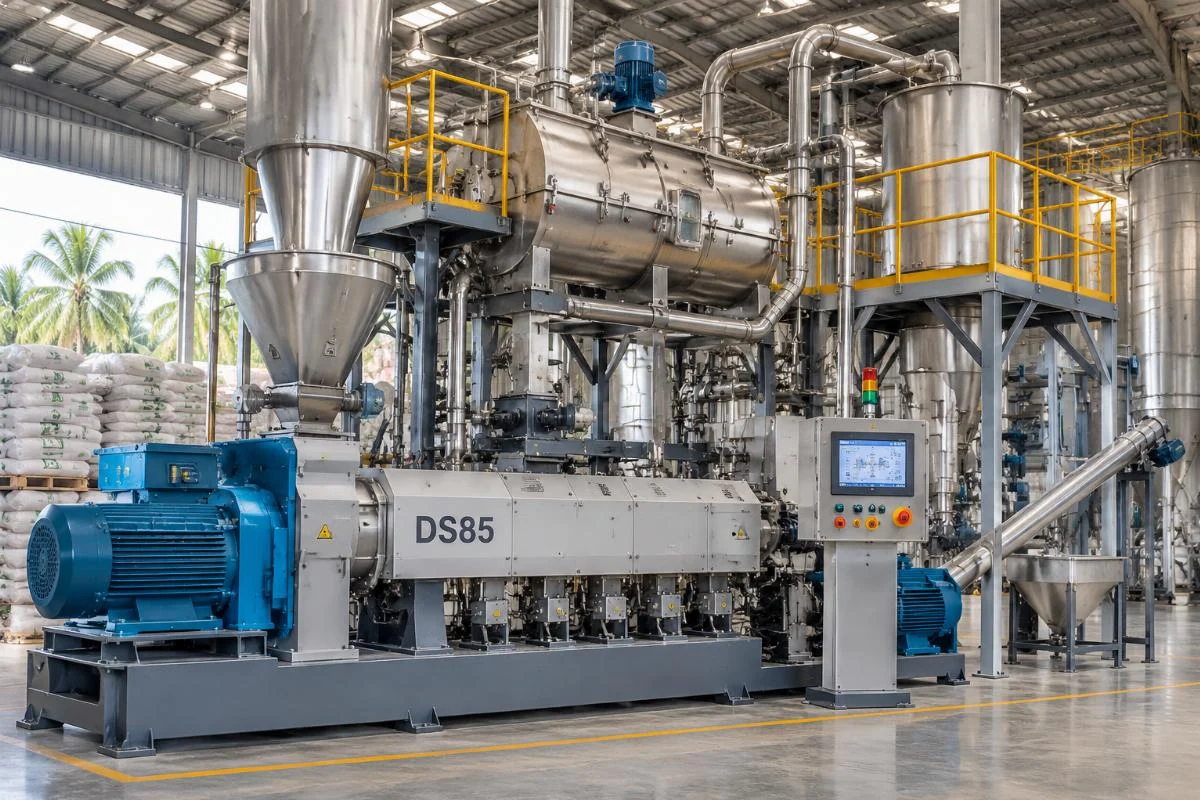
Let us break down how to look past the brochure numbers and actually get your production line running at its true potential.
What Defines the DS85 for Medium-Scale Pellet Plants?
The DS85 Twin-Screw Extruder is engineered to deliver a perfect equilibrium between intense shear forces and steady throughput for moderate-scale operations.
In the realm of aquaculture and pet food manufacturing, finding the sweet spot for production volume is critical. A medium-scale pellet chips plant typically requires a machine that can handle substantial daily volumes without the massive energy footprint of industrial giants. The DS85 Twin-Screw Extruder fits this niche by providing robust specific mechanical energy input tailored for complex formulas. According to industry research, the geometry of the screw elements in this class of machinery is specifically designed to maximize heat transfer while maintaining material retention time.
During a recent site visit to a growing pet snack startup, the operators were struggling with a mid-range capacity line. They were pushing the main motor to its absolute limit, yet the pellets lacked the necessary structural integrity. The issue was not the motor power; it was the screw profile. By adjusting the arrangement of the kneading blocks within the barrel, we redistributed the shear force more evenly. This simple mechanical tweak allowed the DS85 Twin-Screw Extruder to process high-protein recipes without causing excessive thermal degradation. The machinery’s construction using food-grade stainless steel ensures that when dealing with acidic or highly abrasive aquatic feed ingredients, the internal components resist wear and maintain hygiene standards.
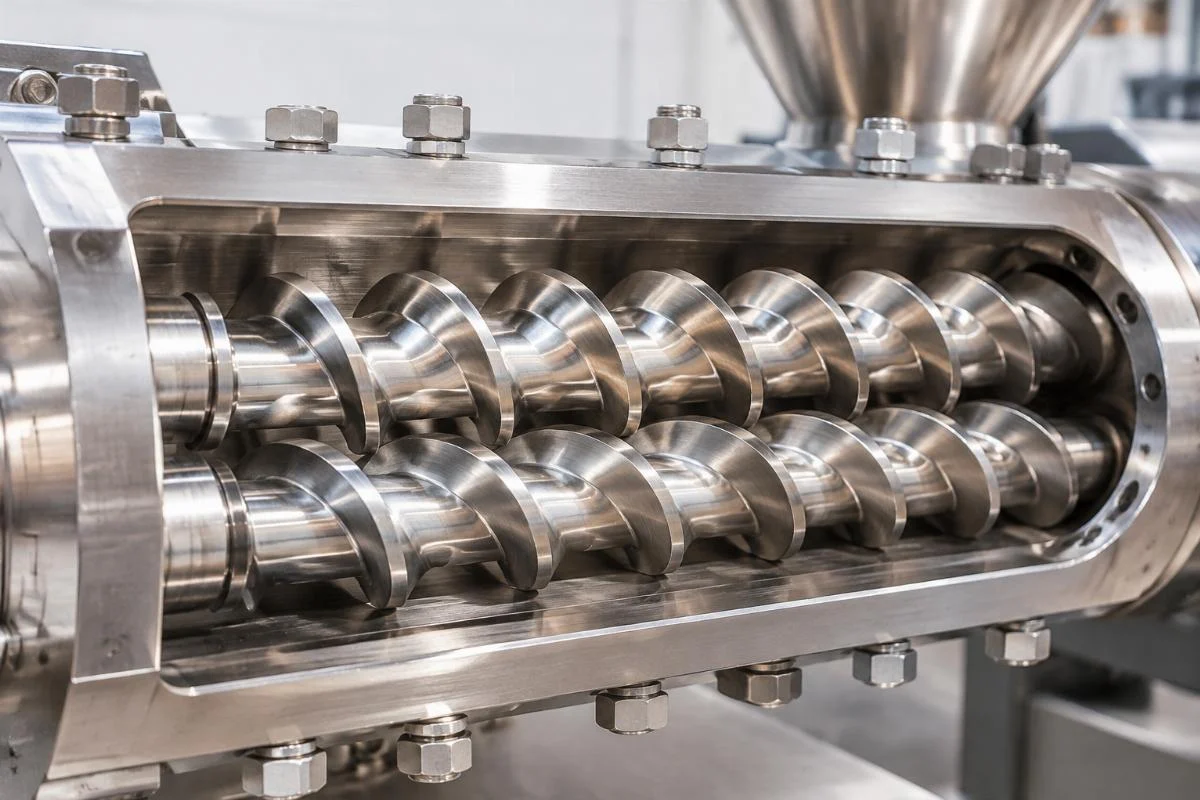
The true definition of this machine lies in its adaptability. It is not merely a motor and a barrel; it is a highly calibrated reactor where thermal and mechanical energies must dance in perfect synchronization to achieve the desired gelatinization and texture.
Why Does Nameplate Capacity Often Fail in Real Production?
Poor conditioning temperature and uneven moisture distribution are the primary culprits that destroy actual output, rendering nameplate specs meaningless.
It is a common trap for new producers to obsess over the main motor’s kilowatt rating while ignoring the pre-conditioning stage. I once worked with an aquaculture pellet line where the operators kept increasing the screw speed to chase higher tonnage. Instead of more output, they got more blockages and burnt smells. The raw material entered the extrusion chamber with a noticeable temperature deficit. Without adequate pre-heating and steam injection, the starches refused to gelatinize properly. The DS85 Twin-Screw Extruder then had to compensate by generating excessive frictional heat, which ultimately scorched the outer layers of the pellets while leaving the core raw.
Moisture uniformity is the other silent killer of capacity. In a separate case involving a regional feed manufacturer, the formula moisture varied wildly from batch to batch. When the mixture was too dry, the DS85 Twin-Screw Extruder experienced massive pressure spikes, triggering automatic safety shutdowns. When it was too wet, the material simply slipped through the screws without building the necessary pressure for proper expansion. The variance in moisture content meant that the specific mechanical energy input was constantly fluctuating, making it impossible to establish a stable production rhythm.
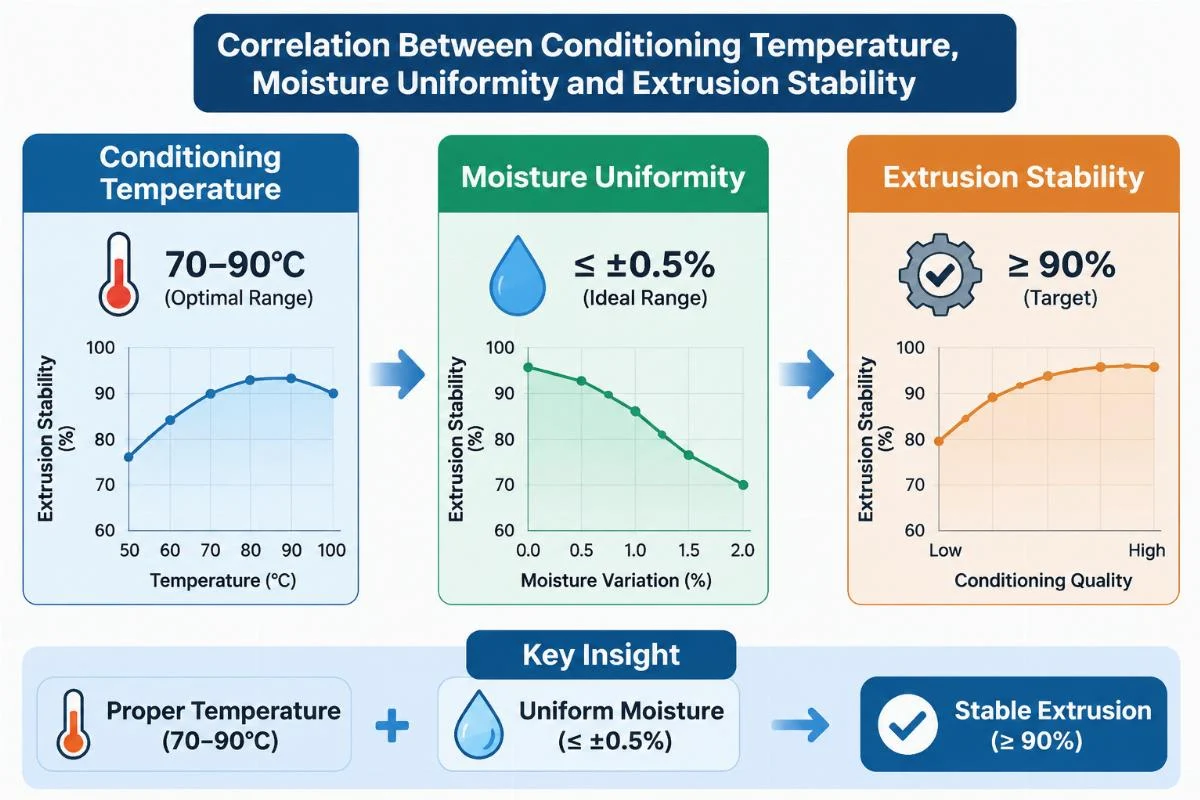
To achieve the theoretical DS85 extruder capacity, the feed must arrive at the extruder throat with a tightly controlled thermal and moisture profile. If the upstream conditioning is flawed, the extruder will spend its energy fighting the raw material rather than shaping the final product.
How to Optimize the Entire Line Beyond the Extruder?
Integrating advanced drying and cooling systems is mandatory to stabilize the final pellet quality and lock in the gains made by the extruder.
The extrusion process is only half the battle. Once the material exits the die, it is highly porous and retains significant residual moisture. If this moisture is not removed rapidly and uniformly, the pellets will degrade, mold, or lose their nutritional value. A comprehensive turnkey line design must treat the post-extrusion section with the same rigor as the extruder itself. In a recent project for a specialized aquatic feed producer, the initial setup relied on a basic, single-stage drying system. The final product moisture varied drastically, leading to frequent rejections by quality control.
By upgrading to a multi-pass drying and cooling integration, the moisture removal became a controlled, gradual process. The DS85 Twin-Screw Extruder was producing perfect pellets, but it was the downstream equipment that determined whether those pellets survived to reach the customer. The integration of these systems ensures that the thermal energy applied during extrusion is effectively utilized to drive off water without cooking the nutrients to death.
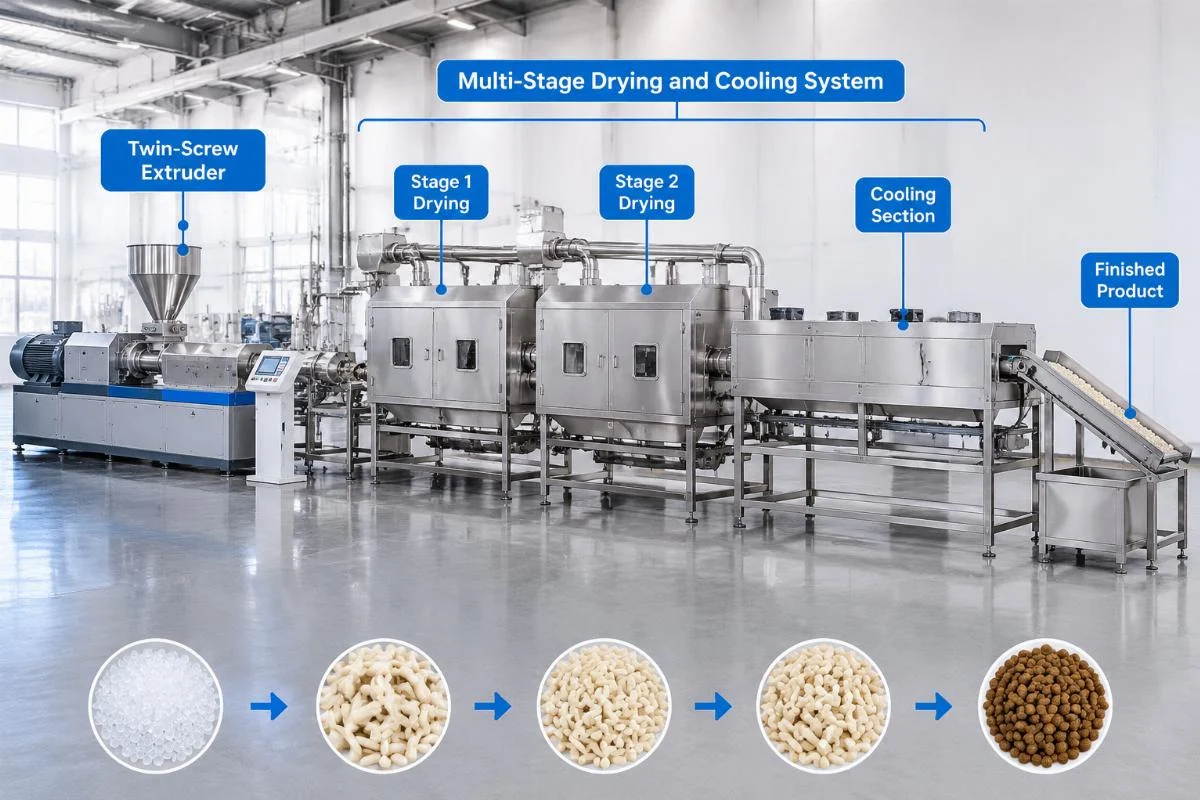
Furthermore, the flavor coating and enrobing stages must be precisely synchronized with the cooling output. If the pellets are not cooled to the exact core temperature before entering the coater, the fat and liquid attractants* unevenly. Optimizing the entire line means viewing the extruder not as an isolated island, but as the heat engine of a continuous, thermodynamically balanced circuit.
What Support Ensures a Smooth Startup?
Turnkey design expertise and on-site formula tuning bridge the critical gap between equipment delivery and commercial viability.
Buying a machine is easy; making it produce a profitable, consistent product is incredibly hard. Many international buyers face a prolonged commissioning phase because the local technicians lack the empirical knowledge to tweak the complex variables of extrusion. This is where comprehensive manufacturer support becomes the deciding factor. When a Middle Eastern startup attempted to launch a novel plant-based protein line, they had the best equipment on paper but could not achieve the right fibrous texture.
Through on-site installation and operator training, the manufacturer’s engineers didn’t just turn on the switches; they stayed on the floor to adjust the water injection rates, tweak the screw profiles, and modify the temperature zones based on the specific local raw materials. This hands-on approach transformed a struggling pilot run into a stable commercial operation. The provision of food-grade stainless construction ensures that these formula adjustments can be made safely and hygienically, meeting strict international sanitary standards.

True support means the manufacturer takes responsibility for the entire process flow, from raw material intake to the final packaged pellet. It involves providing the localized expertise needed to navigate regional ingredient variations, ensuring that the DS85 Twin-Screw Extruder performs consistently regardless of the geographical location.
Conclusion
Real capacity is born from process integration, not just mechanical horsepower. Maximizing your DS85 Twin-Screw Extruder requires a holistic approach that prioritizes precise conditioning, uniform moisture, and seamless downstream drying. By focusing on the entire thermodynamic circuit rather than isolated machine specs, producers can achieve stable, high-quality output that truly meets the demands of the modern feed and food markets.
Equipment Mentioned in This Article
 frying chips machine
Deep Fryer Plantain Cassava Banana Chips Frying Machine French Fries
Basket Lifting Deep Fryer for Plantain and Cassava Chips — featuring precise temperature control and continuous oil filtration. The system… View Machine Details frying chips machine
Electric Banana Chips Frying Machine Plantain Cassava Processing
Electric Banana Chips Frying Machine for Plantain and Cassava Snacks — features automatic basket lifting and turning for uniform heating,… View Machine Details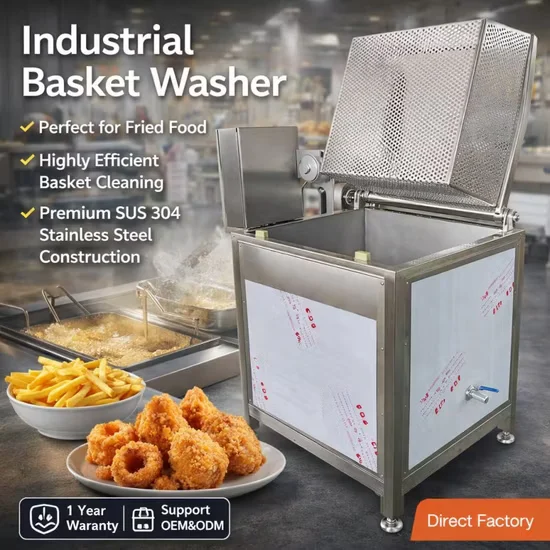 frying chips machine
Plantain Chips Electric Deep Fryer Machine with Mixer
Plantain Chips and Snack Deep Fryer for Uniform Frying — electric batch fryer with automatic basket lifting and oil filtration… View Machine Details frying chips machine
Plantain Banana Chips Deep Fryer Cassava Garri Frying Machine
Plantain And Banana Chips Deep Fryer for Cassava and Snack Pellets — electric heating equipment with automatic basket lifting and… View Machine DetailsRelated Applications

Engineering Perspective
An In-House R&D Team Behind Every Line
Jinan MT Machinery develops its process technology in-house. The team concentrates on the four areas that decide pellet shape, expansion and line stability.
- Expansion technology
- Twin-screw extrusion
- Die design
- PLC/MCC automation
Related Articles
 Nov 15, 2026 · Product & Series Guides
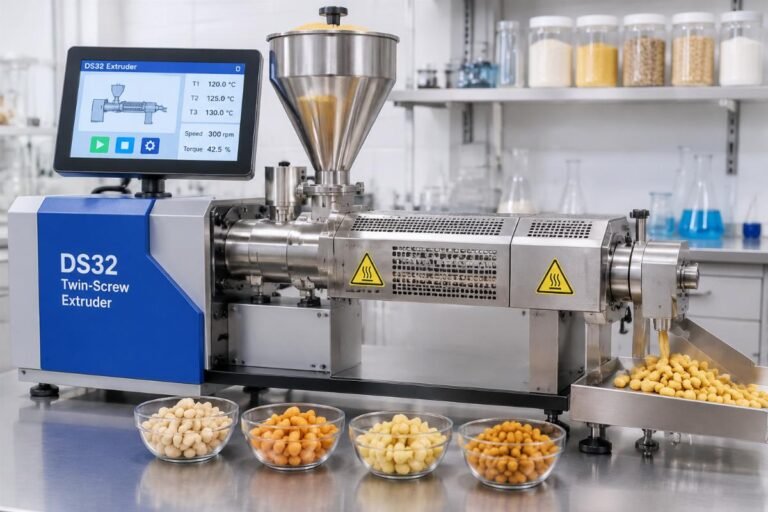
DS32 Lab Twin-Screw Extruder for Snack Pellet Trials Manufacturer
The DS32 lab twin-screw extruder prevents catastrophic barrel seizures during snack pellet recipe trials by matching precise screw configurations to specific starch ratios. Blindly… Read This Article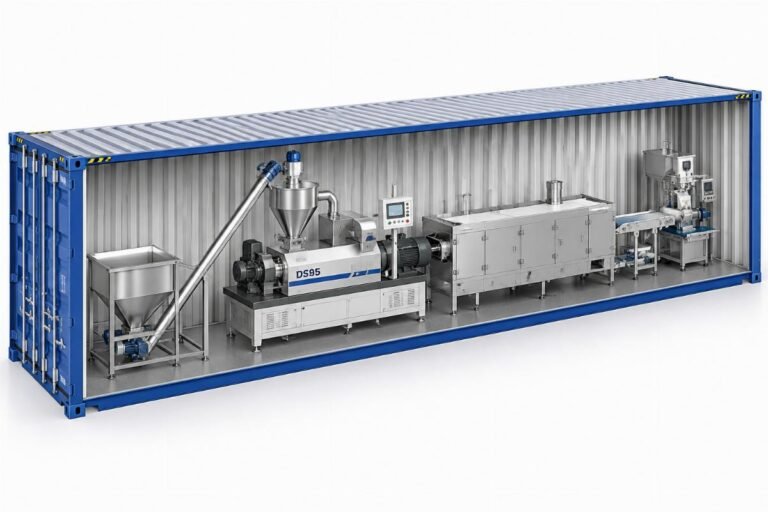 Nov 15, 2026 · Product & Series Guides
DS95 Pellet Snack Line Manufacturer for High-Output Export Factories
The DS95 Pellet Snack Line maximizes high-volume pellet production through optimized twin-screw extrusion while solving critical export logistics and local power matching challenges. Discover… Read This Article Nov 15, 2026 · Product & Series Guides
DS70 Snack Pellet Line Layout & Output: Manufacturer for Sale
Maximizing DS70 Snack Pellet Line output requires practical spatial layout and realistic machine matching rather than relying on theoretical specifications. Discover how to optimize… Read This ArticleFree Process Check
Send Your Recipe for a Process Check
Jinan MT Machinery engineers review your recipe and return a free process plan within 24 hours. Tell us the product, output, raw material, local voltage and heat source.
Send Your Recipe on WhatsApp