
China Supplier Custom Voltage Pellet Chips Line OEM Manufacturer
- By Jinan MT Machinery

Voltage is never just a number on a nameplate; it is the lifeline of your entire extrusion plant.
Yes, a China supplier can fully customize voltage for a pellet chips line, ranging from standard 220V up to 440V. However, buyers must explicitly specify local grid standards, frequency, and fluctuation ranges during the electrical cabinet design phase to prevent catastrophic component failure.
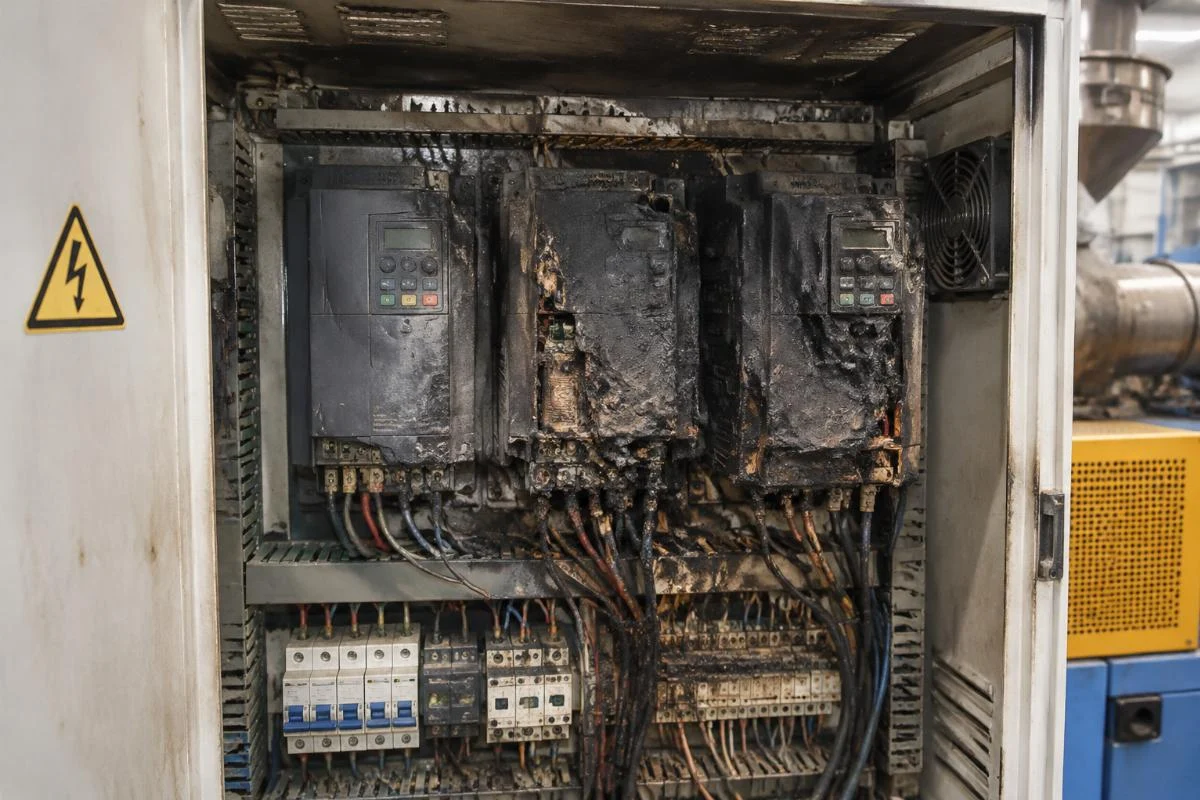
I learned this the hard way years ago in Lagos, Nigeria. I was overseeing the installation of a pet food extrusion line, and the electrical cabinet had been shipped based on the standard domestic 380V assumption. The reality on the ground? The local grid was running at 415V. The moment we powered it up, the main inverter burned out instantly. The client was furious. I had to fly back to the site that night, grab a multimeter, and spend three grueling days sourcing and replacing fried components just to get the line running. Since transitioning to sales, nothing terrifies me more than buyers being vague about voltage customization and OEM electrical details. In regions with unstable grids, purchasing a production line requires looking far beyond basic capacity parameters; the electrical cabinet configuration and on-site commissioning are your absolute bottom line for survival.
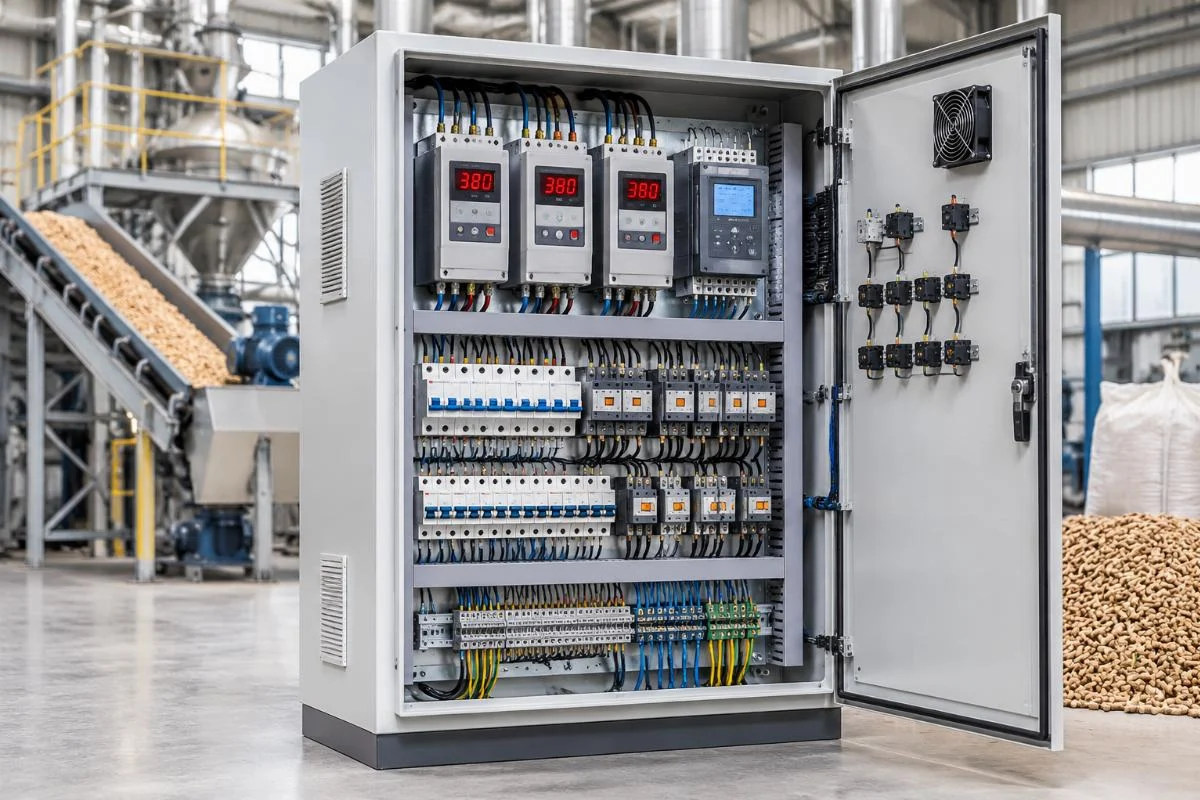
Can Chinese Suppliers Actually Customize Voltage for Extrusion Lines?
Yes, from 220V to 440V, but it requires explicit specification at the contract stage.
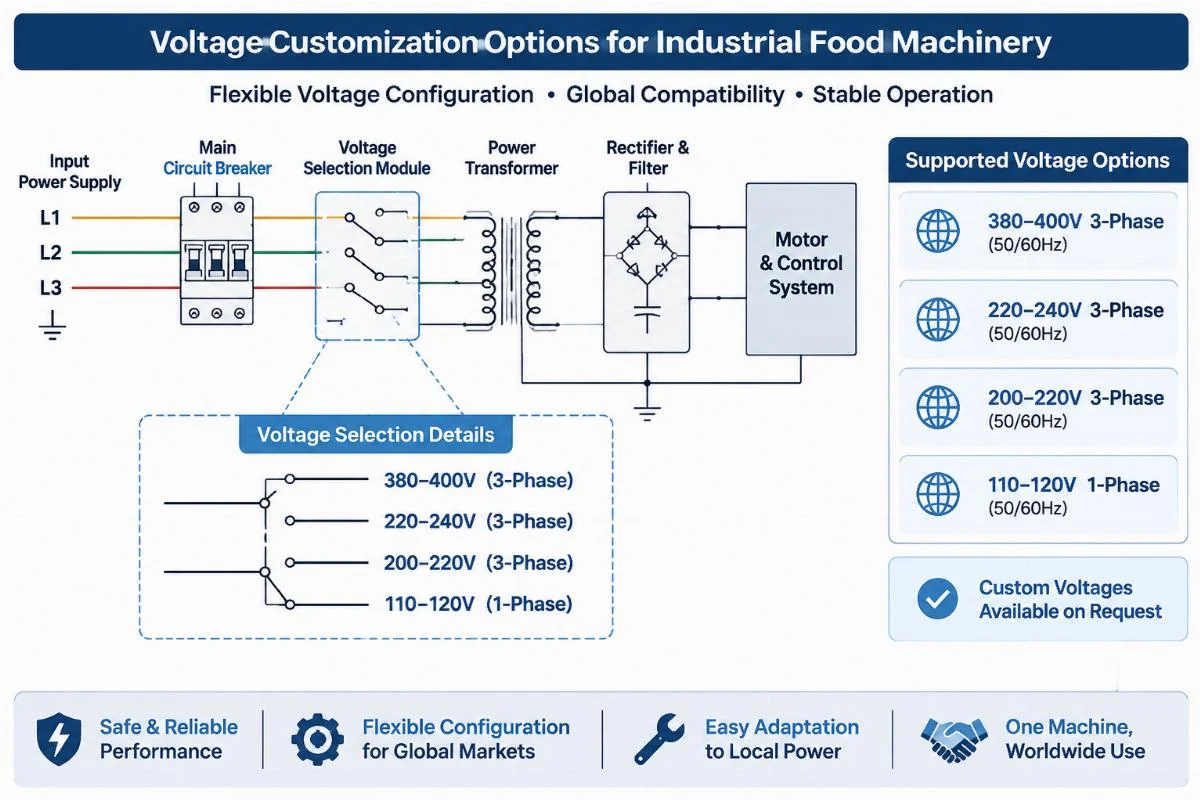
Many buyers assume that a standard 380V/50Hz cabinet can be adapted on-site with a simple step-up or step-down transformer. This is a dangerous misconception. A true customize voltage pellet chips line requires the manufacturer to redesign the core electrical architecture before production even begins. According to IEC 60038 standard voltage ranges, industrial grids vary significantly across different continents.
When you order a customize voltage pellet chips line, the supplier must adjust the transformer taps, select compatible contactors, and reprogram the PLC logic to match your exact local grid code. If you merely ask for a “voltage adjustment” without providing the formal grid parameters, the factory will default to their domestic standard, leaving you with a machine that is essentially a ticking time bomb the moment it hits your facility’s main breaker.
Why Do Inverters Burn Out When Voltage is Slightly Off?
It is often the frequency mismatch or grid fluctuation, not just the voltage level, that destroys components.
Most people think voltage is just a static number, but the reality of industrial voltage adaptation food machinery is far more complex. In my experience across multiple regions, the majority of inverter failures stem from two hidden culprits: frequency mismatch and severe voltage sag/spike.
First, consider frequency. Most buyers focus entirely on the voltage (e.g., 415V) and ignore the Hz. Running a motor designed for 50Hz on a 60Hz grid fundamentally alters the magnetic flux. This leads to noticeable speed and torque deviation, and more critically, it compromises the motor’s internal cooling fan efficiency, causing silent thermal degradation over time.
Second, grid fluctuation. In many developing markets, the grid does not hold a steady 415V. It can drop to 360V during peak hours or spike to 440V at night. Standard electrical cabinets lack the protective relays to handle this. When a 415V pet food extruder electrical cabinet is subjected to constant micro-fluctuations without phase-loss or over-voltage protection relays, the DC bus capacitors inside the inverters degrade rapidly, leading to sudden explosions.
What Electrical Details Must Buyers Provide to the Supplier?
Exact voltage, frequency (Hz), phase, and local grid fluctuation tolerance are mandatory for cabinet design.
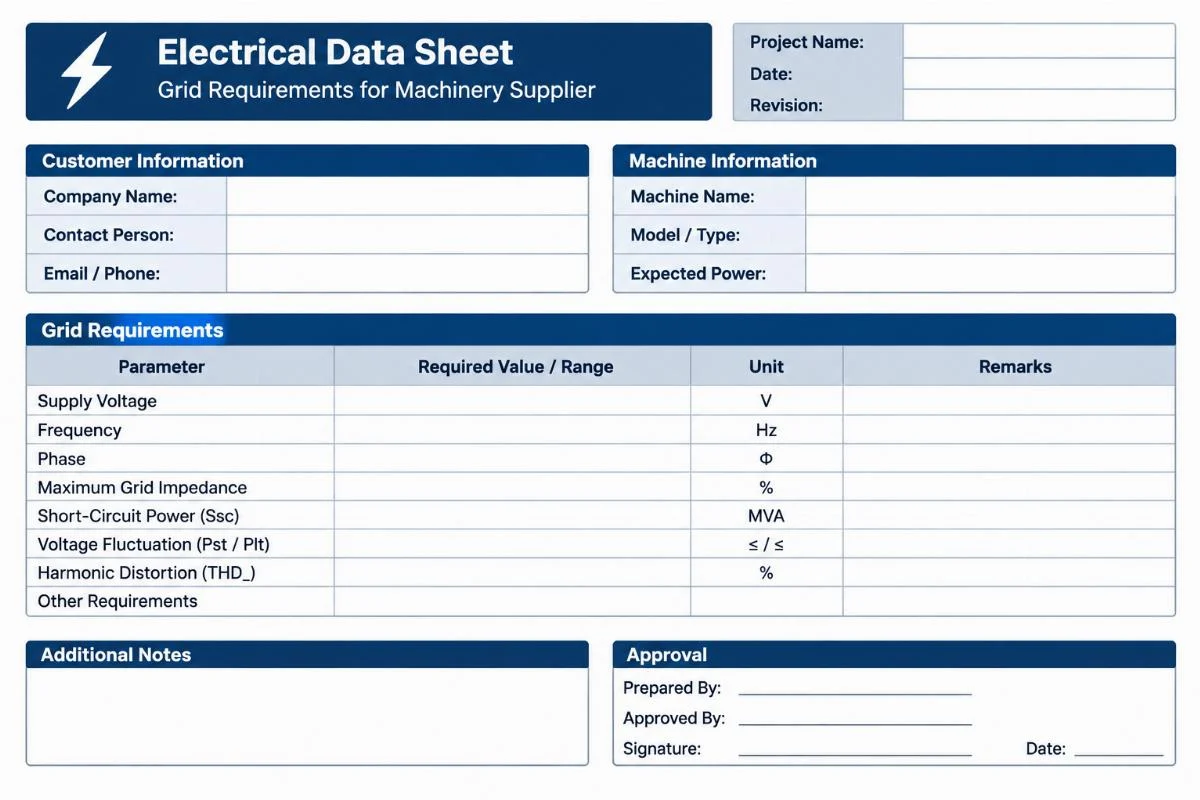
To successfully execute a China supplier voltage customization extrusion line, you cannot just send a purchase order with “380V” written on it. You must provide a comprehensive electrical data sheet.
- Nominal Voltage & Frequency: Specify the exact three-phase voltage (e.g., 415V) and the grid frequency (50Hz or 60Hz).
- Phase Configuration: Confirm if your facility uses a 3-phase 3-wire or 3-phase 4-wire (with neutral) system, as this dictates the control circuit transformer design.
- Grid Fluctuation Tolerance: This is the most overlooked detail. You must inform the supplier if your local grid experiences drops beyond the standard tolerance. If your grid fluctuates wildly, the supplier needs to know so they can oversize the control transformers and select wider-tolerance inverters.
- Control Voltage: Specify the required control voltage for sensors and actuators (usually 24VDC or 110VAC).
Failing to provide these details forces the supplier to guess, and in the world of industrial voltage adaptation food machinery, a guess always ends in a burnt circuit board.
How to Ensure the Electrical Cabinet Survives Local Conditions?
Specify IP54+ protection, local brand components for easy replacement, and voltage stabilizers for unstable grids.
Designing the cabinet for the correct voltage is only half the battle; protecting it from the local environment is the other. In hot, dusty, or humid environments, a standard IP20 cabinet will fail prematurely due to conductive dust shorting out the 415V pet food extruder electrical circuitry. You must mandate an IP54 or IP55 protection rating for the main control cabinet.
Furthermore, insist on using globally recognized or locally available component brands for breakers, contactors, and relays. If a proprietary or obscure brand trips in a remote area, you will wait weeks for a replacement, halting your entire production.
For regions with notoriously unstable grids, adding an industrial automatic voltage regulator (AVR) or stabilizer upstream of the main cabinet is non-negotiable. Yes, this means a moderate cost increase for electrical upgrades, but it is vastly cheaper than replacing a main drive system.
This is exactly where Meiteng approaches the project differently. When we design a turnkey line, we do not just ship a box; we integrate CE and ISO certified electrical cabinets tailored to your exact grid reality. Our on-site commissioning and operator training ensure that your local team understands how to manage these electrical systems, guaranteeing voltage adaptation and long-term operational stability from day one.

Conclusion
Electrical mismatches destroy extrusion lines faster than mechanical wear. Securing a reliable customize voltage pellet chips line requires buyers to dictate exact grid parameters, demand robust protective relays, and mandate high IP ratings for the cabinets. Never treat the electrical cabinet as an afterthought; it is the brain that keeps your investment alive.
Equipment Mentioned in This Article
 frying chips machine
Industrial Deep Fryer Machine Manufacturer Banana Potato Chips French Fries
Industrial Deep Fryer Machine for banana and potato chips features automatic basket lifting and oil filtration. The electric heating system… View Machine Details frying chips machine
100-2000L Tank Deep Fryer Commercial Chips Frying Machine
100-2000L Tank Deep Fryer for Snack Pellets and Chips — handles continuous deep frying and de-oiling for potato, cassava, and… View Machine Details frying chips machine
Electric Batch Frying Machine for French Fries Fast Food Chicken Wing
Industrial Batch Fryer for Fried Snacks and French Fries — features electric or gas heating with automatic basket lifting for… View Machine Details frying chips machine
Industrial Deep Fryer for Potato Chips and Snack Food Production
Industrial Deep Fryer for Potato Chips and Snack Food Production — frying and de-oiling for 2D/3D pellets, papad, and potato… View Machine DetailsRelated Applications

Engineering Perspective
An In-House R&D Team Behind Every Line
Jinan MT Machinery develops its process technology in-house. The team concentrates on the four areas that decide pellet shape, expansion and line stability.
- Expansion technology
- Twin-screw extrusion
- Die design
- PLC/MCC automation
Related Articles
 Nov 10, 2026 · Procurement & Trade FAQs
Snack Pellet Line for UAE: Twin-Screw Extruder Manufacturer & Turnkey Service
Buying a snack pellet line UAE requires engineering systems that survive extreme heat and voltage fluctuations, not just finding the lowest price. You must… Read This Article Nov 10, 2026 · Procurement & Trade FAQs
Fast Replacement Pellet Dies from China Manufacturer Meiteng
Minimize extruder downtime by understanding that replacement pellet die delivery time relies on precise formula matching and custom compression ratios rather than just express… Read This Article Nov 10, 2026 · Procurement & Trade FAQs
Snack Pellet Line for Poland & EU: Meiteng Twin-Screw Extruder Manufacturer
Importing a snack pellet line into Poland and the EU requires navigating strict CE machinery directives, EORI customs registration, and adapting equipment to local… Read This ArticleFree Process Check
Send Your Recipe for a Process Check
Jinan MT Machinery engineers review your recipe and return a free process plan within 24 hours. Tell us the product, output, raw material, local voltage and heat source.
Send Your Recipe on WhatsApp