
Fast Replacement Pellet Dies from China Manufacturer Meiteng
- By Jinan MT Machinery

Expedited shipping means nothing if the replacement pellet die delivery time is spent troubleshooting a mismatched compression ratio.
The typical replacement pellet die delivery time from a Chinese manufacturer ranges from a few days for standard stock items to several weeks for custom-fabricated ring dies. However, minimizing extruder downtime relies less on express freight and more on precise formula matching and custom compression ratios to prevent repeated failures.
Walking the floor at trade shows in Hanover and Chicago over the years, I have heard countless procurement managers complain about extended line stoppages. I vividly recall a pet food startup owner in Chicago pointing at a worn sample, frustrated that their extruder suffered from rapid wear and poor pellet formation rates every time they swapped parts. Instead of pushing a quick sale, my mentor pulled out a caliper to measure the old tooling on the spot, immediately identifying that the compression ratio and alloy grade completely ignored their specific raw material formula. This现场 reality proves that securing a reliable replacement pellet die delivery time requires deep technical alignment with your production工况, not just placing a rush order.
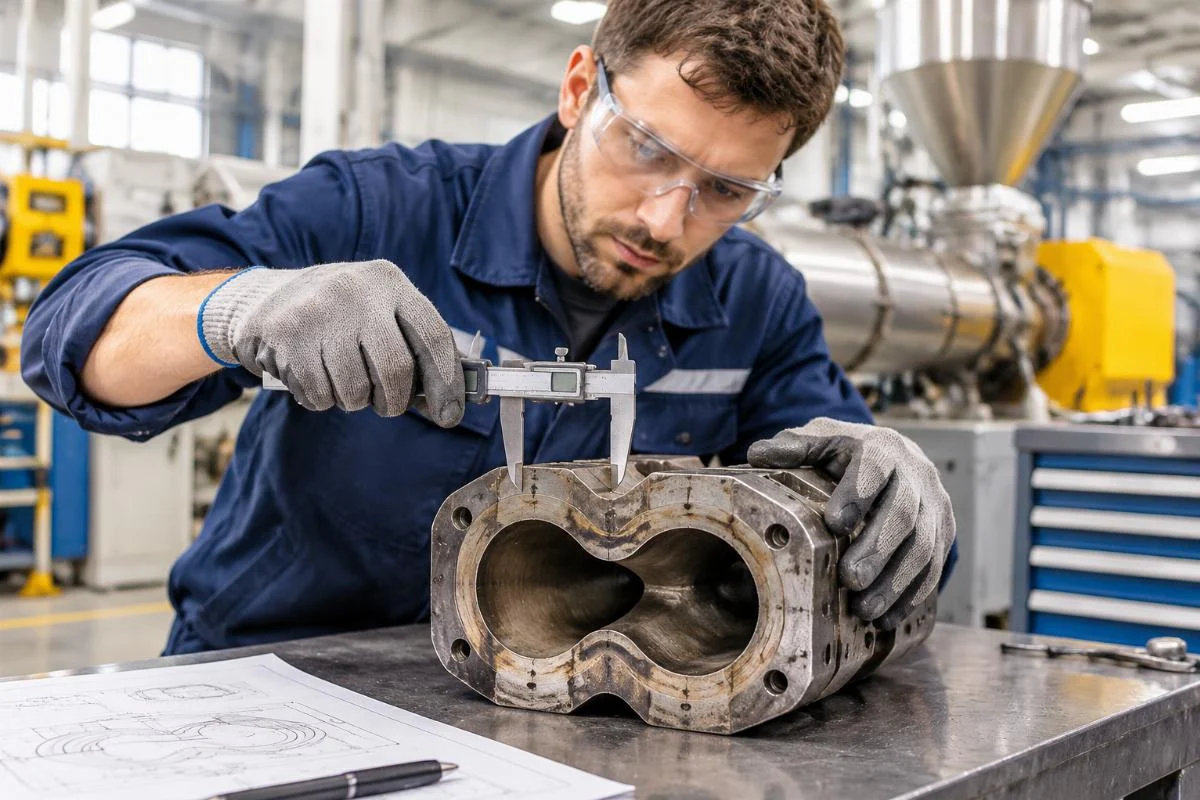
Let us break down the actual factors that dictate how fast you can get your line running again.
What is the standard lead time for replacement pellet dies?
Standard stock items can be dispatched within days, while custom fabrication requires a longer replacement pellet die delivery time to ensure metallurgical precision.
When you order a standard replacement pellet die delivery time is usually dictated by warehouse availability and basic logistics. If the manufacturer keeps generic sizes in stock, the physical shipping cycle is relatively short. However, the moment your twin-screw extruder replacement die requires specific metallurgical treatments or non-standard dimensions, the manufacturing cycle extends significantly.
A Southeast Asian aquaculture feed producer once faced a crisis when their floating fish feed line halted unexpectedly. They initially demanded the fastest possible replacement pellet die delivery time, opting for an off-the-shelf part. The new die arrived quickly, but because the channel depth and alloy hardness were not tailored to their high-moisture fish meal formula, the line suffered from severe slippage and inconsistent pellet density. They ended up ordering a properly engineered custom die, which took longer to manufacture but permanently solved the emergency replacement cycle.
Risk Checklist for Standard Dies:
- Incompatible alloy hardness for abrasive raw materials.
- Incorrect channel depth leading to poor material compression.
- Lack of formula-specific thermal treatment.

Why do custom dies take longer but save more time?
Custom fabrication extends the initial replacement pellet die delivery time but drastically reduces total downtime by eliminating trial-and-error replacements.
It is a common misconception that ordering a standard part is always the fastest route to recovery. In reality, a custom pellet die delivery process involves rigorous material hardness testing and precise compression ratio calculations tailored to your exact recipe.
Consider a snack food manufacturer that frequently changes recipes to produce different corn puff shapes and densities. When they switched to a new high-fiber formulation, their standard dies failed to maintain the pellet formation rate. By investing in a custom ring die customization process supported by Meiteng’s formula development support, the initial replacement pellet die delivery time was longer. Yet, once installed, the die ran substantially longer without wearing out, effectively saving months of cumulative line stoppages compared to repeatedly swapping generic parts.
Risk Checklist for Rushing Custom Orders:
- Skipping metallurgical analysis to force a faster replacement pellet die delivery time.
- Ignoring the specific abrasiveness of new raw material blends.
- Failing to align the die’s expansion ratio with the product’s target texture.

How does formula matching affect delivery and performance?
Accurate on-site measurement and formula analysis ensure the right die is shipped the first time, making the replacement pellet die delivery time truly effective.
The physical dimensions of a twin-screw extruder replacement die are only half the equation. The true performance lies in how the tooling interacts with your specific ingredient matrix. Professional manufacturers utilize strict caliper measurement protocols for old dies and conduct thorough formula analysis before finalizing the machining process.
A European plant-based protein producer struggled with excessive fines and broken textured vegetable protein strands. They blamed the machinery, but the real issue was a generic die that could not handle the hydration and texturization requirements of their soy isolate blend. By leveraging Meiteng’s turnkey line design and formula development support, the engineering team adjusted the compression ratio specifically for their plant-based matrix. The subsequent replacement pellet die delivery time included a thorough validation phase, ensuring the new die perfectly matched the rheological properties of the dough, instantly stabilizing the pellet formation rate.
Risk Checklist for Poor Formula Matching:
- Assuming all protein blends extrude identically regardless of moisture content.
- Neglecting the impact of fat and fiber levels on die wall friction.
- Failing to communicate recipe changes to the tooling supplier.

What documents and support ensure smooth integration?
Comprehensive export documentation and remote diagnostic assistance accelerate the installation phase following the replacement pellet die delivery time.
Receiving the physical part is only the beginning of the recovery process. A seamless integration requires proper export documentation, multi-language technical support, and remote diagnostics to guide your local maintenance team through the installation and commissioning phases.
When a Middle East cereal producer needed to upgrade their breakfast cereal line, they relied on a manufacturer that provided full container-load consolidation with export documentation and multi-language technical support. The replacement pellet die delivery time was matched by a structured remote diagnostic session, where engineers guided the local operators through the precise alignment and thermal profiling of the new die. This holistic approach, typical of Meiteng’s integrated drying, cooling, and flavor-coating systems support, ensured that the line reached optimal capacity immediately after the new tooling was seated.
Risk Checklist for Integration Failures:
- Missing multi-language operational manuals causing installation delays.
- Lack of remote diagnostic support during the initial commissioning phase.
- Incomplete export documentation holding up customs clearance.

Conclusion
Minimizing extruder downtime requires looking beyond shipping speeds to focus on metallurgical precision and formula alignment. A reliable replacement pellet die delivery time is ultimately defined by how well the custom compression ratios and alloy grades match your unique raw material matrix, preventing the costly cycle of repeated failures and extended line stoppages.
Equipment Mentioned in This Article
 3D papad machine
3D Snack Pellet Production Line Fried Extruder Machine
3D Snack Pellet Production Line for Starch-Based Snacks — twin-screw extrusion processes potato, cassava, and corn starch into diverse shapes.… View Machine Details 3D papad machine
Fully Automatic 3D Snack Pellets Extruder Making Machine for Chips
Chips 3D Snack Pellet Extruder Line for 2D/3D Shapes — co-rotating twin-screw extrusion processes potato and cassava starches into papad,… View Machine Details 3D papad machine
Automatic 3D Pellet Extruded Corn Puffed Snack Food Production Line
3D Pellet Extruded Snack Food Production Line for Starch Pellets — processes potato, corn, and cassava starch into papad and… View Machine Details 3D papad machine
2D 3D Snack Pellet Production Line Manufacturer
2D 3D Snack Pellet Production Line for Diverse Shapes from Starches — twin-screw extrusion handles wheat, corn, and cassava. The… View Machine DetailsRelated Applications

Engineering Perspective
An In-House R&D Team Behind Every Line
Jinan MT Machinery develops its process technology in-house. The team concentrates on the four areas that decide pellet shape, expansion and line stability.
- Expansion technology
- Twin-screw extrusion
- Die design
- PLC/MCC automation
Related Articles
 Nov 10, 2026 · Procurement & Trade FAQs
Snack Pellet Line for UAE: Twin-Screw Extruder Manufacturer & Turnkey Service
Buying a snack pellet line UAE requires engineering systems that survive extreme heat and voltage fluctuations, not just finding the lowest price. You must… Read This Article Nov 10, 2026 · Procurement & Trade FAQs
Snack Pellet Line for Poland & EU: Meiteng Twin-Screw Extruder Manufacturer
Importing a snack pellet line into Poland and the EU requires navigating strict CE machinery directives, EORI customs registration, and adapting equipment to local… Read This Article Nov 10, 2026 · Procurement & Trade FAQs
Pellet Chips Line Manufacturer for Peru, Colombia & Chile
Navigating a pellet chips line import FAQ reveals that standard capacity specs fail in the Andes without high altitude drying recalibration and cooling adjustments.… Read This ArticleFree Process Check
Send Your Recipe for a Process Check
Jinan MT Machinery engineers review your recipe and return a free process plan within 24 hours. Tell us the product, output, raw material, local voltage and heat source.
Send Your Recipe on WhatsApp