
Fried Extruded Corn Chips Production Line Manufacturer for Latin America
- By Jinan MT Machinery
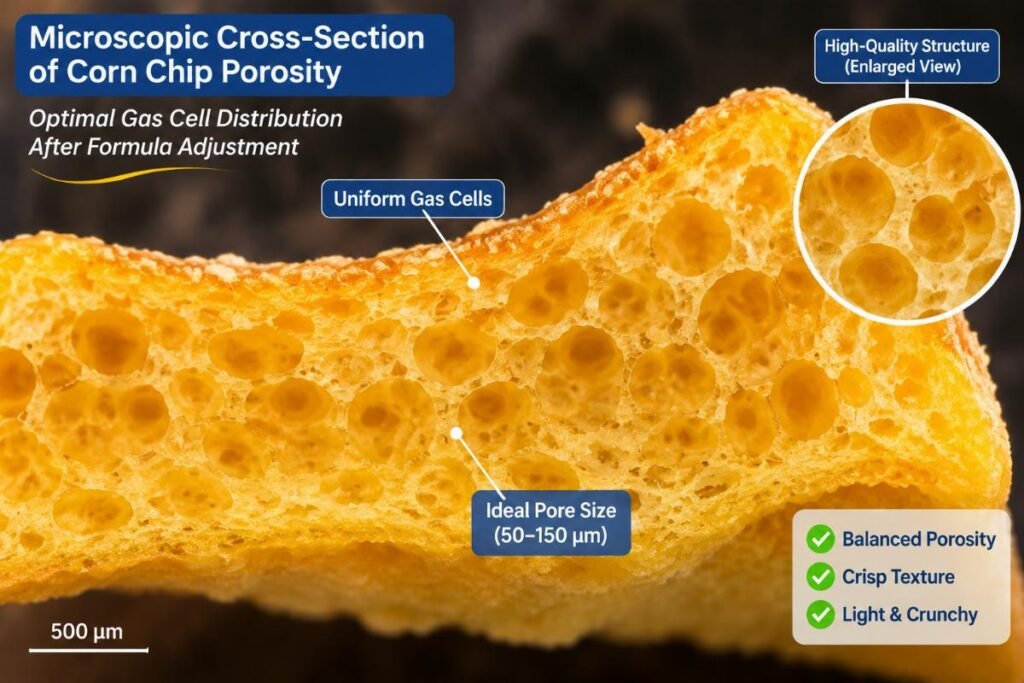
Most operators blame the fryer temperature when their corn chips shatter, but the real culprit is uncontrolled moisture release during the drying phase.
Producing perfect fried corn chips requires precise moisture control during drying and a complete Fried Extruded Corn Chips Production Line to prevent stress-induced shattering in the fryer.
Years ago, while assembling twin-screw equipment in Jinan, I used to obsess over die hole diameters. Later, when evaluating the Latin American market, I visited a snack facility in Monterrey, Mexico. The owner was frustrated because their fried corn chips were turning into fragments. The oil temperature was perfectly stable, but after蹲ing by the line for hours, I realized the drying section was failing to reduce moisture uniformly. The moment the chips hit the hot oil, internal stress released violently, causing them to explode. Since then, I have learned that pushing a Fried Extruded Corn Chips Production Line means monitoring both the hardware and the formula工艺. Latin American buyers do not just need standalone machines; they need a cohesive system that guarantees structural integrity from the mixer to the seasoning drum.
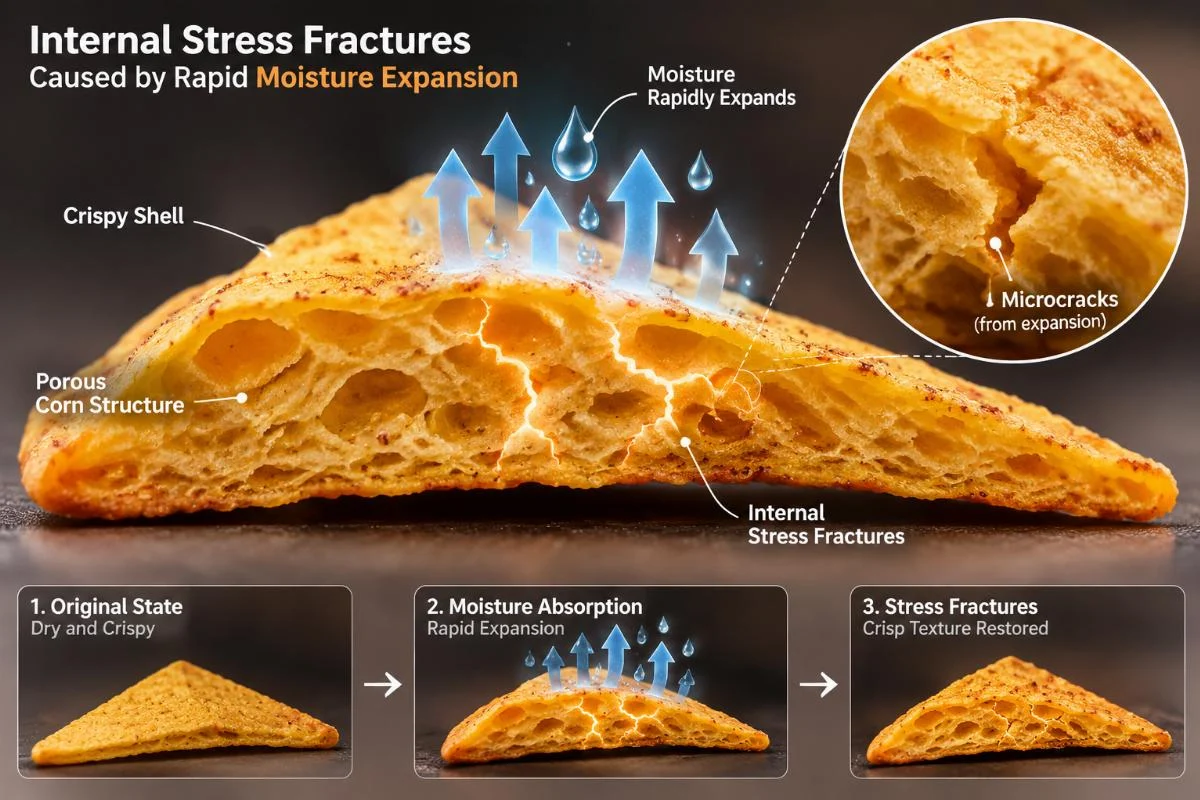
Understanding this moisture dynamic is the first step toward scaling your operation without sacrificing product quality.
Why Do Fried Corn Chips Shatter in the Fryer?
The shattering phenomenon is rarely a thermal shock issue; it is a structural failure driven by trapped steam and uneven moisture gradients.
Industry data consistently shows that the majority of breakage in extruded snacks originates before the product ever reaches the fryer. When a corn chip enters the hot oil, the surface moisture vaporizes instantly. If the core of the chip still holds excessive water, the rapid expansion creates immense internal pressure. Without a properly calibrated drying curve, this pressure exceeds the tensile strength of the corn matrix, resulting in micro-fractures that propagate into complete shattering.
During my time troubleshooting that Mexican facility, we adjusted the multi-zone drying temperatures to create a gentler gradient. Instead of blasting the chips with high heat immediately, we established a gentle initial warming zone followed by a controlled evaporation phase. This allowed the moisture to migrate from the core to the surface gradually. The result was a dramatic drop in breakage rates. The lesson here is clear: a standalone extruder cannot fix a drying problem. You need a fully integrated Fried Extruded Corn Chips Production Line where the dryer and fryer communicate through precise thermal management.

Mastering the drying curve transforms a fragile pellet into a robust chip ready for the fryer.
What Makes a Turnkey Line Essential for Latin American Makers?
A fragmented equipment setup guarantees inconsistent texture, whereas an integrated system ensures uniform oil absorption and structural stability.
Many startups in the region attempt to piece together a Latin American snack food machinery setup by buying a standalone extruder from one vendor and a dryer from another. This approach inevitably leads to bottlenecks and quality inconsistencies. The true value of a turnkey corn chip manufacturing plant lies in the seamless integration of the entire thermal and mechanical process. When the extrusion, drying, cooling, and flavoring stages are engineered as a single ecosystem, the material flow remains uninterrupted, and the physical properties of the chip are preserved.
I recall working with a growing manufacturer in Colombia who wanted to expand their capacity. They initially bought a high-capacity extruder but kept their old, undersized dryer. The chips were exiting the fryer with a soggy center and an overly dark exterior. By upgrading to a comprehensive Fried Extruded Corn Chips Production Line, we synchronized the conveyor speeds and airflow volumes across the drying and cooling tunnels. The oil absorption rate stabilized, and the seasoning coating achieved uniform coverage.
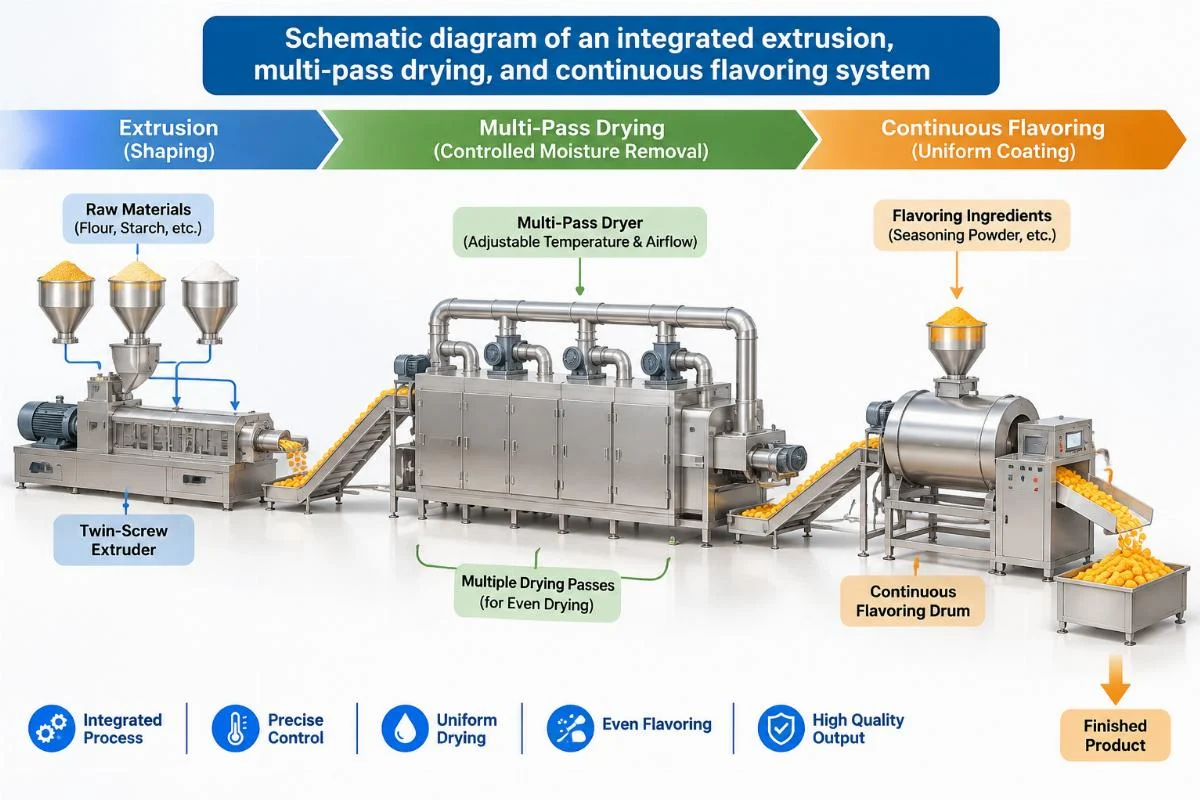
Securing a unified production environment is the only way to guarantee batch-to-batch consistency in a competitive market.
How to Select the Right Twin-Screw Extruder Capacity?
Capacity selection must align with your specific corn flour formulation and target scale, prioritizing shear control over sheer throughput.
Choosing the right twin-screw extruder for corn chips is not merely about matching a ton-per-hour metric. It is about understanding how the screw configuration interacts with your raw material. Nixtamalized corn flour behaves differently than plain corn meal. The shear rate and residence time inside the barrel dictate the degree of gelatinization, which directly impacts the final chip’s expansion and structural strength.
When advising a startup in Peru, they initially wanted the largest model available to future-proof their investment. However, their specific masa flour required a gentler shear profile to prevent excessive degradation. We selected a mid-range capacity model with a customized screw configuration that provided adequate mixing without generating destructive friction heat. This tailored approach within their Fried Extruded Corn Chips Production Line ensured the pellets had the perfect density for frying. Over-specifying capacity often leads to under-filled barrels, causing unstable pressure and inconsistent pellet shapes.

Matching the mechanical action to your raw material is far more critical than simply maximizing output volume.
Which Formula Adjustments Improve Chip Integrity?
Raw material particle size and precise moisture conditioning are the foundational elements that dictate the structural strength of the final product.
Even the most advanced machinery cannot compensate for a poorly conditioned formula. The particle size distribution of your corn flour determines how uniformly the dough hydrates and gelatinizes during extrusion. If the grind is too coarse, you get weak points in the matrix; if it is too fine, the dough becomes overly dense and fails to expand properly. Furthermore, the moisture conditioning step before extrusion is critical. Allowing the masa to rest and hydrate evenly ensures that the starch granules swell uniformly.
In a recent project for a new flavor profile launch in Brazil, the client struggled with chips that absorbed too much oil and became greasy. The issue was traced back to the dough’s initial moisture content and the resting time. By adjusting the moisture conditioning parameters and refining the milling process, we altered the internal porosity of the chip. This simple formula adjustment, supported by the precise dosing systems in their Fried Extruded Corn Chips Production Line, significantly reduced the oil absorption rate while maintaining a crisp bite.

Perfecting the formula at the mixing stage lays the groundwork for a flawless frying and seasoning process.
Conclusion
Structural integrity in fried corn chips is won in the dryer and the mixer, not just the fryer. Controlling moisture gradients and aligning your formula with the right mechanical shear are the true drivers of product quality. A fully integrated system ensures that every chip survives the thermal shock of frying, delivering the crisp texture and consistent flavor that Latin American consumers demand.
Equipment Mentioned in This Article
 3D papad machine
2D 3D Snack Pellet Production Line Manufacturer
2D 3D Snack Pellet Production Line for Diverse Shapes from Starches — twin-screw extrusion handles wheat, corn, and cassava. The… View Machine Details frying chips machine
Industrial Deep Fryer Machine Manufacturer Banana Potato Chips French Fries
Industrial Deep Fryer Machine for banana and potato chips features automatic basket lifting and oil filtration. The electric heating system… View Machine Details frying chips machine
100-2000L Tank Deep Fryer Commercial Chips Frying Machine
100-2000L Tank Deep Fryer for Snack Pellets and Chips — handles continuous deep frying and de-oiling for potato, cassava, and… View Machine Details frying chips machine
Electric Batch Frying Machine for French Fries Fast Food Chicken Wing
Industrial Batch Fryer for Fried Snacks and French Fries — features electric or gas heating with automatic basket lifting for… View Machine DetailsRelated Applications

Engineering Perspective
An In-House R&D Team Behind Every Line
Jinan MT Machinery develops its process technology in-house. The team concentrates on the four areas that decide pellet shape, expansion and line stability.
- Expansion technology
- Twin-screw extrusion
- Die design
- PLC/MCC automation
Related Articles
 Nov 15, 2026 · Applications & Industries
Puffed Corn Snacks & Pellet Chips Line Manufacturer Meiteng
Combining puffed corn snacks and pellet chips production line maximizes equipment utilization and reduces initial capital expenditure for startup manufacturers. Real yield depends on… Read This Article Nov 14, 2026 · Applications & Industries
High-Protein Snack Pellets Extruder Line: Pea & Soy Protein Manufacturer
Producing High-Protein Snack Pellets via Pea and Soy Protein Extrusion often fails due to inadequate shear force and mismatched thermal profiles causing protein denaturation.… Read This Article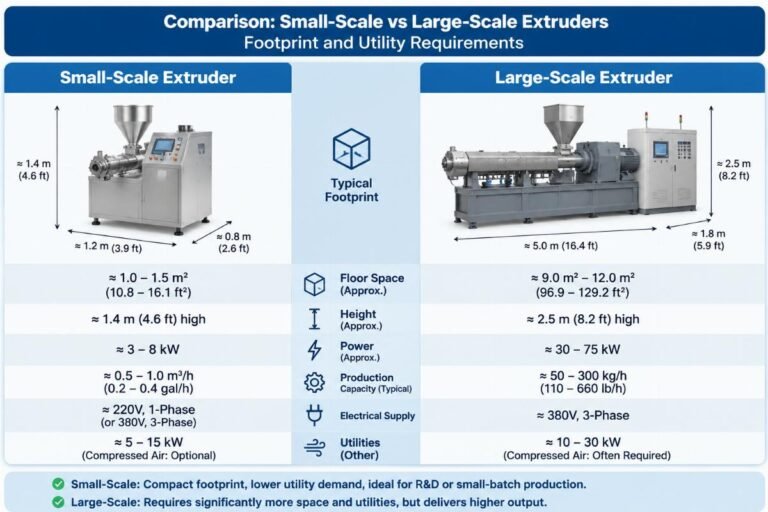 Nov 14, 2026 · Applications & Industries
Kenya Pellet Snack Extrusion Line Manufacturer DS70 for Sale
Setting up a pellet snack production line Kenya requires matching DS70 twin-screw extruder capacity to your startup scale and strictly pre-clearing HS codes for… Read This ArticleFree Process Check
Send Your Recipe for a Process Check
Jinan MT Machinery engineers review your recipe and return a free process plan within 24 hours. Tell us the product, output, raw material, local voltage and heat source.
Send Your Recipe on WhatsApp