
High-Protein Snack Pellets Extruder Line: Pea & Soy Protein Manufacturer
- By Jinan MT Machinery

Most manufacturers blame the raw material when high-protein extrusion fails, but the real culprit is almost always inadequate shear force and mismatched thermal profiles.
Producing high-quality High-Protein Snack Pellets from pea and soy blends requires precise control of twin-screw extrusion shear force and segmented temperature profiling to prevent protein denaturation and ensure the desired fibrous texture, rather than merely relying on high-protein formulations.
Years ago, when I was sourcing plant-based ingredients, I fell into a massive trap. I purchased a pea protein puffing line from a supplier who confidently guaranteed the output capacity. However, the moment we powered it on, the screw shear force was completely insufficient. The proteins denatured prematurely, and the extruded pellets turned out rock-hard with absolutely no fibrous pull. We ended up scrapping dozens of tons of raw material. That mid-six-figure loss pushed me back to Jinan to manufacture extrusion equipment myself. I quickly realized that buyers obsess over the base machine price while entirely ignoring the length-to-diameter ratio of the twin-screw and the thermal control logic. When processing High-Protein Snack Pellets, the gelatinization temperatures of pea and soy proteins differ significantly. If the screw element arrangement is off by even a fraction, the discharge quality changes drastically. Purchasing this equipment is fundamentally about acquiring the process engineering, not just the steel.
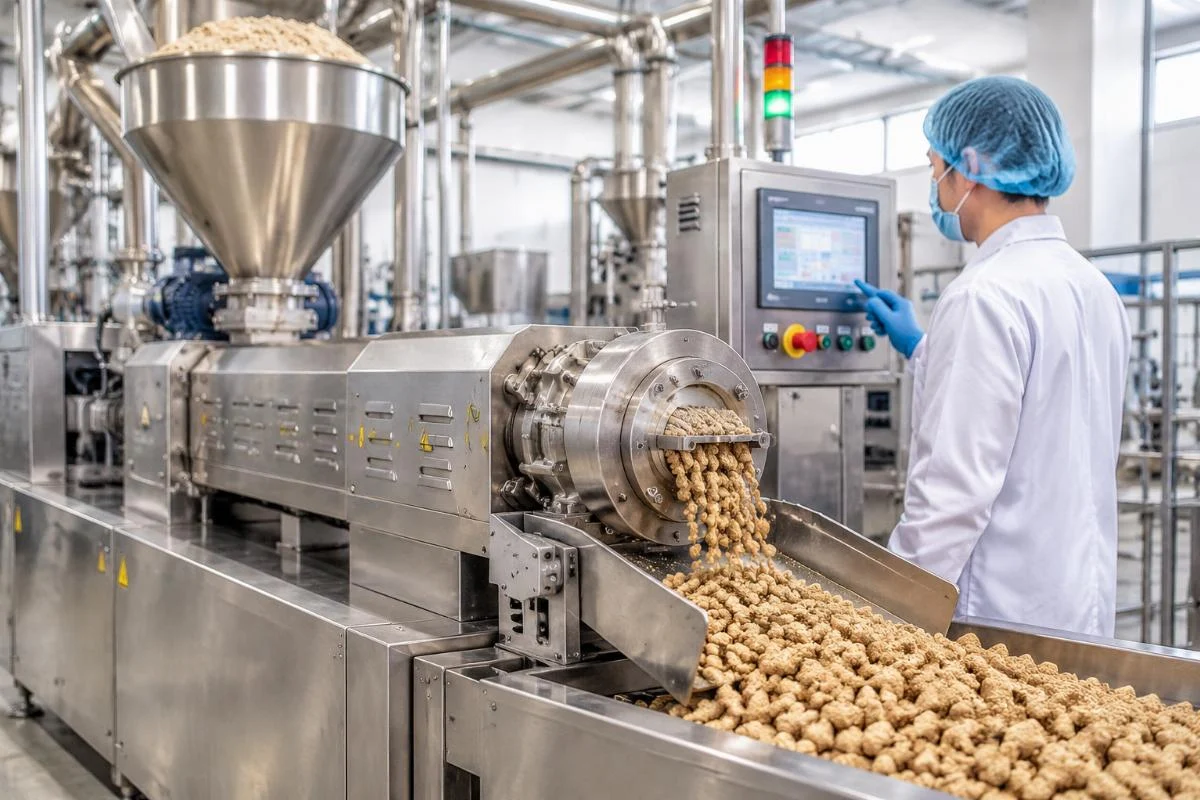
Transitioning from raw material failures to process mastery requires a deep dive into the mechanical and thermal dynamics inside the barrel.
Why Do Pea and Soy Proteins Fail in Traditional Extrusion?
The primary reason plant-based blends fail to achieve the right texture is the mismatch between the mechanical shear force applied and the thermal gelatinization thresholds of the specific proteins involved.
When formulating High-Protein Snack Pellets, many producers assume that simply increasing the protein content will yield a better product. This is a fundamental misunderstanding of food extrusion physics. Pea and soy proteins possess distinct denaturation and gelatinization temperatures. If a standard single-screw or poorly configured twin-screw machine is used, the shear heat generated cannot be evenly distributed. The soy protein might overcook and burn while the pea protein remains under-gelatinized, resulting in a heterogeneous melt.
Furthermore, inadequate shear force fails to unfold the protein molecules sufficiently. Without proper mechanical unfolding and subsequent re-alignment through the cooling die, the proteins cannot form the necessary cross-linked fibrous network. This leads to the dreaded hard, brittle pellet lacking the characteristic chew and pull. The majority of texture failures in plant-based snacks are rooted in this mechanical-thermal disconnect.
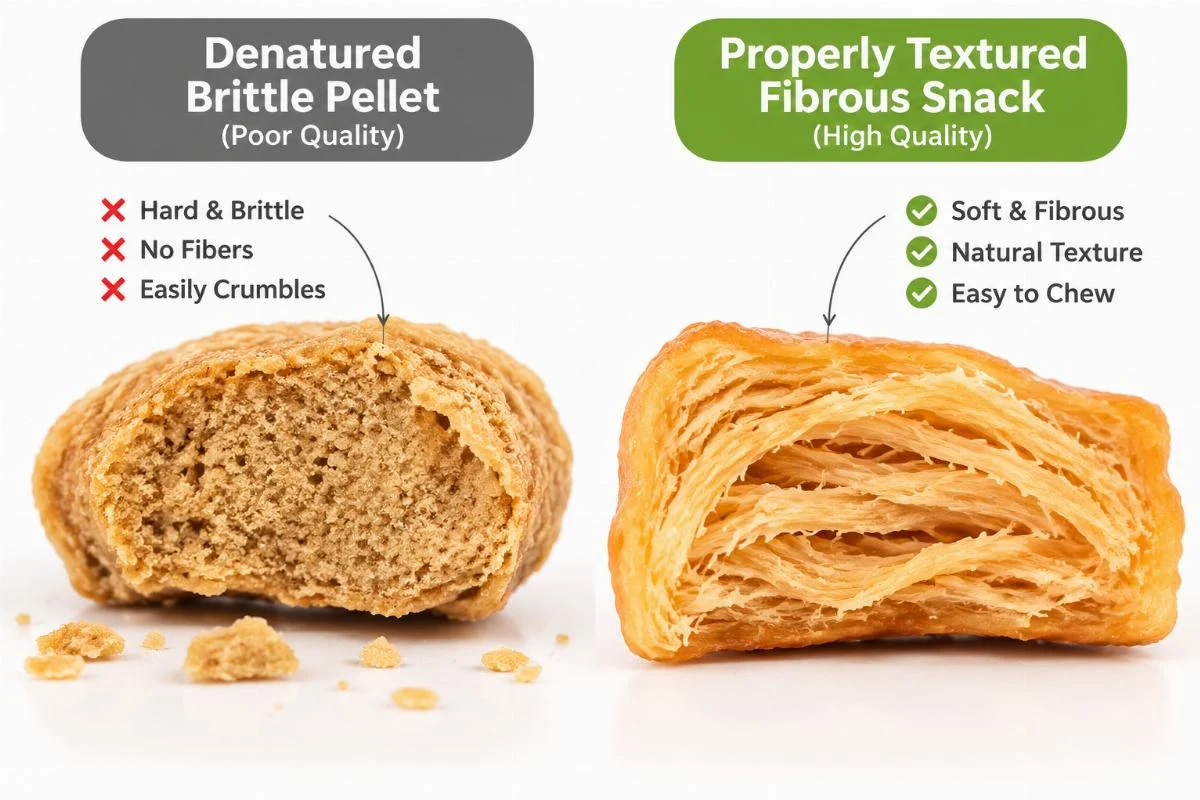
Understanding these failure mechanisms dictates how we must configure the machinery to handle these delicate biological polymers.
How to Match Twin-Screw Parameters for Plant-Based Snacks?
Achieving the perfect texture in High-Protein Snack Pellets demands a custom-tailored screw configuration and a segmented barrel temperature profile that respects the unique gelatinization curves of both pea and soy proteins.
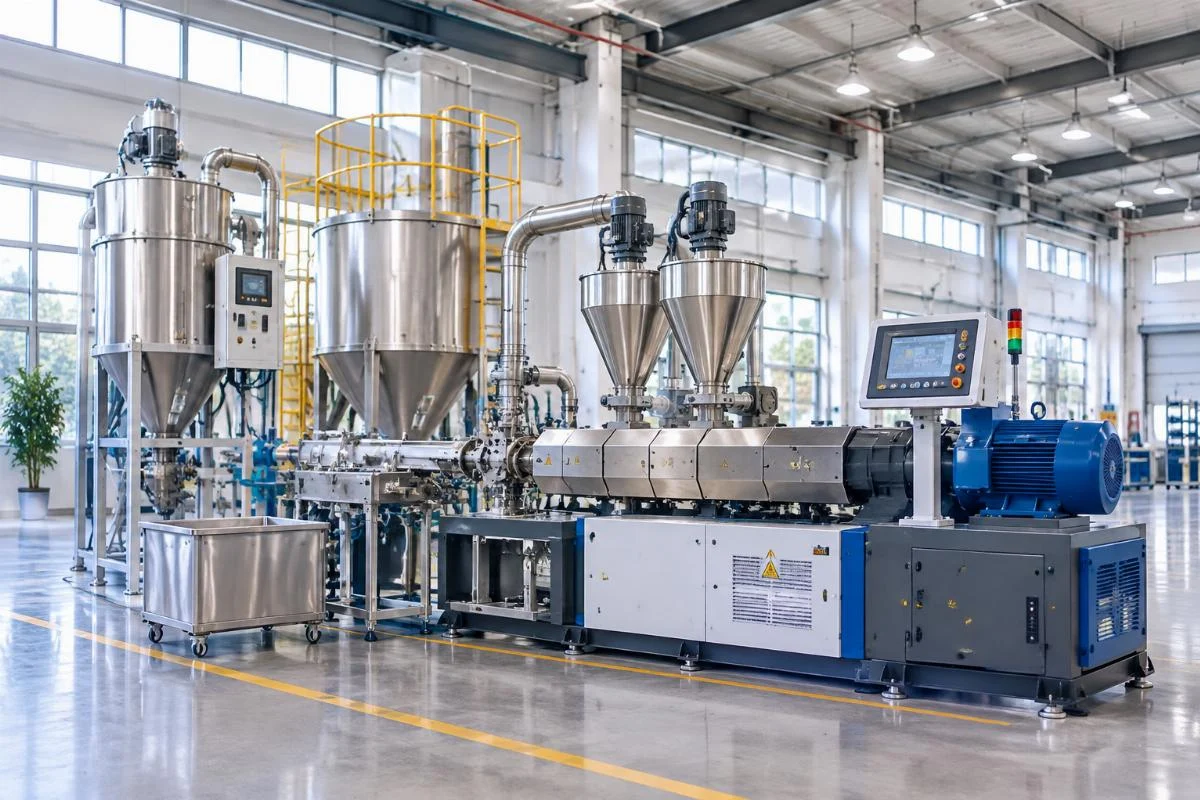
The heart of the extrusion process lies in the screw elements. To process High-Protein Snack Pellets effectively, the twin-screw extruder must utilize a combination of conveying elements and kneading blocks. The kneading blocks are responsible for generating the specific mechanical energy required to unfold the proteins, while the conveying elements manage the residence time and pressure buildup. If the kneading zones are too aggressive, the material will over-shear and degrade; if they are too mild, the proteins will not align properly.
Equally critical is the barrel temperature control. Because pea and soy proteins gelatinize at different thermal thresholds, a uniform temperature setting is a recipe for disaster. The barrel must be divided into multiple independent heating zones. The initial zones require lower temperatures to hydrate and gently mix the dry blend without premature cooking. As the material moves downstream, the temperature must be precisely ramped up to hit the peak gelatinization point for the dominant protein, followed by a controlled cooling zone just before the die to set the fibrous structure and prevent puffing explosion.
| Parameter Factor | Standard Single-Screw Setup | Optimized Twin-Screw Configuration |
|---|---|---|
| Shear Force Control | Uncontrolled / High Variance | Precisely Modulated via Kneading Blocks |
| Thermal Distribution | Uniform / Single Profile | Segmented / Multi-Zone Independent Control |
| Protein Alignment | Random / Weak Network | Directed / Strong Fibrous Network |
| Moisture Penetration | Surface Level Only | Homogeneous Deep Hydration |
This level of parameter matching is why off-the-shelf machines rarely succeed with complex High-Protein Snack Pellets formulations.
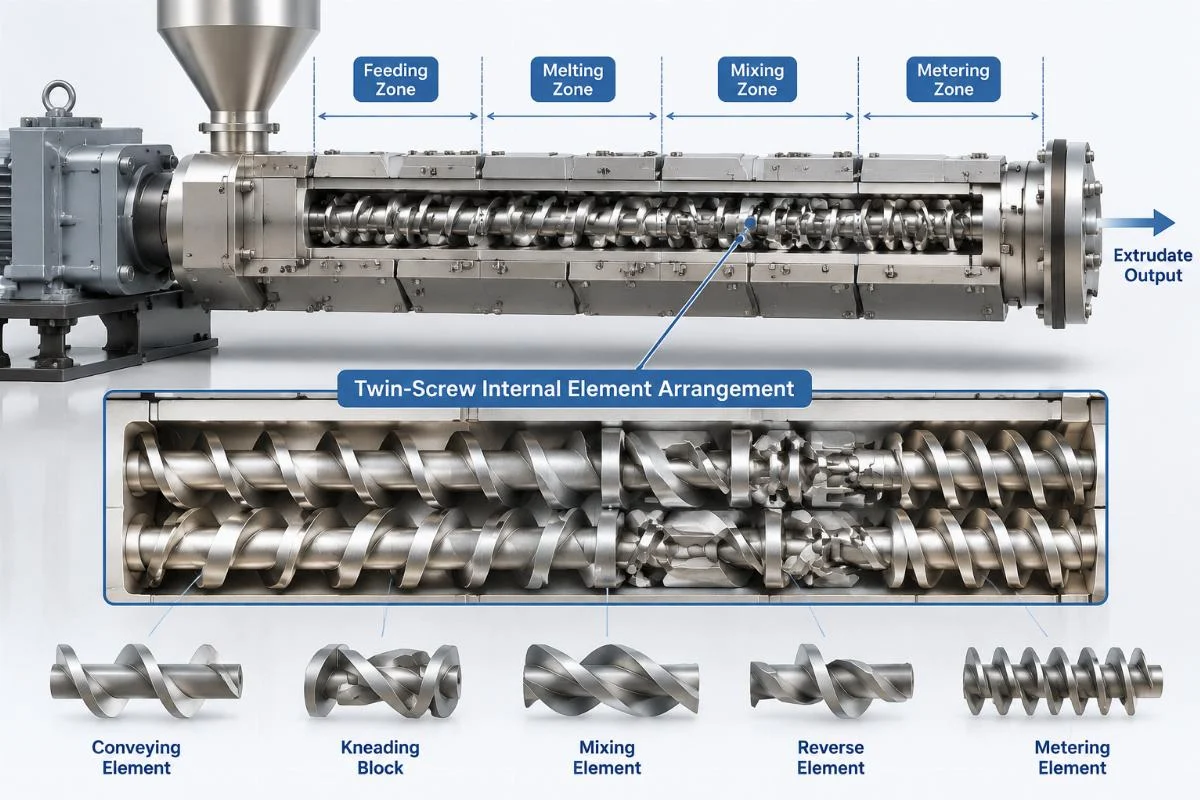
Once the mechanical and thermal parameters are locked in, the focus shifts to integrating these components into a cohesive production environment.
What Are the Key Steps to Build a Turnkey Snack Pellet Line?
A successful turnkey production line for High-Protein Snack Pellets extends far beyond the extruder itself, encompassing precise raw material preprocessing, exact drying curves, and uniform flavor coating systems.
Building a facility to produce High-Protein Snack Pellets requires a holistic approach. The extruder is merely the heart; the entire circulatory system must be perfectly calibrated. The process begins with raw material preprocessing. The pea and soy protein isolates, along with any starches or fibers, must be milled to a uniform particle size and blended to exact moisture specifications before entering the feed hopper. Inconsistent feed moisture leads to fluctuating pressure inside the barrel, ruining the texture of the High-Protein Snack Pellets.
Following extrusion, the continuous ribbon of textured protein must be cut and immediately transferred to a multi-pass dryer. The drying phase is notoriously tricky; if the temperature is too high, the exterior hardens while the interior remains moist, leading to mold or structural collapse. If too low, the pellets remain soggy. A precisely controlled drying tunnel ensures the moisture content drops to a safe storage level without compromising the fibrous matrix. Finally, the flavoring stage requires an even coating of oils and seasonings. A poorly designed coating drum will result in uneven flavor distribution, where some High-Protein Snack Pellets are overly salty while others are bland.
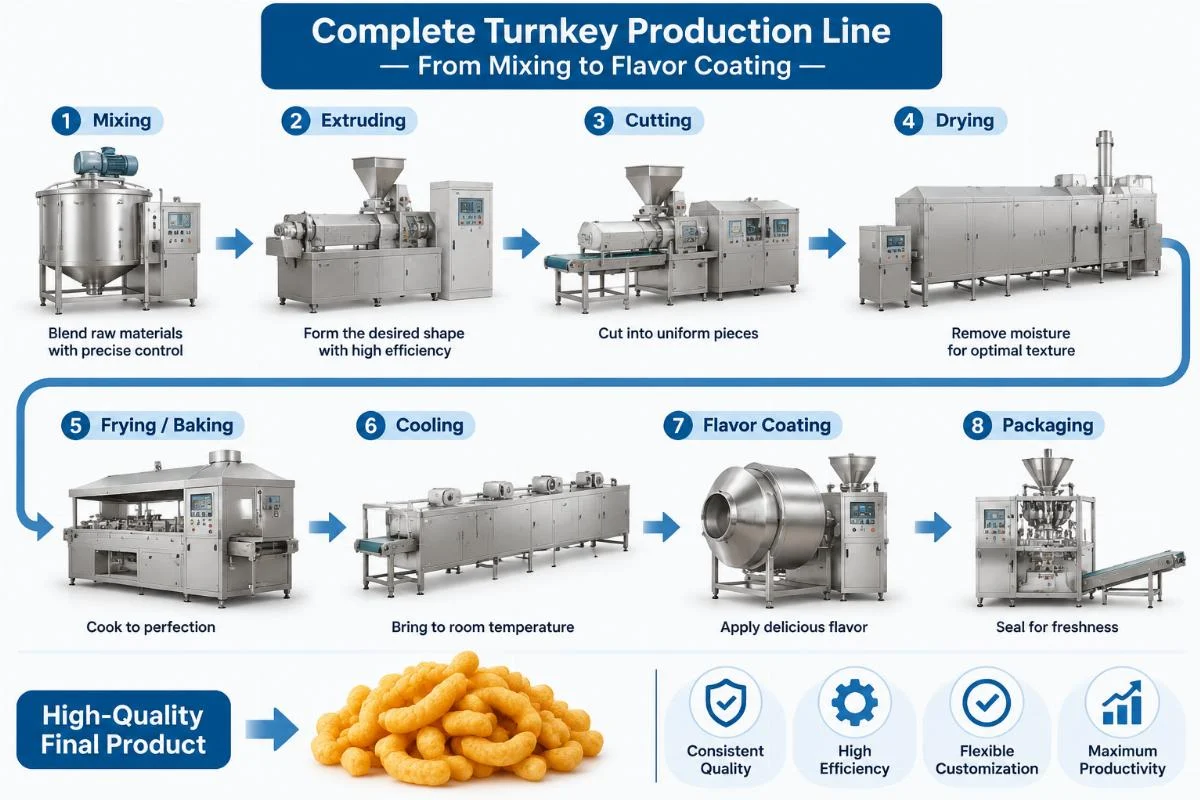
With a robust turnkey line in place, the final challenge is navigating the transition from initial trials to full-scale commercial viability.
How to Scale Up from Startup to Commercial Production?
Scaling the production of High-Protein Snack Pellets from a startup concept to commercial volumes requires equipment that supports iterative recipe微调 and seamless capacity upgrades without requiring a complete line replacement.
For startup brands entering the plant-based snack market, the initial capital expenditure is a massive hurdle. Many entrepreneurs make the mistake of purchasing the smallest, cheapest extruder available, only to find that it cannot replicate the texture achieved in lab trials when scaled up. The key to successful scaling lies in selecting a machinery partner who understands the rheology of High-Protein Snack Pellets and offers modular equipment designs.
When moving from pilot batches to continuous commercial runs, the residence time and shear history inside the extruder change dramatically. A scalable production line must allow for the adjustment of screw speed, feed rate, and barrel temperature profiles to compensate for these shifts. Furthermore, the auxiliary systems—such as the dryer and coating drum—must be sized with sufficient overhead to handle future capacity increases. Partnering with a manufacturer that provides comprehensive formula development support and on-site operator training ensures that the transition from the first test batch to full commercial output of High-Protein Snack Pellets is smooth and economically viable.
Conclusion
Mastering the production of High-Protein Snack Pellets is an exercise in precise mechanical shear and thermal management, not just ingredient selection. By prioritizing customized twin-screw configurations and comprehensive turnkey line integration over mere equipment cost, manufacturers can consistently achieve the fibrous textures and scalable efficiencies demanded by the modern plant-based market.
Equipment Mentioned in This Article
 3D papad machine
3D Snack Pellet Production Line Fried Extruder Machine
3D Snack Pellet Production Line for Starch-Based Snacks — twin-screw extrusion processes potato, cassava, and corn starch into diverse shapes.… View Machine Details 3D papad machine
Fully Automatic 3D Snack Pellets Extruder Making Machine for Chips
Chips 3D Snack Pellet Extruder Line for 2D/3D Shapes — co-rotating twin-screw extrusion processes potato and cassava starches into papad,… View Machine Details 3D papad machine
Automatic 3D Pellet Extruded Corn Puffed Snack Food Production Line
3D Pellet Extruded Snack Food Production Line for Starch Pellets — processes potato, corn, and cassava starch into papad and… View Machine Details 3D papad machine
2D 3D Snack Pellet Production Line Manufacturer
2D 3D Snack Pellet Production Line for Diverse Shapes from Starches — twin-screw extrusion handles wheat, corn, and cassava. The… View Machine DetailsRelated Applications

Engineering Perspective
An In-House R&D Team Behind Every Line
Jinan MT Machinery develops its process technology in-house. The team concentrates on the four areas that decide pellet shape, expansion and line stability.
- Expansion technology
- Twin-screw extrusion
- Die design
- PLC/MCC automation
Related Articles
 Nov 15, 2026 · Applications & Industries
Puffed Corn Snacks & Pellet Chips Line Manufacturer Meiteng
Combining puffed corn snacks and pellet chips production line maximizes equipment utilization and reduces initial capital expenditure for startup manufacturers. Real yield depends on… Read This Article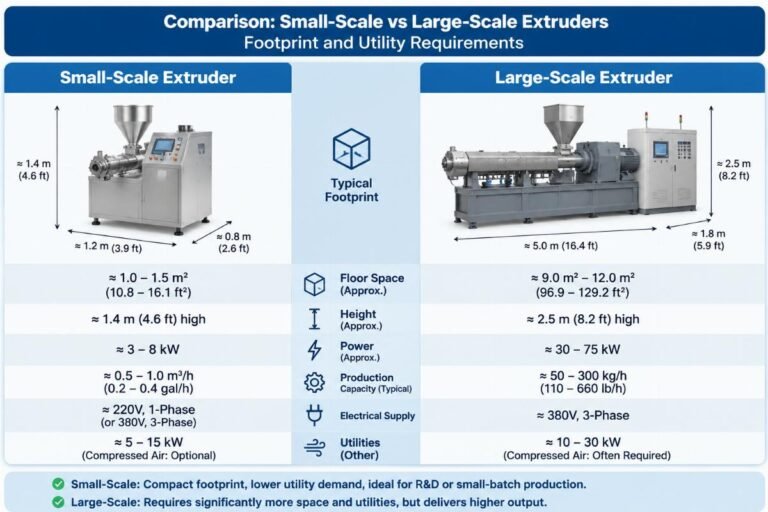 Nov 14, 2026 · Applications & Industries
Kenya Pellet Snack Extrusion Line Manufacturer DS70 for Sale
Setting up a pellet snack production line Kenya requires matching DS70 twin-screw extruder capacity to your startup scale and strictly pre-clearing HS codes for… Read This Article Nov 14, 2026 · Applications & Industries
Ready-to-Fry Pellets Extruder Line Manufacturer for Restaurants & Snack Kiosks
Hard texture and excessive oil absorption in commercial snacks stem from mismatched extrusion parameters, not frying skills. A properly configured Ready-to-Fry Pellets Production Line… Read This ArticleFree Process Check
Send Your Recipe for a Process Check
Jinan MT Machinery engineers review your recipe and return a free process plan within 24 hours. Tell us the product, output, raw material, local voltage and heat source.
Send Your Recipe on WhatsApp