
Frying Chips Line Manufacturer for Nigeria: FOB Price & Clearance
- By Jinan MT Machinery
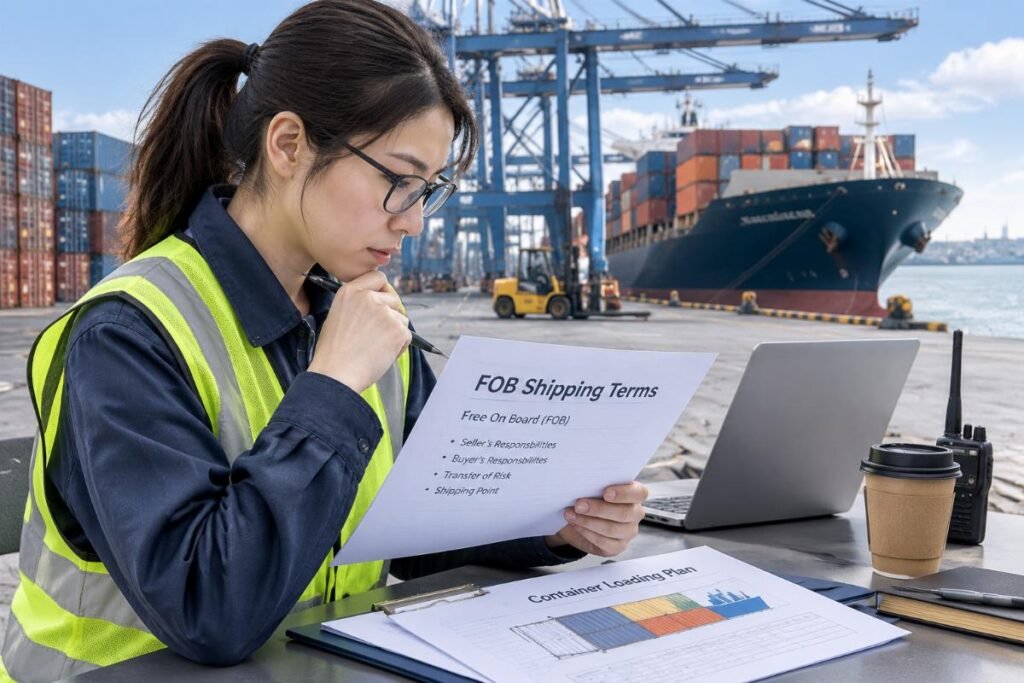
Most buyers assume CIF protects them from port risks, but it actually surrenders control of local clearance to a seller who knows nothing about Apapa’s hidden fees.
Successfully importing a frying chips line to Nigeria requires strict compliance with SONCAP and CTN certifications, combined with precise FOB terms to prevent massive demurrage. You must secure the Nigeria SONCAP certificate for food machinery before the vessel departs, and manage Apapa port clearance for extrusion line operations through a buyer-nominated clearing agent who understands local surcharges.
Years ago, when I was running shipping documents at Yantian Port, I thought I understood export logistics. But a couple of years later, after transitioning to sales, I arranged a shipment for a snack factory in Lagos. We chose FOB terms because I trusted our freight forwarder and didn’t bother supervising the container loading on-site. When the equipment arrived at Apapa, the shipment was paralyzed. We had completely missed the SONCAP certificate and the CTN number. The machinery sat under the blazing sun for weeks, and the accumulated demurrage completely wiped out the profit margin. The buyer simply refused to pay the final balance. Since that mid-six-figure loss, I obsess over every exemption clause and document requirement in our FOB quotations.
If you are navigating the complexities of importing a frying chips line to Nigeria, understanding the intersection of customs duties, mandatory certifications, and shipping terms is the only way to protect your investment.
What Are the Import Duties for a Frying Chips Line in Nigeria?
Import duties for a frying chips line depend entirely on the exact HS code classification for twin-screw extruders and industrial fryers, and you must verify these rates with a licensed local agent before shipping.
When calculating the FOB Lagos shipping duties for snack production line equipment, buyers often focus solely on the base customs duty. However, the total landed cost includes the base duty, the ECOWAS Common External Tariff levy, and the Value Added Tax applied at the port. The Nigerian Customs Service categorizes food processing machinery under specific industrial equipment codes, which generally attract a standard duty bracket, but the final assessment relies on the declared CIF value, not just the FOB price.
A West African snack startup once imported a complete puffing and frying setup. They assumed the duty would be a flat percentage based on the machine’s weight. Instead, customs assessed the value based on the comprehensive line integration, including the flavor-coating and drying systems. This misalignment led to a massive unexpected tax bill upon arrival.
To avoid this, you must ensure the commercial invoice clearly separates the main extrusion equipment from auxiliary parts, though customs will still assess the total line value.
Risk Checklist for Duty Assessment:
- HS Code Misclassification: Using a generic “machine” code instead of a specific “food extrusion” code triggers higher penalty rates.
- Value Declaration Discrepancies: Declaring a value significantly lower than the recognized market price for a twin-screw extruder invites immediate customs audits.
- Missing Form M: Failing to process the Form M via the Central Bank of Nigeria before shipment prevents the importer from accessing official foreign exchange for duty payments.

Mastering the FOB Lagos shipping duties for snack production line requires transparency in your invoice breakdown and proactive engagement with a licensed customs broker.
Why Are SONCAP and CTN Mandatory for Food Machinery?
Without a valid Nigeria SONCAP certificate for food machinery and a CTN number, Nigerian customs will not release your equipment, regardless of whether all financial obligations have been met.
Many international suppliers mistakenly believe that heavy industrial machinery is exempt from consumer safety certifications. This is a fatal misconception. The Standards Organization of Nigeria mandates that food processing lines, including twin-screw extruders and fryers, strictly require SONCAP certification to ensure they meet electrical safety and food-grade material standards.
The process is a two-step trap for the unprepared. First, the exporter must obtain a Product Certificate based on valid test reports from an ISO-accredited laboratory. Second, for every single shipment, a SONCAP Certificate must be issued using the Product Certificate and the Form M. Additionally, the Cargo Tracking Note is a mandatory maritime security document that must be validated before the vessel arrives.
A snack manufacturer in East Africa learned this the hard way. They shipped a twin-screw extrusion line without arranging the pre-shipment inspection required for the SONCAP Certificate. The equipment was held at the port for weeks, incurring storage fees that far exceeded the cost of the certification itself.
Compliance Timeline & Requirements:
- Pre-Shipment Inspection: Must be coordinated in the exporting country before the container is sealed.
- Document Matching: The Commercial Invoice, Packing List, Bill of Lading, Form M, and PAAR must match perfectly in weight, value, and description.
- CTN Validation: Must be applied for immediately after the Bill of Lading is issued; delays here halt the entire Apapa port clearance for extrusion line operations.
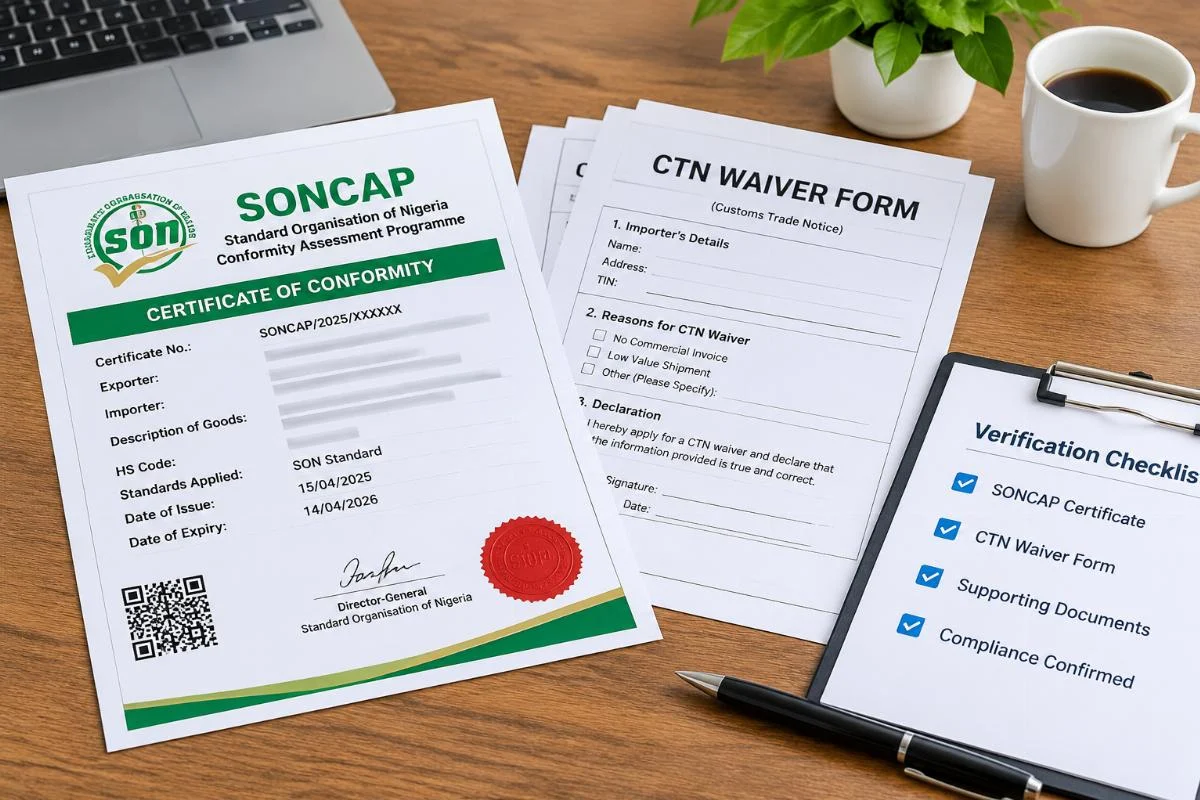
Securing the Nigeria SONCAP certificate for food machinery is not an optional administrative task; it is the absolute gatekeeper for your machinery entering the country.
How Should You Structure FOB Terms to Avoid Apapa Demurrage?
Structuring FOB terms correctly means clearly separating seller and buyer responsibilities, giving the buyer control over the clearing agent who actually navigates Apapa’s hidden local charges.
The conventional wisdom in international trade suggests that CIF is safer because the seller handles the freight. However, when importing a frying chips line to Nigeria, CIF can be a financial trap. Under CIF, the seller’s freight forwarder often uses shipping lines that charge exorbitant local destination terminal handling charges, which the buyer is forced to pay to release the cargo.
By choosing FOB, the buyer nominates a local clearing agent and freight forwarder who understand the specific surcharges at Apapa and Tincan ports. This agent can negotiate better local fees and, more importantly, ensure that the shipping line selected does not have a history of holding cargo hostage for hidden charges.
When we consolidate container loads for a complete snack food production line, we provide all necessary export documentation, including CE and ISO certificates, specifically formatted to support the buyer’s SONCAP applications. This seamless handover under FOB terms ensures that the buyer’s clearing agent has exactly what they need to initiate the Apapa port clearance for extrusion line equipment the moment the vessel docks.
FOB Structural Advantages:
- Agent Control: The buyer selects an agent experienced in Lagos port quirks, avoiding surprise local fees.
- Documentation Flow: The seller provides the raw export documents; the buyer’s agent translates and formats them for Nigerian customs.
- Freight Cost Transparency: The ocean freight cost is isolated, preventing it from being inflated within a CIF package to cover unknown destination risks.
Controlling the freight forwarder through FOB terms is the most effective strategy to shield your capital from unpredictable destination port surcharges.
What Documents Are Required for Smooth Customs Clearance?
Smooth customs clearance requires a flawless alignment of the Commercial Invoice, Packing List, Bill of Lading, Form M, and PAAR, where even a minor weight discrepancy can halt the release of your machinery.
The Nigerian customs system is highly digitized but unforgiving of inconsistencies. When you are importing a frying chips line to Nigeria, the documents must tell a single, unified story. The Form M is the import declaration approved by the Central Bank, and the PAAR (Pre-Arrival Assessment Report) is generated by customs based on the submitted documents. If the gross weight on the Packing List differs by even a fraction from the Bill of Lading, the PAAR will be rejected, and the Apapa port clearance for extrusion line equipment will be delayed indefinitely.
During a recent project involving a full turnkey line design, from raw material intake to packaging, we ensured that every component, from the twin-screw extruder to the multi-layer drying oven, was itemized with exact dimensions and weights. This level of detail allowed the buyer’s clearing agent to secure the PAAR without a single physical inspection delay.
Critical Document Checklist:
- Original Bill of Lading: Must show the correct notify party and consignee details matching the Form M.
- Authenticated Commercial Invoice: Must clearly state the FOB value, freight costs (if applicable for customs valuation), and insurance.
- Detailed Packing List: Must include the exact net and gross weights, as well as the container number and seal number.
- Certificate of Origin: Required to claim any applicable ECOWAS trade agreement benefits, though standard machinery often falls under general tariffs.
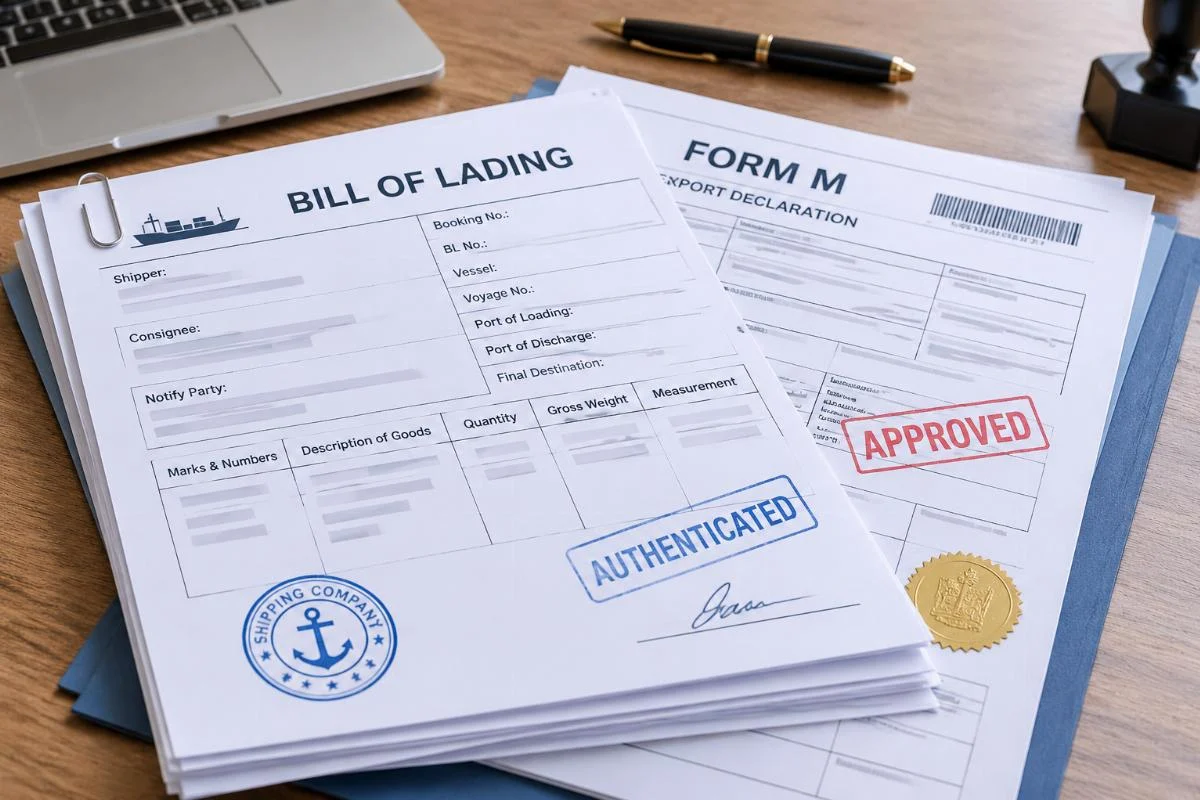
Precision in your paperwork is just as critical as the engineering precision of the food machinery you are importing.
Conclusion
Navigating Nigerian import regulations demands rigorous document preparation and strategic shipping terms. Importing a frying chips line to Nigeria is a highly rewarding venture, but it leaves zero room for administrative errors. By prioritizing the Nigeria SONCAP certificate for food machinery, leveraging FOB terms to control local clearance, and ensuring absolute accuracy in your shipping documents, you bypass the demurrage traps that catch unprepared buyers. Master the paperwork, and the machinery will run smoothly.
Equipment Mentioned in This Article
 frying chips machine
100-2000L Tank Deep Fryer Commercial Chips Frying Machine
100-2000L Tank Deep Fryer for Snack Pellets and Chips — handles continuous deep frying and de-oiling for potato, cassava, and… View Machine Details frying chips machine
Continuous Frying Machine for Potato Chips and Snacks
Continuous Frying Machine for Potato Chips and Snacks — industrial deep fryer for continuous snack processing with precise temperature control… View Machine Details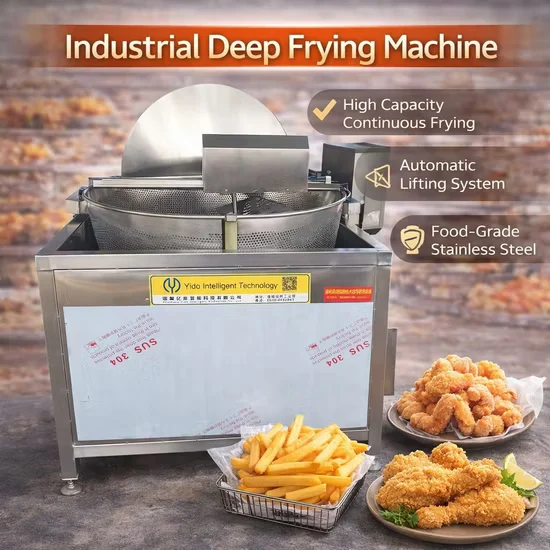 frying chips machine
Potato Chips Frying Machine Manufacturer Electric Gas Deep Fryer
Potato Chips Frying Machine for Uniform Heating and Oil Filtration — deep frying with automatic basket lifting ensures consistent product… View Machine Details frying chips machine
Potato Chips French Fries Batch Fryer Electric Gas Deep Frying Machine
Potato Chips and French Fries Batch Fryer for consistent deep frying of snacks and pellets. Built with food-grade SUS304 stainless… View Machine DetailsRelated Applications

Engineering Perspective
An In-House R&D Team Behind Every Line
Jinan MT Machinery develops its process technology in-house. The team concentrates on the four areas that decide pellet shape, expansion and line stability.
- Expansion technology
- Twin-screw extrusion
- Die design
- PLC/MCC automation
Related Articles
 Nov 10, 2026 · Procurement & Trade FAQs
Snack Pellet Line for UAE: Twin-Screw Extruder Manufacturer & Turnkey Service
Buying a snack pellet line UAE requires engineering systems that survive extreme heat and voltage fluctuations, not just finding the lowest price. You must… Read This Article Nov 10, 2026 · Procurement & Trade FAQs
Fast Replacement Pellet Dies from China Manufacturer Meiteng
Minimize extruder downtime by understanding that replacement pellet die delivery time relies on precise formula matching and custom compression ratios rather than just express… Read This Article Nov 10, 2026 · Procurement & Trade FAQs
Snack Pellet Line for Poland & EU: Meiteng Twin-Screw Extruder Manufacturer
Importing a snack pellet line into Poland and the EU requires navigating strict CE machinery directives, EORI customs registration, and adapting equipment to local… Read This ArticleFree Process Check
Send Your Recipe for a Process Check
Jinan MT Machinery engineers review your recipe and return a free process plan within 24 hours. Tell us the product, output, raw material, local voltage and heat source.
Send Your Recipe on WhatsApp