
Meiteng Continuous Pellet Fryer Manufacturer: Structure & Key Features
- By Jinan MT Machinery
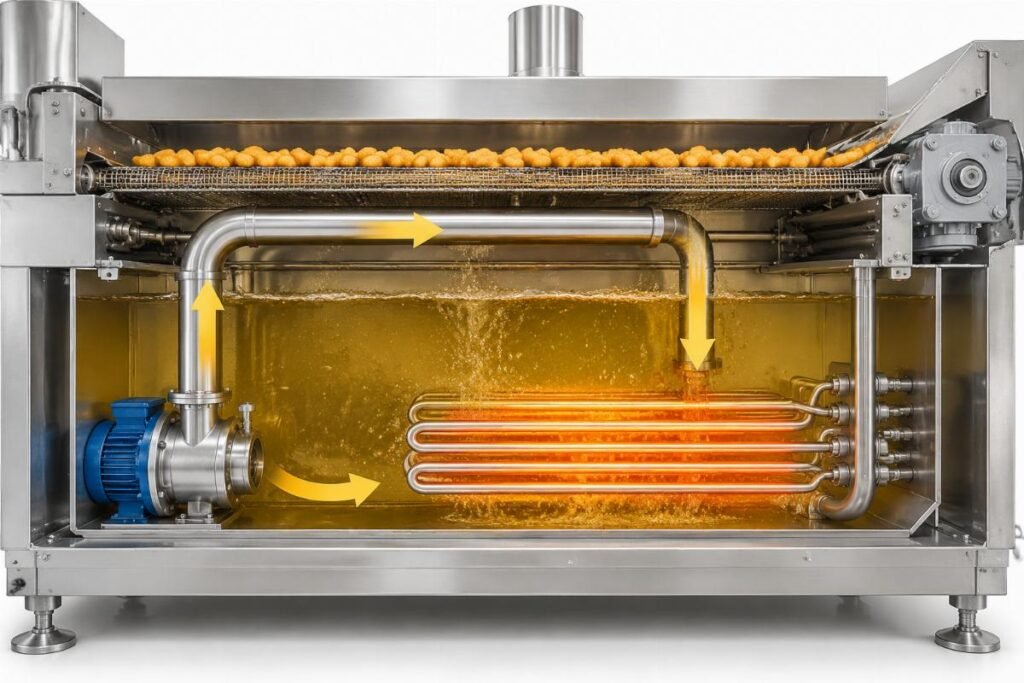
A massive heating capacity means nothing if the oil flow creates dead zones that burn your product.
The structural matching of oil circulation and temperature control in a continuous pellet fryer dictates product consistency; buyers must validate these features through operational testing rather than relying on paper specs.
I spent years on the assembly floor in Jinan before moving into international trade. Early in my career, I shipped a continuous frying line to a client in Saudi Arabia. I focused entirely on the throughput capacity and completely failed to explain how the thermal oil circulation pump structurally matched the temperature probe placement. When they turned it on, oil consumption skyrocketed, and the pet food kibble came out with patchy, uneven coloring. I eventually had to fly out there, tear down the piping, and redesign the internal flow paths. Now, when I evaluate a machine, I always watch the discharge state first, then trace the logic of the internal oil trough and heating tubes. The continuous pellet fryer structure details always reveal the truth behind the final product quality.

Understanding these mechanical realities is the first step toward preventing costly production failures.
Why Fryer Structure Dictates Your Final Product Quality?
Structural mismatches inside the frying vat cause hidden operational costs like severe oil degradation and inconsistent product coloring.
Over the past decade, the industrial food processing sector has seen a massive shift toward automated, high-volume continuous lines. However, industry data indicates that a significant portion of product recalls and quality complaints in extruded snacks and pet food originate from thermal inconsistencies during the frying stage. Many buyers assume that upgrading to a larger vat or a more powerful pump solves these issues. In reality, the continuous pellet fryer structure is a delicate ecosystem. If the physical layout of the heating elements does not align with the fluid dynamics of the oil flow, you get localized overheating. This accelerates oil polymerization, creating off-flavors that ruin entire batches of sensitive pet food formulations.
During a site visit to a Southeast Asian snack manufacturer, I observed their continuous line struggling with dark spots on corn puffs. The paper specs looked perfect, but the continuous pellet fryer structure featured a blind corner in the oil trough where flow stagnated. The oil in that zone was essentially cooking itself. We adjusted the baffle angles and repositioned the return lines, and the color uniformity improved immediately. The physical geometry of the vat dictates how heat transfers to the product.

A well-engineered continuous pellet fryer structure ensures that every pellet experiences the exact same thermal history, which is non-negotiable for brand consistency.
How to Validate the Oil Circulation System Design?
Buyers must verify the pump-to-tank volume ratio and flow path geometry to prevent dead zones and ensure uniform heat transfer.
The oil circulation system is the cardiovascular system of any continuous frying operation. A common misconception in the industry is that higher pump pressure automatically translates to better frying results. The real cause of uneven coloring and excessive oil absorption is usually poor flow distribution within the tank. When evaluating a continuous pellet fryer structure, you need to look beyond the pump’s horsepower and examine how the oil is introduced and extracted from the main vat.
I once worked with a pet food startup in Latin America that was expanding their treat line. They specified a high-capacity circulation pump, but the tank volume was relatively small. The high velocity created turbulent flow that actually pushed the lightweight pellets into the filtration dead zones, causing them to over-fry and break apart. We had to redesign the continuous pellet fryer structure to include a pre-mixing chamber that stabilized the flow before it entered the main frying zone.
To properly validate this system, request a flow dynamics simulation from the manufacturer. You need to see how the oil moves around the product belt. Are there areas where the velocity drops to near zero? Does the oil return path create vortexes that trap fines? A robust continuous pellet fryer structure will feature optimized baffle placements and strategically located suction points that keep the oil moving uniformly across the entire width of the mesh belt.
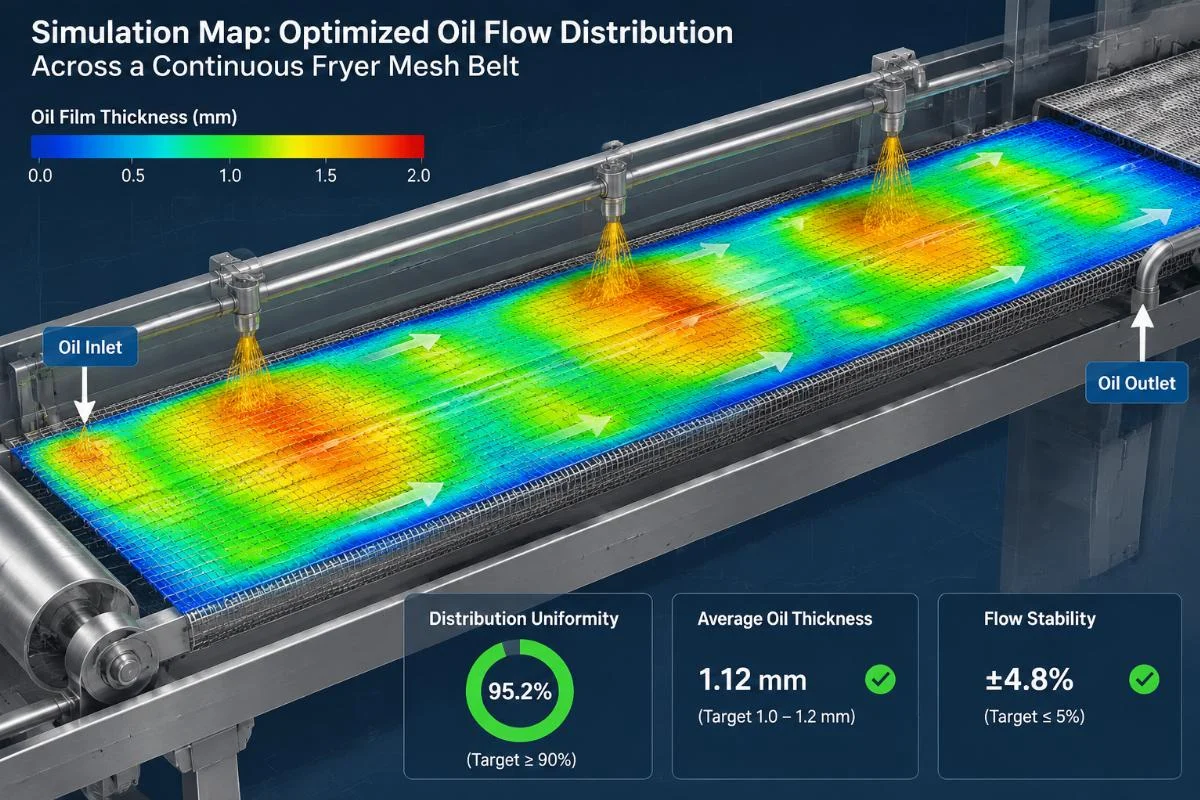
Proper flow validation ensures that the oil temperature remains stable regardless of the product load on the belt.
What Makes the Temperature Control Structure Reliable?
Strategic probe placement and intelligent heating tube layout guarantee uniform heat application without accelerating oil breakdown.
Temperature control in a continuous fryer is not just about having a digital display; it is about where the sensors live and how the heat is generated. Most operators think that packing more heating tubes into the vat means faster recovery times. The real issue is that poorly distributed heating tubes cause localized overheating, which instantly degrades the cooking oil.
When I was overseeing the commissioning of an aquaculture feed line in the Middle East, the client complained about uneven moisture reduction in their floating fish feed pellets. The continuous pellet fryer structure they initially received had the heating tubes clustered at the bottom center. The oil directly above the tubes was boiling, while the oil near the edges was significantly cooler. We restructured the heating zone to use a distributed layout with lower surface intensity tubes, and repositioned the temperature probes to measure the oil temperature exactly at the product discharge point rather than near the heat source.
A reliable continuous pellet fryer structure utilizes multiple independent heating zones with PID controllers that react to the actual thermal mass of the product entering the vat. The temperature probes must be shielded from direct radiant heat and positioned in the main flow stream. This ensures the control system reacts to the true thermal demand of the frying process, maintaining a tight temperature tolerance across the entire belt width.
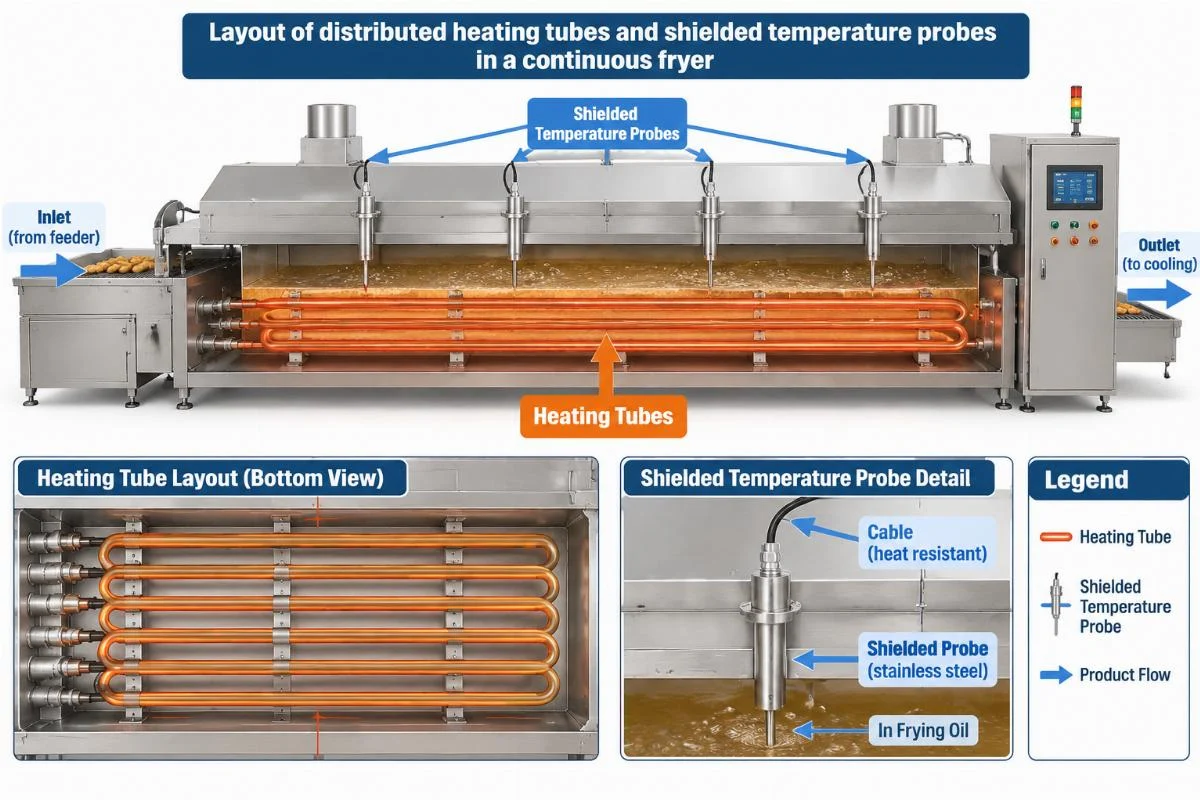
Accurate thermal mapping prevents hot spots and extends the usable life of your cooking oil significantly.
Which Structural Features Matter for Your Specific Application?
Pet food requires precise coloring and oil absorption control, while snack foods demand high-efficiency moisture removal and rapid heat recovery.
Not every continuous pellet fryer structure is built the same, because the physical properties of the products being fried vary drastically. A one-size-fits-all approach to vat design is a recipe for operational failure. When selecting equipment, the structural features must align with the specific rheology and moisture content of your recipe.
For pet food manufacturers, the primary goal is achieving a uniform, appealing color while controlling the final fat content. The continuous pellet fryer structure for this application needs a deeper oil bath and a slower mesh belt speed to allow for thorough heat penetration without surface burning. The oil filtration system must be exceptionally fine to remove microscopic organic particles that cause dark specks on the kibble surface. I recently helped a European contract manufacturer transition to a new pet food recipe. Their existing fryer structure was designed for light snacks, resulting in pale, unevenly colored kibble. By modifying the continuous pellet fryer structure to include a deeper immersion section and a high-efficiency continuous filtration loop, they achieved the rich, consistent brown color their brand required.
Conversely, snack food producers dealing with high-moisture dough pellets need a structure optimized for rapid vapor evacuation. The continuous pellet fryer structure here requires a larger vapor extraction hood and a more aggressive oil turnover rate to handle the sudden temperature drop when wet product enters the vat. The heating tubes must have a higher surface area to ensure rapid thermal recovery between product loads.

Matching the mechanical design to your specific product profile is the only way to achieve maximum efficiency and quality.
Conclusion
The physical geometry of your frying system dictates your product’s visual and textual perfection.
Validating the continuous pellet fryer structure through real-world flow and thermal testing prevents the hidden costs of oil waste and inconsistent coloring. By focusing on pump-to-tank matching, intelligent heating layouts, and application-specific vat designs, manufacturers can secure uniform product quality and extend their operational lifespan.
Equipment Mentioned in This Article
 frying chips machine
Industrial Deep Fryer Machine Manufacturer Banana Potato Chips French Fries
Industrial Deep Fryer Machine for banana and potato chips features automatic basket lifting and oil filtration. The electric heating system… View Machine Details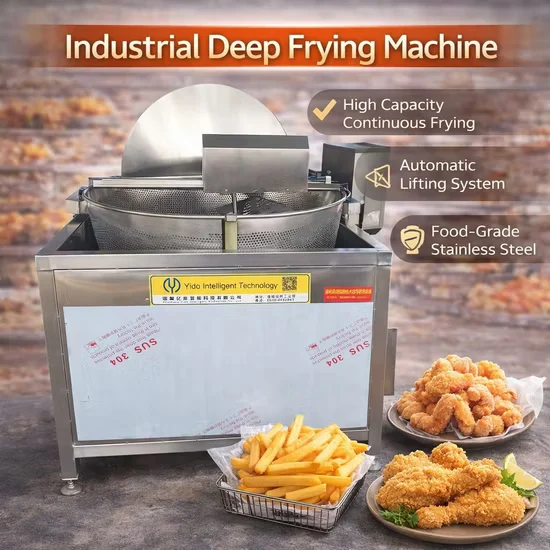 frying chips machine
Potato Chips Frying Machine Manufacturer Electric Gas Deep Fryer
Potato Chips Frying Machine for Uniform Heating and Oil Filtration — deep frying with automatic basket lifting ensures consistent product… View Machine Details frying chips machine
Banana Chips Batch Deep Fryer Machine Manufacturer High Output
Banana Chips Batch Deep Fryer Machine for uniform frying of chips and snack pellets — automatic basket lifting and oil… View Machine Details 3D papad machine
3D Snack Pellet Production Line Fried Extruder Machine
3D Snack Pellet Production Line for Starch-Based Snacks — twin-screw extrusion processes potato, cassava, and corn starch into diverse shapes.… View Machine DetailsRelated Applications

Engineering Perspective
An In-House R&D Team Behind Every Line
Jinan MT Machinery develops its process technology in-house. The team concentrates on the four areas that decide pellet shape, expansion and line stability.
- Expansion technology
- Twin-screw extrusion
- Die design
- PLC/MCC automation
Related Articles
 Nov 16, 2026 · Product & Series Guides
DS Line Rotary Cutter for 2D Snack Pellets Manufacturer
Optimizing Rotary Cutter Options for 2D Snack Pellets eliminates edge burrs and reduces scrap rates by synchronizing cutter speed with extruder screw speed. Selecting… Read This Article Nov 16, 2026 · Product & Series Guides
2D Pellet Die Set for Wheels, Squares, Shells & Tubes Wholesale Supplier
Selecting the right 2D pellet die set requires matching specific shapes with the correct compression ratio to prevent screw jamming and transit corrosion. Discover… Read This Article Nov 16, 2026 · Product & Series Guides
DS85 vs DS95 Pellet Chips Extruder Manufacturer for Sale
Choosing the right DS85 vs DS95 extruder prevents barrel blockage when processing high-meat pellet chip formulas. The DS85 delivers energy efficiency for standard recipes,… Read This ArticleFree Process Check
Send Your Recipe for a Process Check
Jinan MT Machinery engineers review your recipe and return a free process plan within 24 hours. Tell us the product, output, raw material, local voltage and heat source.
Send Your Recipe on WhatsApp