
Meiteng Pellet Line: Test Raw Materials with Manufacturer OEM Support
- By Jinan MT Machinery

Paper specifications never guarantee physical stability under extreme heat and pressure.
Yes, you can and must test your raw materials on Meiteng lines before full production to verify gelatinization, moisture, and formulation, preventing equipment damage.
Working out of the manufacturing hub in Suzhou before transitioning to international trade, I quickly learned that machine calibration means nothing if the input variables are volatile. I once shipped a complete pet food extrusion setup to a startup in the Middle East. They bypassed preliminary trials, directly feeding a blend of cheap fish meal and cassava starch into the barrel. Within hours, the die holes completely choked, and the screws suffered severe abrasion. The entire line sat idle for days, forcing us to air-freight replacement parts just to get them running again. Since that costly lesson, I have obsessively focused on pre-production validation. Good output relies entirely on matching the physical properties of the ingredients with the mechanical action inside the barrel. When you test raw materials on extrusion line setups, you uncover the hidden variables that paper certificates simply cannot reveal.
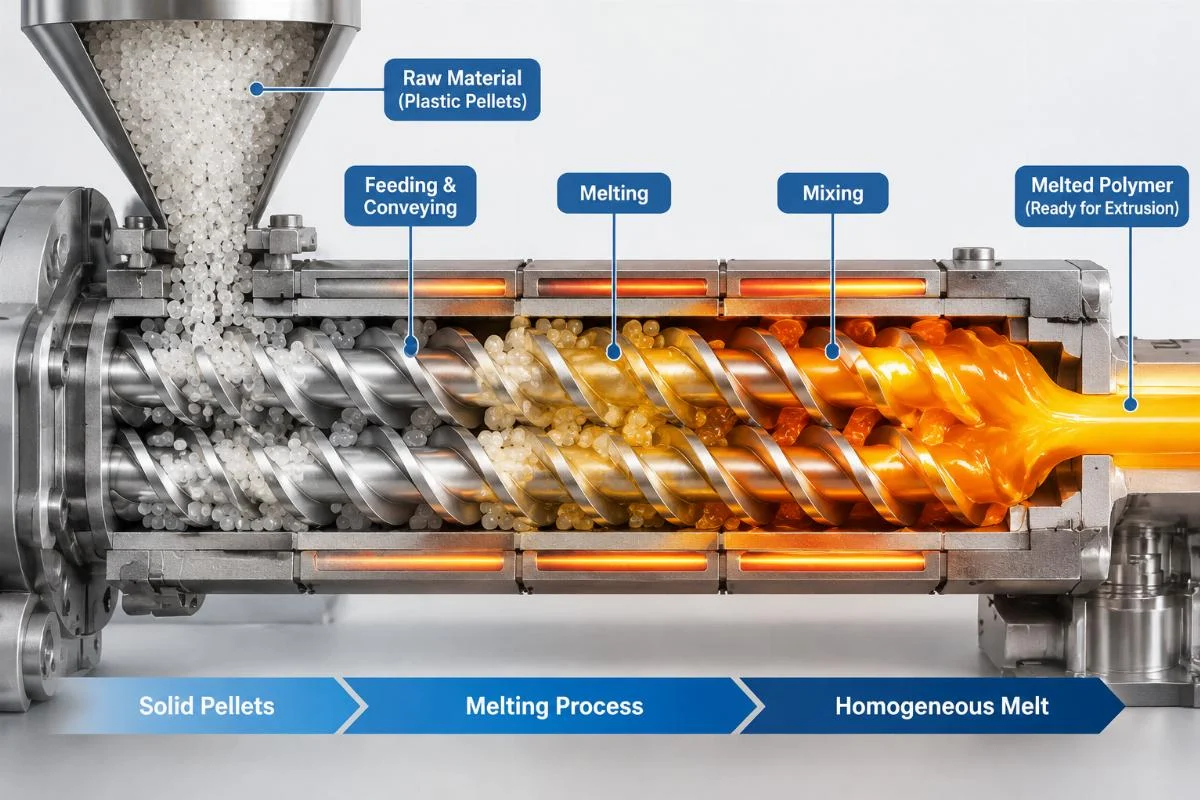
Moving from theoretical specs to physical trials is the only way to secure your production timeline.
Can I send my raw materials to Meiteng for testing?
Yes, Meiteng provides comprehensive OEM sampling and formula R&D support for customer-supplied materials.
Many procurement managers assume that buying a machine is a standalone transaction, leaving the recipe development entirely to their own internal teams. However, twin screw extruder material testing requires specialized equipment that most startups simply do not have on-site. By sending your specific ingredient batches to our facilities in Jinan, we can run physical trials using the exact screw configurations planned for your final order. This process allows us to observe how your unique protein sources, starches, and fiber levels behave under actual processing conditions.
When a Southeast Asian aquaculture producer approached us with a novel high-protein insect meal formula, they were concerned about pellet durability. Instead of guessing, they shipped their raw batches to our lab. During the twin screw extruder material testing, we noticed that the specific amino acid profile in their insect meal required a different shear intensity to achieve the proper binding. We adjusted the screw arrangement and moisture injection points during the trial, ensuring the final floating fish feed would maintain its structure in water without leaching nutrients. This proactive pet food extrusion raw material analysis saved them from launching a product that would have dissolved instantly in their clients’ ponds.
Risk Checklist for Unverified Materials:
- Unpredictable moisture absorption leading to inconsistent expansion.
- Hidden abrasive minerals accelerating internal barrel wear.
- Incompatible fat content causing slippage instead of conveying.
- Thermal degradation of sensitive vitamins due to unverified residence times.
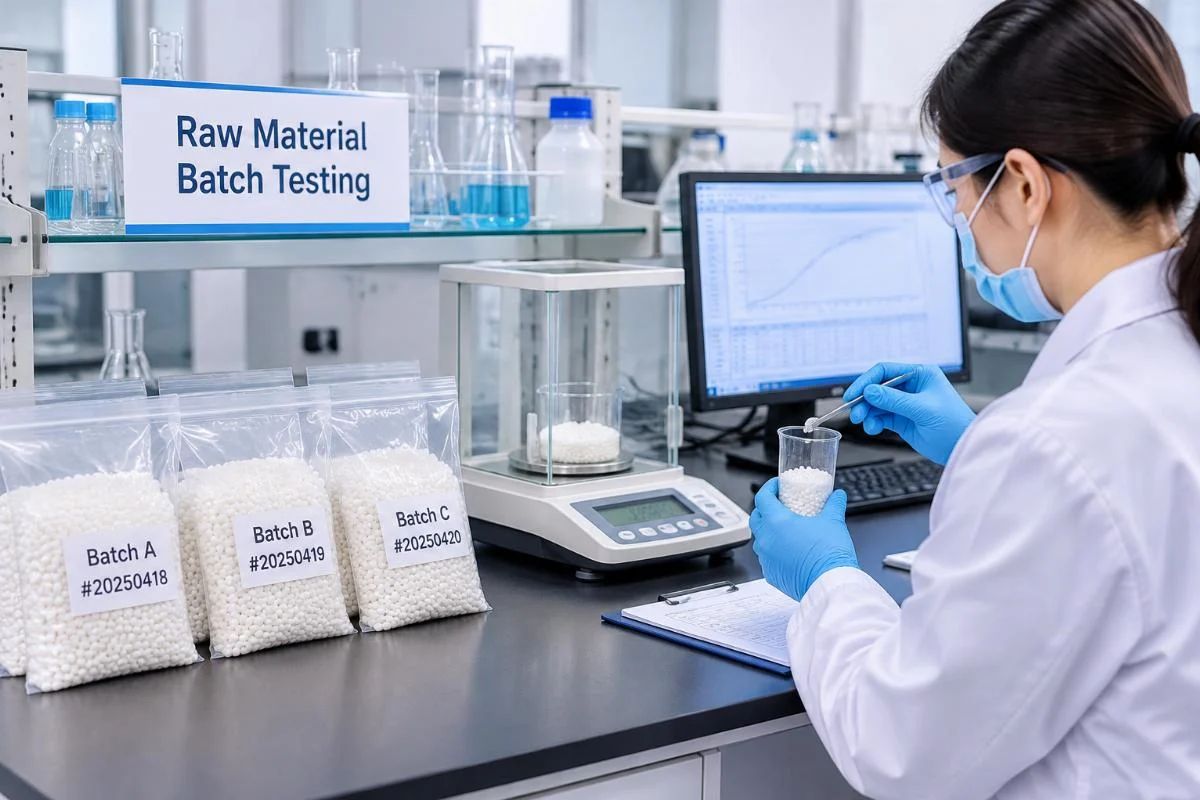
What parameters must be tested before running the pellet line?
Moisture content thresholds, protein-to-starch ratios, and gelatinization degree are critical to prevent die blockage.
Most buyers think paper specs are enough; truly, physical gelatinization and moisture behavior under heat and pressure dictate line stability. When you test raw materials on extrusion line configurations, we focus on the rheological properties of the mash. If the moisture is too low, the material acts like sand, failing to form a cohesive melt and causing massive friction. If it is too high, the product flashes into steam upon exiting the die, destroying the structural integrity of the kibble or pellet.
During a recent pet food extrusion raw material analysis for a contract manufacturer, we evaluated a new batch of poultry by-product meal. The supplier’s certificate claimed standard moisture levels, but our physical trials revealed severe batch variance. The material required significantly more mechanical energy to plasticize, which directly impacted the motor load. By mapping the gelatinization degree across different temperature zones, we established a strict pre-conditioning protocol. This ensured that the starches were fully broken down before entering the main barrel, transforming a potential disaster into a smooth, continuous run.
Critical Testing Parameters:
- Moisture Variance: Uncontrolled/Standard/Controlled
- Protein Denaturation: Vulnerable/Resistant/Robust
- Fat Migration: Uncontrolled/Standard/Controlled
- Fiber Abrasiveness: Noticeably reduced/Substantially extended
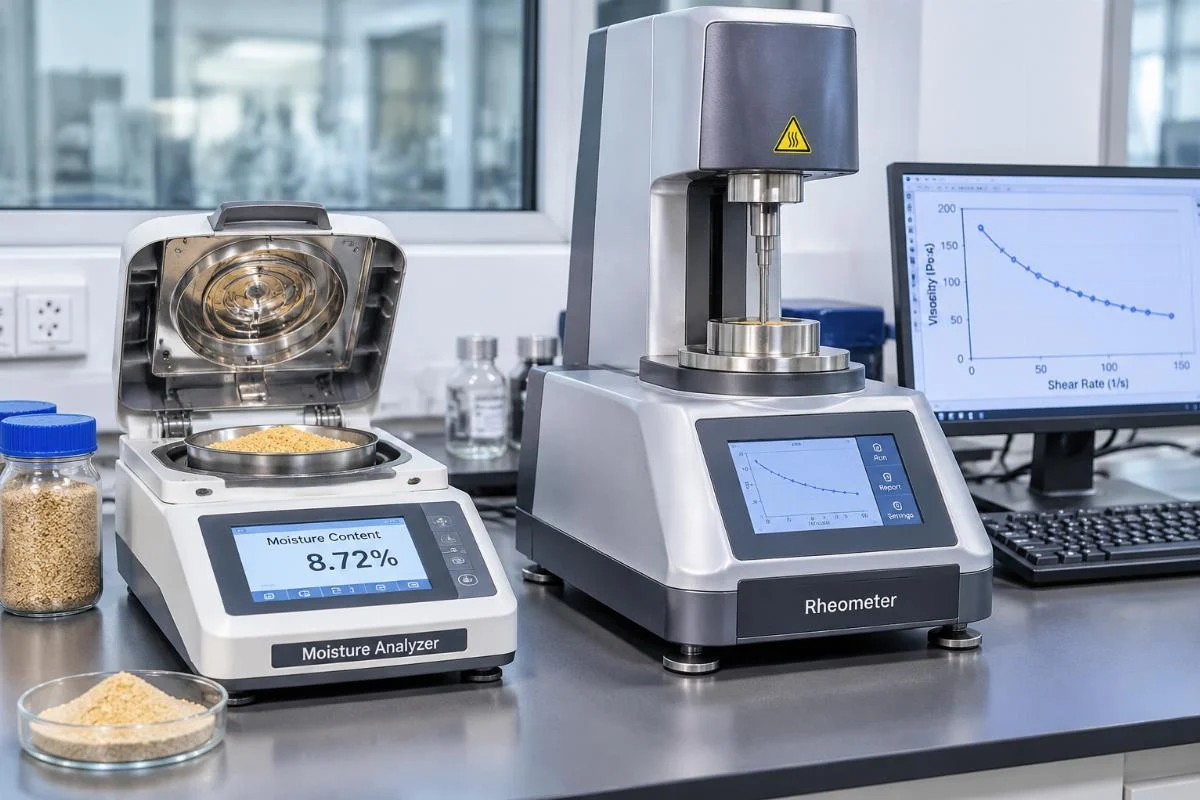
How does raw material testing prevent equipment damage?
Proper testing avoids screw wear and motor overload caused by ungelatinized or overly abrasive materials.
Most think testing is just for the machine; truly, it validates the formula’s adaptability to the specific screw configuration. The mechanical heart of any twin-screw system relies on the precise clearance between the screw flights and the barrel liner. When you test raw materials on extrusion line hardware, we monitor the torque and temperature curves in real-time. Abrasive ingredients, such as certain bone meals or high-silica plant fibers, can act like sandpaper if they are not properly hydrated and plasticized.
Consider a Latin American snack manufacturer that experienced inconsistent puffing due to severe batch variance in their corn and rice blends. They initially blamed the machine’s heating elements. However, during our twin screw extruder material testing, we discovered that the varying particle sizes and hidden mineral content in their cheaper grain sources were causing micro-stoppages and uneven shear heating. This not only ruined the expansion ratio but also subjected the screw tips to asymmetric stress, leading to premature wear. By identifying these physical behaviors early, we recommended a specific mesh size for their hammer mill and adjusted the screw element profile to handle the abrasive load gently. The result was a dramatic extension of spare part life and a consistent, market-ready snack texture.
Equipment Protection Metrics:
- Torque Fluctuation: Noticeably reduced/Substantially extended
- Die Hole Flow Resistance: Uncontrolled/Standard/Controlled
- Motor Load Stability: Vulnerable/Resistant/Robust
- Screw Flight Wear: Noticeably reduced/Substantially extended

What if my raw materials fail the initial extrusion test?
Meiteng’s R&D team will adjust the screw configuration or formula to ensure smooth production.
Failing an initial test is not a dead end; it is the exact reason we conduct these trials before shipping the full production line. When you test raw materials on extrusion line setups at our facility, our engineers treat the failure as a roadmap for customization. If a specific plant-based protein blend fails to texturize properly or a pet food formula refuses to expand, we do not just tell you it is impossible. We reconfigure the barrel.
For a startup developing a novel textured vegetable protein line, their initial soy and pea protein blend exited the die as a dense, unexpanded paste. The standard conveying and kneading blocks were simply too aggressive, generating friction heat that denatured the proteins before they could align. By swapping the internal screw elements for a gentler, more distributive mixing profile and introducing a controlled cooling zone downstream, we transformed the same exact raw materials into a highly structured, meat-like fibrous output. This level of turnkey formula development and on-site commissioning ensures that your specific ingredient challenges are solved in the lab, not on your factory floor.
R&D Support Actions:
- Screw Profile Redesign: Full batch-level/Sample-level/None
- Die Hole Geometry Adjustment: Verifiable/Self-reported/Not provided
- Pre-conditioning Protocol: Certified/Basic/None
- Formula Modification Guidance: Full batch-level/Sample-level/None

Conclusion
Physical trials bridge the gap between theoretical recipes and mechanical reality. Testing your ingredients on dedicated twin-screw hardware eliminates the guesswork that leads to catastrophic downtime and ruined batches. By validating moisture behavior, gelatinization, and abrasion levels early, you protect your equipment and guarantee product consistency from the very first commercial run.
Equipment Mentioned in This Article
 3D papad machine
3D Snack Pellet Production Line Fried Extruder Machine
3D Snack Pellet Production Line for Starch-Based Snacks — twin-screw extrusion processes potato, cassava, and corn starch into diverse shapes.… View Machine Details 3D papad machine
Automatic 3D Pellet Extruded Corn Puffed Snack Food Production Line
3D Pellet Extruded Snack Food Production Line for Starch Pellets — processes potato, corn, and cassava starch into papad and… View Machine Details 3D papad machine
2D 3D Snack Pellet Production Line Manufacturer
2D 3D Snack Pellet Production Line for Diverse Shapes from Starches — twin-screw extrusion handles wheat, corn, and cassava. The… View Machine Details
Engineering Perspective
An In-House R&D Team Behind Every Line
Jinan MT Machinery develops its process technology in-house. The team concentrates on the four areas that decide pellet shape, expansion and line stability.
- Expansion technology
- Twin-screw extrusion
- Die design
- PLC/MCC automation
Related Articles
 Nov 10, 2026 · Procurement & Trade FAQs
Snack Pellet Line for UAE: Twin-Screw Extruder Manufacturer & Turnkey Service
Buying a snack pellet line UAE requires engineering systems that survive extreme heat and voltage fluctuations, not just finding the lowest price. You must… Read This Article Nov 10, 2026 · Procurement & Trade FAQs
Fast Replacement Pellet Dies from China Manufacturer Meiteng
Minimize extruder downtime by understanding that replacement pellet die delivery time relies on precise formula matching and custom compression ratios rather than just express… Read This Article Nov 10, 2026 · Procurement & Trade FAQs
Snack Pellet Line for Poland & EU: Meiteng Twin-Screw Extruder Manufacturer
Importing a snack pellet line into Poland and the EU requires navigating strict CE machinery directives, EORI customs registration, and adapting equipment to local… Read This ArticleFree Process Check
Send Your Recipe for a Process Check
Jinan MT Machinery engineers review your recipe and return a free process plan within 24 hours. Tell us the product, output, raw material, local voltage and heat source.
Send Your Recipe on WhatsApp