
Pellet Fryer Heat Source: Gas, Diesel or Electric – Meiteng Manufacturer
- By Jinan MT Machinery

Choosing a pellet fryer heat source based solely on the initial equipment price is the fastest way to destroy your production line’s profitability.
The optimal pellet fryer heat source depends on a comprehensive evaluation of total lifecycle costs, local industrial energy tariffs, and facility upgrade feasibility, rather than just the upfront capital expenditure. Gas generally offers the lowest long-term operational costs but requires pipeline infrastructure; electric minimizes initial capital but exposes you to volatile utility rates and grid upgrade delays; diesel provides off-grid flexibility but introduces strict fuel storage compliance and high logistical overhead.
Years ago, at a major food exhibition in Chicago, I helped a North American snack startup configure their extrusion line. To minimize their initial capital outlay, they selected an electric pellet fryer heat source. The moment the equipment landed, the reality of local industrial electricity tariffs hit them hard. The facility required a massive grid capacity upgrade, and the municipal approval process stalled their production launch for half a year. The client constantly complained about energy bills eating into their margins, eventually forcing them to spend a fortune retrofitting a natural gas pipeline. Since transitioning to designing complete turnkey solutions, I always use that exact scenario as a warning. Selecting a pellet fryer heat source requires calculating local energy bills and infrastructure modification costs, not just reading the equipment quotation.
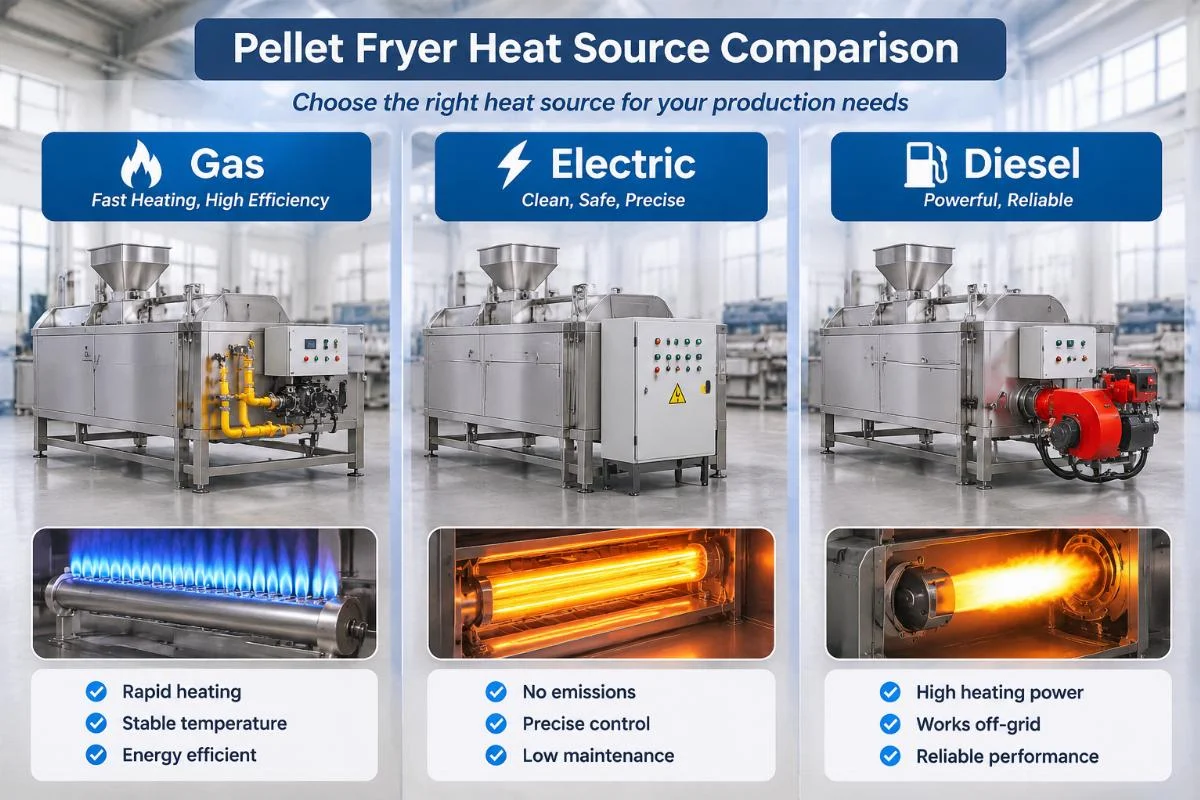
Let us break down how these variables actually dictate your project’s success.
What Are the Real Costs of Electric, Gas, and Diesel Heating?
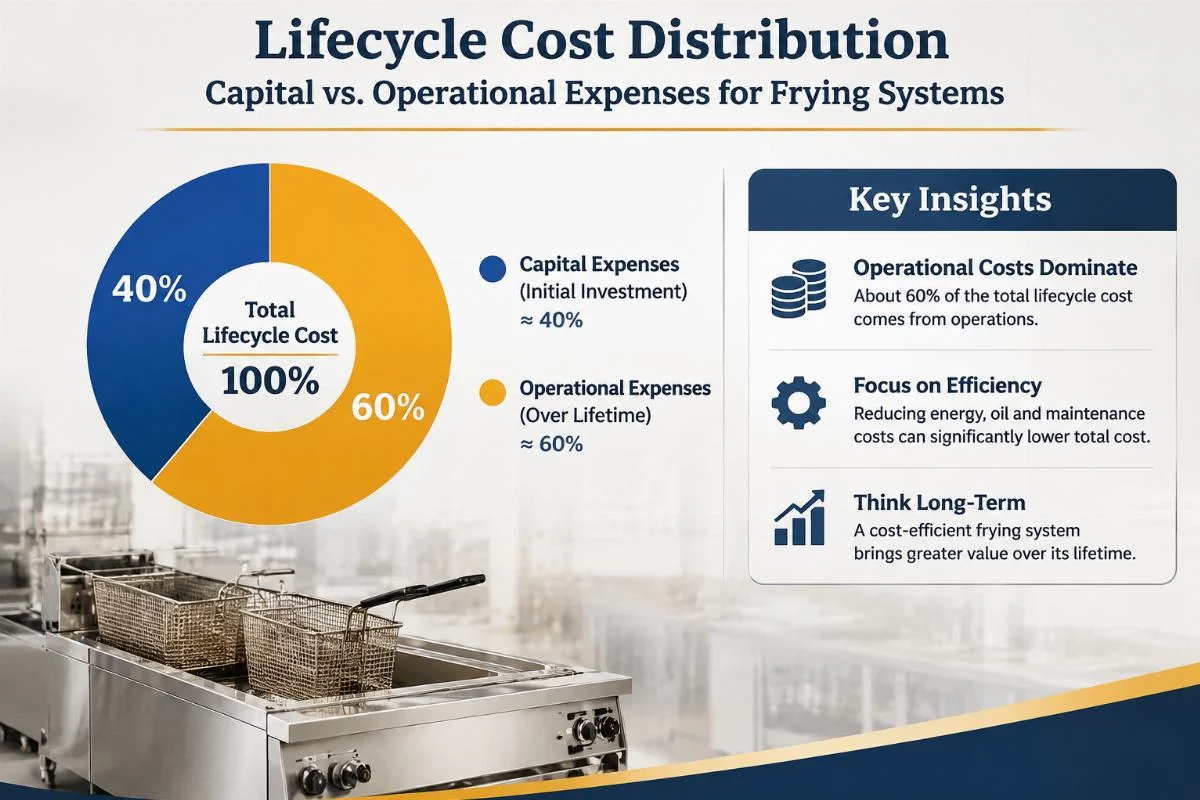
The initial equipment price is highly misleading; lifecycle energy bills and infrastructure modifications dictate true profitability.
When evaluating a pellet fryer heat source, buyers often fixate on the invoice price of the fryer itself. However, the thermal efficiency rates and local utility tariffs determine your actual margin. Electric heating elements are incredibly efficient at converting power to heat, but the cost per therm of electricity in many industrial zones makes the operational expenditure unsustainable.
Conversely, a gas-fired pellet fryer heat source might require a higher initial investment for burners and heat exchangers, but the cost of natural gas is substantially lower per energy unit in most regions. Diesel systems sit in the middle; the burner equipment is moderately priced, but the ongoing fuel procurement and storage maintenance create a heavy logistical burden. Many operators mistakenly believe electric is the cheapest route because it shifts costs from capital expenditure to unpredictable operational expenditure, hiding the true financial impact until the first utility bill arrives.
How Do Local Infrastructure and Regulations Impact Your Choice?
Grid capacity limits, pipeline availability, and fuel storage rules can make or break your project timeline and compliance status.
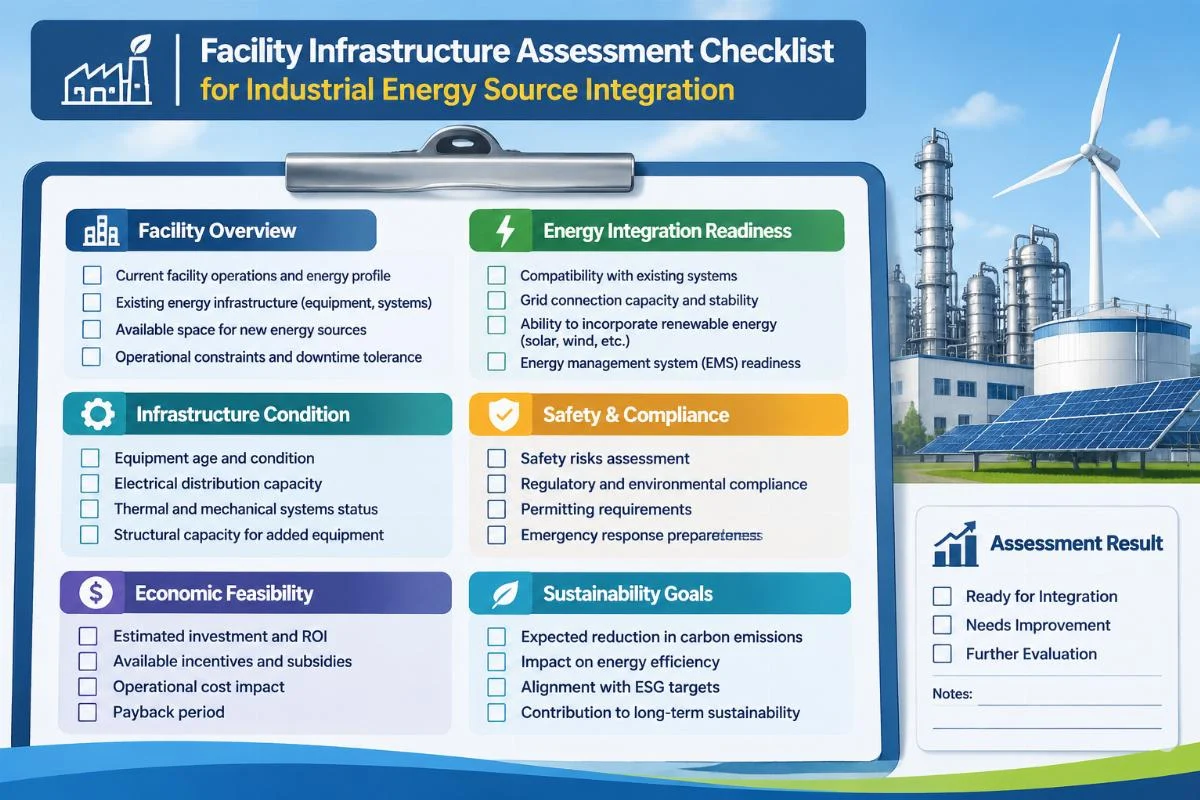
Your facility’s existing infrastructure is the ultimate gatekeeper for your pellet fryer heat source. If you choose electric, you must verify your plant’s electrical load capacity. Industrial grid upgrades are notoriously slow and expensive. I have seen projects delayed for months because the local transformer station could not handle the sudden spike in amperage required by high-wattage heating elements.
If you opt for a gas-powered pellet fryer heat source, you need to assess the proximity of municipal gas lines. Some believe gas requires prohibitively expensive pipelines, but the truth is that long-term energy savings easily offset the initial infrastructure investment.
On the other hand, selecting diesel for off-grid flexibility introduces severe regulatory hurdles. A pet food producer in the MENA region once chose diesel to bypass local grid instability. However, they struggled immensely with local fire safety compliance regarding bulk fuel storage and the continuous maintenance required to keep the burners clean from carbon buildup.
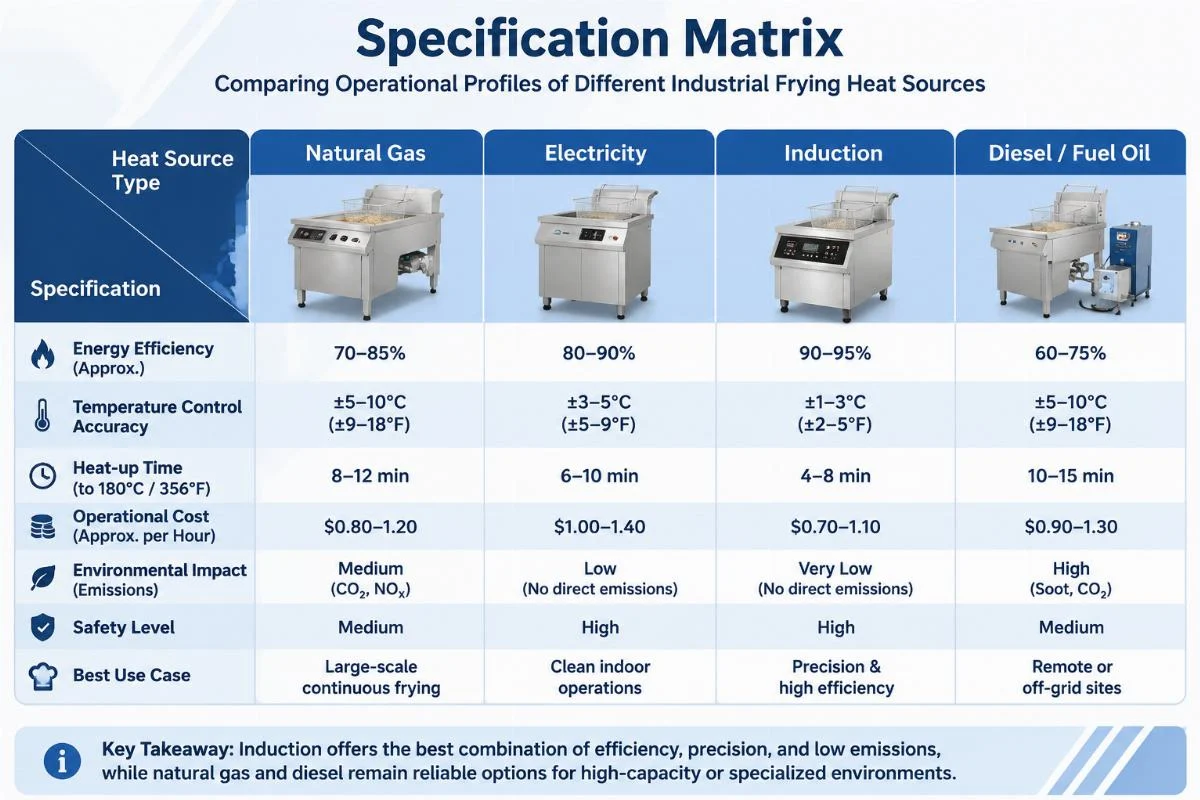
Gas vs. Diesel vs. Electric: A Specification & Cost Matrix
Matching your local energy landscape and production scale to the right matrix prevents catastrophic operational mismatches.
To visualize the trade-offs of each pellet fryer heat source, we must look beyond simple temperature curves and evaluate the operational reality.
| Evaluation Factor | Electric Heating | Gas Heating | Diesel Heating |
|---|---|---|---|
| Initial Equipment Cost | Basic | Certified | Full batch-level |
| Infrastructure Upgrade | Vulnerable | Resistant | Robust |
| Energy Cost per Unit | Noticeably reduced | Substantially extended | Uncontrolled |
| Temperature Stability | Standard | Controlled | Standard |
| Maintenance Overhead | Noticeably reduced | Substantially extended | Uncontrolled |
| Environmental Compliance | Verifiable | Self-reported | Not provided |
Note: The matrix above reflects typical operational profiles rather than absolute universal constants, as local tariffs vary wildly.
Consider a cereal manufacturer in Latin America. They invested heavily in a gas pipeline retrofit for their pellet fryer heat source. Despite the high initial retrofit cost, they achieved stable, low-cost continuous operation, completely insulating themselves from the region’s frequent electrical grid fluctuations. In contrast, a startup relying purely on electric heating often finds their profit margins erased during peak tariff hours, forcing them to run shifts at sub-optimal times.
How to Calculate the Payback Period for Heat Source Upgrades?
Use a standardized capital and operational expenditure model to justify infrastructure investments and secure internal funding.
Calculating the payback period for a pellet fryer heat source upgrade requires a rigorous methodology. You cannot simply divide the equipment cost by the monthly energy savings. You must include the hidden costs of facility modifications.
First, quantify the total capital expenditure, including the fryer, the specific burner technology, and any necessary utility upgrades like transformers or gas lines. Second, project the operational expenditure based on verified local industrial tariffs, not residential estimates. Third, factor in the maintenance lifecycle; a diesel pellet fryer heat source will demand frequent component replacements due to soot accumulation, whereas a properly tuned gas system offers extended service life meaningfully.
This is precisely where comprehensive engineering support becomes critical. At Meiteng, our approach to designing a complete extrusion and frying line never starts with the machine itself; it starts with your local energy assessment. Our engineers integrate utility coordination and regional compliance checks directly into the turnkey production line design. Whether you are producing pet food, aquaculture feed, or textured vegetable protein, we ensure that your chosen pellet fryer heat source aligns perfectly with your facility’s reality, preventing the costly mistakes that stall production launches. We provide formula development support and on-site commissioning, ensuring that from raw material intake to the final frying stage, your thermal infrastructure is optimized for your specific geographic and economic constraints.

Conclusion
Selecting the right thermal infrastructure is a financial strategy, not just a mechanical specification.
A successful pellet fryer heat source decision requires balancing initial capital limitations against long-term operational realities and local regulatory frameworks. By rigorously modeling lifecycle costs and aligning your choice with existing facility infrastructure, you secure stable, profitable production for years to come.
Equipment Mentioned in This Article
 frying chips machine
Electric Batch Frying Machine for French Fries Fast Food Chicken Wing
Industrial Batch Fryer for Fried Snacks and French Fries — features electric or gas heating with automatic basket lifting for… View Machine Details frying chips machine
Automatic Deep Tunnel Fryer Electric Frying Machine for Seafood Shrimp
Automatic Deep Tunnel Fryer for Fried Snacks — electric industrial equipment featuring automatic basket lifting and an advanced oil filtration… View Machine Details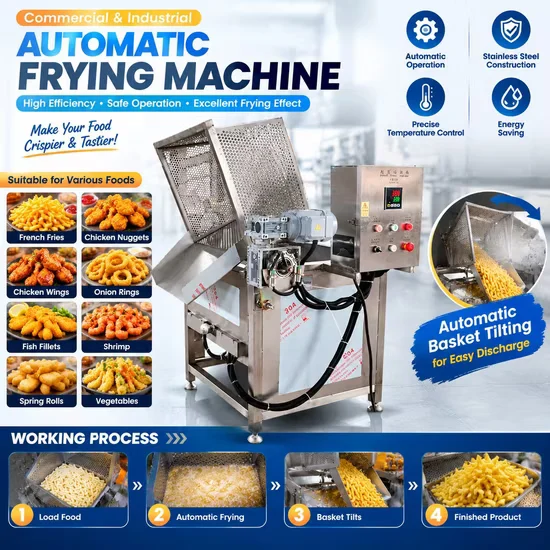 frying chips machine
200L Electric Deep Fryer for Chips and Fried Chicken Machine
Industrial Deep Fryer For Chips And Fried Snacks Application — processes potato chips, 2D/3D snack pellets, and fried chicken using… View Machine Details frying chips machine
Industrial Batch Fryer Machine Electric Automatic Deep Frying Snack Food
Industrial Batch Fryer for Fried Snacks — deep frying and de-oiling for 2D/3D snack pellets and chips using potato, cassava,… View Machine Details
Engineering Perspective
An In-House R&D Team Behind Every Line
Jinan MT Machinery develops its process technology in-house. The team concentrates on the four areas that decide pellet shape, expansion and line stability.
- Expansion technology
- Twin-screw extrusion
- Die design
- PLC/MCC automation
Related Articles
 Nov 7, 2026 · Buying Guide
Energy Efficient Snack Pellet Extruder Line Manufacturer for Sale
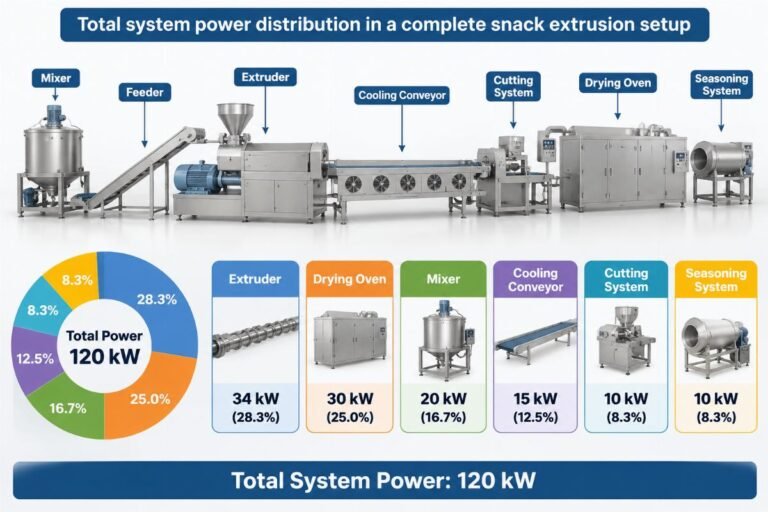
Evaluating an energy efficiency snack pellet production line requires looking beyond single motor ratings to total system power and heat recovery to eliminate hidden… Read This Article Nov 7, 2026 · Buying Guide
De-Oiling Machine for Pellet Chips Fryer Line | Meiteng OEM Manufacturer
A properly matched de-oiling machine for pellet chips controls residual surface oil to extend shelf life and ensure seasoning adhesion without shattering fragile snacks.… Read This Article Nov 7, 2026 · Buying Guide
Twin-Screw Extruder for Snack Food: Wholesale Manufacturer
Selecting a twin-screw extruder for snack food requires matching machine specifications with local factory conditions and raw material intake rather than merely comparing price… Read This ArticleFree Process Check
Send Your Recipe for a Process Check
Jinan MT Machinery engineers review your recipe and return a free process plan within 24 hours. Tell us the product, output, raw material, local voltage and heat source.
Send Your Recipe on WhatsApp