
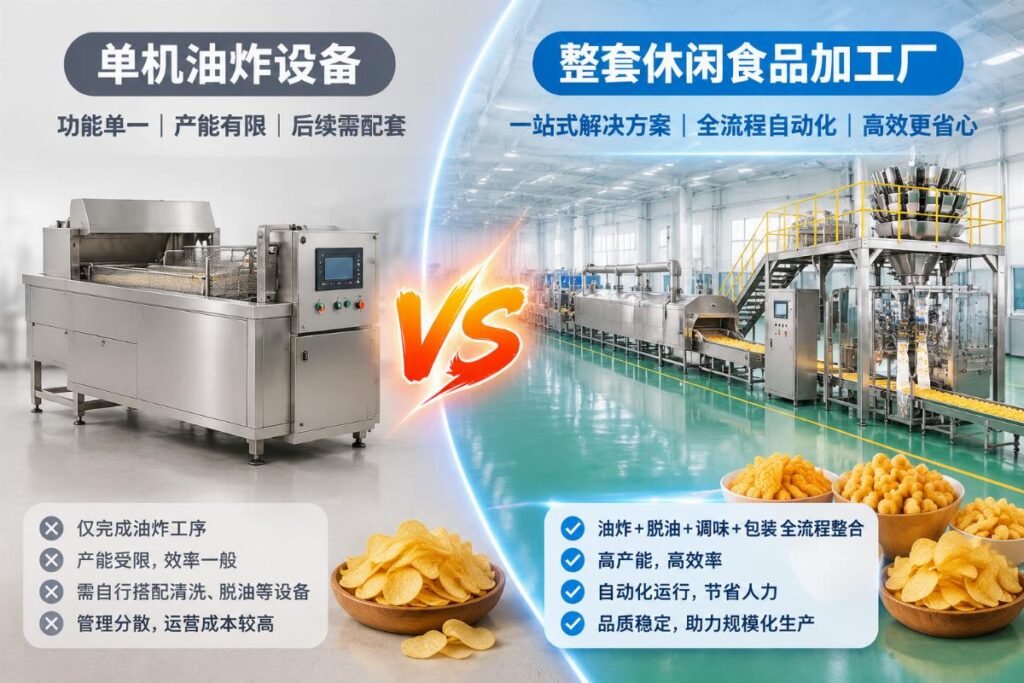
Buying just the fryer is the most expensive mistake a snack startup can make.
When evaluating a pellet frying line vs full pellet plant, the core answer for any buyer targeting export markets or consistent retail quality is clear: a standalone fryer saves initial capital but guarantees hidden operational losses, whereas a full turnkey plant integrates critical de-oiling and cooling stages to lock in texture, extend shelf life, and secure a true return on investment.
I learned this the hard way while crawling under oil-soaked conveyors in São Paulo. Years ago, a client insisted on purchasing only a continuous fryer to cut upfront costs, completely bypassing the downstream sections. The result was a catastrophic batch of corn puffs that turned rancid within weeks due to uncontrolled oil retention and residual moisture. We had to fly back and retrofit the entire ecosystem to salvage their export contracts. That headache perfectly illustrates why wholesale buyers must look beyond the fryer itself and evaluate the complete production ecosystem.
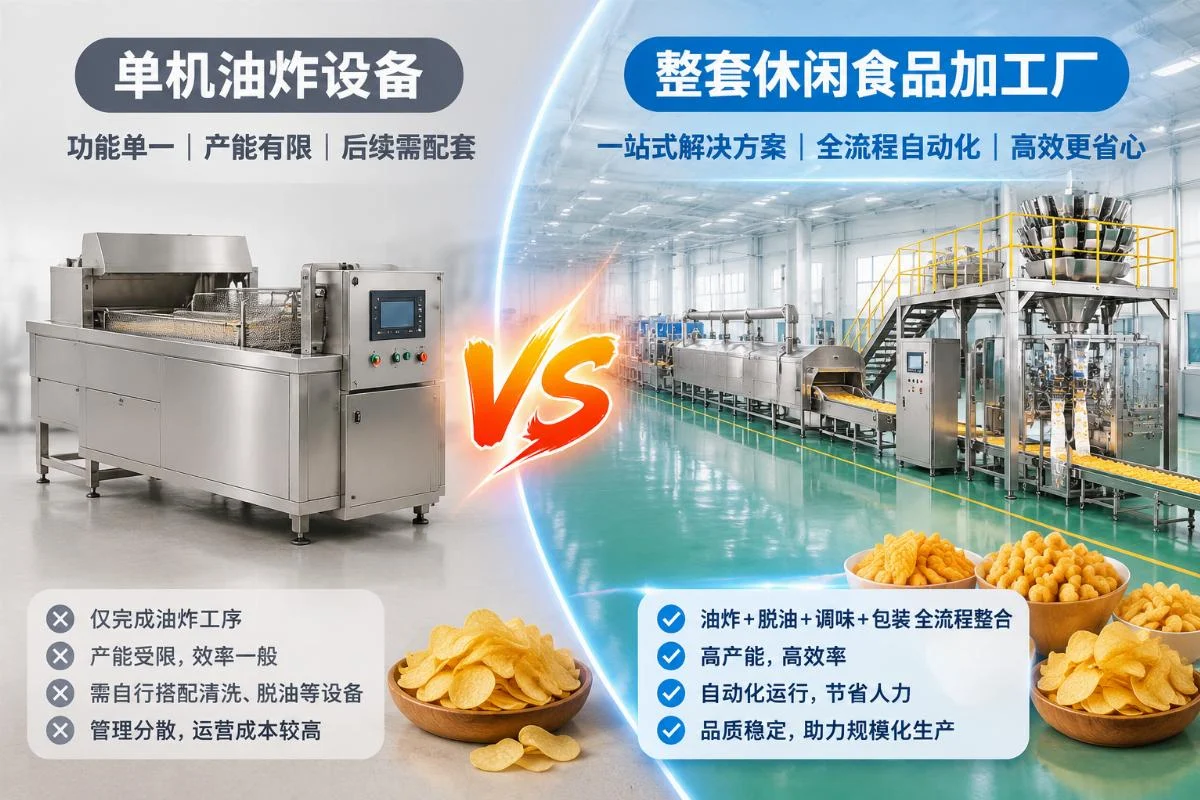
Moving past the initial sticker shock requires understanding exactly what you are paying for. Let us break down the physical and operational realities of these two configurations.
What Are the Core Components of a Frying Line vs. a Full Plant?
A standalone pellet frying line is merely a thermal processing station, while a full pellet plant is a complete moisture and oil management ecosystem.
When buyers compare a continuous fryer vs turnkey snack line, they often mistakenly believe the frying stage is the only critical step. In reality, the fryer is just the beginning of the quality control chain. A basic setup typically includes only the fryer, a basic oil filtration loop, and a simple discharge conveyor. It lacks the integrated systems required to stabilize the product immediately after it exits the hot oil bath.
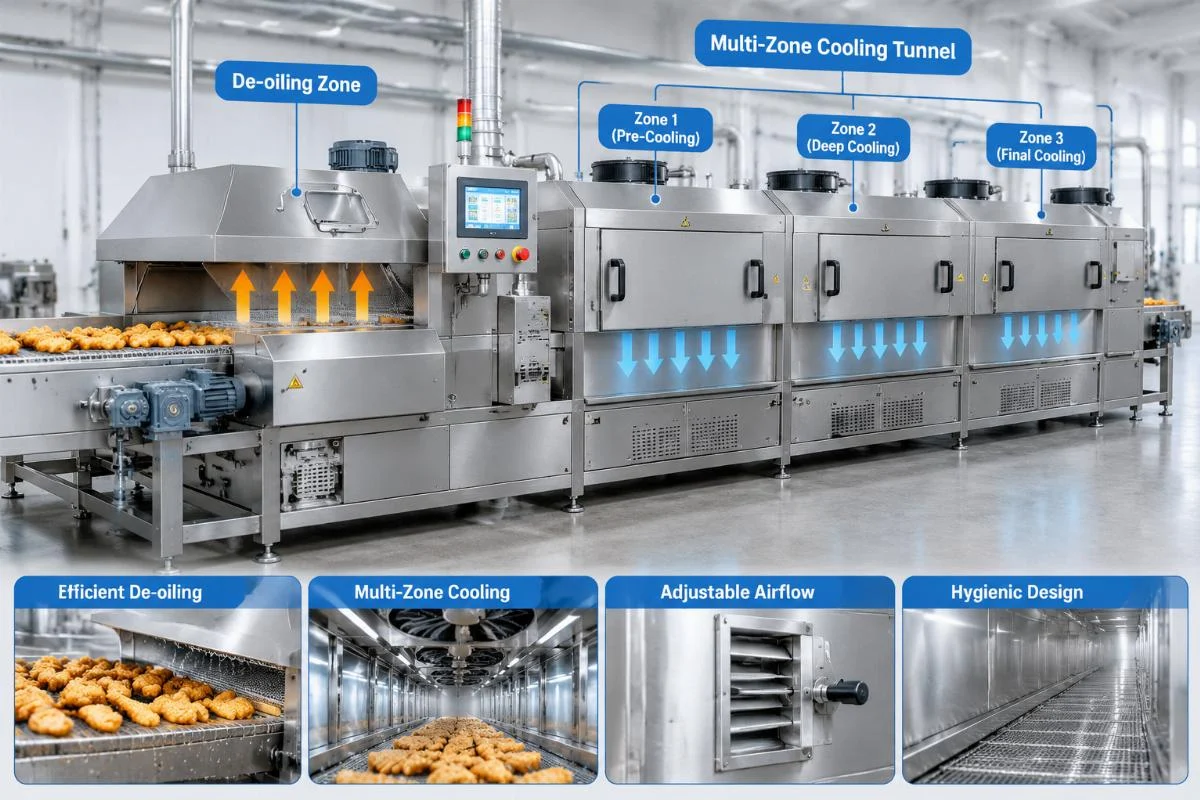
Conversely, a comprehensive extruded snack production line investment encompasses the entire post-frying sequence. This includes a high-efficiency de-oiling section to remove surface oil, a multi-stage cooling tunnel to rapidly drop the core temperature, and an automated flavor coating drum.
| System Component | Standalone Frying Line | Full Turnkey Plant |
|---|---|---|
| Thermal Processing | Basic continuous or batch fryer | Precision continuous fryer with automated oil top-up |
| Surface Oil Management | Uncontrolled drainage | Active de-oiling vibration system |
| Moisture Stabilization | Ambient air cooling only | Forced-air multi-zone cooling tunnel |
| Flavor Application | Manual or basic tumbling | Precision electrostatic or liquid coating system |
| Automation Level | Manual temperature adjustments | Centralized PLC touch-screen control |
The absence of a dedicated pellet cooling and de-oiling system in a basic setup means the product continues to cook in its own retained heat. This thermal inertia destroys the delicate cellular structure of extruded pellets, leading to a dense, oily final product rather than a light, crispy snack.
How Does Integrated Cooling Impact Snack Quality and Shelf Life?
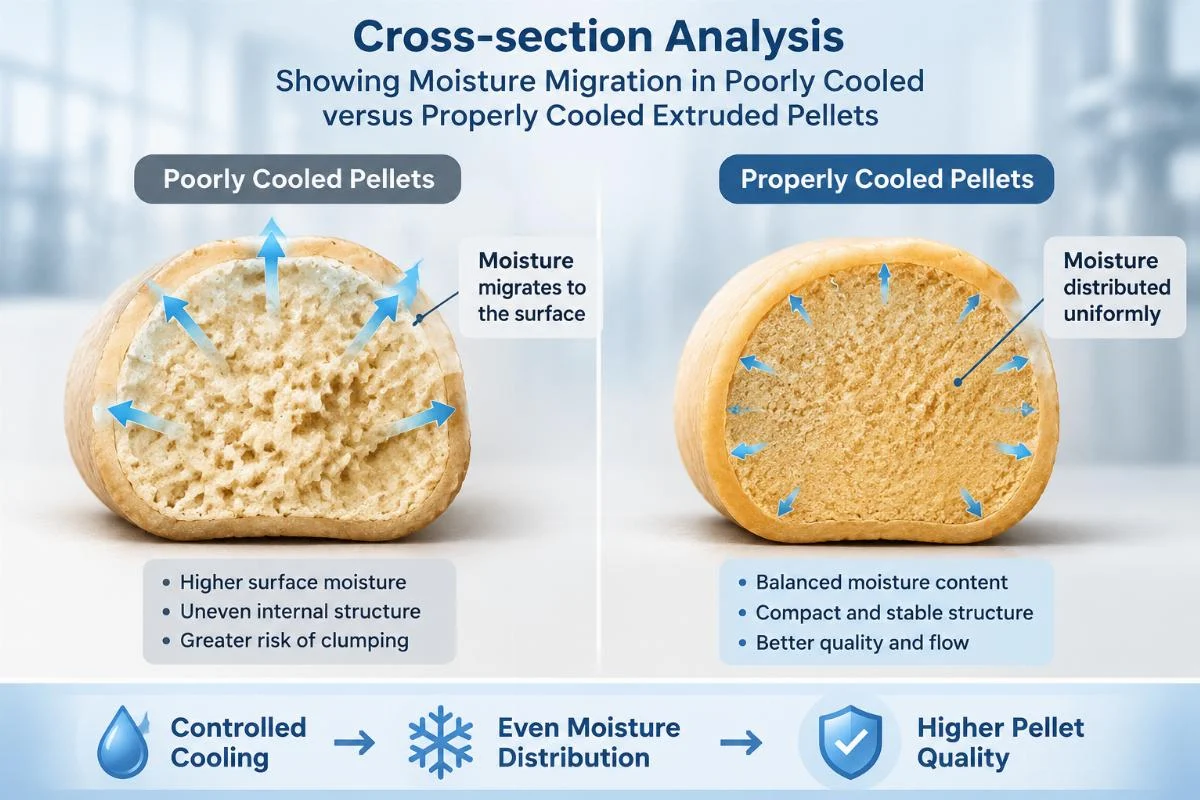
Cooling is not merely about temperature reduction; it is the critical control point for final moisture content and structural integrity.
Most novice manufacturers think cooling is just a waiting period before packaging. Truly, it dictates the final moisture equilibrium and prevents sogginess. When a hot pellet exits the fryer, its internal moisture is in a state of high vapor pressure. If cooled too slowly or unevenly, this moisture migrates to the surface, creating a micro-environment that accelerates lipid oxidation and microbial growth.
In a fully integrated line, the cooling tunnel utilizes controlled airflow and precise residence times to gently equalize the internal and external moisture gradients. This rapid stabilization locks in the crunch. I once consulted for a mid-sized producer in Latin America who was struggling with inconsistent texture. By integrating a proper cooling and flavor coating system, they saw a noticeable improvement in yield and a substantially extended shelf life, eliminating the soggy center complaints that had plagued their regional distribution.
Without this integrated pellet cooling and de-oiling system, the oil left on the surface of the snack acts as a sponge for ambient humidity. The product becomes unpalatable long before it reaches the consumer. For export-focused buyers, this is non-negotiable. International food safety and quality audits demand verifiable control over moisture and water activity levels. A full plant provides the automated data logging and consistent batch parameters required to pass these rigorous inspections, ensuring your product survives the journey across the ocean.
What Is the True ROI When Comparing CAPEX and Hidden OPEX?
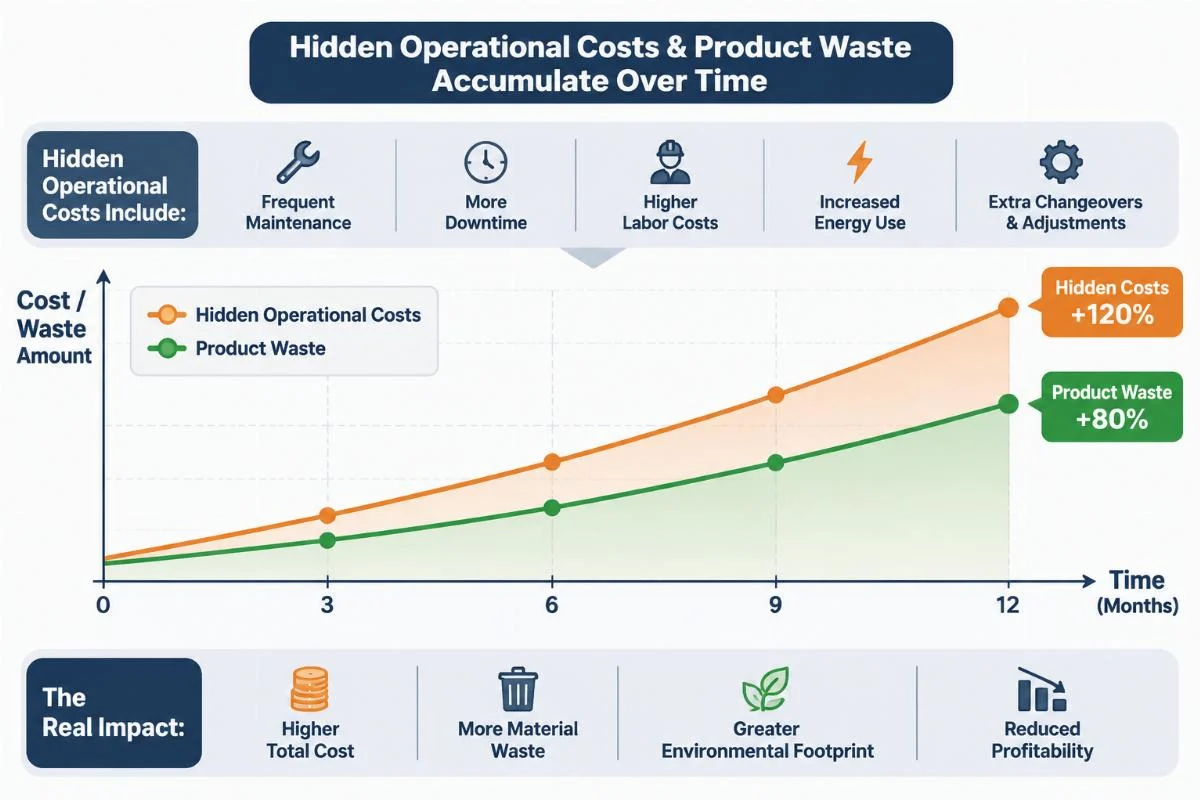
The initial capital expenditure of a standalone fryer is quickly eclipsed by the hidden operational costs of product waste, energy inefficiency, and line retrofits.
When evaluating an extruded snack production line investment, buyers must look at the total cost of ownership, not just the invoice price. The most common counter-intuitive reality in this industry is that a standalone fryer cuts initial costs but spikes hidden OPEX through massive product waste and batch rejections.
Consider the energy consumption per kg of finished snack. A standalone setup often runs inefficiently, with poor heat recovery and excessive oil degradation due to lack of continuous filtration and skimming. The oil turnover rate drops, leading to off-flavors that ruin entire batches. Furthermore, the manual handling required to move product from a basic fryer to a separate cooling area introduces contamination risks and labor costs.
A full turnkey plant, on the other hand, is engineered for resource efficiency. The integrated design allows for heat recovery, precise oil management, and automated product flow. The payback period is realized through the elimination of rejected batches and the ability to command premium pricing for a superior, consistent product. I have seen startups spend a mid-six-figure sum on retrofitting a basic fryer into a functional line after their first major export rejection. The cost of downtime, shipping penalties, and lost client trust far exceeds the initial premium of buying a complete system from day one.
Which Investment Fits Your Production Scale and Business Goals?
Startups targeting export quality and retail consistency must choose a turnkey line, while basic fryers are only suitable for low-risk, localized testing.
The decision ultimately hinges on your target market and quality tolerance. If you are producing for a local, price-sensitive market where shelf life expectations are minimal and batch inconsistency is tolerated, a standalone pellet frying line might suffice temporarily. However, this is a highly precarious position that limits your growth potential.
For any business aiming to build a recognizable brand, secure supermarket shelf space, or enter international markets, a full plant is mandatory. The automation ensures batch-to-batch consistency, which is the bedrock of brand trust.
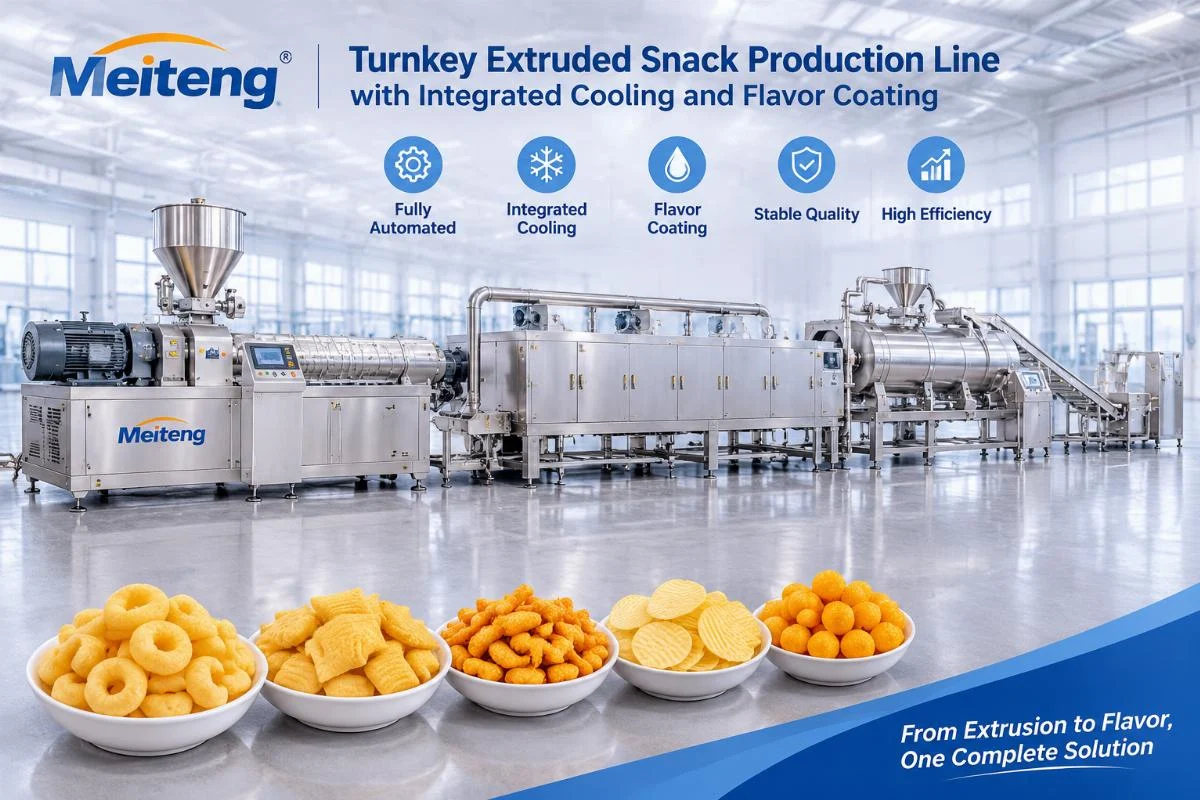
This is where partnering with an experienced manufacturer becomes critical. Meiteng specializes in designing turnkey extruded snack lines that bridge the gap between raw material intake and final packaging. With capacities ranging from 200kg/h to 3000kg/h, our systems are built around the specific needs of global snack manufacturers. We do not just supply a fryer; we provide a complete ecosystem featuring integrated drying, cooling, and flavor-coating systems. Constructed from food-grade stainless steel and certified to CE and ISO standards, our lines are engineered to meet the stringent hygiene and safety requirements of international food safety audits.
We support our equipment with comprehensive formula development, on-site installation, and operator training, ensuring that your investment translates directly into a profitable, high-quality production reality. Whether you are launching a new corn puff brand or scaling an existing puffed snack operation, the right infrastructure is what separates a fleeting experiment from a lasting enterprise.
Conclusion
A fryer cooks the product, but the entire line defines its commercial viability.
Choosing between a pellet frying line vs full pellet plant is a choice between accepting hidden operational risks and securing long-term product consistency. By investing in integrated downstream processing, manufacturers protect their margins, ensure export compliance, and build a brand foundation that survives the demands of the global snack market.
Equipment Mentioned in This Article
 frying chips machine
Industrial Continuous Frying Production Line Stainless Steel Fryer
Industrial Continuous Frying Production Line for 2D/3D Snack Pellets and Chips — processes potato, cassava, wheat starch and corn. Fryer… View Machine Details frying chips machine
Fried Snack Frying Production Line Machine Making System
Fried Snack Frying Production Line for 2D/3D Pellets and Chips — processes potato, cassava, wheat starch, and corn. The fryer… View Machine Details frying chips machine
Continuous Frying Machine for Complete Fried Foods Production Lines
Continuous Frying Machine for Snack Pellets and Chips Precise temperature control and uniform heating for consistent frying quality. Processes potato,… View Machine Details 3D papad machine
3D Snack Pellet Production Line Fried Extruder Machine
3D Snack Pellet Production Line for Starch-Based Snacks — twin-screw extrusion processes potato, cassava, and corn starch into diverse shapes.… View Machine DetailsRelated Applications

Engineering Perspective
An In-House R&D Team Behind Every Line
Jinan MT Machinery develops its process technology in-house. The team concentrates on the four areas that decide pellet shape, expansion and line stability.
- Expansion technology
- Twin-screw extrusion
- Die design
- PLC/MCC automation
Related Articles
 Nov 7, 2026 · Buying Guide
Energy Efficient Snack Pellet Extruder Line Manufacturer for Sale
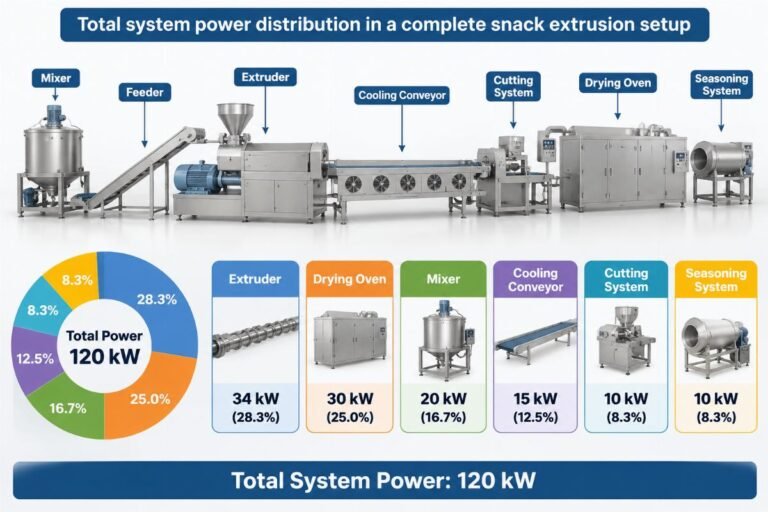
Evaluating an energy efficiency snack pellet production line requires looking beyond single motor ratings to total system power and heat recovery to eliminate hidden… Read This Article Nov 7, 2026 · Buying Guide
De-Oiling Machine for Pellet Chips Fryer Line | Meiteng OEM Manufacturer
A properly matched de-oiling machine for pellet chips controls residual surface oil to extend shelf life and ensure seasoning adhesion without shattering fragile snacks.… Read This Article Nov 7, 2026 · Buying Guide
Twin-Screw Extruder for Snack Food: Wholesale Manufacturer
Selecting a twin-screw extruder for snack food requires matching machine specifications with local factory conditions and raw material intake rather than merely comparing price… Read This ArticleFree Process Check
Send Your Recipe for a Process Check
Jinan MT Machinery engineers review your recipe and return a free process plan within 24 hours. Tell us the product, output, raw material, local voltage and heat source.
Send Your Recipe on WhatsApp