
SLG-90 Single-Screw Pellet Extruder Dies & Shapes Wholesale Supplier
- By Jinan MT Machinery

Larger die holes do not guarantee higher throughput; they often destroy pellet density by killing backpressure.
The true output capacity and shape stability of an SLG-90 Single-Screw Pellet Extruder depend entirely on matching die channel designs with specific formula viscosities, rather than simply scaling up the barrel size or motor power.
Years ago, I shipped a batch of molds for a tilapia feed plant in South Africa. We went with standard alloy steel to keep costs down, skipping the nitriding treatment. The local formula was packed with high-protein fishmeal. Within two hours of startup, the die holes clogged solid. The operators grabbed power drills to clear the blockage, nearly destroying the mold face and halting the entire line for days. That disaster forced me to obsess over single-screw die selection. Smooth discharge lives or dies inside the die channel design. You cannot just read blueprints; you must align the mold specs with the exact formula and on-site conditions.

Understanding this relationship between formula viscosity and die geometry is the first step toward stable production.
How Do Die Shapes Dictate Final Pellet Geometry?
Shape retention relies strictly on die land length and exit angles, not just the external mold profile.
When producing pet food kibble, irregular pellet sizing is a frequent complaint. The root cause usually traces back to uneven flow distribution across a multi-hole die layout. If the compression ratios are mismatched with the dough’s rheology, some holes will over-feed while others starve. The die land length—the parallel section at the exit of each hole—creates the necessary friction to maintain structural integrity as the extrudate expands. Too short, and the pellets lose their defined edges, turning into amorphous blobs. Too long, and you risk excessive friction heat, burning the surface before it even hits the cutter.
For plant-based protein texturization, output fluctuation is the primary enemy. The fibrous matrix requires precise temperature profiling combined with specific die land lengths to align the protein strands properly. A poorly designed exit angle will cause the textured strands to snap or curl unpredictably, ruining the meat-like bite.

What Determines the SLG-90 Maximum Output?
Output is capped by formula friction and die hole area, not just motor power.
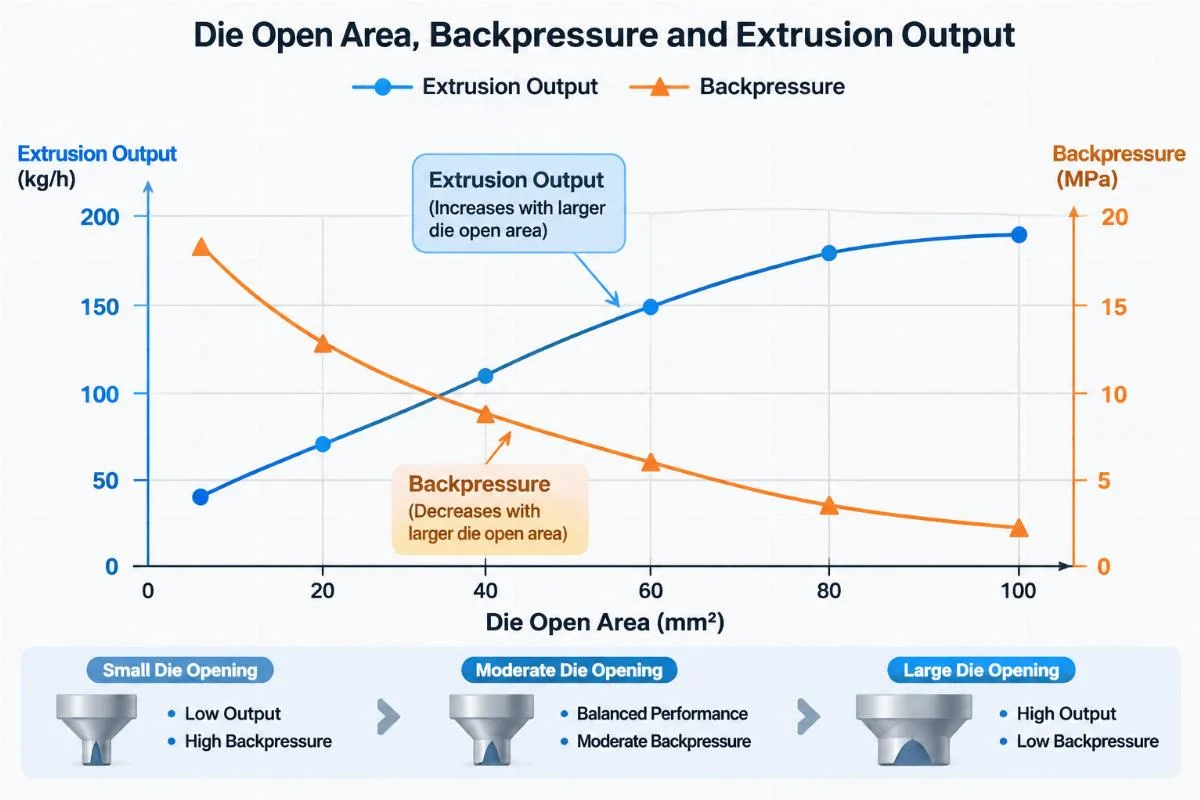
A common misconception is that upgrading the main motor will automatically boost the pellet extruder output capacity. In reality, pushing more material through an SLG-90 Single-Screw Pellet Extruder without adjusting the die channel design simply increases internal pressure until the material stops moving or the shear heat destroys the product quality.
The actual throughput is dictated by the total open area of the die holes relative to the barrel volume. If the open area is too small for a low-viscosity formula, the machine will choke. Conversely, if the open area is too large for a high-viscosity mix, the material slips, backpressure drops, and the pellets emerge under-cured and structurally weak. Matching the single screw extruder die design to the specific friction coefficient of your raw materials is the only way to maximize yield without compromising density.
Which Die Materials Survive High-Protein Formulas?
Nitrided treatments are mandatory for abrasive fishmeal and pet food mixes.
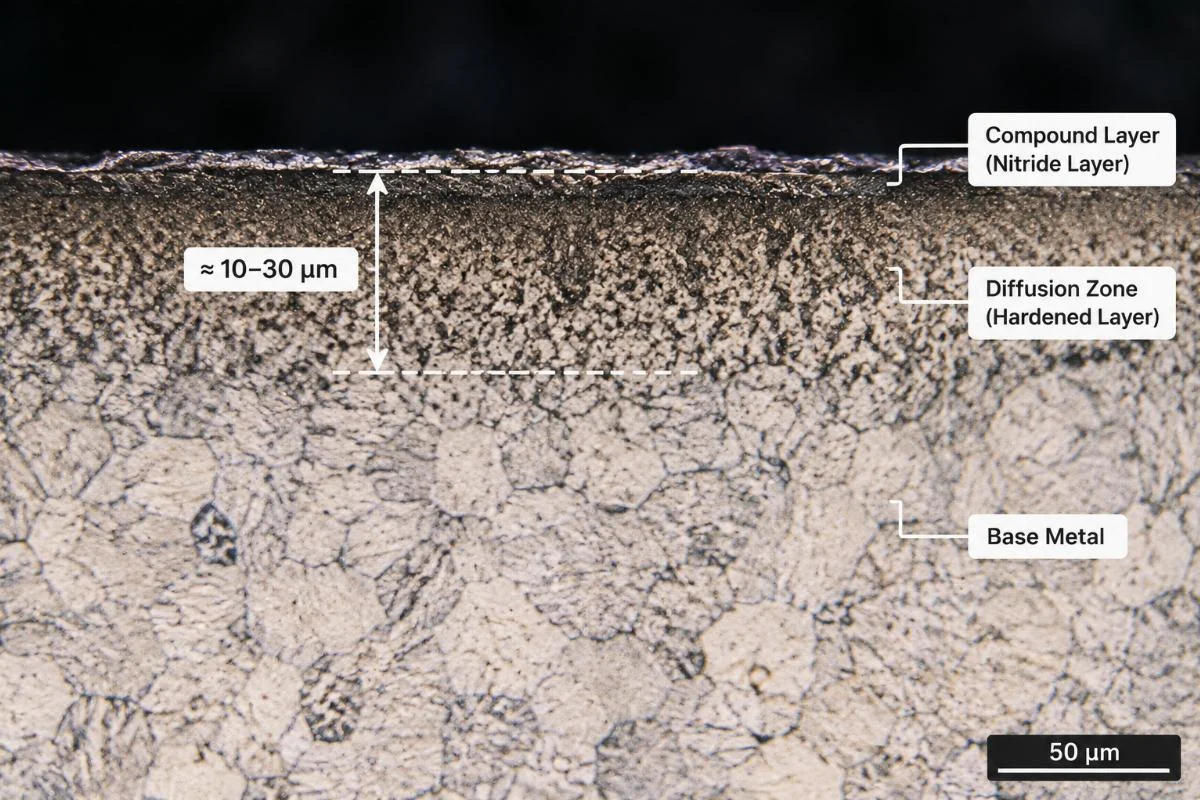
Standard alloy dies might look cost-effective on paper, but high-protein formulas cause rapid abrasive wear. The mineral content in fishmeal and certain bone meals acts like sandpaper inside the channels. Within a few months, standard steel holes enlarge, destroying the compression ratio and leading to massive downtime costs for replacement and recalibration.
To survive these conditions, the die face and channels must undergo deep nitriding. This controlled nitrogen infusion creates a surface hardness that resists abrasion, extending the service life meaningfully. At Meiteng, we apply this principle across our custom ring die and pellet forming services. We utilize food-grade 304 and 316 stainless steel options for corrosive environments, ensuring that the base material remains sanitary while the working surfaces handle the mechanical abuse.
Our turnkey formula support goes beyond just selling hardware. We analyze your specific ingredient abrasiveness to recommend the exact nitriding depth and alloy composition required. This prevents the on-site clogging and rapid wear issues that plague producers who rely on off-the-shelf, untreated molds.
How to Match Die Specs with Your Production Goals?
A systematic matrix comparing hole diameters, shapes, and expected performance ranges prevents costly trial and error.
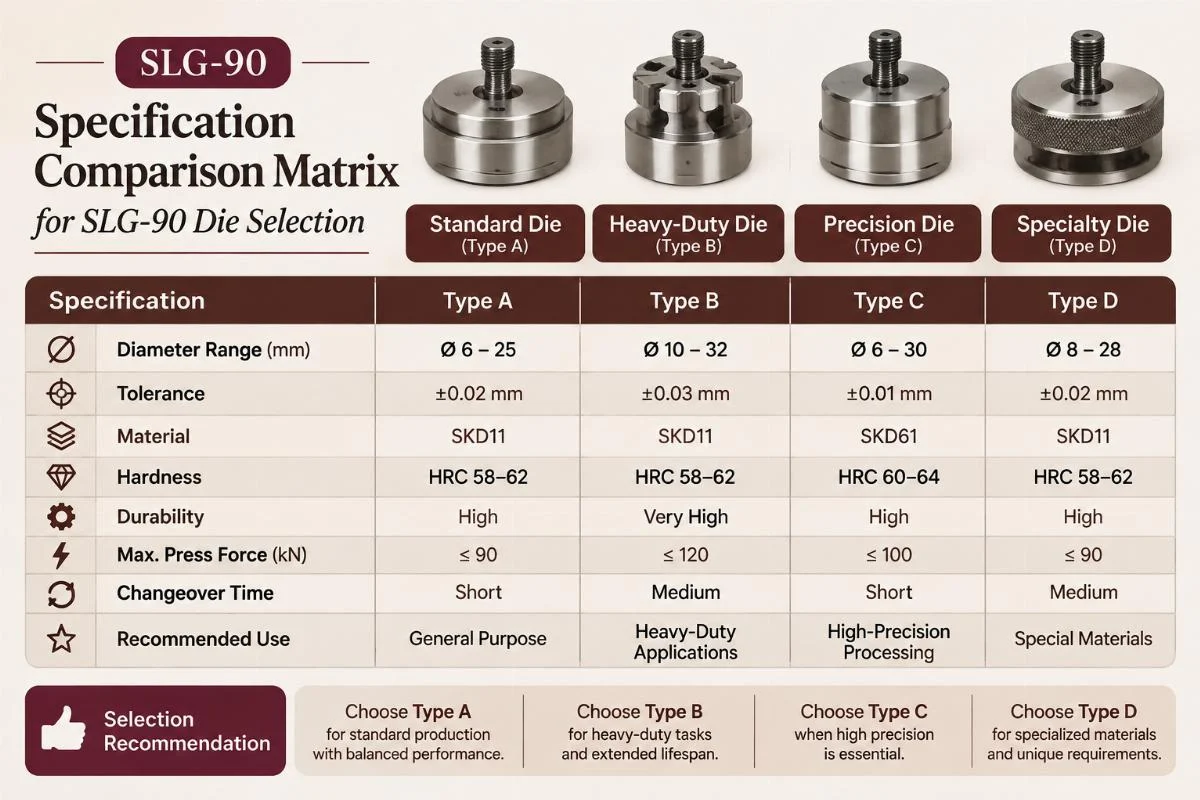
Selecting the right SLG-90 mold shapes requires balancing the desired pellet geometry with the physical limits of your formula. Below is a specification comparison matrix to guide your selection process.
| Target Application | Die Hole Shape | Recommended Channel Design | Material & Treatment | Expected Performance Characteristics |
|---|---|---|---|---|
| High-Fishmeal Aquafeed | Round (Sinking) | High compression ratio, short land | Nitrided Alloy Steel | Robust resistance to abrasive wear, stable density |
| Pet Food Kibble | Bone, Star, Triangle | Multi-hole layout, optimized land length | 304 Stainless + Nitrided | Sharp edge retention, uniform sizing, low breakage |
| Plant-Based Protein | Cylinder, Strand | Long land length, gradual exit angle | 316 Stainless Steel | Enhanced fiber alignment, smooth surface finish |
| Standard Poultry Feed | Round (Floating) | Moderate compression, standard land | Standard Nitrided Alloy | Balanced output capacity, good buoyancy control |
Note: Exact kg/h ranges depend on formula viscosity and moisture content. The values above represent relative performance tiers based on die channel optimization.
When a Southeast Asian catfish producer switched from standard round holes to a custom multi-hole layout with adjusted compression ratios for their high-starch floating feed, they eliminated the irregular sizing that was causing packaging line jams. The single screw extruder die design was tailored specifically to their starch gelatinization point, proving that geometry dictates success just as much as raw power.
Conclusion
Die geometry and material hardness dictate the reality of extrusion, not marketing brochures.
Maximizing the SLG-90 Single-Screw Pellet Extruder requires aligning die channel designs with formula viscosities to maintain backpressure and shape integrity. Nitrided treatments are non-negotiable for high-protein abrasion, while precise land lengths ensure structural retention. Match your mold specs to your ingredients, and the output capacity will follow naturally.

Engineering Perspective
An In-House R&D Team Behind Every Line
Jinan MT Machinery develops its process technology in-house. The team concentrates on the four areas that decide pellet shape, expansion and line stability.
- Expansion technology
- Twin-screw extrusion
- Die design
- PLC/MCC automation
Related Articles
 Nov 16, 2026 · Product & Series Guides
DS Line Rotary Cutter for 2D Snack Pellets Manufacturer
Optimizing Rotary Cutter Options for 2D Snack Pellets eliminates edge burrs and reduces scrap rates by synchronizing cutter speed with extruder screw speed. Selecting… Read This Article Nov 16, 2026 · Product & Series Guides
2D Pellet Die Set for Wheels, Squares, Shells & Tubes Wholesale Supplier
Selecting the right 2D pellet die set requires matching specific shapes with the correct compression ratio to prevent screw jamming and transit corrosion. Discover… Read This Article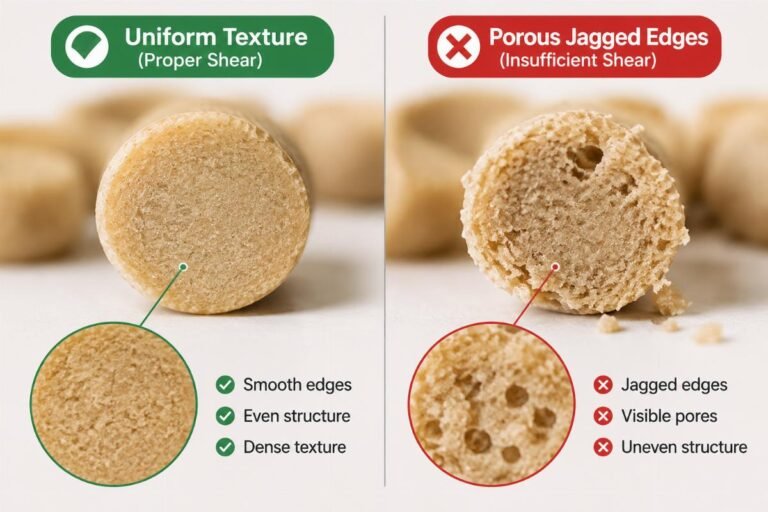 Nov 16, 2026 · Product & Series Guides
DS85 vs DS95 Pellet Chips Extruder Manufacturer for Sale
Choosing the right DS85 vs DS95 extruder prevents barrel blockage when processing high-meat pellet chip formulas. The DS85 delivers energy efficiency for standard recipes,… Read This ArticleFree Process Check
Send Your Recipe for a Process Check
Jinan MT Machinery engineers review your recipe and return a free process plan within 24 hours. Tell us the product, output, raw material, local voltage and heat source.
Send Your Recipe on WhatsApp