
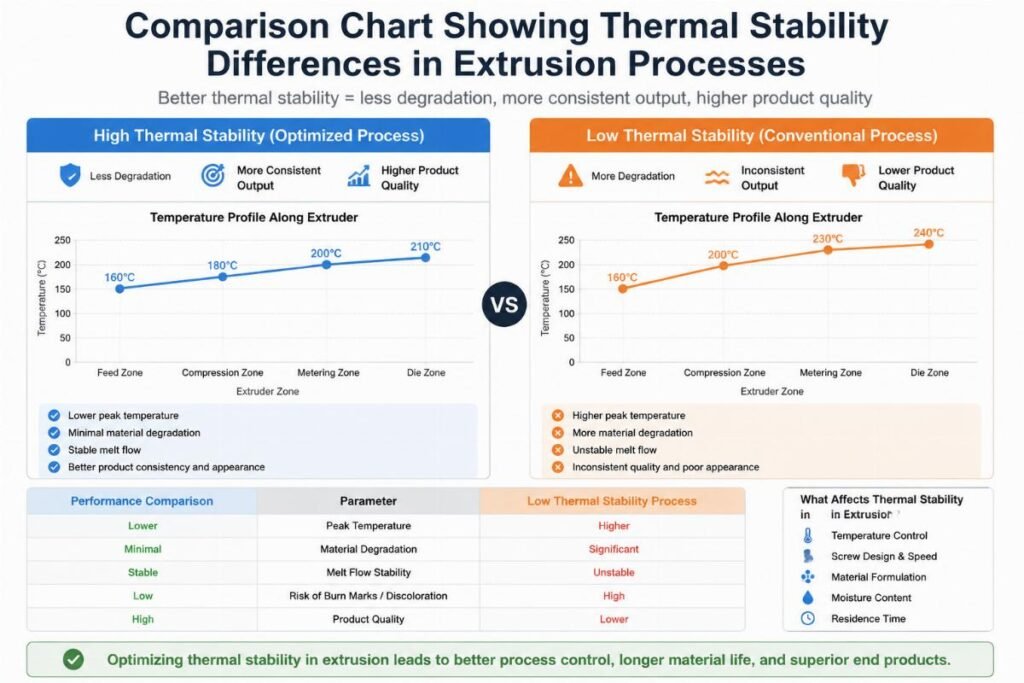
The lowest initial equipment price rarely saves money; it usually guarantees catastrophic batch rejections.
When you compare quotes turnkey pellet chips production line proposals, you must look far beyond the initial invoice. The true cost drivers are screw-barrel matching precision, PID temperature control stability, and cutting consistency, which collectively dictate your final yield and profitability.
Before transitioning from the workshop floor to sales, I spent years debugging twin-screw machines at pet food facilities. I have witnessed countless startup owners purchase cheap, assembled lines, only to watch their extrusion cavity temperatures fluctuate wildly. The result? Pellets covered in dark cracks, massive碎屑 after drying, and entire batches scrapped. When I evaluate extruder line quotes today, I ignore flashy parameters and focus entirely on how the screw combination matches the mold holes. Buying an extrusion line is not about stacking individual machines; the coherence of temperature control and cutting is the ultimate safeguard for your profit margins.

Transitioning from raw material intake to finished packaging requires a holistic view of the entire system. Let us break down the critical factors you must assess.
What Hidden Costs Are Ignored in Cheap Turnkey Quotes?
Low initial quotes frequently exclude critical integration costs, particularly regarding precise temperature control and synchronized cutting systems.
When you compare quotes turnkey pellet chips production line offers, suppliers often highlight the base extruder price while burying the integration expenses. A cheap assembled line might lack advanced thermal regulation, leading to unstable extrusion cavity temperatures. This instability causes dark cracks in the final product and massive yield loss after the drying phase. Similarly, ignoring the integration between the cutter and the mold leads to uneven pellet sizes, forcing frequent downtime for mold adjustments and causing substantial flavor coating waste.
To properly evaluate extruder line quotes, you need to see exactly what is included in the pet food production line cost breakdown. Below is a specification comparison matrix illustrating the difference between a basic cheap quote and a properly integrated turnkey solution.
| Integration Factor | Basic Cheap Quote | Properly Integrated Turnkey Line |
|---|---|---|
| Temperature Control | Uncontrolled / Basic | PID Controlled / Stable |
| Screw-Mold Matching | Self-reported / Unverified | Verifiable / Precision Matched |
| Cutting Synchronization | Uncontrolled / Manual | Synchronized / Automated |
| Material Certification | Not provided / Basic | Certified / Food-Grade |
| Yield Consistency | Vulnerable / High Rejection | Robust / Premium Yield |
A pet food startup once purchased a heavily discounted assembled line. Because the thermal regulation was inadequate, the extrusion cavity experienced severe temperature swings. The resulting dark cracks meant a significant portion of the batch was rejected, and the yield loss after drying was devastating, completely wiping out any initial savings.
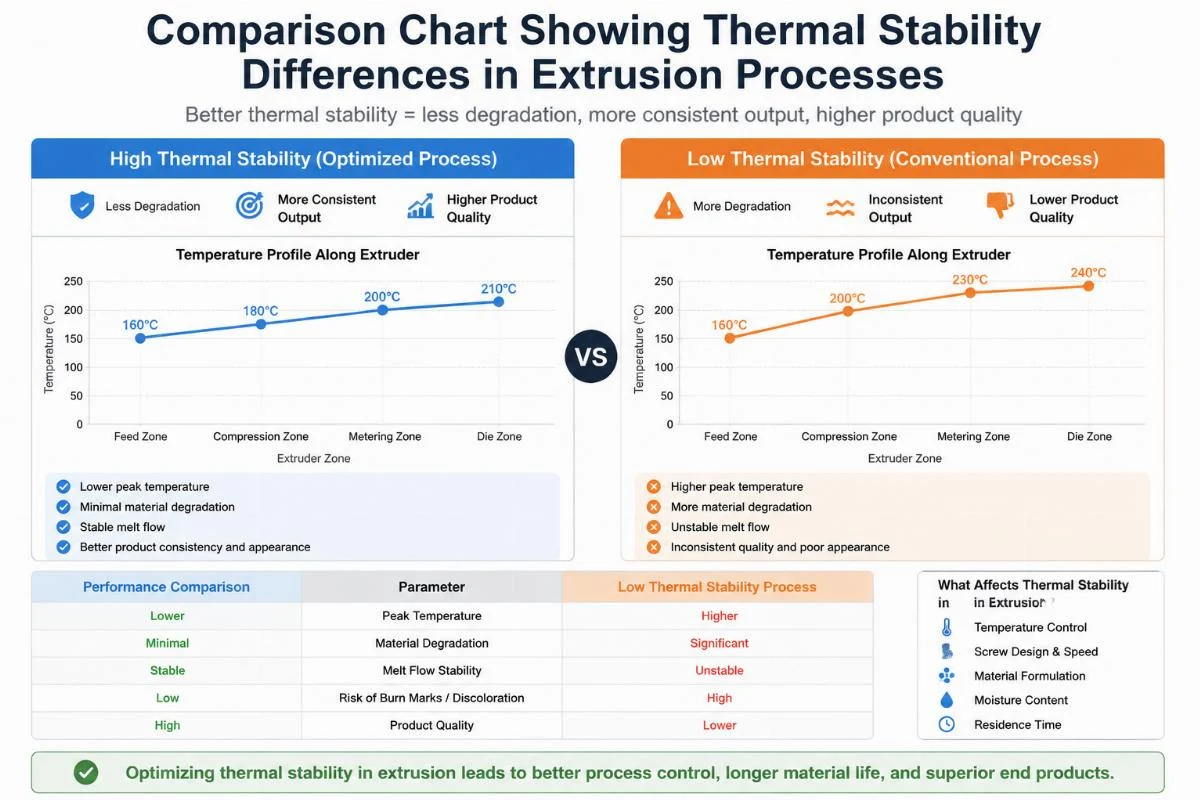
True cost evaluation requires analyzing the entire pet food production line cost breakdown, ensuring that thermal and mechanical integrations are not treated as optional upgrades.
How Do Screw Configurations Impact Final Pellet Quality?
Proper screw-barrel matching ensures stable extrusion, preventing structural failures and ensuring uniform expansion in the final product.
The heart of any twin-screw extruder price comparison should be the screw configuration. The specific mechanical energy input ranges and the shear forces generated by the screw elements dictate how well the raw materials gelatinize and expand. If the screw combination does not perfectly match the mold hole ratios, the material experiences uneven pressure. This leads to inconsistent textures and structural weaknesses.
When you compare quotes turnkey pellet chips production line packages, you must demand transparency on the screw design. A snack manufacturer once ignored this matching principle. They focused solely on the motor power, resulting in uneven pellet sizes. The mismatch forced them into frequent downtime for mold adjustments, and the irregular surfaces caused substantial flavor coating waste, as the coating could not adhere uniformly.
This is where the DS-series twin-screw extruders, such as the DS70, demonstrate their engineering value. The focus is heavily placed on screw-mold matching and the integration of downstream drying and cooling systems. By ensuring that the shear zones within the barrel align perfectly with the die plate specifications, the extrusion process maintains temperature stability. This precision prevents the dark cracks and structural failures that plague poorly configured machines, ensuring that every pellet meets the required density and texture standards.

Evaluating the screw design is not about counting elements; it is about understanding how the shear profile supports the specific rheology of your recipe.
Why Is Cutting Consistency More Important Than Extruder Capacity?
Synchronized cutting and mold matching reduce fines and rework, directly protecting your profit margins by maximizing premium product yield.
A common misconception in the industry is that higher capacity automatically means better return on investment. However, when you compare quotes turnkey pellet chips production line proposals, you will find that mismatched cutting speeds create excess fines. These fines cannot be sold as premium products, drastically lowering your overall yield. The cutting system must operate in perfect harmony with the extruder output and the mold hole layout.
If the cutter rotation speed is not synchronized with the material extrusion rate, the pellet lengths will vary wildly. Short pellets and excessive dust become inevitable. A textured vegetable protein producer once focused entirely on single-machine specs while ignoring the hydration and cutting integration. The result was a much longer rehydration time and inconsistent texture batches, as the irregular pellet sizes absorbed water at different rates.
When conducting a twin-screw extruder price comparison, prioritize the cutting mechanism’s precision over raw throughput numbers. A synchronized cutting system ensures that the face-cutting or water-ring cutting process produces uniform pellets with clean edges. This uniformity is critical for downstream processes, such as drying and flavor coating, where consistent surface area is required for even heat transfer and flavor adherence.
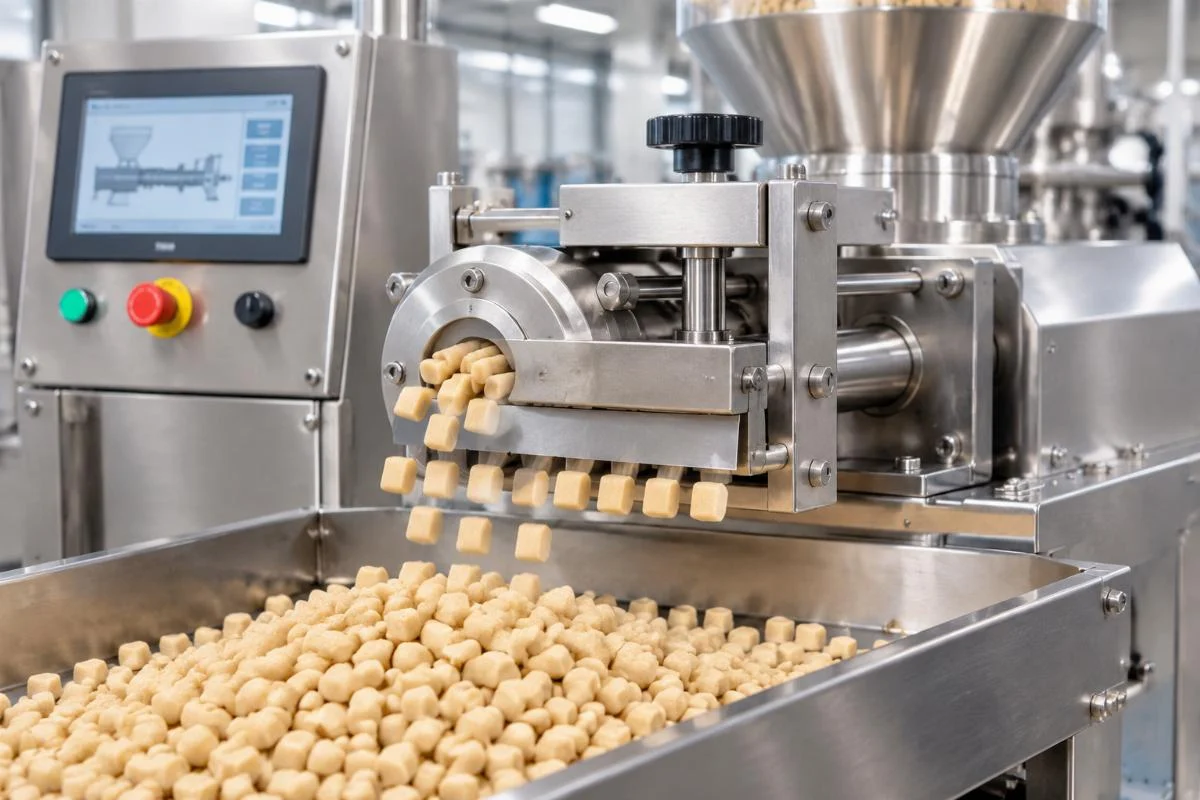
Capacity is meaningless if the cutting system turns a significant portion of your output into low-value fines.
Which Certifications and Support Should You Demand?
Food-grade materials, international certifications, and comprehensive on-site training prevent long-term compliance failures and maintenance disasters.
When you compare quotes turnkey pellet chips production line offers, the cheapest options often cut corners on material quality and documentation. Extrusion involves high temperatures, pressures, and moisture. If the contact parts are not made from proper food-grade stainless steel, contamination is a severe risk. Furthermore, operating an integrated line requires specialized knowledge; without proper training, even the best equipment will be misused.
You must demand verifiable certifications. Equipment should comply with international food safety standards, such as CE and ISO 9001, and ideally meet sanitary standards like 3-A for specific applications. A startup producing infant food or premium pet treats cannot afford to use machinery that lacks traceable material certifications.
Beyond the hardware, the support structure is vital. A proper turnkey solution includes on-site installation, commissioning, and operator training. I have seen lines sit idle for months because the local operators did not understand the PID control logic or the screw combination adjustments. Comprehensive training ensures that your team can handle formula changes, perform routine maintenance, and troubleshoot minor issues without waiting for remote support. Multi-language technical support and remote diagnostic assistance are essential for global operations, ensuring that downtime is minimized regardless of your geographic location.

Certifications and training are not administrative burdens; they are the foundation of operational continuity and product safety.
Conclusion
Comparing quotes requires looking beyond the initial invoice to evaluate the integration of thermal control, screw matching, and cutting precision.
When you compare quotes turnkey pellet chips production line proposals, remember that the cheapest unit price often leads to the highest operational costs through batch rejections and yield loss. Focus on the pet food production line cost breakdown to ensure that screw-barrel matching and synchronized cutting are prioritized over raw capacity. Proper integration, backed by food-grade certifications and comprehensive operator training, is the only way to secure consistent quality and protect your profit margins in the long term.
Equipment Mentioned in This Article
 frying chips machine
Industrial Deep Fryer Machine Manufacturer Banana Potato Chips French Fries
Industrial Deep Fryer Machine for banana and potato chips features automatic basket lifting and oil filtration. The electric heating system… View Machine Details frying chips machine
100-2000L Tank Deep Fryer Commercial Chips Frying Machine
100-2000L Tank Deep Fryer for Snack Pellets and Chips — handles continuous deep frying and de-oiling for potato, cassava, and… View Machine Details frying chips machine
Electric Batch Frying Machine for French Fries Fast Food Chicken Wing
Industrial Batch Fryer for Fried Snacks and French Fries — features electric or gas heating with automatic basket lifting for… View Machine Details frying chips machine
Industrial Deep Fryer for Potato Chips and Snack Food Production
Industrial Deep Fryer for Potato Chips and Snack Food Production — frying and de-oiling for 2D/3D pellets, papad, and potato… View Machine DetailsRelated Applications

Engineering Perspective
An In-House R&D Team Behind Every Line
Jinan MT Machinery develops its process technology in-house. The team concentrates on the four areas that decide pellet shape, expansion and line stability.
- Expansion technology
- Twin-screw extrusion
- Die design
- PLC/MCC automation
Related Articles
 Nov 7, 2026 · Buying Guide
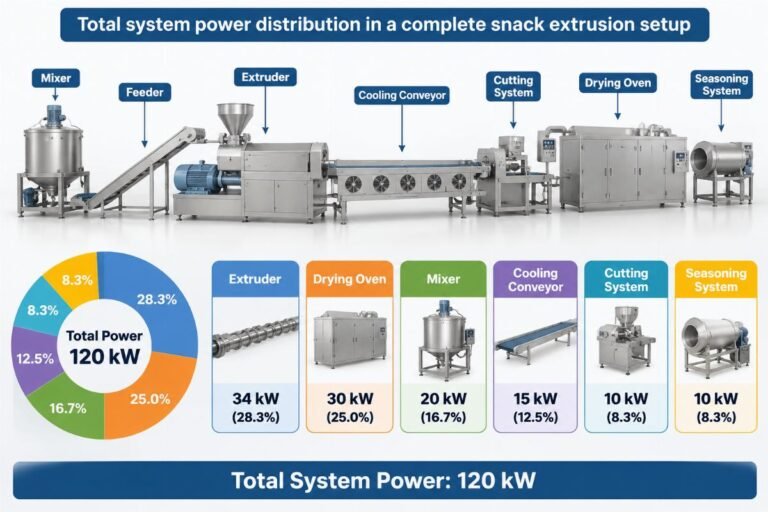
Energy Efficient Snack Pellet Extruder Line Manufacturer for Sale
Evaluating an energy efficiency snack pellet production line requires looking beyond single motor ratings to total system power and heat recovery to eliminate hidden… Read This Article Nov 7, 2026 · Buying Guide
De-Oiling Machine for Pellet Chips Fryer Line | Meiteng OEM Manufacturer
A properly matched de-oiling machine for pellet chips controls residual surface oil to extend shelf life and ensure seasoning adhesion without shattering fragile snacks.… Read This Article Nov 7, 2026 · Buying Guide
Twin-Screw Extruder for Snack Food: Wholesale Manufacturer
Selecting a twin-screw extruder for snack food requires matching machine specifications with local factory conditions and raw material intake rather than merely comparing price… Read This ArticleFree Process Check
Send Your Recipe for a Process Check
Jinan MT Machinery engineers review your recipe and return a free process plan within 24 hours. Tell us the product, output, raw material, local voltage and heat source.
Send Your Recipe on WhatsApp