
Twin-Screw vs Single-Screw Extruder for Corn Chips Manufacturer
- By Jinan MT Machinery
Buying a cheaper machine to save upfront capital is the fastest way to bankrupt a corn chip startup.
When evaluating a Twin-Screw vs Single-Screw Extruder for corn chip production, the definitive answer is that twin-screw technology is the only reliable choice for stable snack manufacturing. Single-screw machines rely on unpredictable wall friction, which consistently fails to achieve the uniform gelatinization required for corn chips, leading to severe blockages and massive material waste. Twin-screw extruders deliver controlled shear intensity and self-cleaning action, ensuring consistent product quality and long-term profitability.
Walking through the assembly floor in Jinan years ago, I watched operators scrape burnt, ungelatinized corn dough out of a barrel. The factory owner was furious, blaming the raw material. But the real culprit was the machine’s fundamental design. Single-screw machines push material forward using friction against the barrel wall. When processing corn grits for chips, this friction creates uneven heat zones. Some parts burn while others remain raw. I later consulted for a Mexican snack startup that ignored this physics lesson. They purchased a single-screw corn puff machine to cut initial costs. Within weeks, the barrel blocked constantly during startup. They eventually had to scrap that line and invest in a twin-screw setup. Understanding the core mechanical differences in a Twin-Screw vs Single-Screw Extruder comparison is not just an academic exercise; it is the baseline for avoiding operational disasters.
Transitioning from basic friction to positive displacement requires a deep dive into the mechanical principles governing these machines.
How Do Shear Principles Differ Between Single and Twin-Screw Extruders?
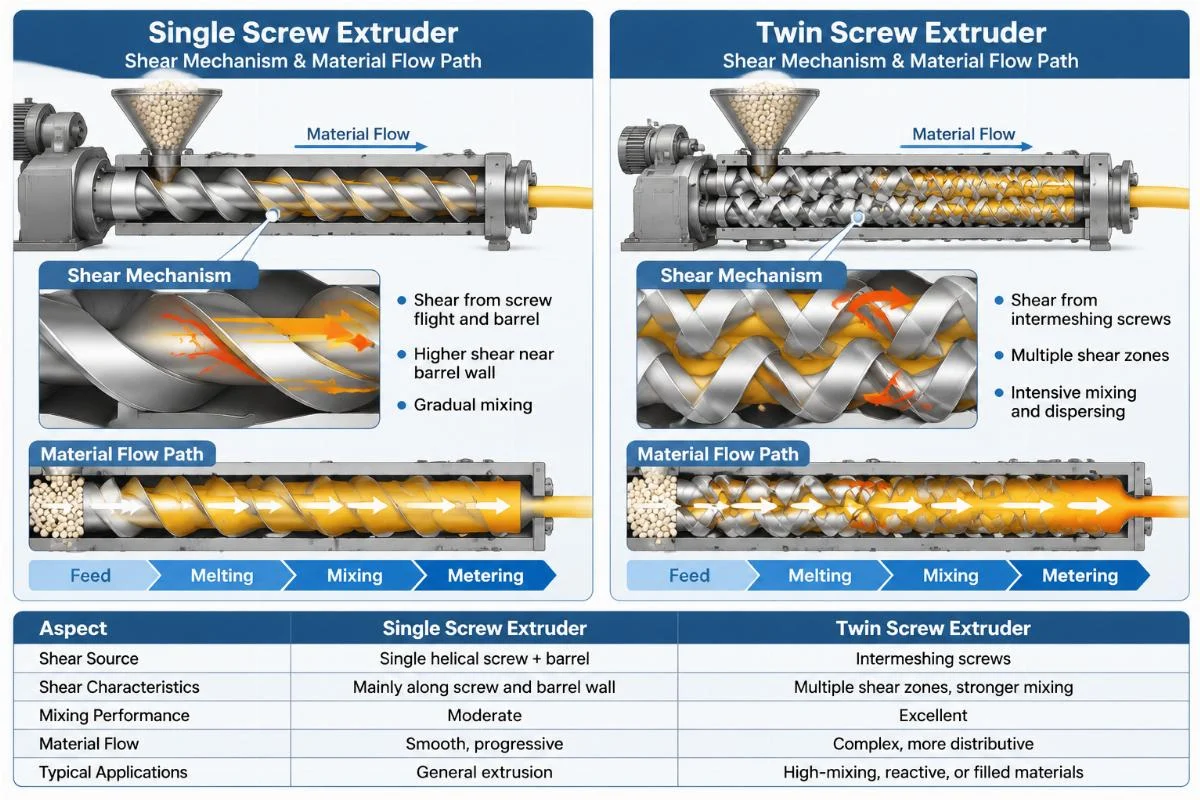
The fundamental difference lies in how mechanical energy is transferred to the corn grits: single-screw relies on drag flow and wall friction, whereas twin-screw utilizes intermeshing positive displacement and intense internal shear.
In a single-screw setup, the material must stick to the barrel wall and slide against the screw root. This drag flow is highly sensitive to the formulation’s moisture and fat content. If the corn mixture becomes too slippery, the screw simply spins without pushing the material forward, causing a complete stoppage..
Conversely, a twin-screw extruder features two intermeshing screws that act as a positive displacement pump. The material is trapped in the C-shaped cavities between the screws and the barrel. This geometry forces the corn grits to undergo severe shearing and kneading as they pass through the intermeshing zone. This intense shear generates the exact Specific Mechanical Energy (SME) required to fully gelatinize corn starch without relying on barrel friction..
Furthermore, the intermeshing zones create a self-cleaning effect. As the screws rotate, the flight of one screw wipes the flight of the other. This prevents sticky, gelatinized corn dough from adhering to the metal surfaces and degrading into burnt black spots—a common defect in corn chip production. When analyzing a Twin-Screw vs Single-Screw Extruder, this self-cleaning capability is the primary reason twin-screw machines maintain consistent throughput over extended runs.
Moving from mechanical theory to practical application, we must quantify how these principles translate into actual production metrics.
What Are the Key Specification Differences for Corn Chip Production?
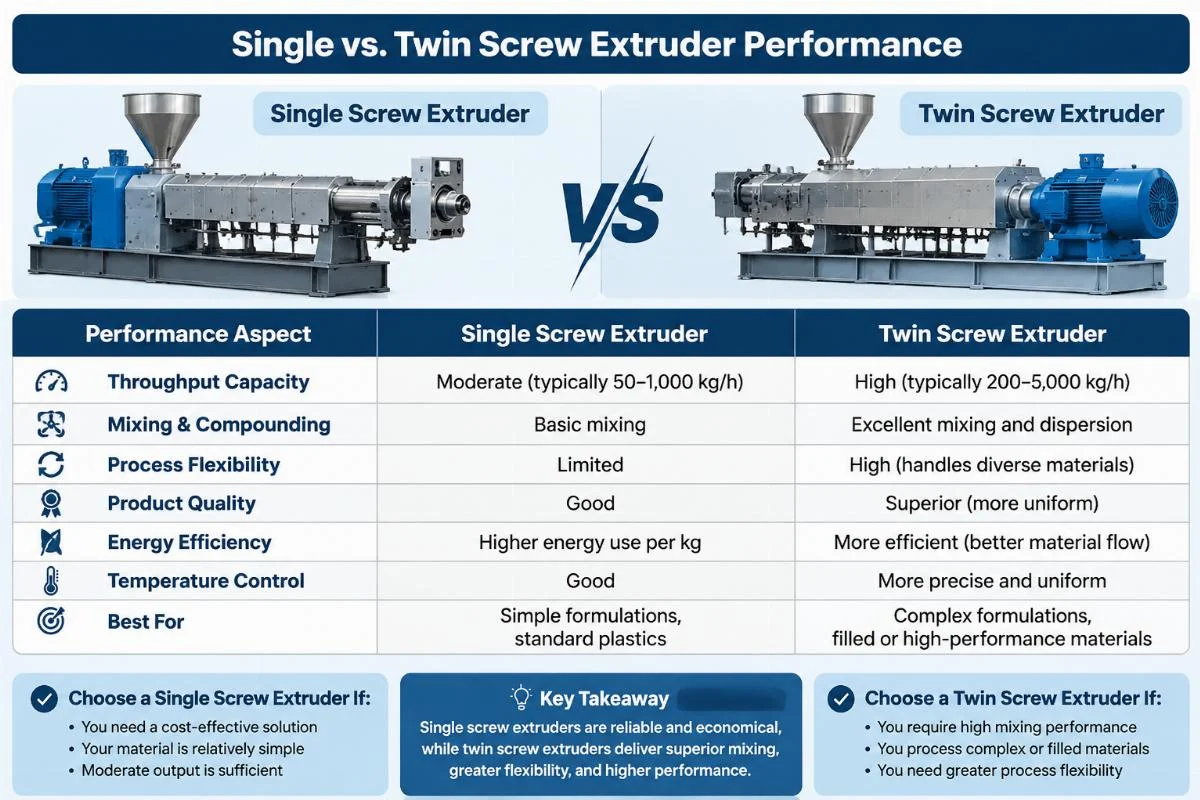
A rigorous specification comparison reveals that twin-screw extruders offer superior throughput stability, precise SME control, and significantly lower maintenance frequency compared to their single-screw counterparts.
To make an informed purchasing decision, buyers must look beyond the motor nameplate and evaluate the operational parameters that dictate daily profitability. The following matrix outlines the critical differences when processing corn-based snack formulations.
| Performance Factor | Single-Screw Extruder | Twin-Screw Extruder |
|---|---|---|
| Shear Mechanism | Uncontrolled wall friction | Controlled intermeshing shear |
| Gelatinization Consistency | Highly variable, prone to raw spots | Uniform and verifiable |
| Self-Cleaning Ability | None, high risk of material buildup | Excellent, continuous wiping action |
| Throughput Stability | Vulnerable to slip and blockage | Robust, positive displacement |
| Maintenance Frequency | High, frequent barrel cleaning required | Noticeably reduced, stable long runs |
| Formulation Flexibility | Restricted to simple, low-fat recipes | Highly adaptable to complex recipes |
.
Consider a snack food startup in Latin America. They initially struggled with a single-screw corn puff machine that suffered from frequent slip-stall events whenever the ambient humidity shifted. After upgrading to a DS-series twin-screw extruder from Meiteng, their capacity stabilized in the mid-hundreds of kilograms per hour. More importantly, their unplanned downtime dropped noticeably because the positive displacement feed eliminated the slip-stall issue entirely. This real-world shift highlights why a Twin-Screw vs Single-Screw Extruder evaluation must prioritize operational stability over initial purchase price.
Understanding the specifications is crucial, but recognizing the failure modes of inadequate equipment is what truly protects your investment.
Why Do Single-Screw Extruders Fail in Corn Chip Applications?
Single-screw extruders fail in corn chip applications because their reliance on friction-based melting causes uneven heating, incomplete starch gelatinization, and frequent catastrophic blockages when processing complex corn formulations.
Corn grits require a precise thermal and mechanical history to achieve the optimal expansion ratio and crisp texture. The friction-based heating in a single-screw machine is inherently inefficient for this task. The heat transfer depends entirely on the material rubbing against the heated barrel. If the corn formulation contains added fats, fibers, or moisture variations, the friction coefficient changes unpredictably..
I once audited an African corn puff manufacturing facility where the scrap rate was severely impacting margins. The operators were constantly adjusting the barrel temperatures and screw speeds, trying to force the single-screw machine to puff the corn evenly. They believed that higher screw speed would guarantee better puffing. This is a counter-intuitive trap: higher speed in a single-screw machine merely reduces the residence time, leading to under-gelatinized, dense products that fail to expand properly in the fryer or oven. True gelatinization depends on shear intensity and residence time distribution, not just rotational speed.
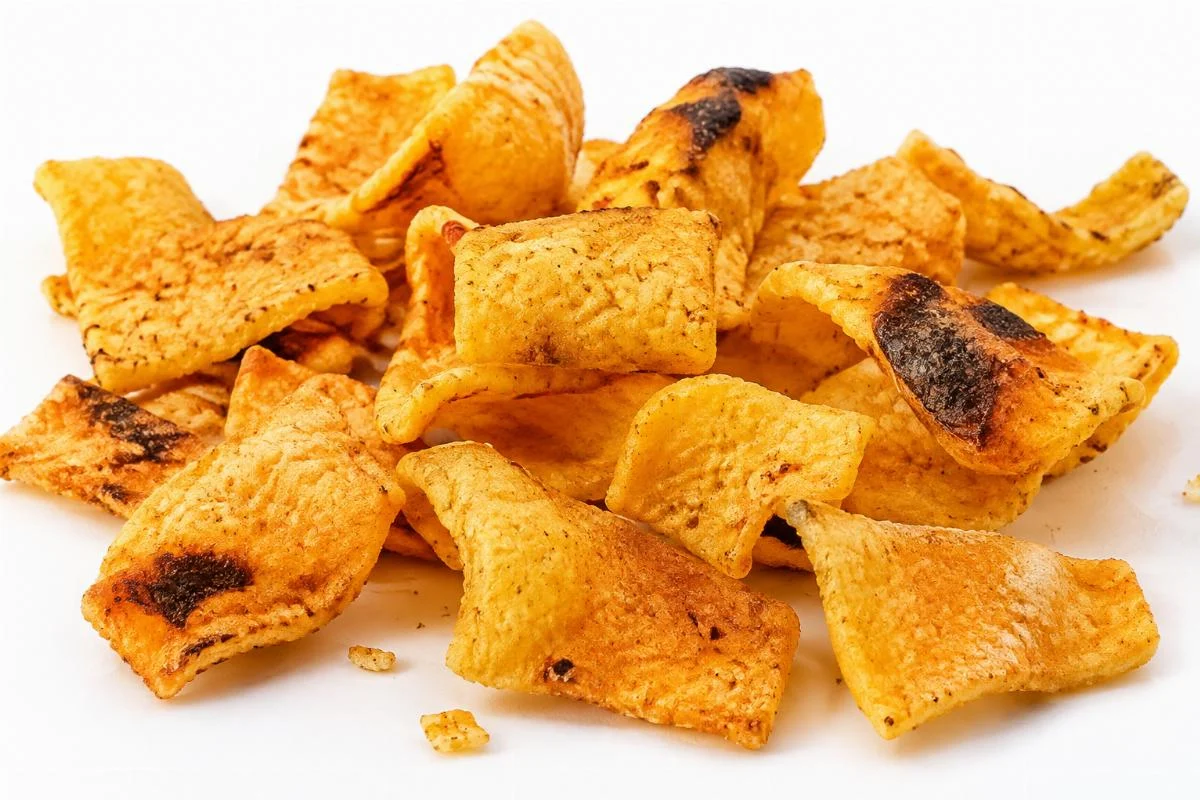
When we replaced their line with an SLG-series single-screw extruder configured specifically for simpler, low-fat applications, and installed a DS-series twin-screw extruder for their complex corn chip recipes, the results were immediate. The twin-screw unit delivered uniform gelatinization, achieving the optimal final moisture range consistently. The scrap rate dropped noticeably because the product quality was no longer a guessing game..
Armed with the knowledge of failure modes and mechanical advantages, the final step is aligning your specific business needs with the correct technology.
How to Choose the Right Extruder for Your Snack Line?
Choosing the right extruder requires matching your target capacity, product complexity, and long-term ROI goals to the mechanical realities of the equipment, heavily favoring twin-screw technology for corn chip lines.
The decision matrix for snack food startup owners should not be based solely on the quotation sheet. A single-screw machine might appear cheaper initially, but the hidden costs from blockages, material waste, and labor-intensive cleaning make a twin-screw extruder vastly more economical over the lifecycle of the project.
When consulting for a contract manufacturer in the MENA region, they wanted to produce multi-shape corn chips to capture a premium market segment. They needed rapid die changeovers and high yield. We designed a turnkey line featuring a DS-series twin-screw extruder. The self-cleaning action and precise SME control allowed them to switch die plates rapidly, keeping changeover times well under half an hour. The yield increased substantially because the positive displacement ensured every gram of dough was processed uniformly..
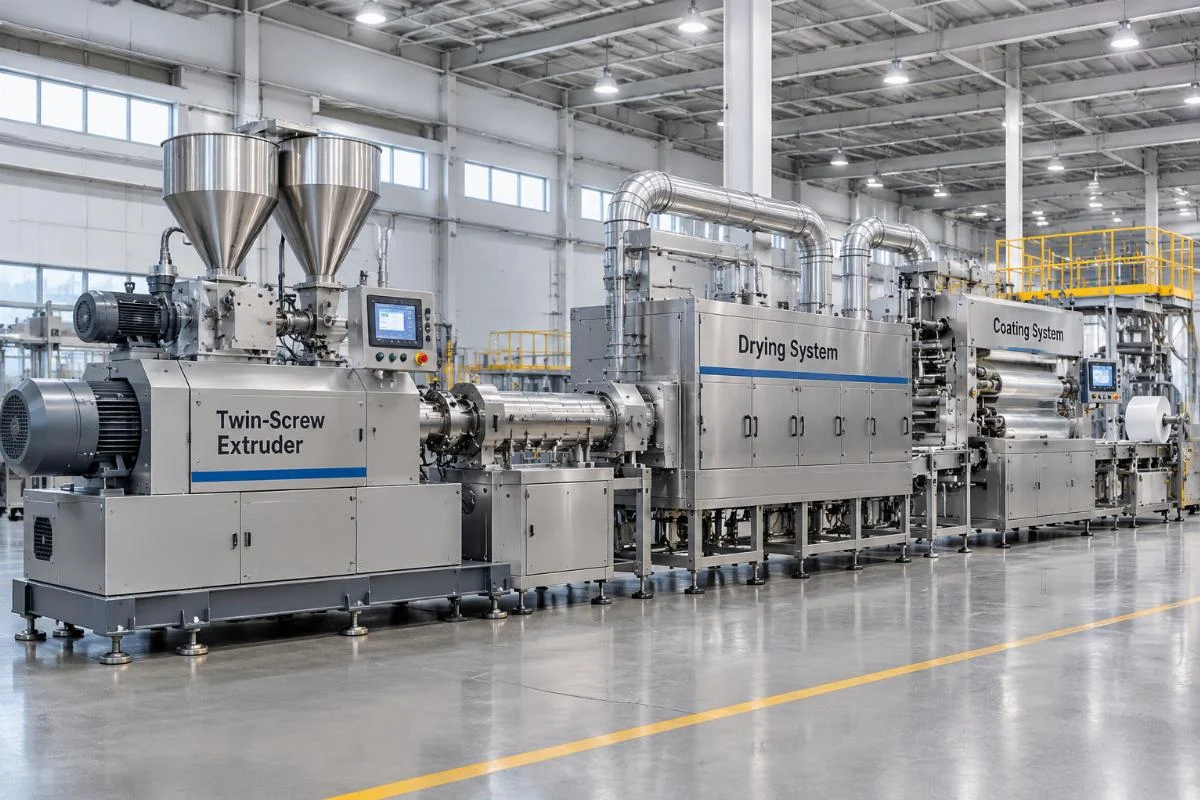
If your business model involves simple, single-ingredient, low-fat puffing, a single-screw option like the SLG-series might suffice. However, for authentic corn chips, multi-grain blends, or products requiring precise texture control, the twin-screw architecture is non-negotiable. Meiteng supports this transition not just by supplying the DS-series hardware, but by providing comprehensive formula development and turnkey line design. We ensure that the raw material intake, extrusion, drying, and flavor-coating systems are perfectly synchronized for your specific corn chip recipe.
Evaluating a Twin-Screw vs Single-Screw Extruder ultimately comes down to risk management. The twin-screw extruder mitigates the physical risks of friction-based processing, ensuring that your production line runs smoothly, your product quality remains consistent, and your business achieves a stable, profitable ROI.
Conclusion
Selecting the correct extrusion technology dictates the survival and profitability of a corn chip manufacturing business.
Single-screw extruders rely on unpredictable friction, leading to inconsistent gelatinization and frequent blockages that destroy margins. Twin-screw extruders provide the controlled shear, self-cleaning action, and positive displacement necessary for stable, high-quality corn chip production. By prioritizing mechanical reliability and operational consistency over initial equipment costs, snack manufacturers can secure a robust foundation for long-term commercial success.
Equipment Mentioned in This Article
 frying chips machine
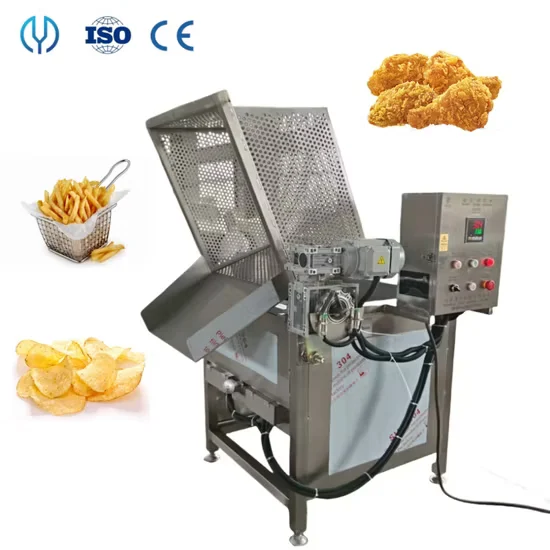
Banana Chips Corn Chips Frying Machine Semi-Automatic Deep Fryer CE
Banana Chips Corn Chips Frying Machine for Snack Processing — deep frying for banana chips, corn chips and falafel with… View Machine Details frying chips machine
Industrial Deep Fryer Machine Manufacturer Banana Potato Chips French Fries
Industrial Deep Fryer Machine for banana and potato chips features automatic basket lifting and oil filtration. The electric heating system… View Machine Details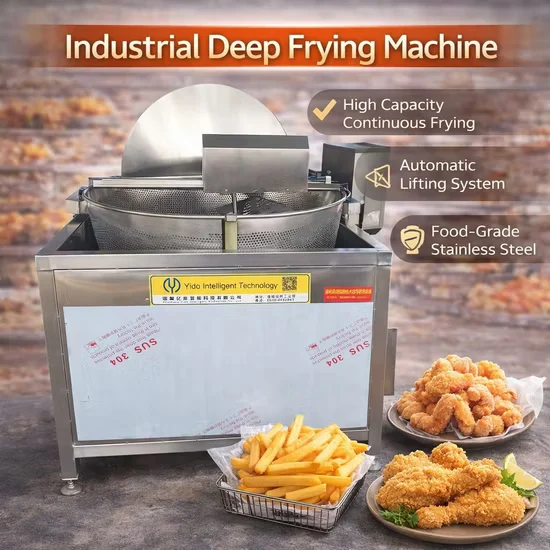 frying chips machine
Potato Chips Frying Machine Manufacturer Electric Gas Deep Fryer
Potato Chips Frying Machine for Uniform Heating and Oil Filtration — deep frying with automatic basket lifting ensures consistent product… View Machine Details frying chips machine
50L-2000L Plantain Banana Chips Frying Machine Manufacturer
Plantain And Banana Chips Frying Machine for frying and de-oiling snacks to ensure crisp texture. It features automatic basket lifting,… View Machine DetailsRelated Applications

Engineering Perspective
An In-House R&D Team Behind Every Line
Jinan MT Machinery develops its process technology in-house. The team concentrates on the four areas that decide pellet shape, expansion and line stability.
- Expansion technology
- Twin-screw extrusion
- Die design
- PLC/MCC automation
Related Articles
 Nov 12, 2026 · Brands & Alternatives
Bühler vs Wenger vs Clextral Snack Extruder Wholesale Supplier
Evaluating snack extruder options reveals that premium European brands often cause costly downtime due to long spare parts lead times and rigid designs for… Read This Article Nov 12, 2026 · Brands & Alternatives
Semi-Auto vs Fully Auto Pellet Chips Lines Manufacturer
Choosing between semi-automatic and fully automatic pellet chips lines depends on matching local power capacity, labor costs, and factory space rather than just production… Read This Article Nov 12, 2026 · Brands & Alternatives
Low-Fat Snack Air Popping Lines: Wholesale Supplier for Pellet Fryer Alternatives
Transitioning to an Air popping line for low-fat snacks often causes blockages and severe screw wear due to poor shear control. Twin-screw extruders with… Read This ArticleFree Process Check
Send Your Recipe for a Process Check
Jinan MT Machinery engineers review your recipe and return a free process plan within 24 hours. Tell us the product, output, raw material, local voltage and heat source.
Send Your Recipe on WhatsApp