
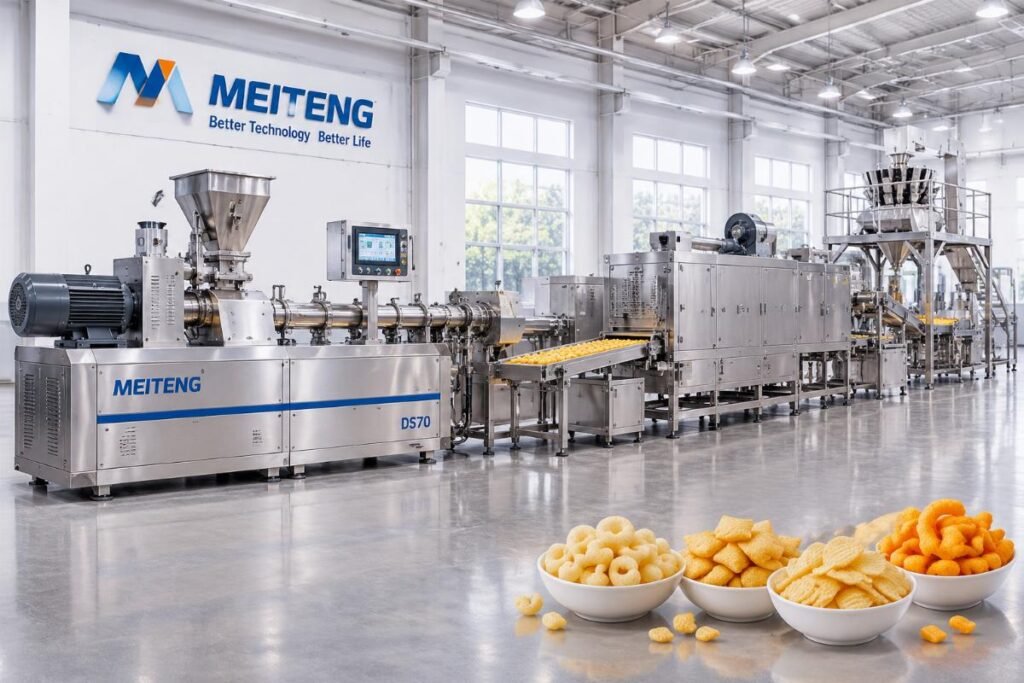
Most buyers assume 3D snacks merely require swapping the mold, but the reality is that complex textures demand strict synchronization between extrusion pressure and cutting speed to prevent structural collapse.
When deciding between 2D and 3D snack pellet lines, the core difference lies in the product geometry: 2D lines focus on maintaining consistent cross-sections through fixed dies, whereas 3D lines rely on dynamic expansion and precise rotary cutting to achieve multi-dimensional shapes. Choosing the right 2D vs 3D snack pellet lines depends entirely on your target product shape, as mismatched parameters in 3D production will inevitably lead to fragmented yields and wasted raw materials.
I still recall setting up a corn stick line for a client in Foshan who wanted a textured 3D surface effect. I initially quoted him a standard DS70 setup using conventional 2D logic, failing to fine-tune the mold ratio and cutting parameters. During the on-site trial, the extrudate came out as irregular fragments instead of the desired spherical puffs. We had to halt production and recalibrate the DS70 parameters to restore the yield to a commercially viable level. That field failure forced me to deeply investigate the 2D and 3D snack extrusion line differences, eventually mastering how different screw configurations and cutting mechanisms behave under various dough rheologies. Selecting equipment is never just about reading a spec sheet; it is about matching the mechanical behavior of the machine to the visual identity of your snack.
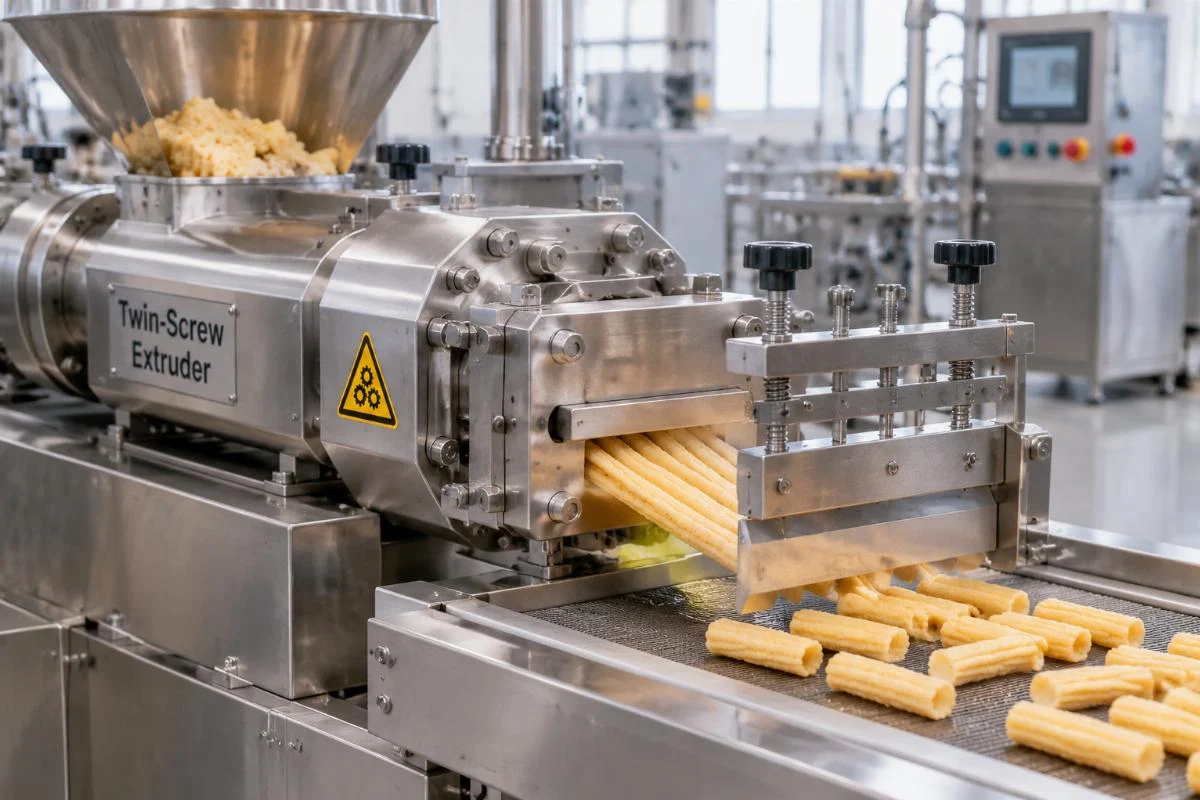
Understanding these mechanical nuances is the first step toward avoiding costly trial-and-error mistakes when you buy 3D snack pellet machine setups or scale up simple 2D profiles.
What Are the Core Differences Between 2D and 3D Snack Lines?
The fundamental divergence between these two line types lies in how they handle dough expansion and shape retention during the transition from the die face to the cutting zone.
In a 2D configuration, the primary objective is to maintain a uniform cross-section from the moment the dough exits the die until it is cut. The extrusion pressure remains relatively stable, and the cutting mechanism simply slices the continuous extrudate at fixed intervals. Conversely, a 3D configuration requires the dough to expand dynamically in multiple directions immediately after exiting the die, relying on rapid moisture flash-off to create complex volumetric shapes.
| Parameter | 2D Line Configuration | 3D Line Configuration |
|---|---|---|
| Die Design | Fixed cross-section holes | Multi-hole dynamic expansion molds |
| Cutting Mechanism | Fixed interval guillotine or simple rotary | Synchronized high-speed rotary cutter |
| Pressure Profile | Steady and continuous | Highly variable with rapid drop at die exit |
| Expansion Behavior | Minimal radial expansion | Multi-directional volumetric expansion |
| Moisture Threshold | Higher tolerance before drying | Strict threshold for optimal puffing |
A startup in Latin America wanted to produce 3D spherical puffs but initially used a line configured for 2D straight tubes. The mismatched cutting speed and mold ratio resulted in severe fragmentation. Only after adjusting the screw configuration and synchronizing the cutter speed did they achieve a stable yield.
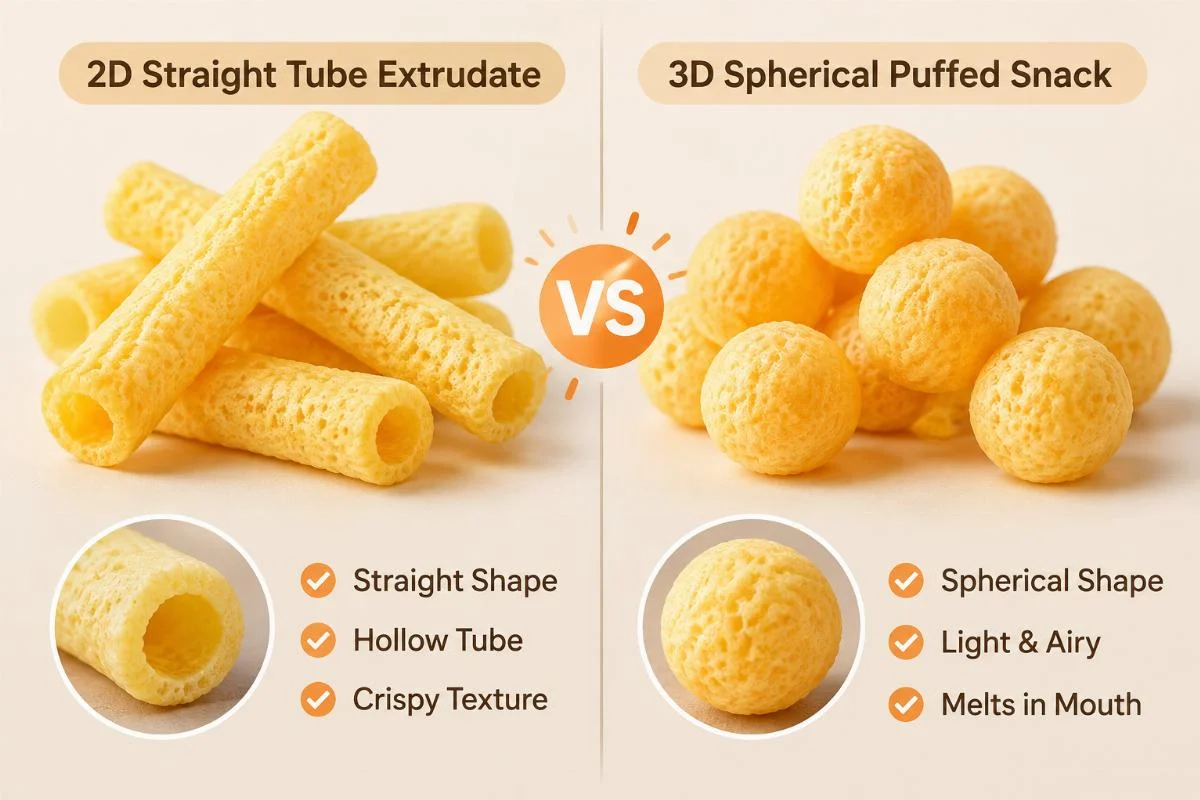
The 2D vs 3D snack pellet lines debate ultimately comes down to whether your product relies on a consistent profile or a dynamic, multi-dimensional expansion.
How Do Extruder Types Affect 2D and 3D Outputs?
Many assume single-screw extruders can handle 3D shapes, but complex 3D textures almost always demand the higher shear and mixing capabilities of twin-screw systems.
The screw configuration dictates how the dough is cooked, mixed, and pressurized before it reaches the die. Single-screw extruders rely heavily on friction and barrel heating, which works well for simple, homogeneous 2D profiles like basic rings or tubes. However, when producing intricate 3D snacks, the dough rheology becomes highly complex. Twin-screw extruders provide positive conveying, superior mixing, and precise shear control, which are critical for managing the starch gelatinization required for 3D expansion.
When a producer decided to upgrade from 2D rings to 3D star-shaped snacks, they quickly realized their single-screw setup could not handle the complex viscosity. The dough was not cooking evenly, leading to dense, unexpanded centers. They had to switch to a twin-screw extruder for 3D snacks to achieve the necessary shear and scale their capacity to the mid-range throughput required for commercial viability.
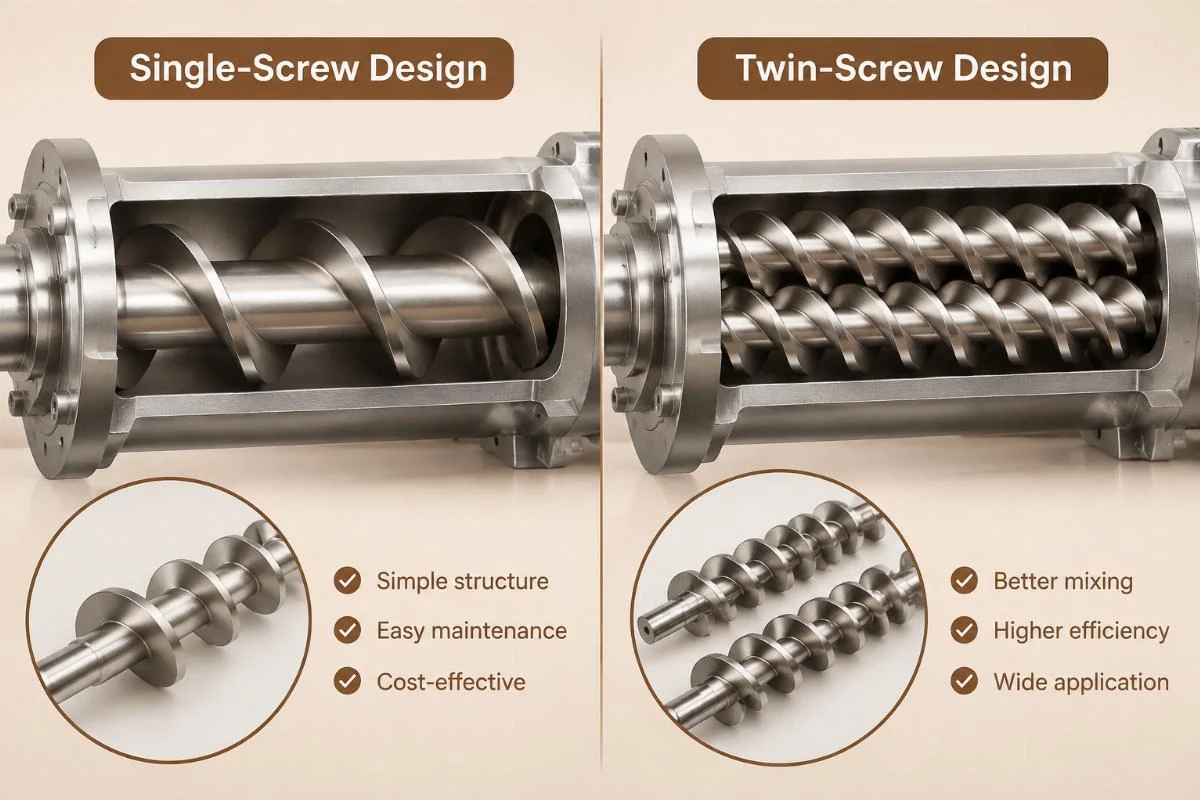
If your recipe involves multiple ingredients, varying moisture levels, or requires precise textural control for 3D shapes, the twin-screw design is non-negotiable. The 2D vs 3D snack pellet lines choice must align with the mechanical limitations of your extruder type.
What Are the Key Configuration Differences in Molds and Cutters?
Achieving a flawless 3D shape is not just about the mold; it requires a perfectly calibrated relationship between the mold hole diameter and the cutting blade speed.
In 2D production, the mold is designed to create a specific cross-section, and the cutter simply chops the continuous strand. The tolerance for error is relatively high because the shape is already formed inside the die. In 3D production, the mold hole diameter directly influences the initial expansion vector. If the cutting blade speed is not perfectly synchronized with the extrusion pressure and the mold’s expansion ratio, the delicate 3D structure will tear or collapse before it sets.
Consider a client producing 2D straight tubes. Their primary focus was achieving a uniform diameter, which allowed them to maintain a consistent moisture reduction in the dryer without worrying about complex cutting dynamics. However, when another client attempted to produce 3D hollow stars, a slight misalignment between the rotary cutter and the die face resulted in jagged edges and inconsistent puff volumes. The solution involved redesigning the mold to alter the flow dynamics and installing a precision rotary cutter that could match the high-speed extrusion.
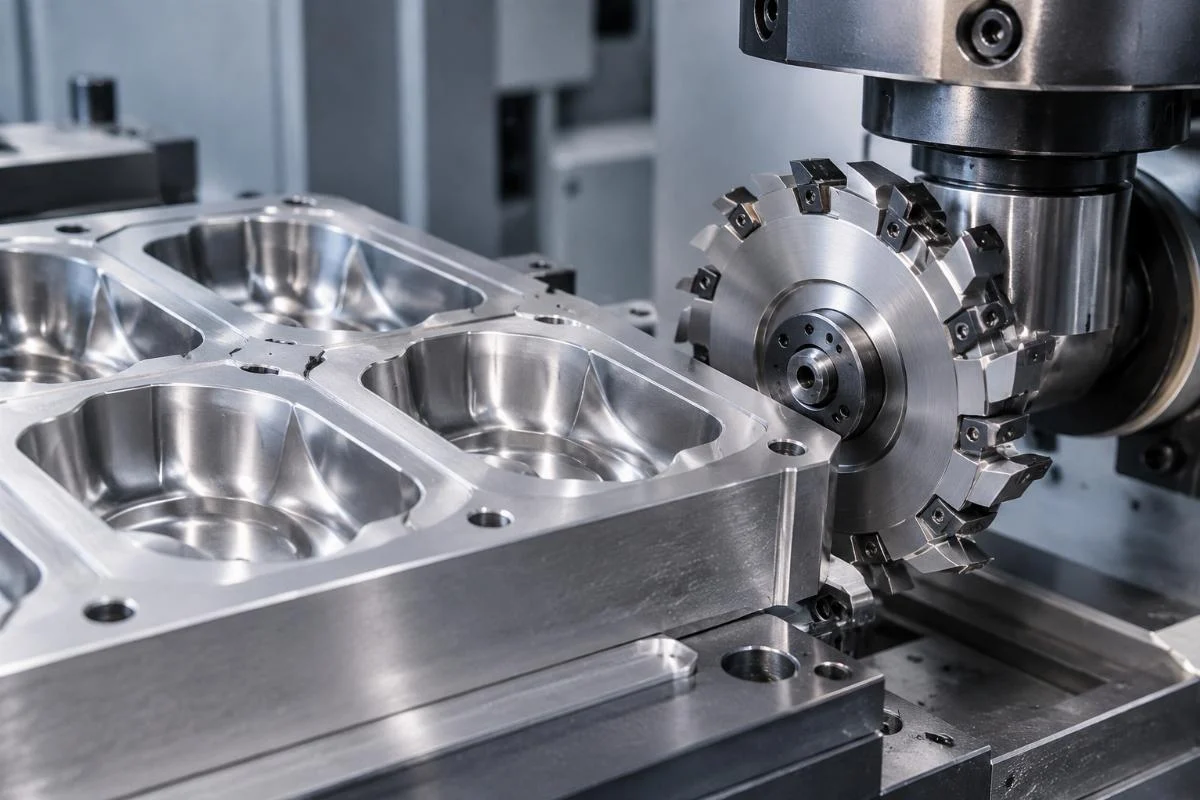
The physical hardware of the 2D vs 3D snack pellet lines must be engineered to handle these distinct cutting and forming mechanics.
Which Line Should You Buy First Based on Your Product Goal?
Your initial investment should be dictated by your target market’s demand for product complexity versus production volume and simplicity.
If your business model relies on high-volume, simple shapes like basic puffs, rings, or tubes, a 2D line is the most cost-effective and stable starting point. It offers straightforward operation, easier maintenance, and consistent output with minimal parameter tweaking. However, if you are targeting the premium snack market with complex textures, multi-dimensional shapes, or specialized fillings, you must invest in a 3D line from the beginning. Attempting to retrofit a 2D line for 3D production later will result in severe bottlenecks and quality issues.
This is where turnkey line design becomes critical. When buyers approach Meiteng to buy 3D snack pellet machine configurations, we do not just supply the DS70 or SLG-90 extruders; we provide comprehensive formula development and parameter matching. For instance, our DS70 twin-screw extruder is frequently deployed for complex 3D snacks because of its modular screw design, which allows us to adjust the shear profile based on the specific raw material blend. Similarly, the SLG-90 single-screw is optimized for high-capacity 2D profiles where consistent cross-sections are the priority. By integrating the extruder with the correct drying and flavor-coating systems, we ensure that the moisture content thresholds are met before the product enters the fryer or oven, guaranteeing optimal expansion.
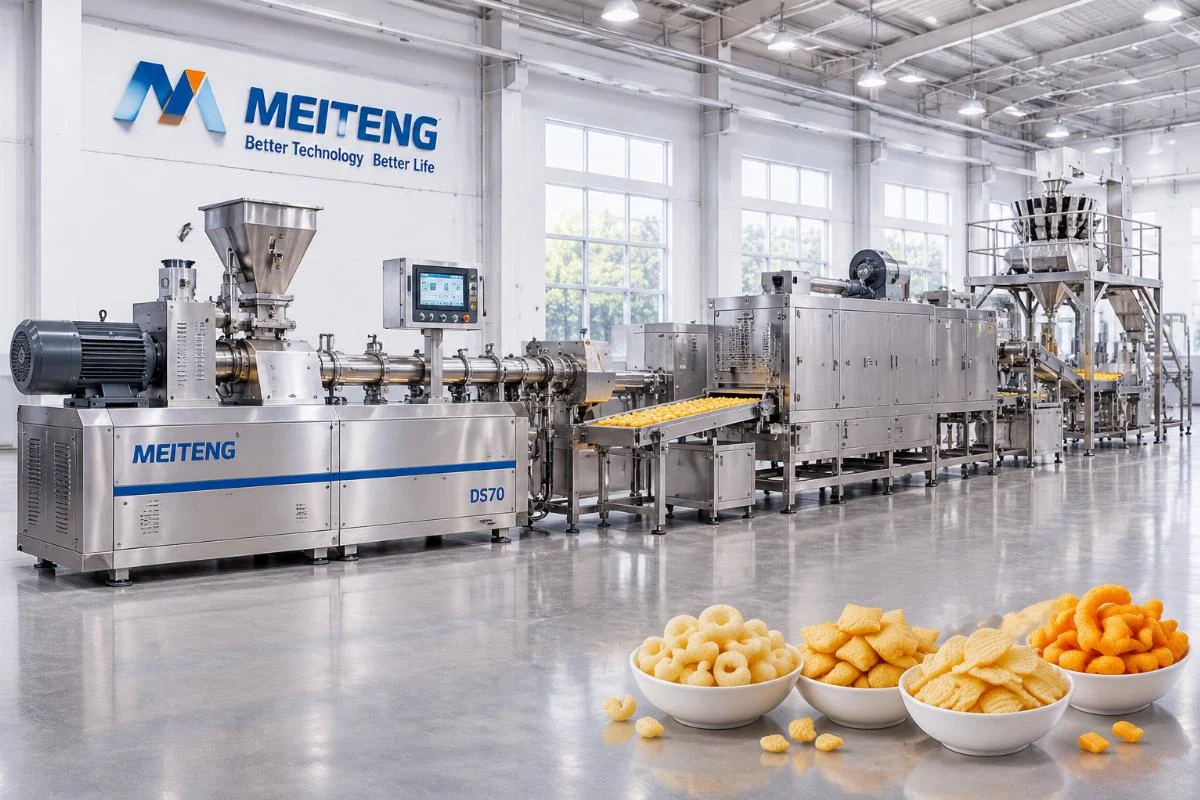
Selecting the correct 2D vs 3D snack pellet lines with the support of an experienced manufacturer prevents the costly mismatches that plague startup food businesses.
Conclusion
The choice between 2D and 3D snack pellet lines is a fundamental decision that dictates your extruder type, mold design, and cutting synchronization.
Matching your equipment to your target product geometry ensures optimal expansion, minimizes waste, and secures a stable yield. Whether you require the high-shear precision of a twin-screw system for complex 3D textures or the reliable throughput of a single-screw setup for uniform 2D profiles, aligning your mechanical parameters with your recipe is the only path to commercial success.
Equipment Mentioned in This Article
 3D papad machine
2D 3D Snack Pellet Production Line Manufacturer
2D 3D Snack Pellet Production Line for Diverse Shapes from Starches — twin-screw extrusion handles wheat, corn, and cassava. The… View Machine Details 3D papad machine
3D Snack Pellet Production Line Fried Extruder Machine
3D Snack Pellet Production Line for Starch-Based Snacks — twin-screw extrusion processes potato, cassava, and corn starch into diverse shapes.… View Machine Details 3D papad machine
Automatic 3D Pellet Extruded Corn Puffed Snack Food Production Line
3D Pellet Extruded Snack Food Production Line for Starch Pellets — processes potato, corn, and cassava starch into papad and… View Machine Details 3D papad machine
Fully Automatic 3D Snack Pellets Extruder Making Machine for Chips
Chips 3D Snack Pellet Extruder Line for 2D/3D Shapes — co-rotating twin-screw extrusion processes potato and cassava starches into papad,… View Machine DetailsRelated Applications

Engineering Perspective
An In-House R&D Team Behind Every Line
Jinan MT Machinery develops its process technology in-house. The team concentrates on the four areas that decide pellet shape, expansion and line stability.
- Expansion technology
- Twin-screw extrusion
- Die design
- PLC/MCC automation
Related Articles
 Nov 7, 2026 · Buying Guide
Energy Efficient Snack Pellet Extruder Line Manufacturer for Sale
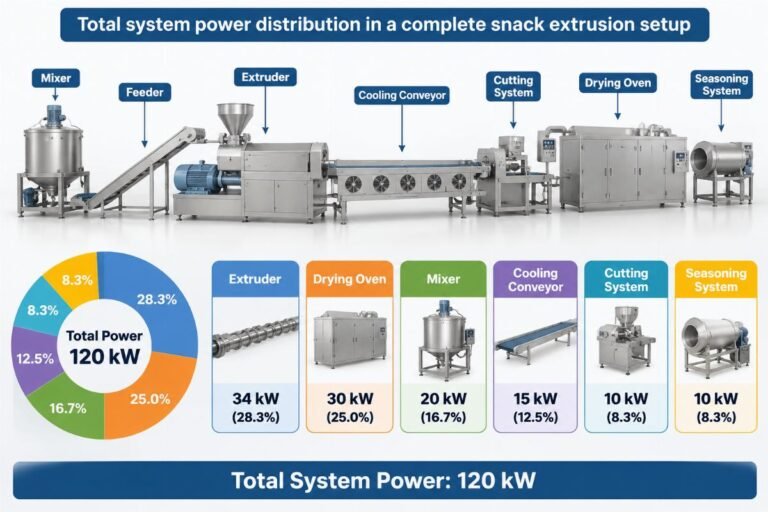
Evaluating an energy efficiency snack pellet production line requires looking beyond single motor ratings to total system power and heat recovery to eliminate hidden… Read This Article Nov 7, 2026 · Buying Guide
De-Oiling Machine for Pellet Chips Fryer Line | Meiteng OEM Manufacturer
A properly matched de-oiling machine for pellet chips controls residual surface oil to extend shelf life and ensure seasoning adhesion without shattering fragile snacks.… Read This Article Nov 7, 2026 · Buying Guide
Twin-Screw Extruder for Snack Food: Wholesale Manufacturer
Selecting a twin-screw extruder for snack food requires matching machine specifications with local factory conditions and raw material intake rather than merely comparing price… Read This ArticleFree Process Check
Send Your Recipe for a Process Check
Jinan MT Machinery engineers review your recipe and return a free process plan within 24 hours. Tell us the product, output, raw material, local voltage and heat source.
Send Your Recipe on WhatsApp