
3D Snack Pellet Line Manufacturer: MOQ & Lead Time from China
- By Jinan MT Machinery

Paying a larger deposit or ordering a massive quantity does not automatically fast-track your machinery to the loading dock.
The typical lead time and MOQ for 3D snack pellet line from China are dictated by the complexity of custom mold design and the batch production scheduling of non-standard wear parts, rather than simple machine assembly. Standard configurations follow a baseline manufacturing cycle, while customized 3D shape molds and specialized screw profiles introduce sequential engineering phases that cannot be bypassed by financial incentives alone.
I still remember the suffocating humidity of a factory floor in Jakarta where I spent half a month waiting for a machine that never arrived. It was a 3D snack extrusion project, and the entire operation was paralyzed because the minimum order quantity for standard spare parts had not been met, meaning the core mold factory simply refused to schedule our production run. The client stared at the empty workshop every day, and I was practically burning with stress. Back when I worked as a quality inspector on the shop floor, I assumed that as long as the machine was built correctly, the job was done. Transitioning into business operations revealed that the lead time and MOQ for 3D snack pellet line from China are actually a chain of interlocking supply constraints. Now, when discussing 3D pellet lines, I always break down the mold development cycle and production queue nodes piece by piece, having witnessed too many complete line shutdowns caused by disconnected delivery schedules.
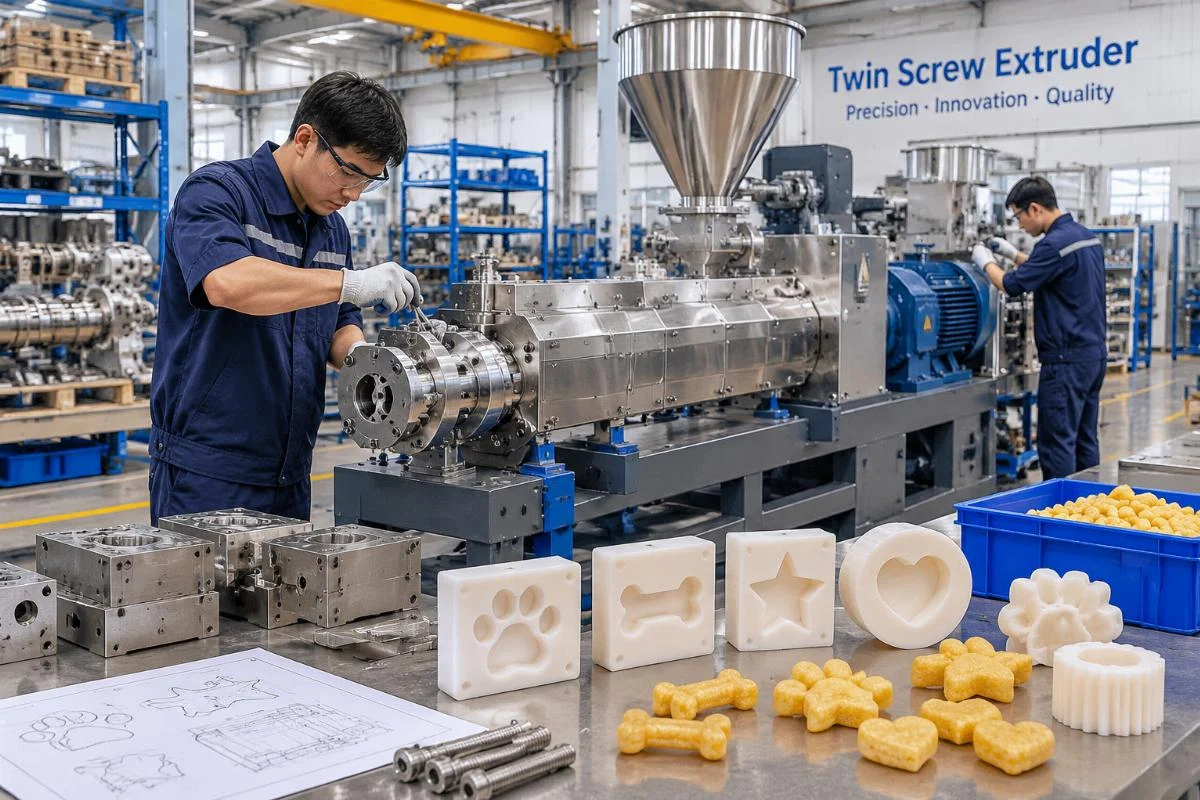
Understanding the lead time and MOQ for 3D snack pellet line from China requires looking past the brochure specifications and into the actual engineering workflow.
What Determines the Lead Time for a 3D Snack Pellet Line?
The timeline is primarily driven by the metallurgical design of custom 3D molds and the specific configuration of screw elements, not just the physical assembly of the extruder barrel.
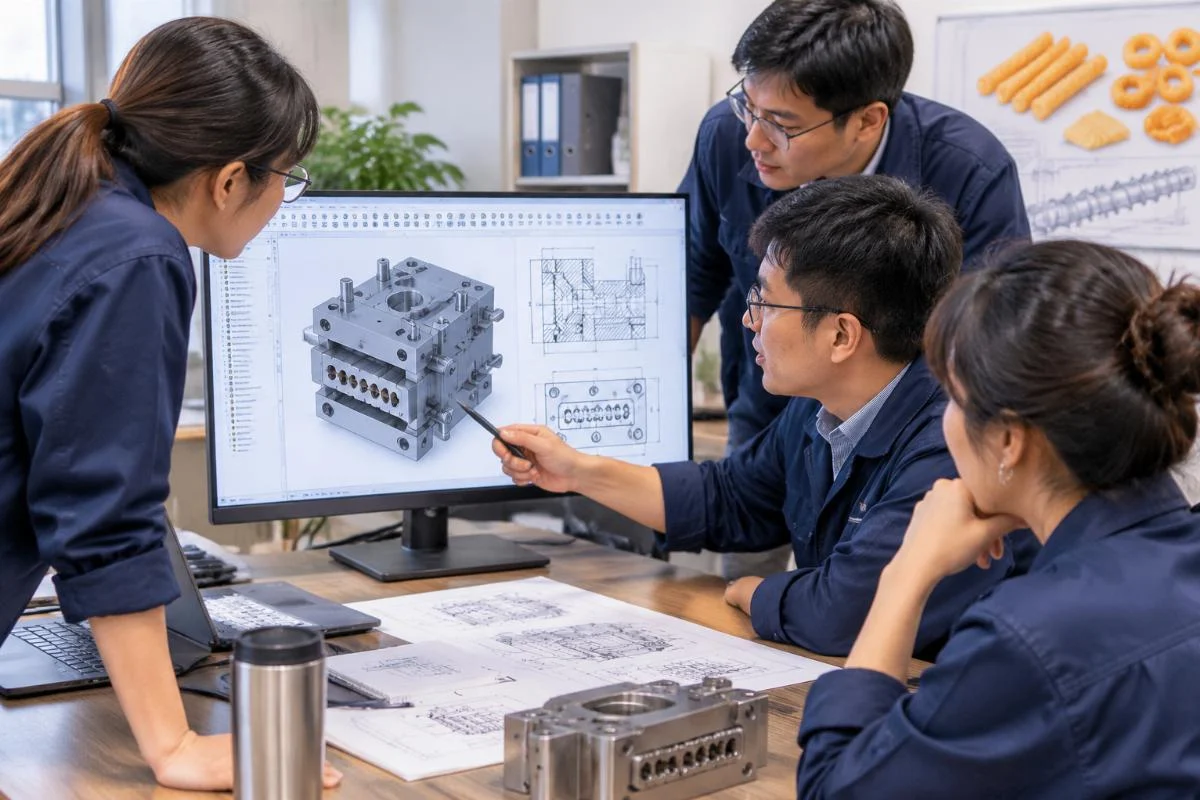
When buyers look at the lead time and MOQ for 3D snack pellet line from China, they often assume the clock starts ticking the moment the contract is signed. In reality, the financial transaction only triggers the procurement of raw steel and electronic components. The true bottleneck lies in the design and machining phase. A standard twin-screw extruder model follows a predictable baseline cycle because the barrel segments and standard screw configurations are already cast and machined in bulk. However, introducing a custom 3D shape—such as a complex animal figure or a multi-layered pillow with specific cavity depths—requires dedicated mold flow analysis and electrical discharge machining.
During my time coordinating turnkey line design and formula development support with manufacturers like Meiteng, I observed that the pre-production phase is where schedules either stabilize or collapse. Formula development for the dough rheology must align perfectly with the mold’s internal geometry. If the moisture content and expansion ratio are not simulated correctly before the steel is cut, the mold will require multiple re-machining iterations, adding weeks to the timeline.

How is the MOQ Calculated for Snack Extrusion Lines?
Minimum order quantities apply predominantly to customized wear parts and specific mold designs, whereas standard extruder mainframes often feature flexible procurement thresholds.
The logic behind the lead time and MOQ for 3D snack pellet line from China is rooted in batch production economics. Standard components like basic motor mounts or generic control panels are kept in inventory. However, specialized alloy screws and nitrided barrel sleeves are produced in specific batches to maximize furnace efficiency. If a buyer orders a single set of non-standard screws, it disrupts the thermal processing schedule of the heat treatment facility.
I recall a situation where a buyer wanted to procure a full snack line but only needed a few sets of specialized spare parts for future maintenance. Because the spare parts order fell below the batch threshold, the heat treatment facility delayed the processing, which in turn delayed the shipment of the entire main extruder. The lead time and MOQ for 3D snack pellet line from China are deeply intertwined; failing to meet the batch minimum for peripheral components can hold up the core machinery.
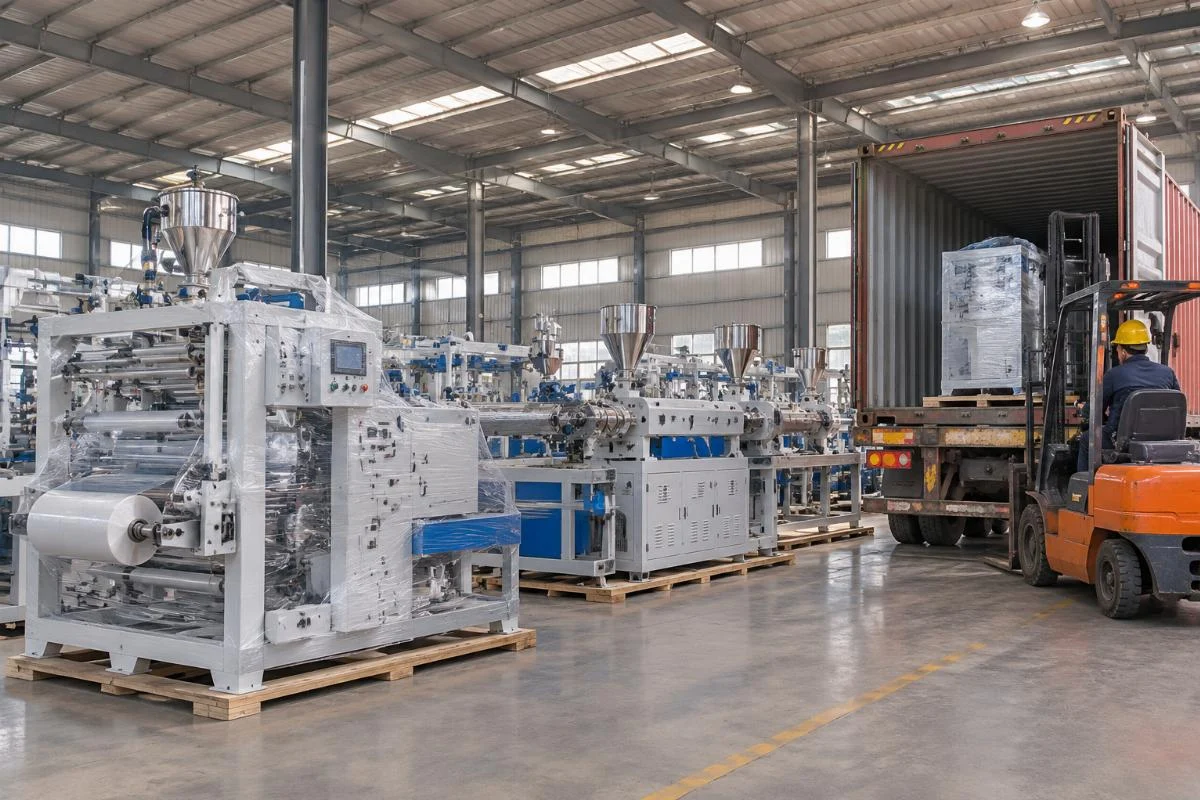
Furthermore, container consolidation plays a massive role. Combining a full snack line with extra packaging machines and flavor coating systems requires precise spatial planning. If the auxiliary equipment is delayed due to its own MOQ constraints at a different sub-supplier, the entire dispatch timeline shifts.
How Can Buyers Avoid Delays in Procurement?
Aligning your project timeline with the factory’s production queue and confirming technical drawings early prevents unexpected bottlenecks in the supply chain.
To navigate the lead time and MOQ for 3D snack pellet line from China successfully, procurement must be treated as an engineering integration project rather than a simple purchase order. The most critical step is finalizing the 3D mold drawings and dough formulation parameters before the commercial invoice is issued.
Many startup owners believe that paying a premium deposit speeds up production. This is a fundamental misunderstanding of the manufacturing sequence. The deposit only secures the raw materials; it does not accelerate the physical limitations of mold design and stress testing. A more effective strategy is to synchronize your facility preparation with the manufacturing phases. While the factory is machining the custom 3D molds, the buyer should be finalizing the factory layout, preparing the utility connections (steam, compressed air, electrical phases), and sourcing local raw materials for the initial commissioning.
What Happens if Lead Time and MOQ Are Mismanaged?
Poor planning leads to idle factory space and delayed market entry, ultimately costing significantly more than the initial machinery investment.
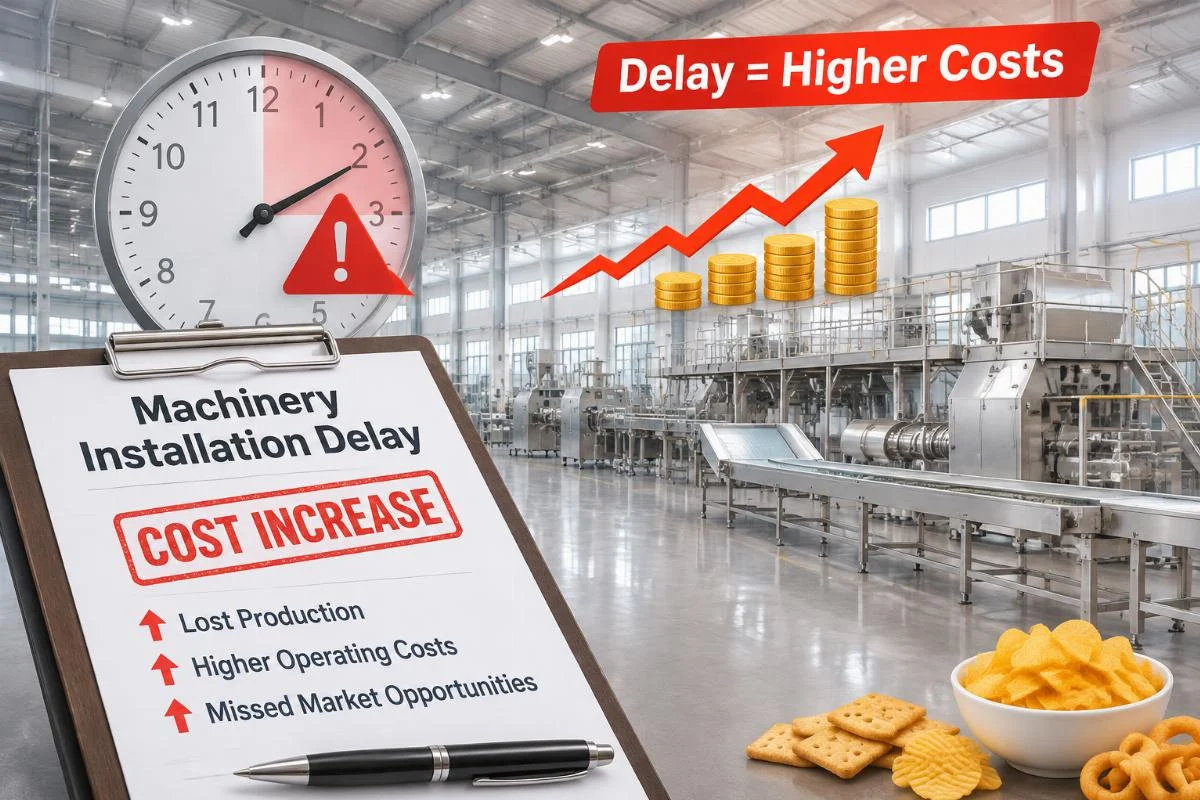
Mismanaging the lead time and MOQ for 3D snack pellet line from China creates a cascading effect of financial losses. When the machinery arrives late, the fixed costs of the facility—rent, salaried staff, and utility standby fees—continue to accumulate without any revenue generation.
Consider a scenario where a buyer orders an oversized quantity of custom molds to “save time” by getting everything done at once. Counter-intuitively, this oversized order may exceed the factory’s monthly capacity cap, pushing the project into the next production quarter. The buyer ends up paying for molds that sit in storage, while the core extruder is delayed because the factory is overwhelmed by the sheer volume of custom machining required. The lead time and MOQ for 3D snack pellet line from China demand a balanced approach: ordering what is necessary for the initial launch and scheduling the expansion parts in subsequent batches that align with the factory’s natural production rhythm.
Conclusion
Procurement success relies on synchronizing engineering customization with manufacturing batch realities.
Mastering the lead time and MOQ for 3D snack pellet line from China requires recognizing that delivery schedules are governed by mold complexity and material batch thresholds, not just financial commitments. By aligning technical finalizations with factory production cycles, buyers can secure efficient turnkey deployments and avoid the severe costs of operational downtime.
Equipment Mentioned in This Article
 3D papad machine
3D Snack Pellet Production Line Fried Extruder Machine
3D Snack Pellet Production Line for Starch-Based Snacks — twin-screw extrusion processes potato, cassava, and corn starch into diverse shapes.… View Machine Details 3D papad machine
Automatic 3D Pellet Extruded Corn Puffed Snack Food Production Line
3D Pellet Extruded Snack Food Production Line for Starch Pellets — processes potato, corn, and cassava starch into papad and… View Machine Details 3D papad machine
2D 3D Snack Pellet Production Line Manufacturer
2D 3D Snack Pellet Production Line for Diverse Shapes from Starches — twin-screw extrusion handles wheat, corn, and cassava. The… View Machine Details 3D papad machine
Fully Automatic 3D Snack Pellets Extruder Making Machine for Chips
Chips 3D Snack Pellet Extruder Line for 2D/3D Shapes — co-rotating twin-screw extrusion processes potato and cassava starches into papad,… View Machine DetailsRelated Applications

Engineering Perspective
An In-House R&D Team Behind Every Line
Jinan MT Machinery develops its process technology in-house. The team concentrates on the four areas that decide pellet shape, expansion and line stability.
- Expansion technology
- Twin-screw extrusion
- Die design
- PLC/MCC automation
Related Articles
 Nov 10, 2026 · Procurement & Trade FAQs
Snack Pellet Line for UAE: Twin-Screw Extruder Manufacturer & Turnkey Service
Buying a snack pellet line UAE requires engineering systems that survive extreme heat and voltage fluctuations, not just finding the lowest price. You must… Read This Article Nov 10, 2026 · Procurement & Trade FAQs
Fast Replacement Pellet Dies from China Manufacturer Meiteng
Minimize extruder downtime by understanding that replacement pellet die delivery time relies on precise formula matching and custom compression ratios rather than just express… Read This Article Nov 10, 2026 · Procurement & Trade FAQs
Snack Pellet Line for Poland & EU: Meiteng Twin-Screw Extruder Manufacturer
Importing a snack pellet line into Poland and the EU requires navigating strict CE machinery directives, EORI customs registration, and adapting equipment to local… Read This ArticleFree Process Check
Send Your Recipe for a Process Check
Jinan MT Machinery engineers review your recipe and return a free process plan within 24 hours. Tell us the product, output, raw material, local voltage and heat source.
Send Your Recipe on WhatsApp