
Meiteng 3D Pellet Forming Rollers Manufacturer for Embossing Cutting Folding
- By Jinan MT Machinery

Deeper embossing does not guarantee better patterns; in high-humidity environments, it guarantees material sticking and line stoppages.
Generic 3D Pellet Forming Rollers fail because their fixed embossing depth and folding angles ignore the critical variables of raw material moisture and ambient humidity. To ensure pellet integrity and maximize yield, these parameters must be dynamically customized to the specific recipe and local climate, transforming a generic iron block into a precision shaping tool.
I still remember the screaming match in a Jakarta factory years ago. The plant manager was furious because a batch of 3D Pellet Forming Rollers we supplied had caused the entire extrusion line to shut down for days. The embossing depth was designed based on a standard European drawing, completely ignoring the tropical humidity and the specific moisture ratio of their sticky raw materials. The cut pellets shattered instantly. Now, working on the supply side in Vietnam, my first question to any client ordering embossing and cutting rollers for pet food is never about the steel grade alone; it is about their raw material moisture content and the exact folding angle they need. I do not trust generic blueprints; I only trust the pellets produced during on-site machine trials. Buying these rollers is not about buying metal; it is about buying yield rates. A deviation of a fraction of a millimeter means the client rejects the batch.
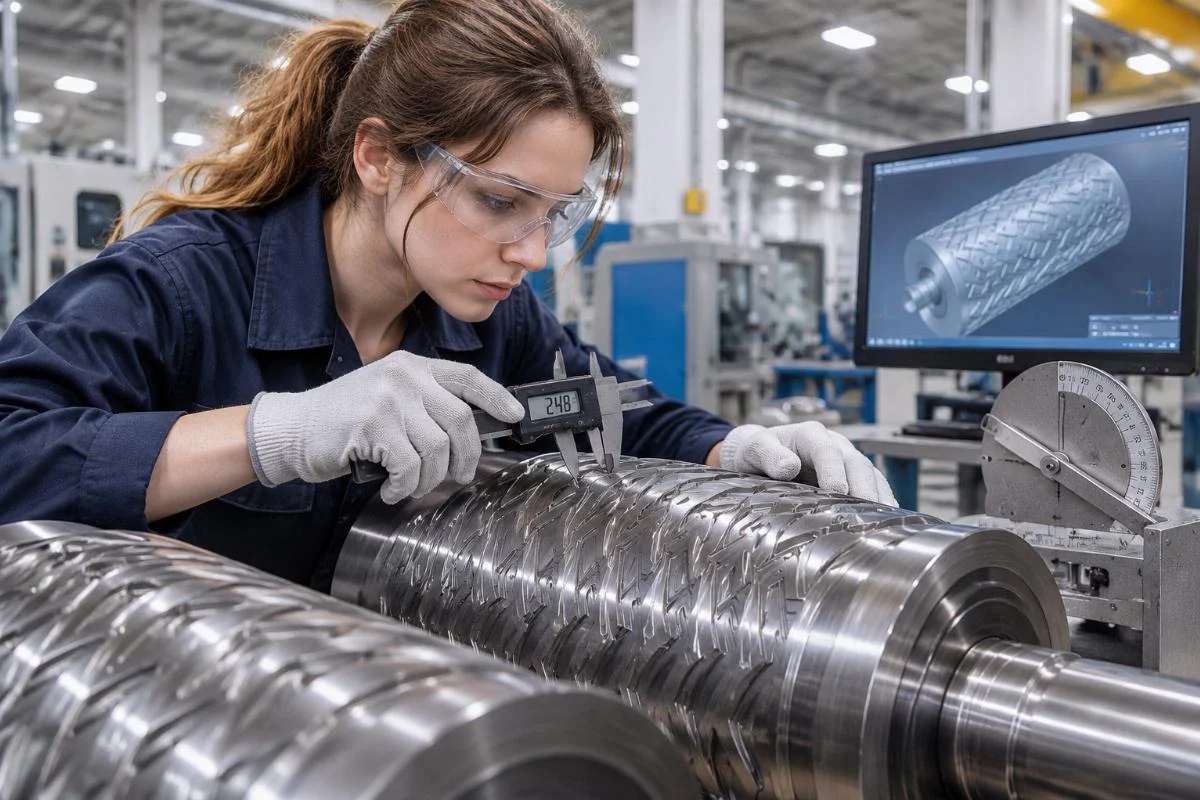
Matching these components to the actual production environment is the only way to prevent catastrophic downtime, which brings us to the core mechanics of why standard designs fail in specific climates.
Why Do Generic 3D Forming Rollers Fail in Tropical Climates?
Standard roller designs assume a controlled, low-humidity environment, a assumption that collapses the moment the equipment is shipped to tropical regions.
The fundamental issue lies in how ambient humidity interacts with material viscosity. In temperate zones, a standard embossing depth cuts cleanly through the dough. However, in tropical climates like Southeast Asia or Latin America, the high ambient moisture drastically alters the rheology of the raw materials. When manufacturers blindly apply standard drawings, the deeper embossing meant to create sharp 3D patterns actually acts as a trap for the highly viscous, sticky material. Instead of cutting cleanly, the material smears and adheres to the roller surface, leading to rapid buildup and eventual line blockage.
I once consulted for an aquaculture feed producer in a coastal region where the ambient humidity rarely dropped below acceptable levels. They had purchased off-the-shelf twin-screw extruder forming rollers from a supplier who merely replicated a popular catalog design. The result was a continuous cycle of line stoppages. The rollers required cleaning every few hours, destroying their production capacity. The root cause was not the steel quality, but the failure to adjust the embossing depth to compensate for the moisture-laden environment. By reducing the depth and altering the surface finish to minimize adhesion, the material flow stabilized.

This observation highlights a critical industry reality: environmental factors dictate mechanical design just as much as the recipe itself.
How to Match Embossing Depth and Folding Angles to Your Recipe?
Achieving perfect pellet成型率 requires treating the embossing depth and folding angle as dynamic variables that must be mathematically matched to the specific moisture content and target shape of the recipe.
It is a common misconception that a single set of custom pellet folding rollers can handle multiple recipes without adjustment. In reality, the folding angle determines how the material is compressed and shaped as it passes through the gap. If the angle is too steep for a high-moisture recipe, the material will extrude too quickly and lack structural integrity, leading to high breakage rates. Conversely, if the angle is too shallow for a dry recipe, the material will not compress sufficiently, resulting in poorly formed, fragile pellets.
When a pet food startup approached me with a new organic recipe, they wanted to use a standard folding angle they had used for their previous conventional formula. I insisted on reviewing the precise moisture content of their new organic binders. The moisture was significantly higher, meaning the standard angle would cause the pellets to deform immediately after cutting. We recalculated the folding angle to provide a gentler, more prolonged compression zone, allowing the moisture to distribute evenly without causing surface tearing.
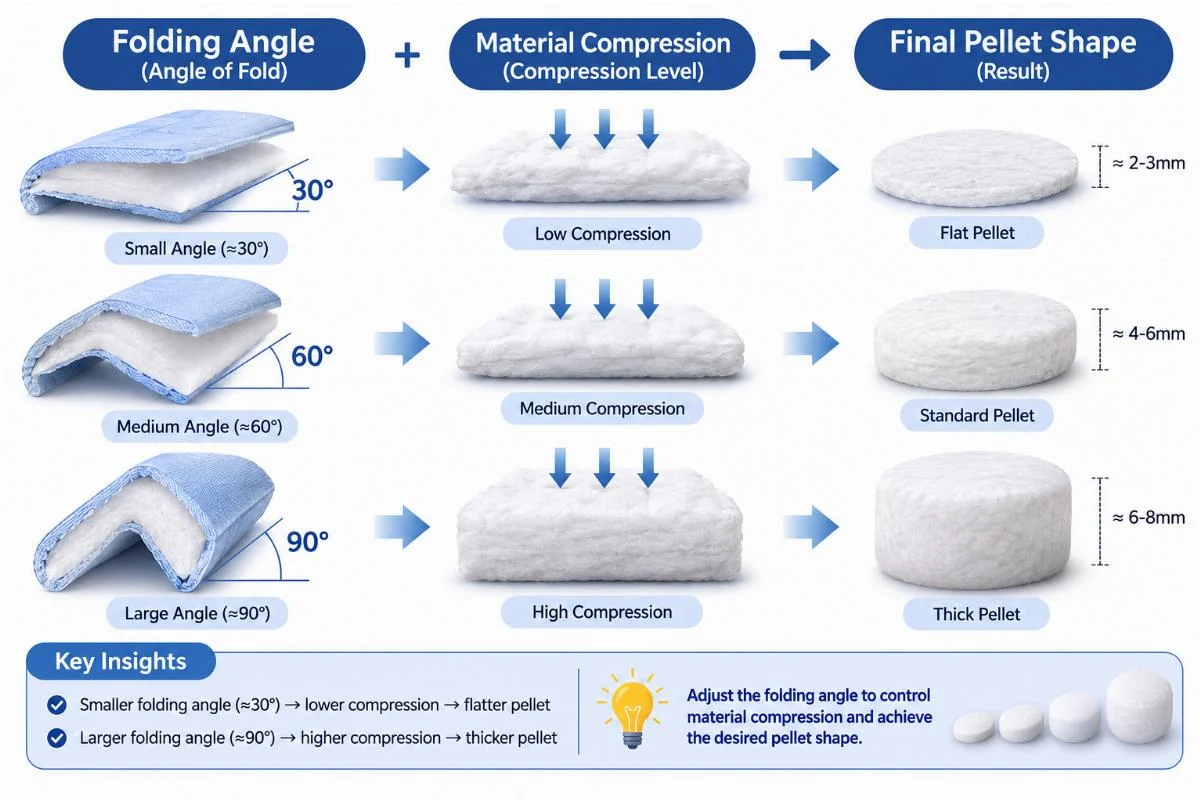
This precise matching process ensures that the physical dimensions of the rollers are perfectly synchronized with the biochemical properties of the raw materials.
The Critical Role of On-Site Trials in Roller Customization
Real-machine testing with actual raw materials under local environmental conditions is the only definitive method to validate roller customization and guarantee成型率.
Theoretical calculations and laboratory tests can only take you so far. The true test of any 3D Pellet Forming Rollers design occurs on the factory floor, where the unpredictable variables of real-world production come into play. Relying solely on generic drawings or lab-scale prototypes is a massive risk. The ambient temperature, the exact batch-to-batch variation in raw material moisture, and the specific wear characteristics of the extruder all converge during the trial phase.
I recall a situation where a client in the Middle East ordered a set of embossing and cutting rollers for pet food based entirely on CAD models and theoretical yield projections. When the rollers arrived and were installed, the成型率 was abysmal. The pellets were cracking during the drying phase. We flew a technician to the site, brought a set of trial rollers with slightly modified embossing depths, and ran them through the actual twin-screw extruder. The on-site trial revealed that the local water quality, used in the dough mixing stage, was interacting with the binders in a way the lab tests had missed. We adjusted the embossing depth on the trial rollers right there on the shop floor, ran the machine, and achieved the target成型率 within hours.
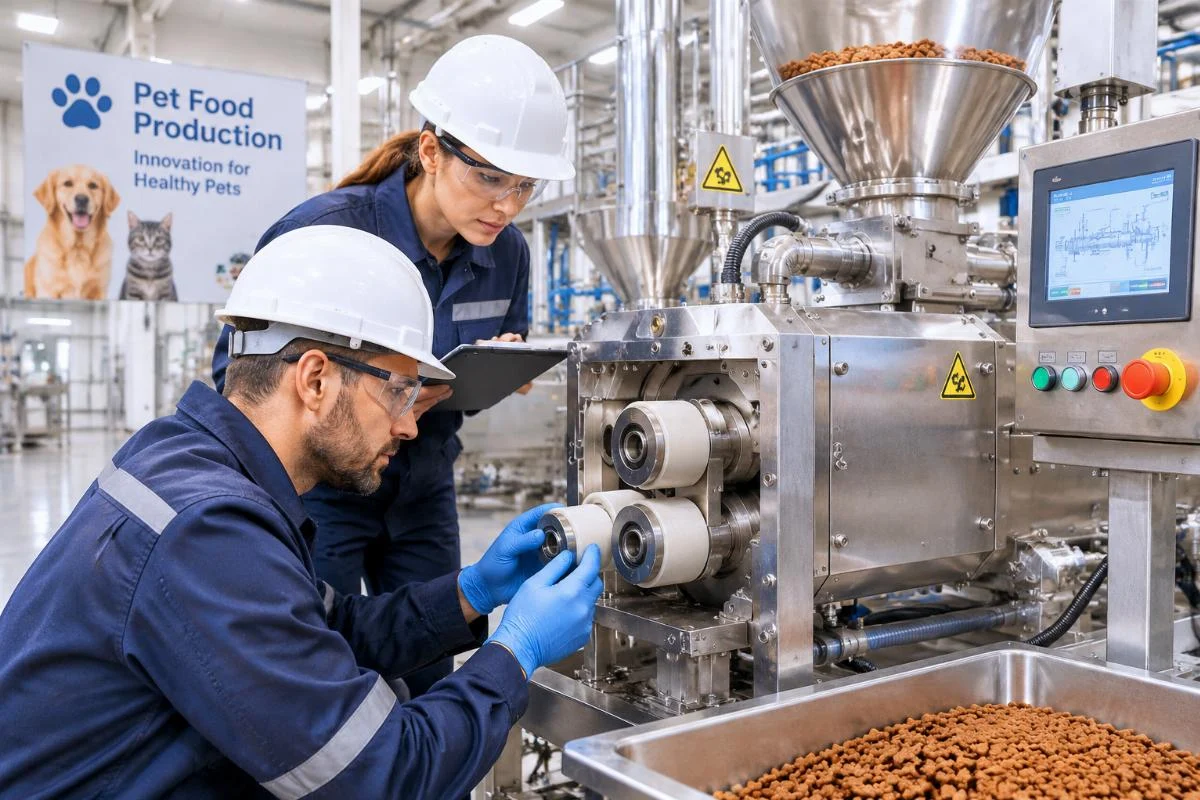
This hands-on validation eliminates the guesswork and ensures that the final production rollers are optimized for the specific realities of the client’s facility.
What to Expect from Meiteng’s Turnkey Roller Integration?
A comprehensive integration approach encompasses everything from initial formula support and moisture analysis to the manufacturing of food-grade, CE-certified rollers and complete on-site commissioning.
When producers invest in custom pellet folding rollers, they are not just buying a machined part; they are investing in a process guarantee. Meiteng approaches this by integrating the roller design into the broader context of the entire extrusion line. This begins with formula development support, where our engineers analyze the raw material moisture and ambient conditions to dictate the initial roller specifications.
The manufacturing phase strictly adheres to food-grade standards, utilizing 304/316 stainless steel construction to meet 3-A sanitary requirements, ensuring that the rollers do not contaminate the pet food or aquaculture feed. Every set of 3D Pellet Forming Rollers is manufactured under CE and ISO 9001 certified quality management systems. But the process does not end at the factory gate. Meiteng provides on-site installation, commissioning, and operator training, ensuring that the rollers are perfectly aligned with the specific twin-screw or single-screw extruders, whether it is a DS65 for pet food or a DS95 for high-capacity aquaculture feed.

This end-to-end support transforms a simple component purchase into a reliable, high-yield production solution.
Conclusion
Pellet成型率 is won or lost at the interface of the roller and the raw material. Generic designs fail because they ignore the profound impact of moisture and humidity on material behavior. By treating embossing depth and folding angles as dynamic variables, validating them through rigorous on-site trials, and integrating them within a comprehensive turnkey support system, producers can eliminate breakage, prevent line stoppages, and achieve consistent, high-quality pellet production in any climate.
Equipment Mentioned in This Article
 3D papad machine
3D Snack Pellet Production Line Fried Extruder Machine
3D Snack Pellet Production Line for Starch-Based Snacks — twin-screw extrusion processes potato, cassava, and corn starch into diverse shapes.… View Machine Details 3D papad machine
Fully Automatic 3D Snack Pellets Extruder Making Machine for Chips
Chips 3D Snack Pellet Extruder Line for 2D/3D Shapes — co-rotating twin-screw extrusion processes potato and cassava starches into papad,… View Machine Details 3D papad machine
Automatic 3D Pellet Extruded Corn Puffed Snack Food Production Line
3D Pellet Extruded Snack Food Production Line for Starch Pellets — processes potato, corn, and cassava starch into papad and… View Machine Details 3D papad machine
2D 3D Snack Pellet Production Line Manufacturer
2D 3D Snack Pellet Production Line for Diverse Shapes from Starches — twin-screw extrusion handles wheat, corn, and cassava. The… View Machine DetailsRelated Applications

Engineering Perspective
An In-House R&D Team Behind Every Line
Jinan MT Machinery develops its process technology in-house. The team concentrates on the four areas that decide pellet shape, expansion and line stability.
- Expansion technology
- Twin-screw extrusion
- Die design
- PLC/MCC automation
Related Articles
 Nov 16, 2026 · Product & Series Guides
DS Line Rotary Cutter for 2D Snack Pellets Manufacturer
Optimizing Rotary Cutter Options for 2D Snack Pellets eliminates edge burrs and reduces scrap rates by synchronizing cutter speed with extruder screw speed. Selecting… Read This Article Nov 16, 2026 · Product & Series Guides
2D Pellet Die Set for Wheels, Squares, Shells & Tubes Wholesale Supplier
Selecting the right 2D pellet die set requires matching specific shapes with the correct compression ratio to prevent screw jamming and transit corrosion. Discover… Read This Article Nov 16, 2026 · Product & Series Guides
DS85 vs DS95 Pellet Chips Extruder Manufacturer for Sale
Choosing the right DS85 vs DS95 extruder prevents barrel blockage when processing high-meat pellet chip formulas. The DS85 delivers energy efficiency for standard recipes,… Read This ArticleFree Process Check
Send Your Recipe for a Process Check
Jinan MT Machinery engineers review your recipe and return a free process plan within 24 hours. Tell us the product, output, raw material, local voltage and heat source.
Send Your Recipe on WhatsApp