
Pellet Chips Extruder Line Manufacturer for Saudi Arabia & Gulf
- By Jinan MT Machinery
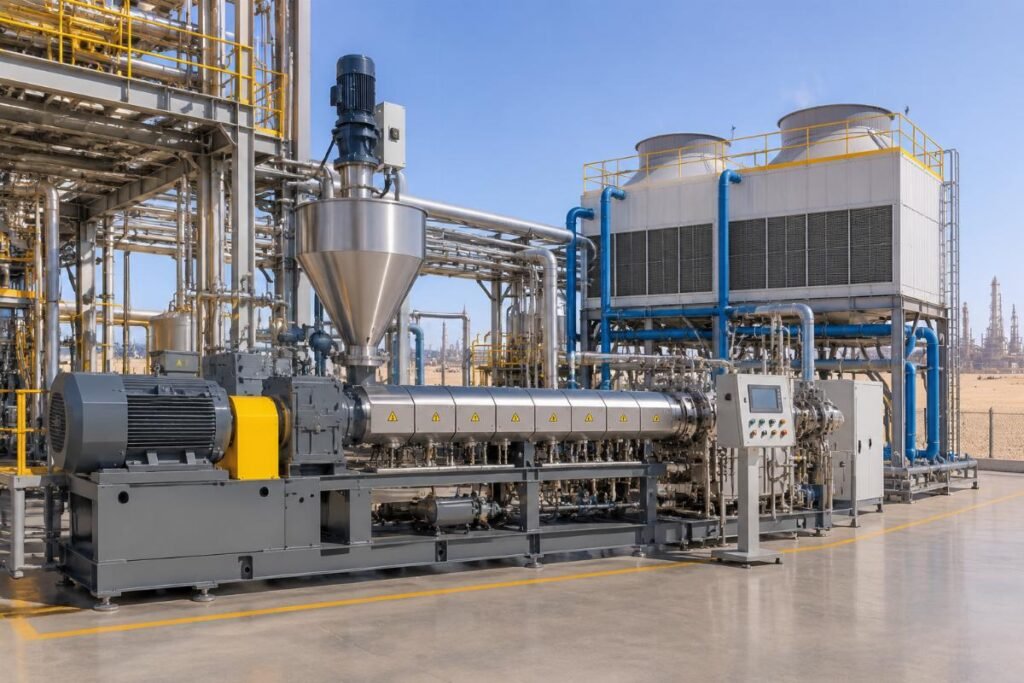
Most buyers assume the extruder screw design dictates the final chip shape, but in the Gulf, it is actually the local cooling water hardness that determines the surface finish and sticking behavior.
Success in the Gulf’s pellet chips market relies on adapting extrusion and cooling infrastructure to extreme heat and hard water, not just buying standard machines.
Early in my career, I spent my days tuning twin-screw extruders in a Jinan workshop before eventually traveling with equipment shipments to the second phase industrial city in Riyadh. We dispatched a DS65 line for a local pellet chips startup, only to discover on-site that the client had not configured a proper cooling tower. The ambient summer temperatures combined with extremely hard water caused the cooling system to scale up and block completely, resulting in extruded chips sticking to the cutting knives. Transitioning into foreign trade, I realized that when designing solutions for Gulf clients, the first thing to tackle is the local water, electricity, and cooling parameters. Equipment going overseas must withstand extreme local environments, not just perform well in a controlled factory.

Let us break down how to build a resilient production line from the ground up.
What Are the Core Steps to Launch a Pellet Chips Plant in Saudi Arabia?
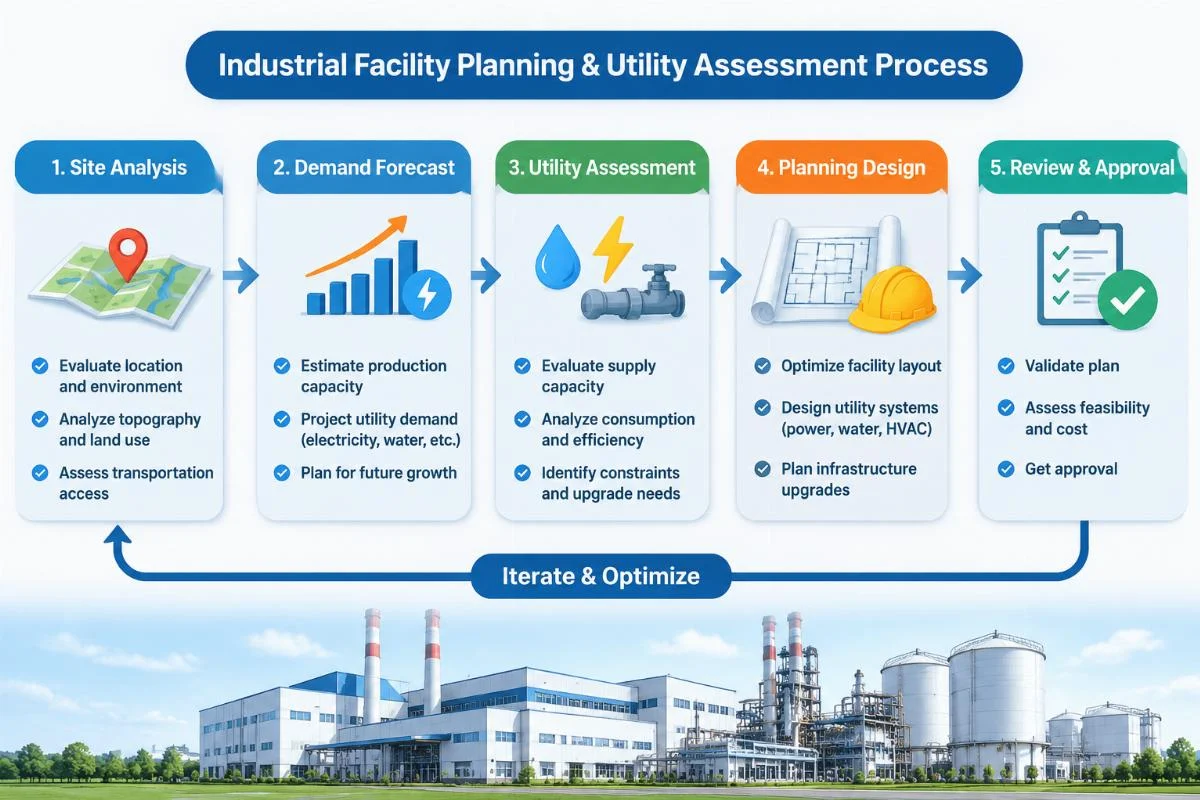
Navigating investment licensing and industrial city utility planning is the true first step before selecting any machinery.
Many startup owners rush to order equipment, only to find their factory space lacks the necessary utility capacity. The initial phase involves securing approval from the Ministry of Investment and aligning with local industrial development guidelines.
- Licensing and Zoning: Secure the necessary foreign investment licenses and ensure the chosen industrial city zone permits food processing operations.
- Utility Capacity Assessment: Evaluate the available water supply, electrical grid stability, and drainage capabilities. Industrial zones often have strict limits on wastewater discharge temperatures and chemical loads.
- Facility Layout Planning: Design the floor plan considering ceiling heights and ambient heat flow. Dryers require significant vertical space, and poor layout leads to heat accumulation.
- Environmental Control Integration: Plan for oversized cooling towers and water treatment systems before the machinery arrives.
A Middle East snack food startup once bypassed the utility assessment phase. They installed a standard line in a facility with restricted water discharge limits, leading to severe scaling in the recirculating water system within weeks.
Why Do Standard Extrusion Lines Fail in the Gulf Climate?
Extreme ambient heat and hard water overwhelm standard cooling towers, causing product sticking and inconsistent expansion.
Standard European or Asian extrusion lines are calibrated for moderate climates. When deployed in the Gulf, the ambient summer temperatures push the thermal load far beyond the design limits of standard cooling towers.
The core issue lies in the water quality. Gulf groundwater and municipal supplies often contain high mineral concentrations. When this hard water is heated in the cooling loop, calcium and magnesium precipitate rapidly, forming scale inside the extruder barrel jackets and cooling rollers. This scale acts as an insulator, preventing proper temperature control.
- Thermal Overload: Standard chillers cannot reject heat fast enough when the ambient air exceeds typical design thresholds.
- Mineral Scaling: Hard water accelerates fouling in heat exchangers, reducing cooling efficiency progressively over a single shift.
- Product Defects: Inadequate cooling leads to dough sticking on the cutting blades, resulting in deformed pellet chips and increased downtime for manual cleaning.
A regional contract manufacturer installed a standard line without upgrading the water treatment. The extruder specific mechanical energy fluctuated wildly due to poor temperature control, yielding a batch with unacceptable texture variance.

How to Configure a Twin-Screw Extruder Line for MENA Conditions?
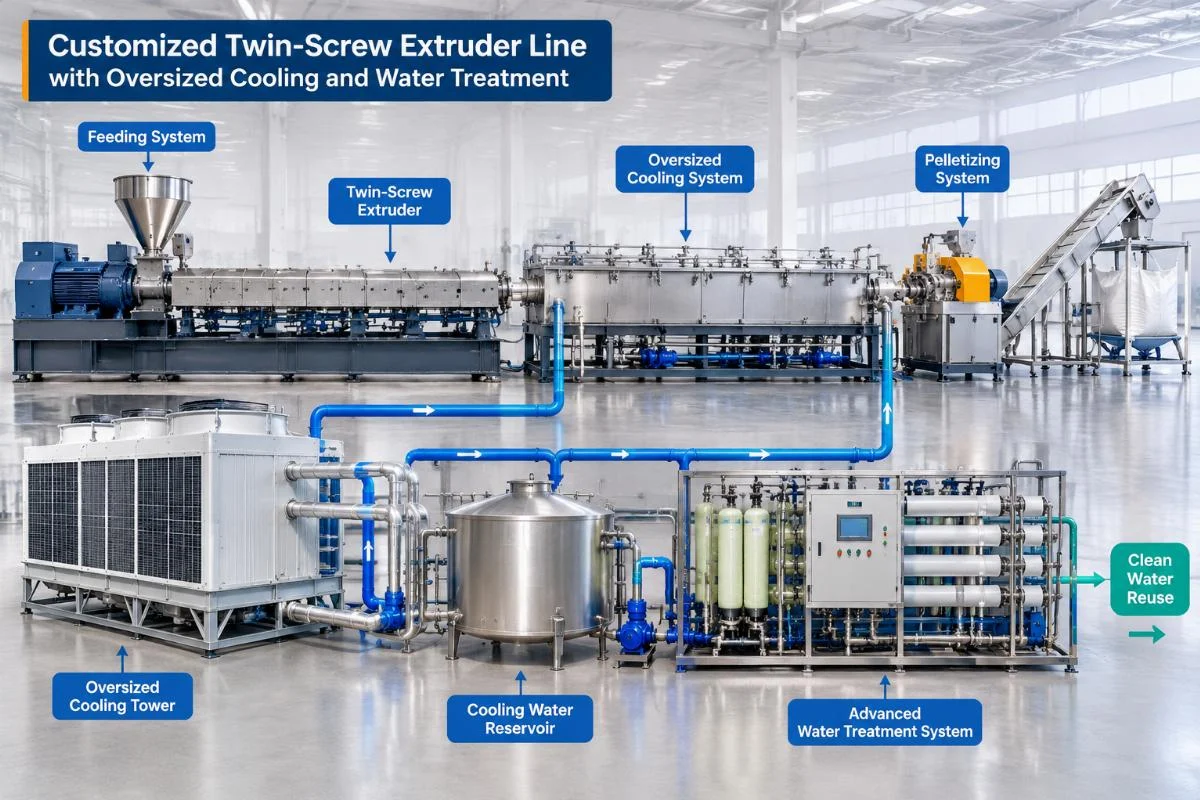
Upgrading water treatment and oversizing cooling systems are mandatory for DS65-class lines to ensure stable operation.
Configuring a line for this region requires moving away from off-the-shelf setups and focusing on thermal management and fluid dynamics.
| Cooling Component | Standard Configuration | MENA Adapted Configuration |
|---|---|---|
| Chiller Capacity | Standard ambient rating | Substantially oversized margin |
| Water Filtration | Basic mesh screen | Multi-stage reverse osmosis |
| Cooling Tower | Standard evaporation rate | High-efficiency heat rejection |
| Pipe Material | Standard stainless | Enhanced anti-scaling treatment |
- Oversize the Cooling Loop: Select chillers and cooling towers with a significantly higher capacity than the standard calculation suggests. This provides a buffer against peak summer temperatures.
- Implement Advanced Water Treatment: Install reverse osmosis or specialized softening systems to keep mineral levels well below the threshold that causes scaling.
- Optimize Dryer Length and Layout: Adjust the dryer length to accommodate factory ceiling height constraints while ensuring sufficient moisture removal without overheating the product.
- Select Robust Extruder Specs: Utilize twin-screw extruders like the DS65 model, which allows for precise control of specific mechanical energy, compensating for minor thermal fluctuations.
When we configured a DS65 twin-screw extruder line for a client in the region, we integrated a customized cooling configuration and provided on-site installation training tailored for the local industrial environment. This proactive adaptation prevented the trial-and-error costs that plague unprepared startups.
What Turnkey Services Ensure a Smooth Startup in the Region?
Local formula adaptation and on-site commissioning prevent costly trial-and-error during the initial production runs.
Buying the hardware is only a fraction of the equation. The physical environment dictates how the raw materials behave during extrusion.
- Formula Adaptation: Local flour and starch batches have different protein and moisture profiles. Formulations must be adjusted to maintain the desired expansion ratio and texture.
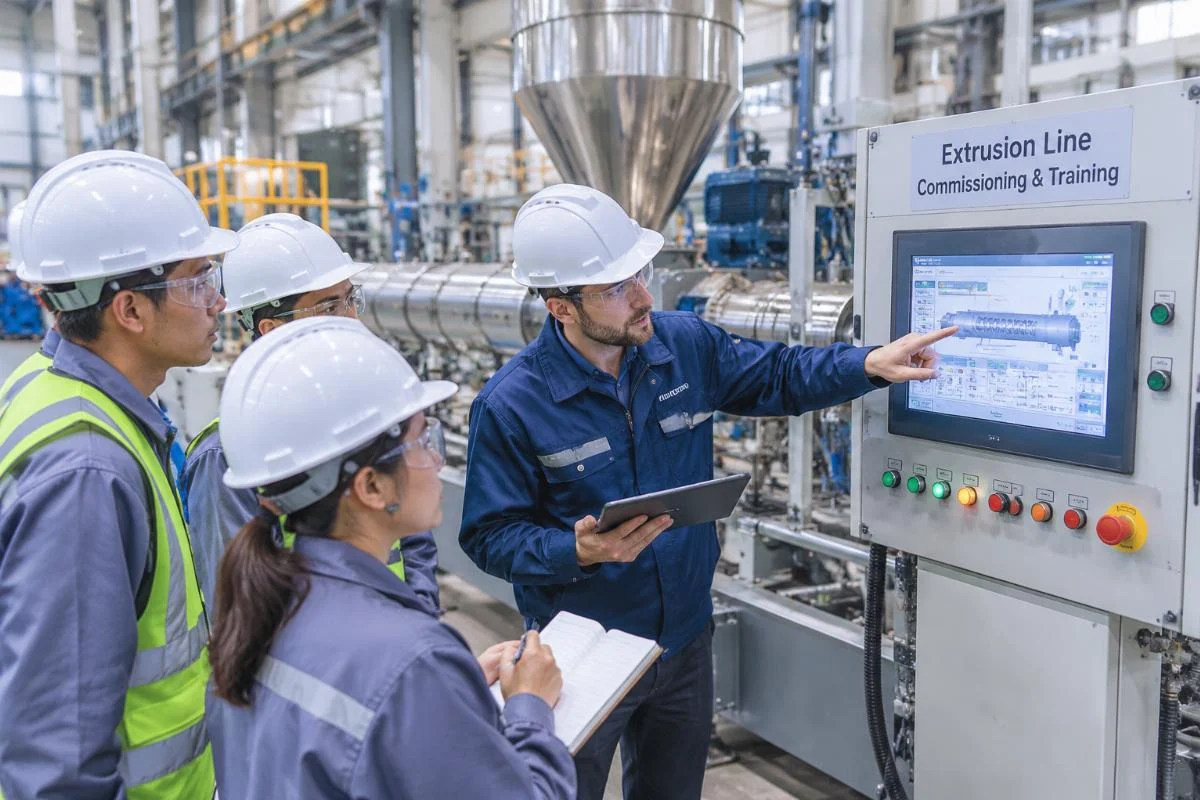
- On-Site Commissioning: Engineers must be present to fine-tune the barrel temperatures, screw speed, and cutter alignment under actual local ambient conditions.
- Operator Training: Local operators need specific training on monitoring water treatment metrics and performing preventative maintenance against scaling.
A Gulf snack food startup owner relied solely on remote support and standard recipes. The resulting product failed to meet local texture preferences, and the line suffered frequent blockages. By engaging a manufacturer that offers comprehensive turnkey services, including recipe development and hands-on training, the same owner later achieved a stable, high-yield production run.
Conclusion
Building a resilient pellet chips business in Saudi Arabia demands infrastructure adapted to extreme heat and hard water, not just premium machinery. Standard lines will inevitably fail without oversized cooling margins and rigorous water treatment. By prioritizing local utility planning, customizing thermal management, and leveraging comprehensive turnkey support, manufacturers can secure stable, high-quality production in the Gulf market.
Equipment Mentioned in This Article
 3D papad machine
Fully Automatic 3D Snack Pellets Extruder Making Machine for Chips
Chips 3D Snack Pellet Extruder Line for 2D/3D Shapes — co-rotating twin-screw extrusion processes potato and cassava starches into papad,… View Machine Details 3D papad machine
2D 3D Snack Pellet Production Line Manufacturer
2D 3D Snack Pellet Production Line for Diverse Shapes from Starches — twin-screw extrusion handles wheat, corn, and cassava. The… View Machine Details frying chips machine
Industrial Deep Fryer Machine Manufacturer Banana Potato Chips French Fries
Industrial Deep Fryer Machine for banana and potato chips features automatic basket lifting and oil filtration. The electric heating system… View Machine Details frying chips machine
100-2000L Tank Deep Fryer Commercial Chips Frying Machine
100-2000L Tank Deep Fryer for Snack Pellets and Chips — handles continuous deep frying and de-oiling for potato, cassava, and… View Machine DetailsRelated Applications

Engineering Perspective
An In-House R&D Team Behind Every Line
Jinan MT Machinery develops its process technology in-house. The team concentrates on the four areas that decide pellet shape, expansion and line stability.
- Expansion technology
- Twin-screw extrusion
- Die design
- PLC/MCC automation
Related Articles
 Nov 15, 2026 · Applications & Industries
Puffed Corn Snacks & Pellet Chips Line Manufacturer Meiteng
Combining puffed corn snacks and pellet chips production line maximizes equipment utilization and reduces initial capital expenditure for startup manufacturers. Real yield depends on… Read This Article Nov 14, 2026 · Applications & Industries
High-Protein Snack Pellets Extruder Line: Pea & Soy Protein Manufacturer
Producing High-Protein Snack Pellets via Pea and Soy Protein Extrusion often fails due to inadequate shear force and mismatched thermal profiles causing protein denaturation.… Read This Article Nov 14, 2026 · Applications & Industries
Kenya Pellet Snack Extrusion Line Manufacturer DS70 for Sale
Setting up a pellet snack production line Kenya requires matching DS70 twin-screw extruder capacity to your startup scale and strictly pre-clearing HS codes for… Read This ArticleFree Process Check
Send Your Recipe for a Process Check
Jinan MT Machinery engineers review your recipe and return a free process plan within 24 hours. Tell us the product, output, raw material, local voltage and heat source.
Send Your Recipe on WhatsApp