
Pellet Chips Line Price: Installation & Training Included
- By Jinan MT Machinery

Assuming the quoted machinery cost covers your local startup is the most expensive mistake a buyer can make.
The base pellet chips line price rarely includes installation and training; these are separate, critical investments required to ensure the equipment produces qualified products locally.
Early in my career handling export documentation, I assumed getting the equipment FOB price right was the only thing that mattered. That illusion shattered during a shipment of a pet food extrusion setup to West Africa. The initial quotation failed to itemize on-site service fees separately. When our engineers arrived, local customs clearance hurdles and visa processing delays stranded them for weeks. The company absorbed massive extra accommodation and daily allowance costs just to get the line running. Now, when I structure a deal, the on-site service fees are strictly accounted for as independent line items. Never trust a suspiciously low initial quote that promises free field services; getting the steel to your dock is merely the starting line, while making the machine consistently extrude qualified pellets on your local soil is where the real operational cost begins.

Understanding this distinction is the first step toward protecting your capital. Let us dissect how these costs actually function in global trade.
Is Installation Included in the Base FOB Price?
Standard international trade terms dictate that base equipment prices cover manufacturing and export documentation, not on-site physical assembly.
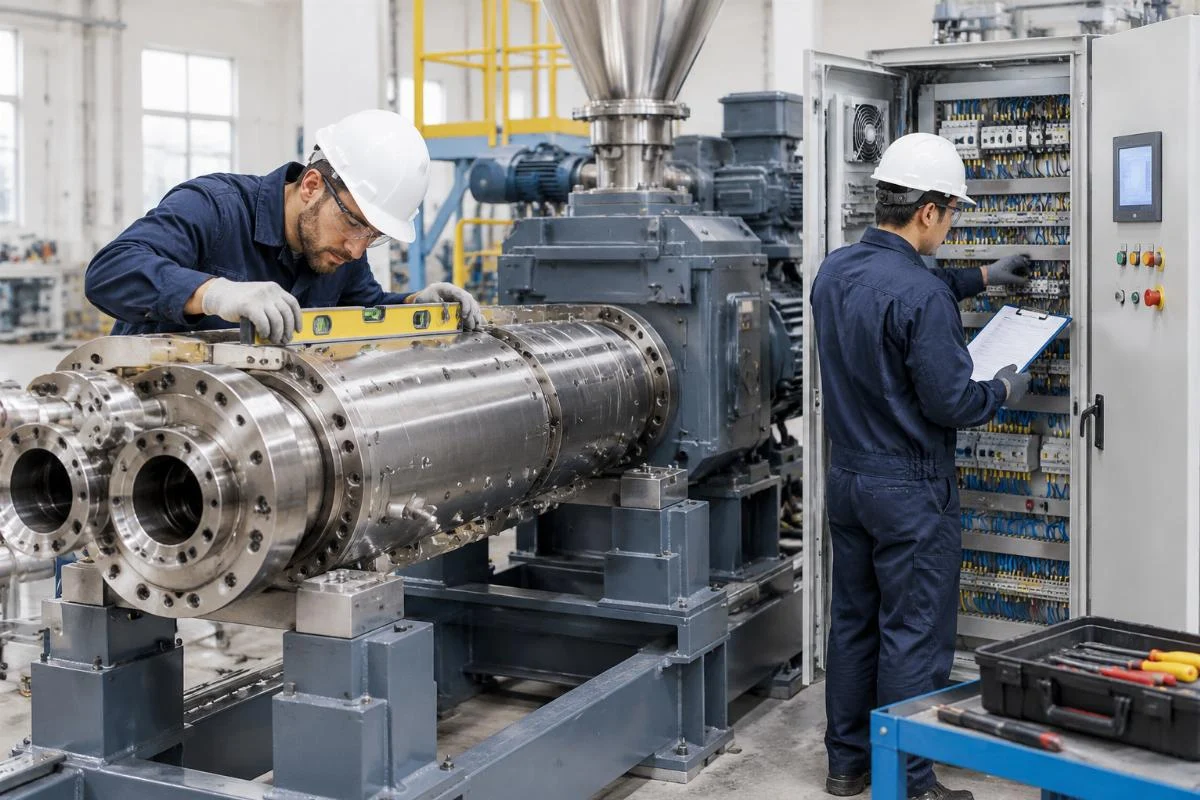
When buyers evaluate the pellet chips line price, they often conflate the manufacturing cost with the commissioning cost. Under standard Incoterms like FOB or CIF, the seller’s financial responsibility typically ends once the machinery is loaded onto the vessel or cleared for export. The physical assembly of a twin-screw extruder, connecting the multi-zone heating barrels, aligning the cutter mechanism, and integrating the fluidic coating drum requires specialized mechanical and electrical engineering.
If a supplier claims installation is entirely free, they have likely padded the base machinery cost or plan to send a junior technician who lacks the authority to authorize complex parameter adjustments. A proper installation involves verifying the local power grid stability, calibrating the steam conditioning system, and ensuring the exhaust ventilation meets your facility’s layout. Treating installation as an afterthought rather than a dedicated engineering service leads to severe alignment issues. The true production cost begins the moment the main motor spins up on your factory floor, not when the wooden crates are unloaded.
Why Should Training Be Costed Separately?
Proper operator training prevents massive material waste and ensures consistent pellet quality across different local raw materials.
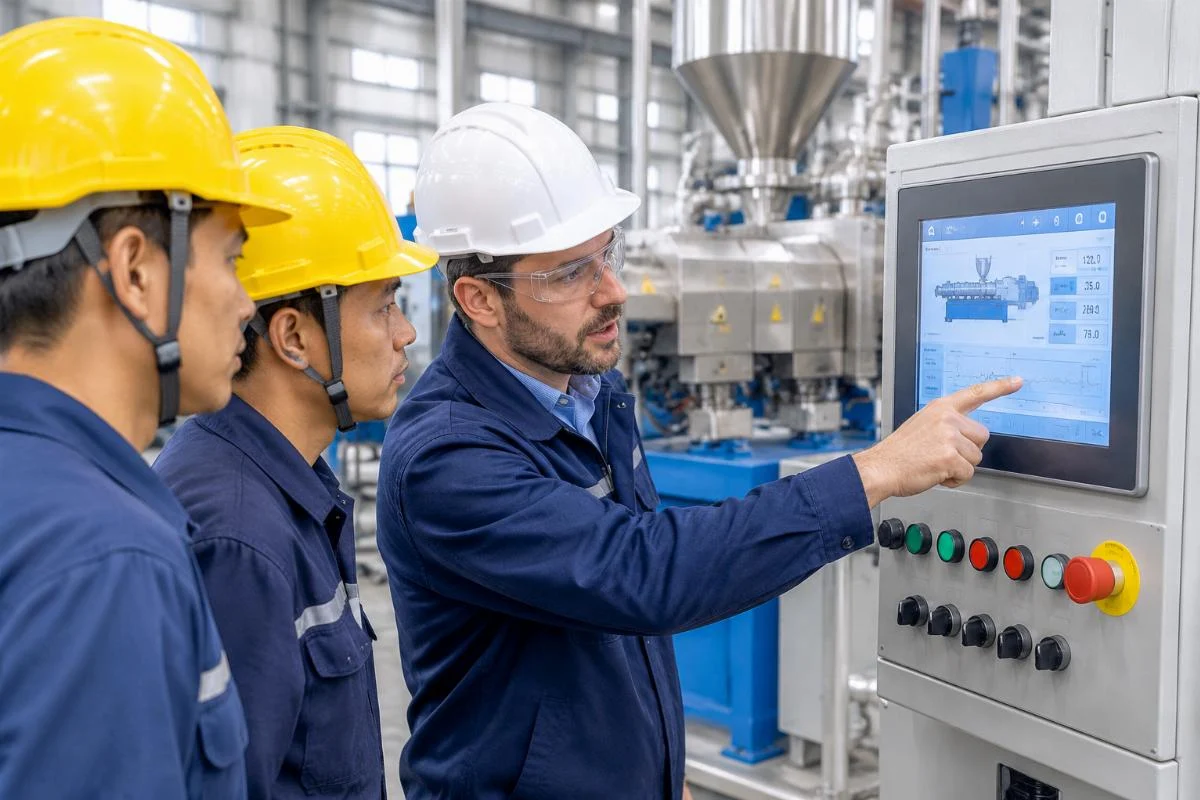
Even the most precise DS-series twin-screw extruder will produce unusable sludge if the local operators do not understand the thermodynamic principles of starch gelatinization. Training is not a simple manual handover; it is a critical process of transferring formulation logic and mechanical intuition. When we budget for training, we are paying for the engineer’s time to stand by the control panel, adjusting the water injection rate and screw speed in real-time until the pellet chips achieve the exact bulk density and texture required.
Without dedicated training investment, facilities often endure extended periods of trial and error. Operators struggling with twin-screw parameters without proper guidance will inevitably ruin batches of expensive raw materials, such as premium meat meals or specialized plant proteins. The cost of wasted ingredients over a few months of poor operation will vastly exceed the initial training fee. Furthermore, local raw materials often have different moisture and protein profiles than the test materials used in the manufacturer’s facility. A dedicated training period allows the engineer to adapt the recipe and machine settings to your specific local supply chain, ensuring the final product meets market standards from day one.
What Hidden Costs Occur During On-Site Commissioning?
Visa delays, local safety compliance rectifications, and extended stays create significant unbudgeted expenses for both buyers and sellers.
The physical environment of your factory introduces variables that no remote quotation can perfectly predict. During on-site commissioning, hidden costs frequently emerge from regulatory and logistical friction. For instance, if your facility lacks the required local safety compliance for high-voltage machinery or dust extraction, the installation will halt immediately. Rectifying these issues on the spot forces the engineering team to extend their stay, inflating daily allowances, accommodation, and flight change fees.
Similarly, bureaucratic hurdles like sudden visa restrictions or customs delays on spare parts can strand the technical team. A Southeast Asian snack line project once faced severe parameter instability because the local operators lacked basic electrical safety knowledge, forcing the engineers to spend extra weeks conducting foundational safety and mechanical maintenance workshops. These scenarios prove that on-site service is a dynamic project, not a fixed-price product. When evaluating the pellet chips line price, buyers must recognize that the financial buffer for these unpredictable field variables is essential. Failing to budget for local compliance fees, interpreter services, or extended engineer per-diems will inevitably lead to mid-project financial surprises and delayed return on investment.

How to Structure a Transparent Turnkey Quotation?
Itemizing equipment, freight, installation, and training separately ensures financial clarity and guarantees a smooth production startup.
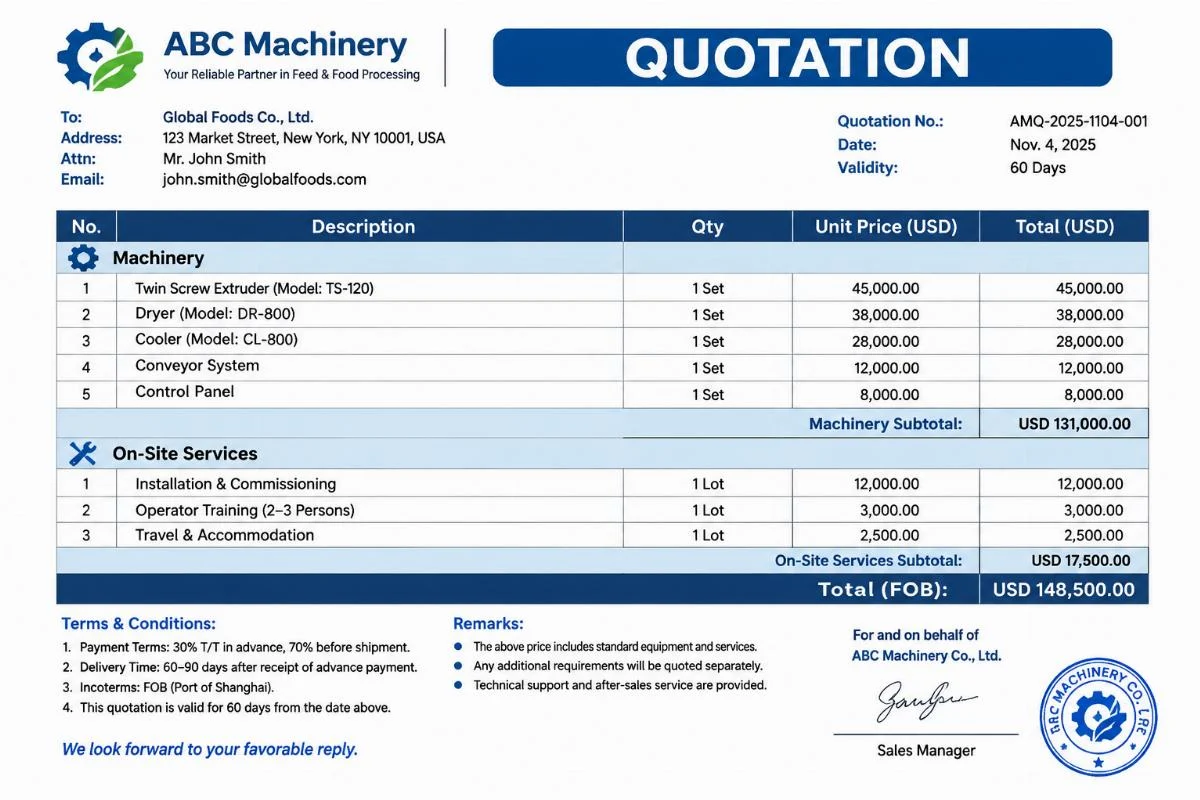
A professional turnkey quotation must reflect the reality of global project execution. At Meiteng, we structure our proposals to separate the hardware from the intellectual and physical services. The base pellet chips line price covers the extruders, dryers, flavoring systems, and export packaging. The on-site installation and operator training are presented as distinct, transparent line items. This approach allows buyers to see exactly what they are paying for regarding human expertise and field engineering.
This transparent accounting structure protects both parties. It ensures that the engineers dispatched to your facility are senior technical experts capable of handling complex formulation adjustments, rather than general assemblers. It also provides a clear framework for calculating the daily allowances, visa processing support, and local safety compliance coordination. By isolating these costs, buyers can accurately calculate their total landed investment and avoid the frustration of hidden fees appearing after the machinery arrives at the port. Ultimately, a transparent quotation transforms the procurement process from a risky gamble into a predictable, engineered pathway to profitable production.
Conclusion
Treat on-site engineering and knowledge transfer as premium investments, not free bonuses.
The true pellet chips line price extends far beyond the factory gate, encompassing the specialized labor required to conquer local variables and train your team. By demanding transparent, itemized quotations for installation and training, you secure the technical foundation necessary to turn imported steel into consistent, high-quality local production.
Equipment Mentioned in This Article
 3D papad machine
Fully Automatic 3D Snack Pellets Extruder Making Machine for Chips
Chips 3D Snack Pellet Extruder Line for 2D/3D Shapes — co-rotating twin-screw extrusion processes potato and cassava starches into papad,… View Machine Details frying chips machine
Industrial Deep Fryer Machine Manufacturer Banana Potato Chips French Fries
Industrial Deep Fryer Machine for banana and potato chips features automatic basket lifting and oil filtration. The electric heating system… View Machine Details frying chips machine
100-2000L Tank Deep Fryer Commercial Chips Frying Machine
100-2000L Tank Deep Fryer for Snack Pellets and Chips — handles continuous deep frying and de-oiling for potato, cassava, and… View Machine Details frying chips machine
Electric Batch Frying Machine for French Fries Fast Food Chicken Wing
Industrial Batch Fryer for Fried Snacks and French Fries — features electric or gas heating with automatic basket lifting for… View Machine DetailsRelated Applications

Engineering Perspective
An In-House R&D Team Behind Every Line
Jinan MT Machinery develops its process technology in-house. The team concentrates on the four areas that decide pellet shape, expansion and line stability.
- Expansion technology
- Twin-screw extrusion
- Die design
- PLC/MCC automation
Related Articles
 Nov 10, 2026 · Procurement & Trade FAQs
Snack Pellet Line for UAE: Twin-Screw Extruder Manufacturer & Turnkey Service
Buying a snack pellet line UAE requires engineering systems that survive extreme heat and voltage fluctuations, not just finding the lowest price. You must… Read This Article Nov 10, 2026 · Procurement & Trade FAQs
Fast Replacement Pellet Dies from China Manufacturer Meiteng
Minimize extruder downtime by understanding that replacement pellet die delivery time relies on precise formula matching and custom compression ratios rather than just express… Read This Article Nov 10, 2026 · Procurement & Trade FAQs
Snack Pellet Line for Poland & EU: Meiteng Twin-Screw Extruder Manufacturer
Importing a snack pellet line into Poland and the EU requires navigating strict CE machinery directives, EORI customs registration, and adapting equipment to local… Read This ArticleFree Process Check
Send Your Recipe for a Process Check
Jinan MT Machinery engineers review your recipe and return a free process plan within 24 hours. Tell us the product, output, raw material, local voltage and heat source.
Send Your Recipe on WhatsApp