
Pellet Snack Extrusion Line for India: DS70 Twin-Screw Manufacturer
- By Jinan MT Machinery

Bigger extruders often burn your raw materials instead of boosting your profits.
Selecting the right pellet snack line India requires matching twin-screw capacity with local raw material moisture levels and specific shape molds, rather than just maximizing output.
I still remember the smell of scorched corn flour in a factory in Mumbai. Years ago, we shipped a DS70 twin-screw extruder to an Indian client for a corn puff project. We configured the screw length-to-diameter ratio and die hole spacing based on standard industry parameters. During the trial run, the local corn flour, which carried unusually high internal moisture, turned into a sticky paste inside the barrel. The material completely blocked the die holes, and the waste piled up halfway across the workshop. We had to fly in custom-designed screws and specially drilled templates overnight to save the project. Since then, I examine the moisture reports of Indian raw materials much more carefully than letters of credit. Choosing a pellet snack line India is never just about reading the maximum output parameters on a brochure; it is about adapting to the physical reality of local agriculture.
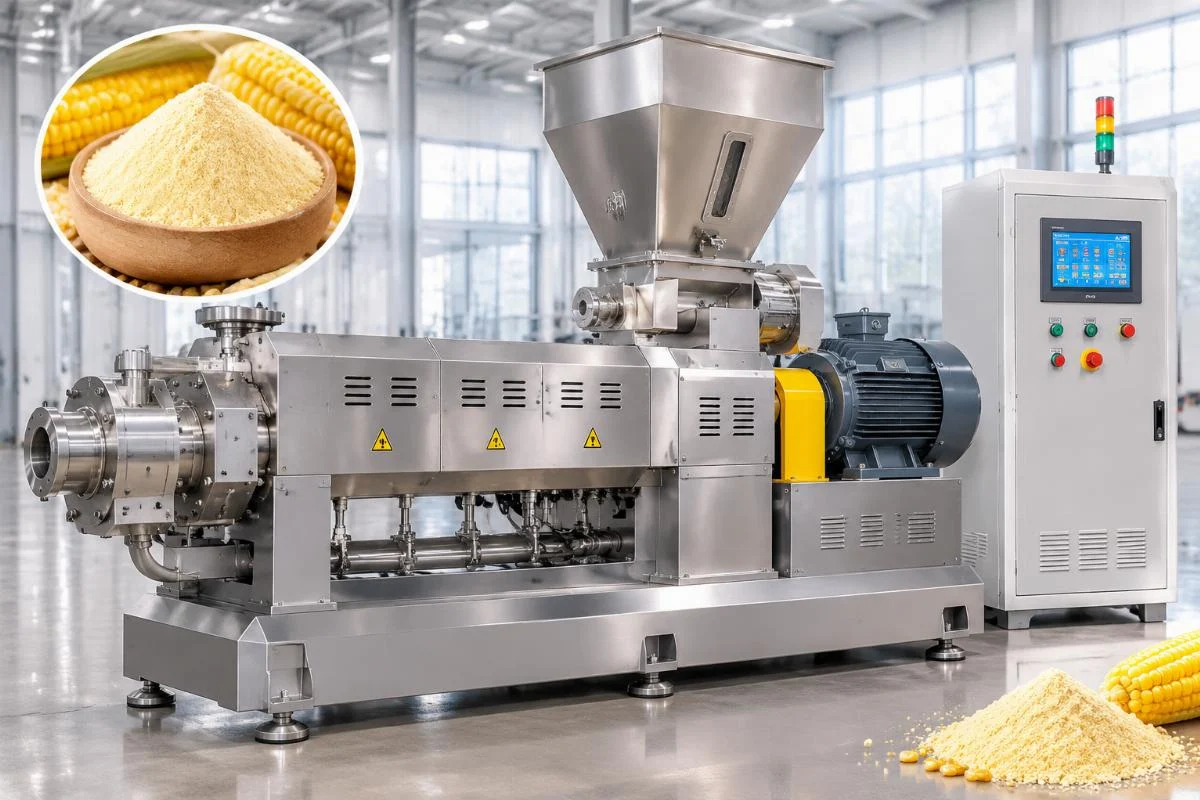
Let us break down how to evaluate equipment specs, capacity sizing, and technical support to ensure a smooth production launch.
What Capacity Do You Really Need for the Indian Market?
Matching mid-sized twin-screw models to actual local demand prevents oversized retention issues that destroy product quality.
When startups approach us, the first question is usually about maximum output. However, oversized extruders cause material retention and burning when processing high-moisture local corn. The specific mechanical energy required for corn starch gelatinization drops if the material stays in the barrel too long.
Here is how capacity selection translates to real-world processing stability:
| Capacity Tier | Typical Model | Material Retention Risk | Moisture Adaptability | Best Fit For |
|---|---|---|---|---|
| Mid-Sized Range | DS65 Series | Noticeably reduced | Standard | Regional startups testing SKU variety |
| Mid-High Range | DS70 Series | Controlled | High (with custom screws) | Established manufacturers scaling local corn |
| Large Scale | DS85 Series | Vulnerable | Requires strict pre-drying | Massive continuous runs with uniform raw materials |
A snack food startup in South India once insisted on installing the largest available model to future-proof their factory. They ended up dealing with severe material degradation because the local corn flour density varied daily. By switching to a mid-sized twin-screw configuration, they stabilized the gelatinization process and noticeably reduced waste.
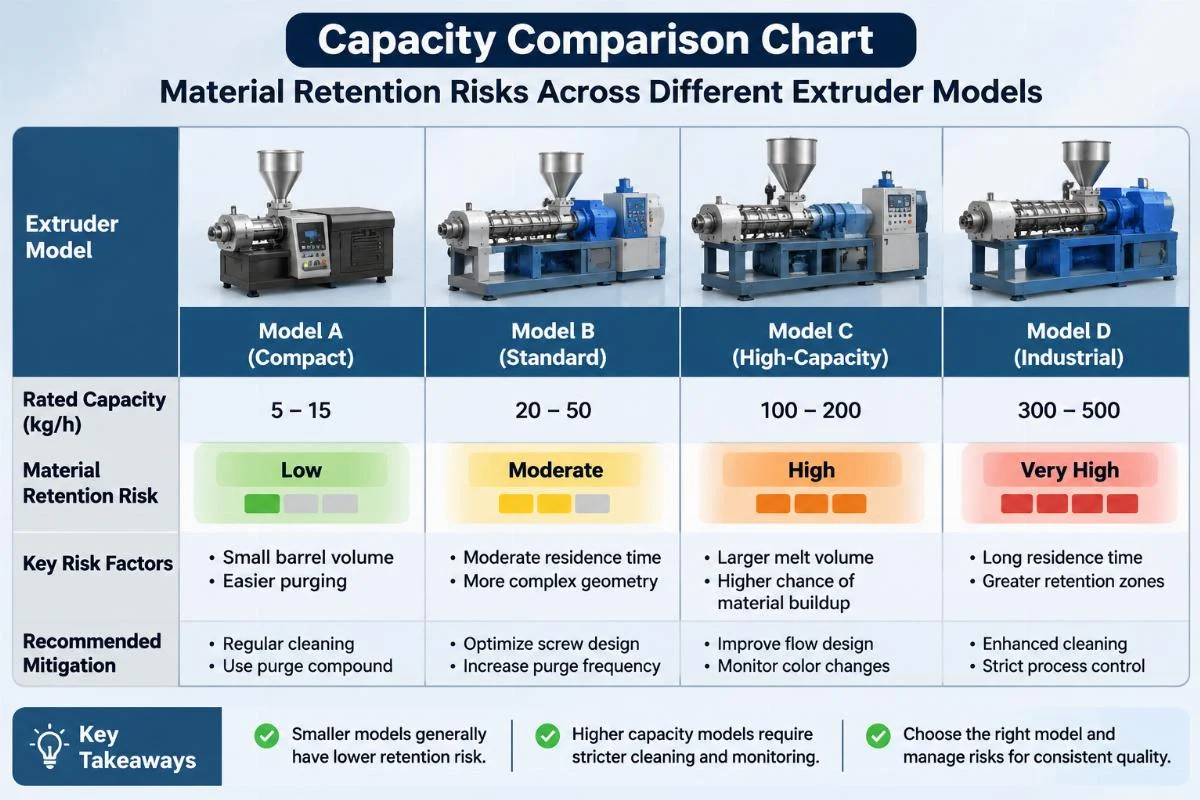
The lesson is clear: do not let the pursuit of maximum tonnage compromise the thermal history of your dough.
How Do Local Raw Materials Affect Screw and Die Selection?
Adapting screw configurations and template hole spacing for high-moisture Indian corn flour is mandatory to prevent die blocking.
Standard dies frequently fail in India because local humidity and flour density require custom-drilled templates to prevent blockages. If you use a standard off-the-shelf screw design with local corn flour exceeding standard moisture thresholds, the friction heat generated will not be enough to push the sticky mass through the die.
To solve this, we follow a strict adaptation protocol:
- Analyze Raw Material Moisture: Test the incoming corn flour batches. If the moisture content is consistently elevated, standard compression ratios will fail.
- Adjust Screw L/D Ratio: Modify the length-to-diameter ratio of the screw elements to extend the cooking and shear zones, ensuring complete gelatinization before the material reaches the die face.
- Customize Die Hole Spacing: Increase the distance between die holes and alter the land length of the template to reduce backpressure and allow the sticky dough to expand cleanly.
- Implement Moisture Conditioning: Pre-condition the raw material to stabilize its moisture profile before it enters the main feed hopper.
During the Mumbai incident mentioned earlier, the standard template simply could not handle the dense, sticky dough. We redesigned the screw elements to increase shear in the melting zone and drilled the new template with wider spacing. The result was a clean cut and a perfect puff.

Ignoring the physical properties of your raw material is the fastest way to turn your pellet snack line India into a expensive paperweight.
Which Snack Shapes Yield the Best Market ROI?
Comparing ring die versatility for stars, rings, and balls maximizes SKU flexibility without requiring multiple extrusion lines.
In the Indian snack market, visual appeal and shape diversity drive consumer purchasing decisions. A single product shape will struggle to capture shelf space. Therefore, the ability to quickly switch shapes on your pellet snack line India is a massive financial advantage.
We utilize specialized ring dies that allow manufacturers to produce multiple shapes using the same core extruder. By simply swapping the die plate, a production run can transition from rings to stars, or from balls to complex geometric shapes.
Consider the operational benefits of this approach:
- Reduced Capital Expenditure: You do not need to buy a dedicated machine for every shape.
- Faster Market Testing: Launch a small batch of a new shape, gauge consumer reaction, and scale up without line downtime.
- Optimized Flavor Coating: Different shapes hold seasoning differently; having multiple shapes allows you to tailor the coating system for maximum flavor adhesion.
A contract manufacturer in the Middle East used this exact strategy to dominate a niche market. They ran three different mold types per line, allowing them to offer a diverse catalog to regional distributors while maintaining a single, efficient extrusion footprint.

Maximizing SKU flexibility is how you turn a standard production facility into a versatile snack engine.
Why is Turnkey Support Crucial for Indian Startups?
On-site commissioning and formula tweaking are vital for adapting to regional ingredient variations and ensuring long-term stability.
Buying a machine is only the first step; making it produce a consistent, tasty snack in a specific geographic location is the real challenge. The Indian market features vast regional variations in raw material quality, water hardness, and ambient climate conditions. A formula that works perfectly in a controlled test lab will often fail on a factory floor in a humid coastal city.
Turnkey support bridges this gap. It involves more than just bolting machines together. It requires deep formula development and R&D support tailored to the exact local ingredients.
When we deploy a team for a turnkey installation, the focus is on operator training and recipe calibration. We adjust the moisture addition, screw speed, and temperature profiles based on the actual flour delivered to the client’s door. We also integrate the drying, cooling, and flavor-coating systems to ensure the final product meets local texture and taste expectations.
A startup in Southeast Asia initially tried to replicate a European formula using local cassava and corn blends. The texture was completely wrong. By bringing in our application engineers to tweak the formula and adjust the multi-stage drying parameters, they achieved the exact crunch and flavor release required for their target demographic.
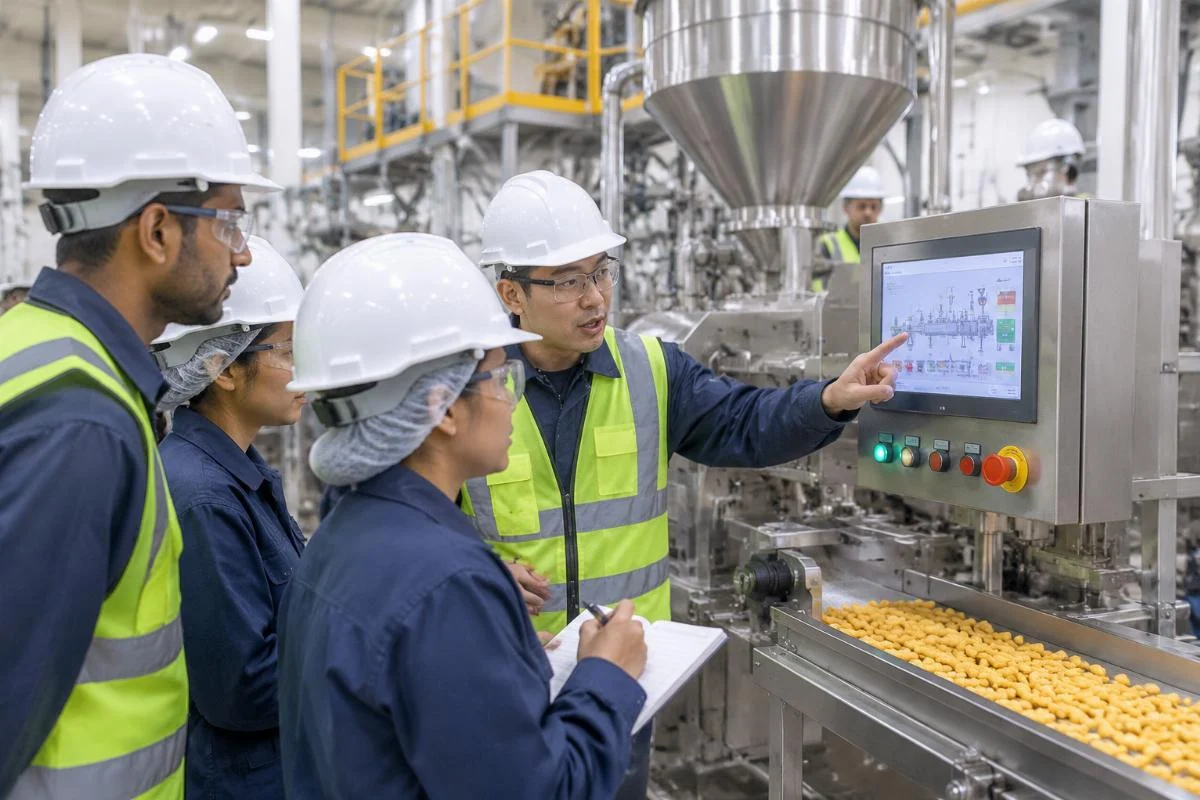
Technical support is not an optional add-on; it is the foundation of your production success.
Conclusion
Success in snack extrusion relies on adapting to local raw materials, not just buying the biggest machine.
Choosing the right pellet snack line India means prioritizing moisture adaptation, versatile shape molding, and localized formula support over raw output numbers. When you align your equipment specifications with the physical realities of your regional ingredients, you build a resilient and profitable manufacturing operation.
Equipment Mentioned in This Article
 3D papad machine
3D Snack Pellet Production Line Fried Extruder Machine
3D Snack Pellet Production Line for Starch-Based Snacks — twin-screw extrusion processes potato, cassava, and corn starch into diverse shapes.… View Machine Details 3D papad machine
Fully Automatic 3D Snack Pellets Extruder Making Machine for Chips
Chips 3D Snack Pellet Extruder Line for 2D/3D Shapes — co-rotating twin-screw extrusion processes potato and cassava starches into papad,… View Machine Details 3D papad machine
Automatic 3D Pellet Extruded Corn Puffed Snack Food Production Line
3D Pellet Extruded Snack Food Production Line for Starch Pellets — processes potato, corn, and cassava starch into papad and… View Machine Details 3D papad machine
2D 3D Snack Pellet Production Line Manufacturer
2D 3D Snack Pellet Production Line for Diverse Shapes from Starches — twin-screw extrusion handles wheat, corn, and cassava. The… View Machine DetailsRelated Applications

Engineering Perspective
An In-House R&D Team Behind Every Line
Jinan MT Machinery develops its process technology in-house. The team concentrates on the four areas that decide pellet shape, expansion and line stability.
- Expansion technology
- Twin-screw extrusion
- Die design
- PLC/MCC automation
Related Articles
 Nov 7, 2026 · Buying Guide
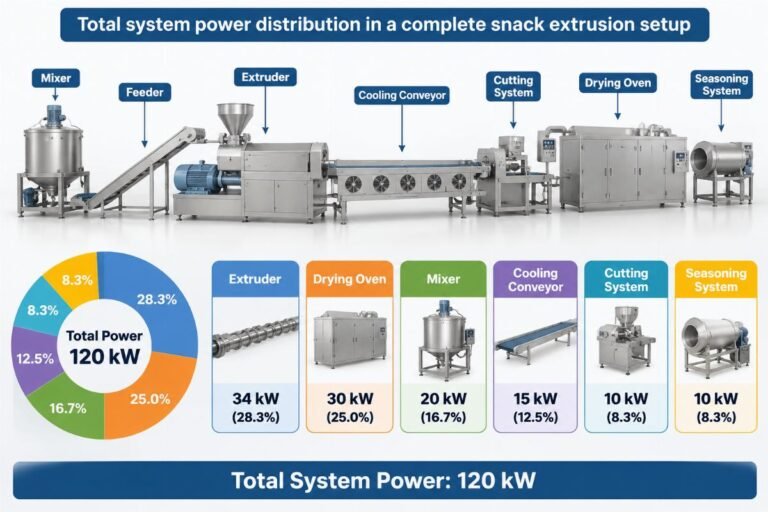
Energy Efficient Snack Pellet Extruder Line Manufacturer for Sale
Evaluating an energy efficiency snack pellet production line requires looking beyond single motor ratings to total system power and heat recovery to eliminate hidden… Read This Article Nov 7, 2026 · Buying Guide
De-Oiling Machine for Pellet Chips Fryer Line | Meiteng OEM Manufacturer
A properly matched de-oiling machine for pellet chips controls residual surface oil to extend shelf life and ensure seasoning adhesion without shattering fragile snacks.… Read This Article Nov 7, 2026 · Buying Guide
Twin-Screw Extruder for Snack Food: Wholesale Manufacturer
Selecting a twin-screw extruder for snack food requires matching machine specifications with local factory conditions and raw material intake rather than merely comparing price… Read This ArticleFree Process Check
Send Your Recipe for a Process Check
Jinan MT Machinery engineers review your recipe and return a free process plan within 24 hours. Tell us the product, output, raw material, local voltage and heat source.
Send Your Recipe on WhatsApp