
Shrimp Flavored Pellet Crackers Extruder Line Manufacturer for Southeast Asian Snack Makers
- By Jinan MT Machinery
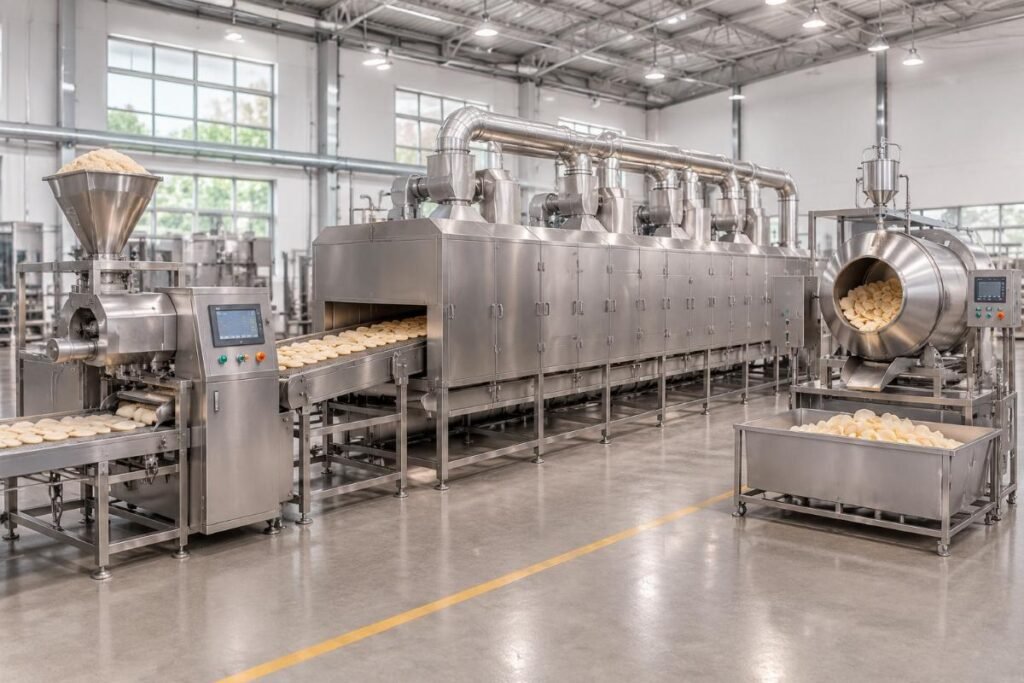
Buying cheap carbon steel components for tropical snack manufacturing is the fastest way to bankrupt your production schedule.
Successfully producing shrimp flavored pellet crackers in Southeast Asia requires prioritizing anti-corrosion materials and precise twin-screw extrusion over cheap initial equipment costs to avoid severe maintenance downtime.
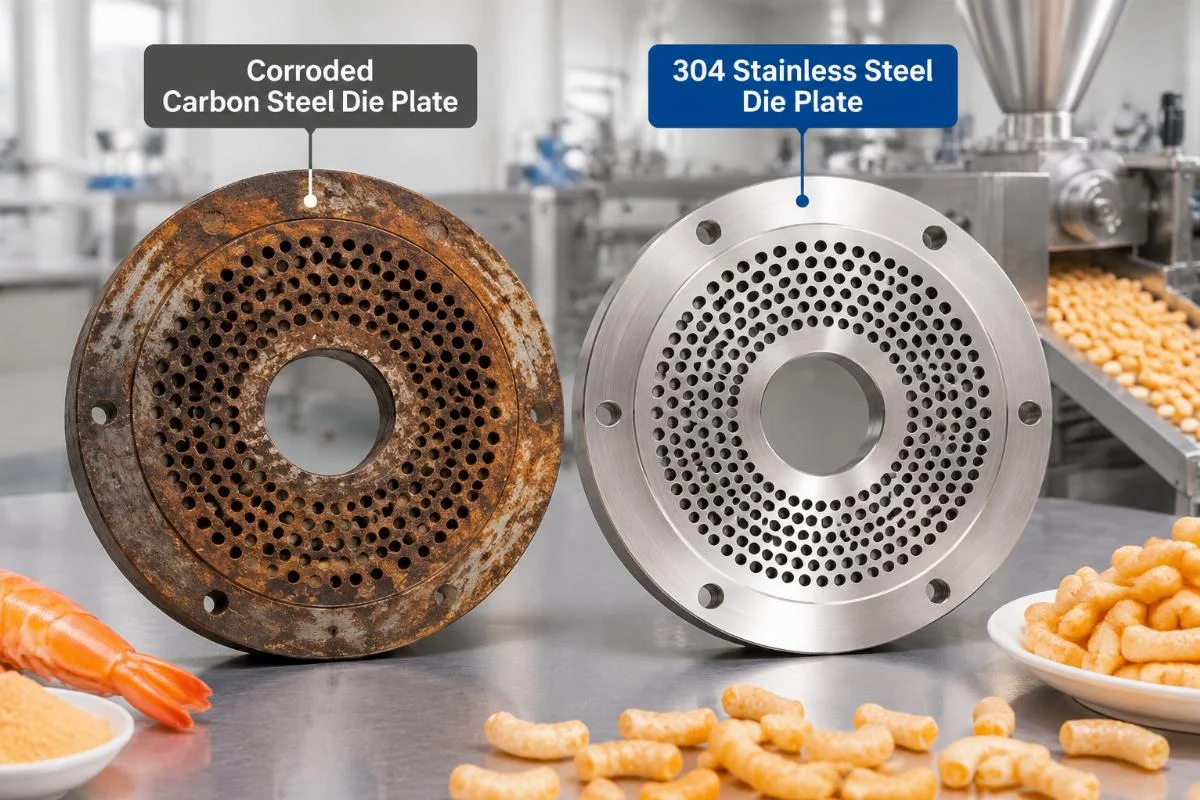
While setting up a snack facility in Lagos, a local client decided to cut costs by swapping the original die plates on their twin-screw extruder for cheap carbon steel alternatives. Within weeks, the high-salt shrimp powder combined with the coastal humidity corroded the die holes, creating burrs that left black spots on every extruded pellet. The entire Shrimp Flavored Pellet Crackers Extrusion Line was shut down for days to replace the ruined parts and clean the system. That specific failure highlighted a massive industry blind spot regarding material degradation in high-salt environments. When dealing with a Shrimp Flavored Pellet Crackers Extrusion Line in tropical regions, the ambient moisture and aggressive seasoning profiles demand food-grade stainless steel and precise thermal management from day one. Transitioning from those on-site debugging sessions to equipment consulting, the focus shifted entirely toward material durability and integrated system design for Southeast Asia snack food machinery.
Why Standard Extruders Fail in Tropical Shrimp Cracker Production?
Standard carbon steel components rapidly degrade when exposed to the high-salt shrimp powder and tropical humidity typical of Southeast Asian manufacturing environments.
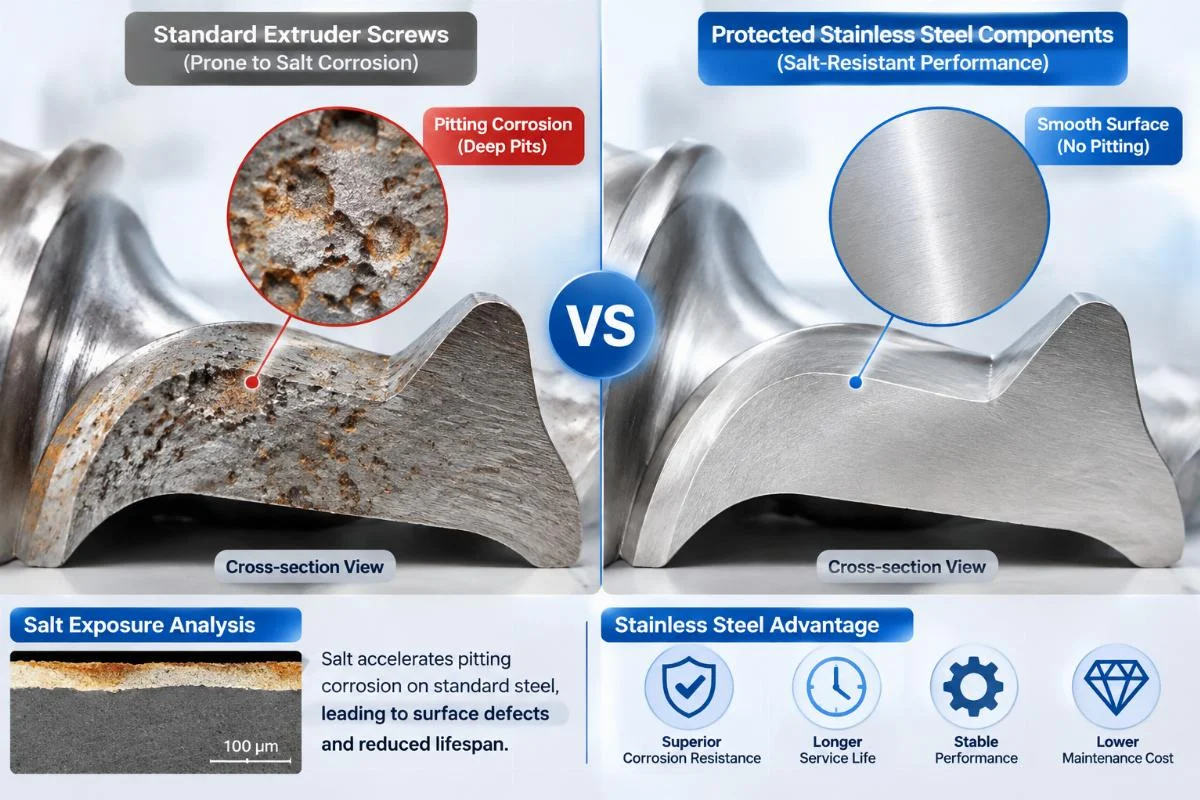
The core issue lies in the chemical interaction between sodium chloride and non-stainless metals. In tropical climates, the ambient humidity acts as an electrolyte, accelerating galvanic corrosion on standard machinery parts. Industry data confirms that high-chloride food powders significantly reduce the lifespan of unprotected metal components. When a Shrimp Flavored Pellet Crackers Extrusion Line utilizes basic carbon steel for the barrel or die, the salt penetrates the micro-pores of the metal. This not only causes physical pitting but also introduces metallic contaminants into the food product, leading to severe quality defects and potential hygiene violations.
During a facility audit in a coastal Southeast Asian region, operators reported frequent product discoloration and inconsistent pellet shapes. The root cause was traced back to the micro-corrosion inside the extruder barrel, which altered the friction coefficient and disrupted the shear profile. Upgrading to a 304 stainless steel pellet cracker production line eliminates this vulnerability, as the chromium oxide layer passivates the surface against chloride attacks. For a Shrimp Flavored Pellet Crackers Extrusion Line, ignoring this material science reality guarantees recurring maintenance crises and compromised product safety.
How to Select the Right Twin-Screw Extruder for Shrimp Pellets?
Selecting the right equipment demands a focus on 304 stainless steel contact parts and precise temperature control to manage the expansion ratio in humid conditions.
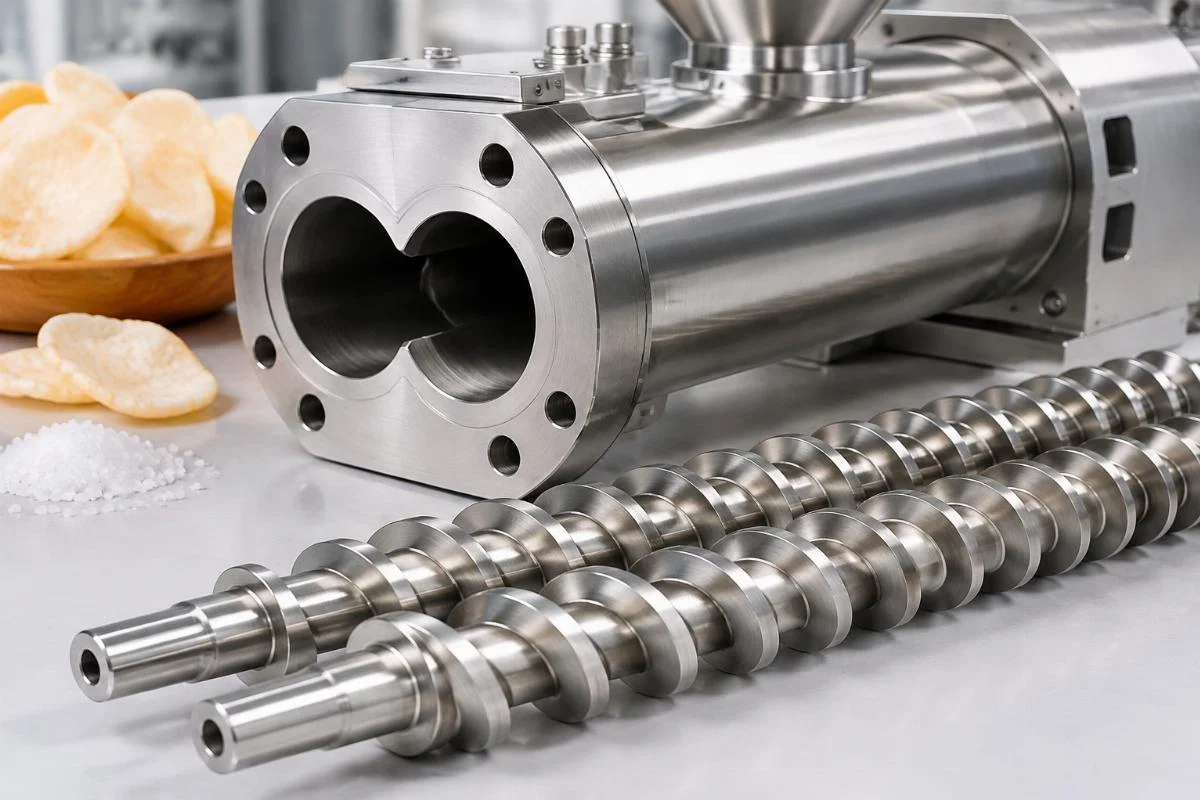
The twin-screw extruder for shrimp crackers must handle a highly abrasive and sticky dough matrix. Shrimp powder alters the rheology of the raw material, requiring specific shear intensity parameters to achieve the desired puffing density. Research on extrusion processing indicates that precise moisture and temperature control are critical for maintaining consistent expansion ratios in high-ambient-humidity environments. If the twin-screw extruder for shrimp crackers lacks advanced thermal regulation, the residual moisture in the tropical air will cause the pellets to either collapse or become excessively dense.
A reliable Shrimp Flavored Pellet Crackers Extrusion Line must feature variable frequency drives on the main motor and precise water injection systems to balance the dough hydration. Furthermore, all product contact parts, including the screws, barrel liners, and dies, must be manufactured from certified 304 or 316 stainless steel to meet 3-A sanitary standards. This ensures that the twin-screw extruder for shrimp crackers not only withstands the mechanical wear of the shrimp powder but also complies with international food safety hygiene standards. Choosing a machine with these specifications transforms the Shrimp Flavored Pellet Crackers Extrusion Line from a liability into a consistent production asset.
What Post-Extrusion Systems Are Critical for Southeast Asian Climates?
Integrated drying and flavor-coating systems are the true bottlenecks for product quality, essential to prevent spoilage and ensure even seasoning adhesion.
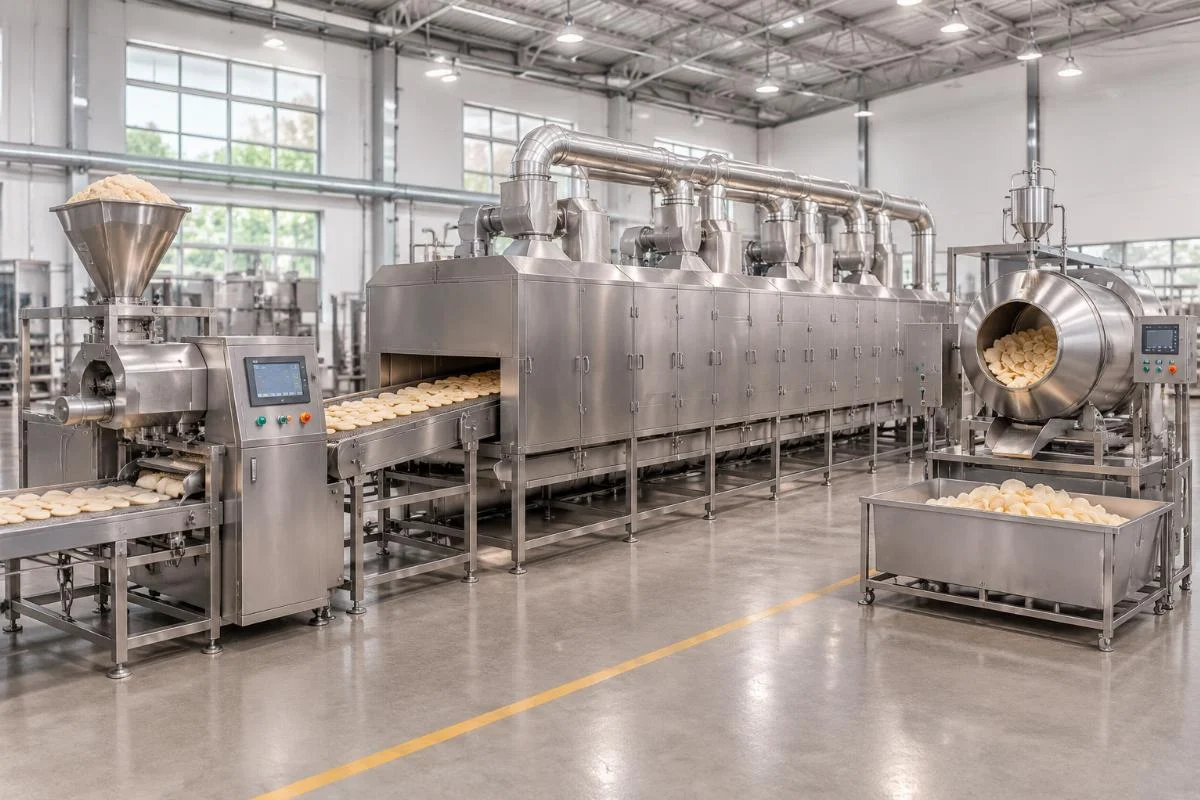
Most buyers focus solely on the extruder capacity, ignoring the post-extrusion environment. In Southeast Asia, the ambient humidity can re-introduce moisture into the freshly extruded pellets within minutes if they are not dried properly. Food engineering studies emphasize that achieving the correct final moisture content target for pellet drying is non-negotiable for shelf-life stability. A standalone dryer is often insufficient; the Shrimp Flavored Pellet Crackers Extrusion Line requires a multi-pass drying system with precise airflow and temperature zoning to gently remove surface and core moisture without case-hardening the pellets.
Following the drying phase, the flavor coating system must apply the shrimp seasoning uniformly. Uneven seasoning adhesion on pellet crackers causes localized moisture pockets, leading to localized spoilage and rancidity. Seasoning adhesion testing methods show that a properly designed coating drum with controlled oil misting and powder distribution ensures maximum coverage. When integrating these components into a 304 stainless steel pellet cracker production line, the entire system works in harmony to protect the product from the tropical climate, ensuring that the final snack remains crisp and flavorful throughout its shelf life.
How Does a Turnkey Solution Reduce Long-Term Operational Risks?
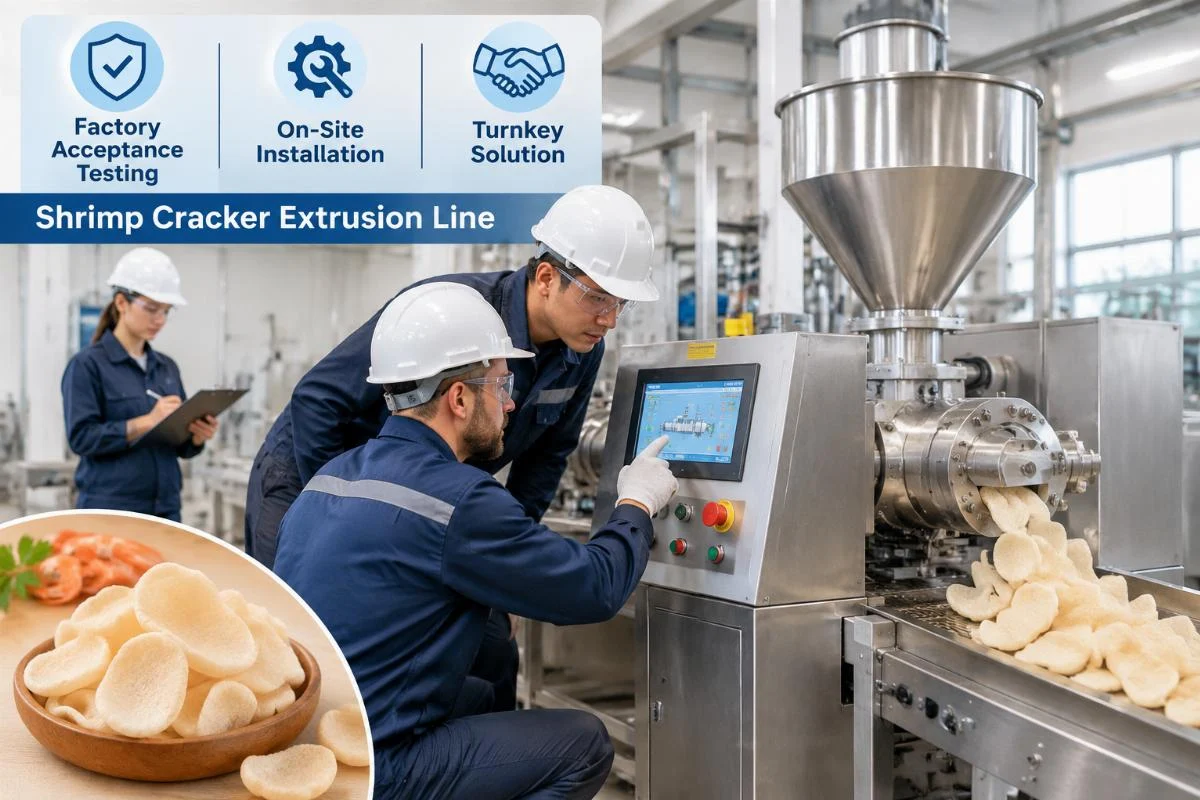
Factory-accepted testing, on-site installation, and formula R&D prevent costly trial-and-error during startup, securing the entire production ecosystem.
Launching a new snack brand involves immense operational risk, particularly when dealing with complex formulations like shrimp flavored pellets. A fragmented approach, where the extruder, dryer, and coating machine are sourced separately, often leads to integration failures and production bottlenecks. Industry analysis of snack food machinery implementations reveals that turnkey setups significantly reduce the time-to-market and minimize early-stage operational failures.
Meiteng addresses these risks by providing a comprehensive Shrimp Flavored Pellet Crackers Extrusion Line that encompasses everything from raw material intake to final packaging. As a professional manufacturer headquartered in Jinan, Shandong Province, the approach includes full turnkey line design, formula development support, and on-site installation with operator training. The equipment, ranging from twin-screw models like the DS65 and DS70 to integrated drying systems, is constructed with food-grade 304 stainless steel and holds CE and ISO 9001 certifications. By offering formula R&D support, the technical team ensures that the shrimp powder ratio and starch base are perfectly calibrated for the local climate. This holistic integration ensures that the Shrimp Flavored Pellet Crackers Extrusion Line operates at peak efficiency from day one, eliminating the guesswork and protecting the investment against the harsh realities of tropical manufacturing.
Conclusion
Prioritizing material durability and system integration is the only viable path for tropical snack manufacturing.
Upgrading to a 304 stainless steel pellet cracker production line and securing a comprehensive turnkey setup eliminates the hidden costs of corrosion and environmental spoilage. For Southeast Asian snack makers, investing in a robust Shrimp Flavored Pellet Crackers Extrusion Line guarantees product consistency, hygiene compliance, and long-term operational stability.
Equipment Mentioned in This Article
 3D papad machine
2D 3D Snack Pellet Production Line Manufacturer
2D 3D Snack Pellet Production Line for Diverse Shapes from Starches — twin-screw extrusion handles wheat, corn, and cassava. The… View Machine Details 3D papad machine
3D Snack Pellet Production Line Fried Extruder Machine
3D Snack Pellet Production Line for Starch-Based Snacks — twin-screw extrusion processes potato, cassava, and corn starch into diverse shapes.… View Machine Details 3D papad machine
Fully Automatic 3D Snack Pellets Extruder Making Machine for Chips
Chips 3D Snack Pellet Extruder Line for 2D/3D Shapes — co-rotating twin-screw extrusion processes potato and cassava starches into papad,… View Machine Details 3D papad machine
Automatic 3D Pellet Extruded Corn Puffed Snack Food Production Line
3D Pellet Extruded Snack Food Production Line for Starch Pellets — processes potato, corn, and cassava starch into papad and… View Machine DetailsRelated Applications

Engineering Perspective
An In-House R&D Team Behind Every Line
Jinan MT Machinery develops its process technology in-house. The team concentrates on the four areas that decide pellet shape, expansion and line stability.
- Expansion technology
- Twin-screw extrusion
- Die design
- PLC/MCC automation
Related Articles
 Nov 15, 2026 · Applications & Industries
Puffed Corn Snacks & Pellet Chips Line Manufacturer Meiteng
Combining puffed corn snacks and pellet chips production line maximizes equipment utilization and reduces initial capital expenditure for startup manufacturers. Real yield depends on… Read This Article Nov 14, 2026 · Applications & Industries
High-Protein Snack Pellets Extruder Line: Pea & Soy Protein Manufacturer
Producing High-Protein Snack Pellets via Pea and Soy Protein Extrusion often fails due to inadequate shear force and mismatched thermal profiles causing protein denaturation.… Read This Article Nov 14, 2026 · Applications & Industries
Kenya Pellet Snack Extrusion Line Manufacturer DS70 for Sale
Setting up a pellet snack production line Kenya requires matching DS70 twin-screw extruder capacity to your startup scale and strictly pre-clearing HS codes for… Read This ArticleFree Process Check
Send Your Recipe for a Process Check
Jinan MT Machinery engineers review your recipe and return a free process plan within 24 hours. Tell us the product, output, raw material, local voltage and heat source.
Send Your Recipe on WhatsApp