
Snack Pellet Dies & Moulds: OEM Manufacturer Pricing & Shipping
- By Jinan MT Machinery
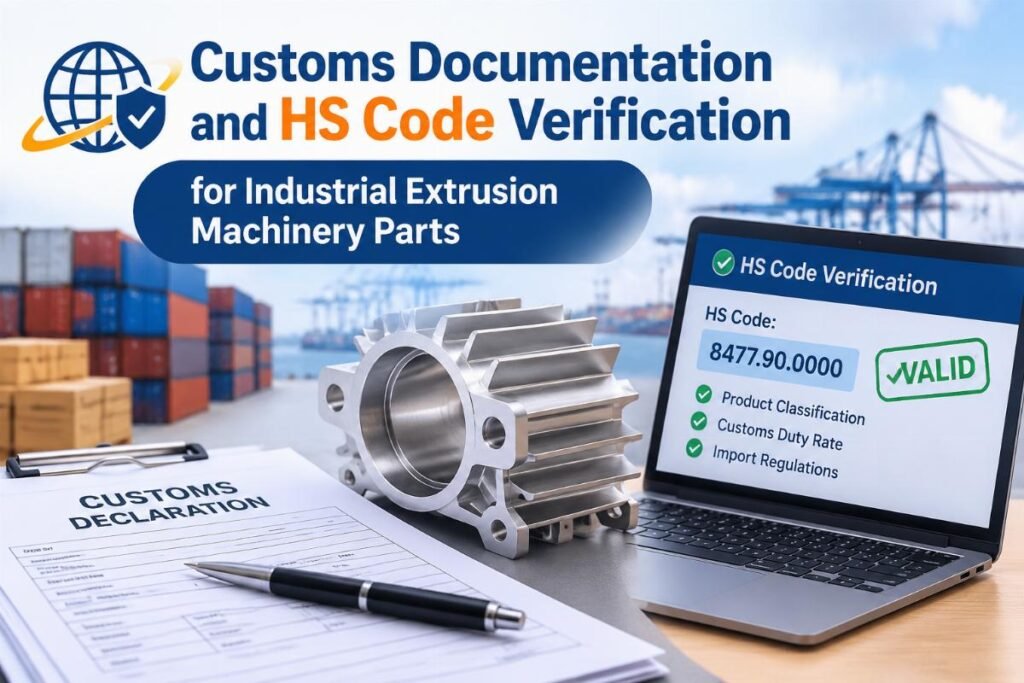
Dense steel components often trigger volumetric weight surcharges that dwarf the initial manufacturing quote.
The true cost of snack pellet dies moulds pricing shipping extends far beyond the raw steel block; it is fundamentally dictated by machining complexity, fumigation-free packaging compliance, and the strict application of dimensional weight formulas by ocean carriers.
Transitioning from documentation to business development in Jinan exposed me to the brutal reality of international logistics. Years ago, a shipment of custom pet food forming discs destined for Manzanillo, Mexico, became a financial disaster. The wooden crates used for the OEM moulds lacked proper fumigation-free certification, and the consolidation team failed to calculate the actual versus volumetric weight accurately. The cargo was held at the port for weeks, and the resulting demurrage fees consumed the majority of the profit margin. Since that incident, I have obsessively scrutinized material weights, packaging specifications, and customs documentation. The OEM price of custom dies is never just the cost of steel; the downstream packaging, customs clearance, and ocean freight surcharges can silently erase your margins if a single calculation is off.
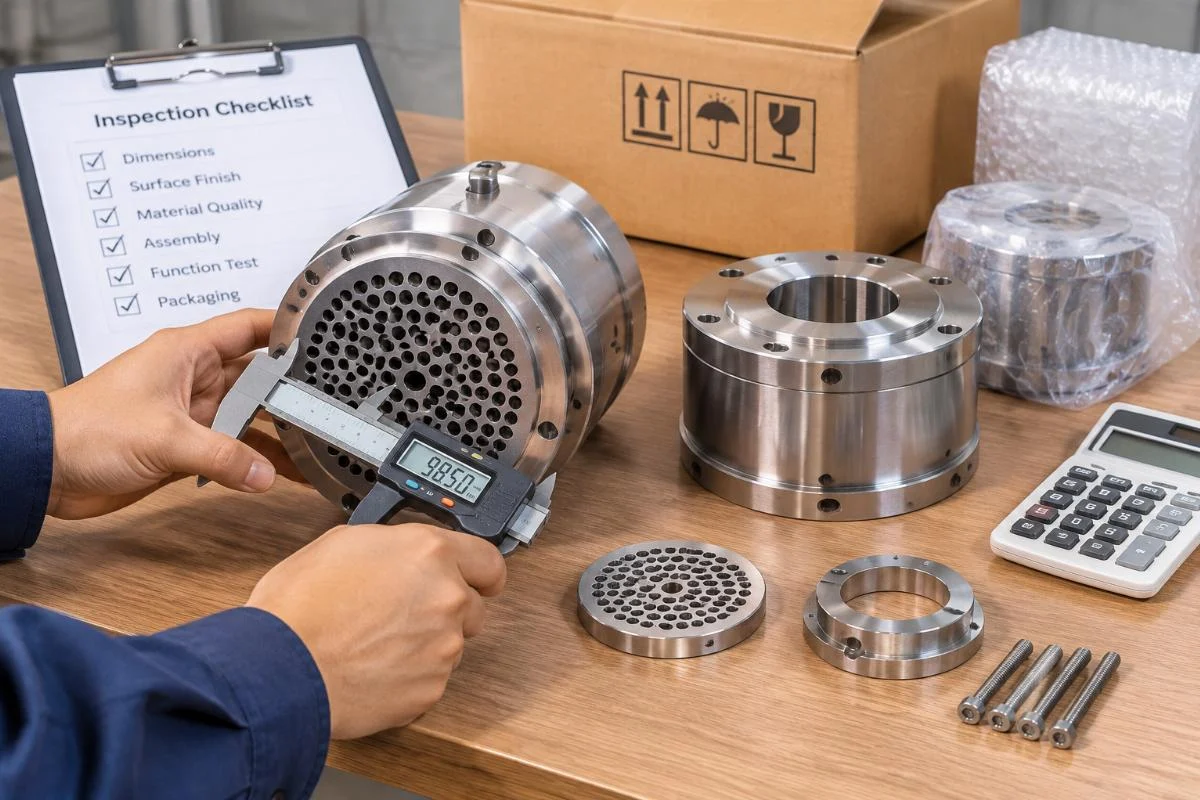
Understanding these hidden variables is critical for snack food manufacturers sourcing custom extruder dies. Let us break down the exact mechanisms behind the costs and logistics.
What Determines the Base Price of Extra Snack Pellet Dies?
The base manufacturing cost is driven by the specific steel grade, the geometric complexity of the hole patterns, and the precision required for micron-level finishing.
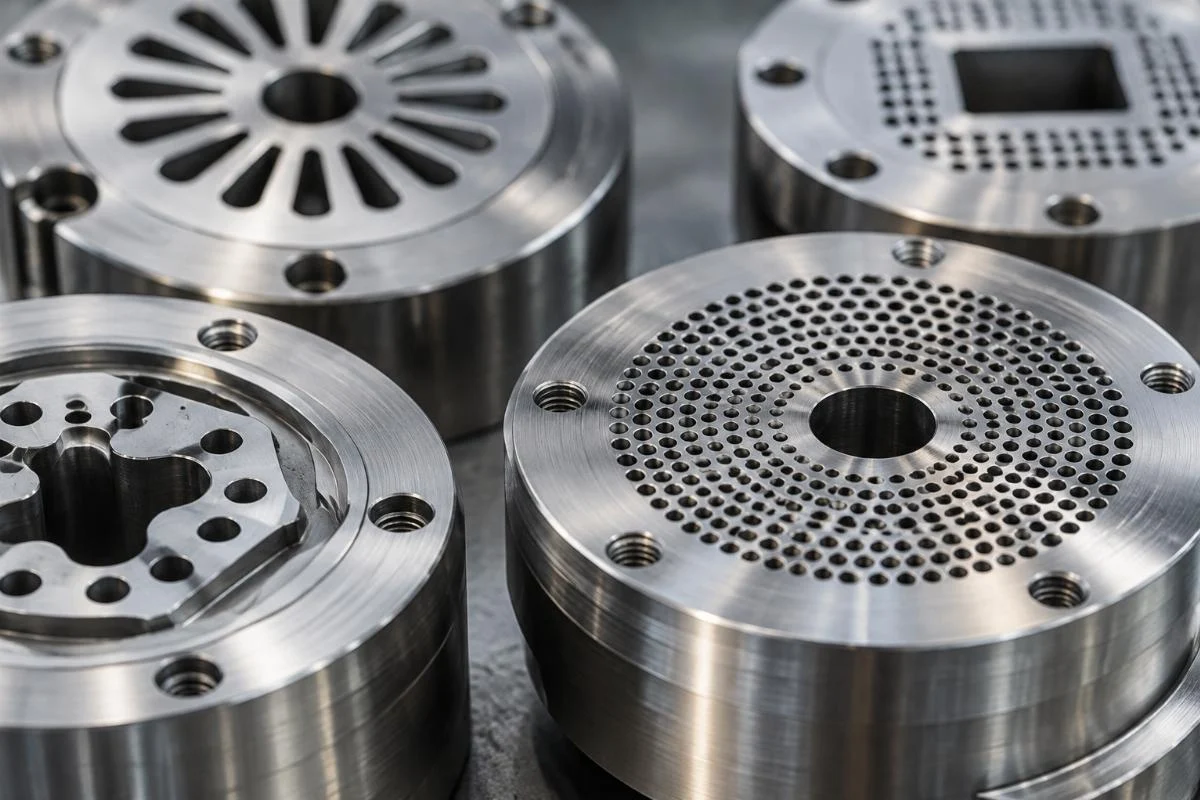
When procurement managers evaluate snack pellet dies moulds pricing shipping, they often focus solely on the material cost. However, the machining process dictates the true baseline. Extruder dies for snack foods require specific material grades to withstand high pressure and abrasive ingredients. Food-grade stainless steel variants are mandatory to meet sanitary standards, and these alloys are significantly more expensive and harder to machine than standard carbon steels.
The hole patterns and channel geometries also introduce massive variables. A simple uniform hole pattern is straightforward to drill, but complex shapes designed for specific snack textures require advanced wire EDM or laser drilling. Each additional layer of geometric complexity increases the machine hours and quality control checks required. Furthermore, the heat treatment and surface polishing processes must be strictly controlled to ensure the dies resist corrosion and maintain dimensional stability under continuous thermal cycling.
Consider a scenario where a snack food manufacturer in South America requested a revised hole pattern for a new corn puff product. The initial quote seemed reasonable based on standard steel pricing. However, the new pattern required intricate internal channels that drastically increased the machining time. The base price reflected this complexity, but because the buyer only focused on the raw material cost, they were caught off guard by the final invoice. Accurate pricing requires a transparent breakdown of machining hours, material certification, and surface treatment protocols.
How Are Custom Moulds Packed for International Shipping?
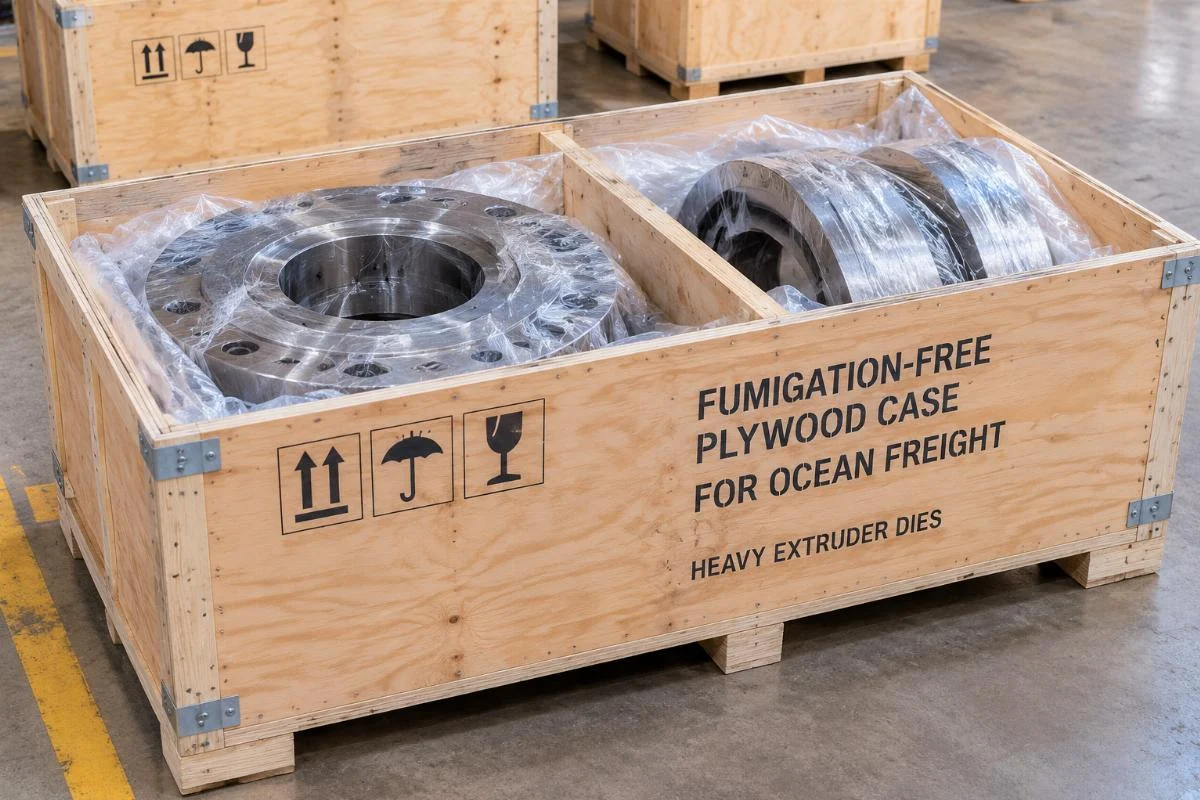
Fumigation-free plywood cases are absolutely mandatory to prevent customs holds and ensure smooth port clearance.
The packaging phase is where many buyers encounter unexpected delays and costs. When dealing with snack pellet dies moulds pricing shipping, the packaging method directly impacts both the safety of the cargo and the customs clearance speed. Solid wood crates, while sturdy, require strict fumigation treatments and phytosanitary certificates according to international maritime regulations. If the documentation is missing or the wood treatment marks are unclear, customs authorities will detain the cargo immediately.
To bypass these risks, professional manufacturers utilize engineered plywood cases. These cases provide the necessary structural integrity to protect the heavy steel dies during transit without triggering fumigation requirements. The dies must be securely braced inside the case to prevent any movement that could damage the precision-machined surfaces. Additionally, moisture barriers and rust-preventive coatings are applied before sealing the crate, especially for ocean freight where humidity fluctuations are extreme.
I once reviewed a shipment where a buyer opted for the cheapest packaging option to save a small amount upfront. The supplier used untreated solid wood without declaring it properly. The shipment arrived at a European port and was immediately flagged. The buyer had to pay for emergency fumigation, storage fees, and administrative penalties. The total cost was several times the savings they initially sought. Proper packaging is not an optional accessory; it is a critical component of the logistics strategy.
How is Freight Calculated for Heavy Extruder Dies?
Ocean carriers and freight forwarders charge based on the higher of the actual gross weight or the volumetric weight, a rule that heavily penalizes dense steel shipments.
This is the most counter-intuitive aspect of snack pellet dies moulds pricing shipping. Steel is incredibly dense, meaning a relatively small physical footprint can weigh a massive amount. However, freight calculations for Less than Container Load (LCL) shipments rely on a dimensional weight formula. Carriers calculate the volume of the cargo in cubic meters and apply a standard conversion factor to determine the chargeable weight. If the volumetric weight exceeds the actual weight, you pay for the space the cargo occupies, not just its mass.
For heavy extruder dies, the actual weight usually dominates. However, if the dies are packed in oversized crates with excessive internal void space to “protect” them, the volumetric weight can skyrocket. This discrepancy leads to severe freight surcharges. Accurate consolidation requires precise measurements of the final packed dimensions and gross weight to negotiate the best freight rates and avoid surprise invoices.
A Middle East snack producer once ordered a set of custom dies. The supplier packed each die in an individual, oversized wooden box with大量 internal padding. The actual weight was substantial, but the volumetric weight calculated by the forwarder was exponentially higher due to the wasted space. The freight cost ended up multiplying the logistics budget significantly. Precise consolidation services and tight packaging design are essential to align the physical dimensions with the actual mass, ensuring you only pay for the necessary cargo space.

What Hidden Fees Occur During Customs and Delivery?
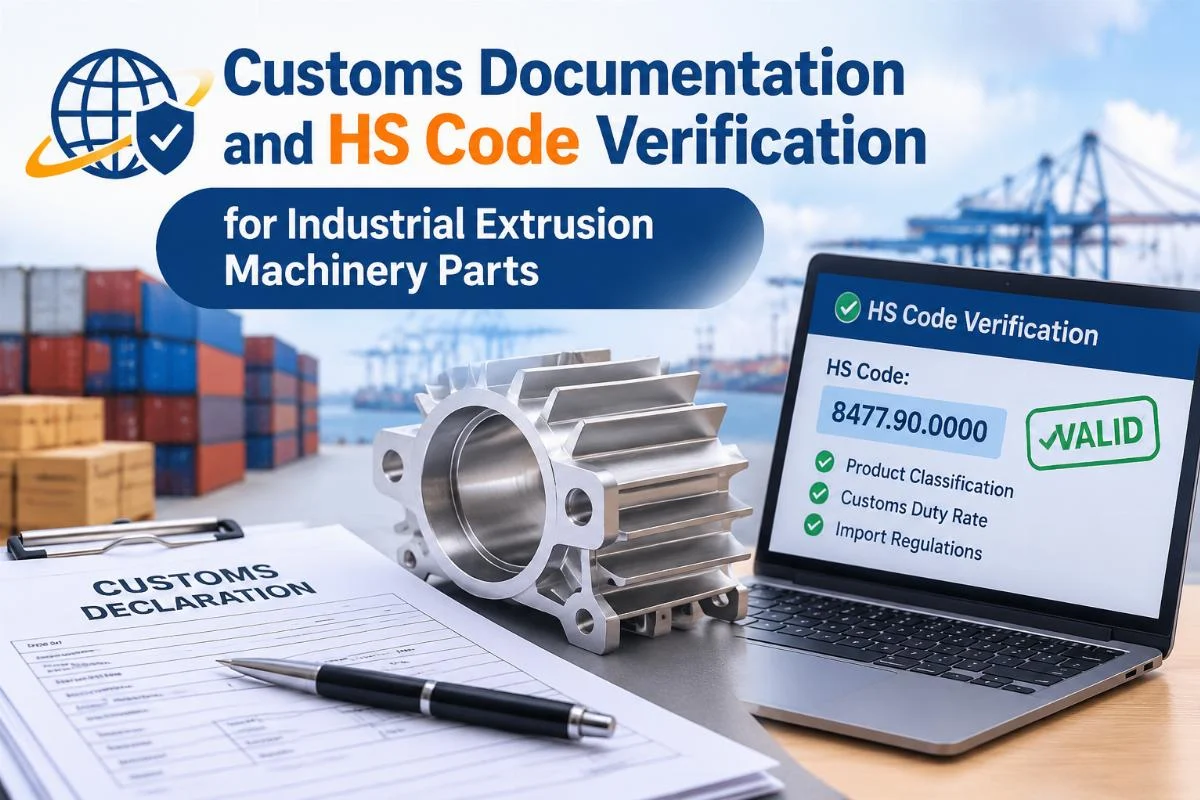
Incorrect Harmonized System (HS) codes and missing export documentation trigger unexpected surcharges, port storage fees, and severe delivery delays.
The final layer of snack pellet dies moulds pricing shipping involves customs clearance and final delivery. Extruder dies must be classified under the correct HS code to determine the applicable import duties and taxes. Misclassifying the dies as general machinery parts instead of specialized food processing components can lead to incorrect duty assessments, fines, or prolonged customs inspections. Furthermore, the commercial invoice, packing list, and certificate of origin must perfectly align with the physical shipment and the bill of lading.
Turnkey export documentation is vital here. Manufacturers who provide comprehensive, accurate documentation ensure that the buyer’s customs broker can clear the goods swiftly. Missing signatures, inconsistent weight declarations, or vague product descriptions will halt the clearance process. The resulting port storage fees and demurrage charges accumulate daily and can quickly eclipse the original value of the dies.
Rush orders also introduce massive hidden costs. If a buyer needs the dies urgently and opts for air freight, the logistics costs multiply exponentially compared to ocean freight. Heavy steel components are notoriously expensive to move by air. Planning the procurement timeline accurately and utilizing reliable ocean freight consolidation prevents the need for these emergency shipping methods. A robust supply chain partner handles the documentation and consolidation seamlessly, transforming a potential logistical nightmare into a predictable, controlled process.
Conclusion
Procuring custom extrusion tooling requires a holistic view of the total landed cost, not just the initial manufacturing quote.
Mastering snack pellet dies moulds pricing shipping demands strict attention to machining complexities, fumigation-free packaging compliance, and precise volumetric weight calculations. By prioritizing accurate documentation and professional consolidation, manufacturers can eliminate hidden port fees and ensure their production lines remain operational without costly logistical interruptions.
Equipment Mentioned in This Article
 3D papad machine
3D Snack Pellet Production Line Fried Extruder Machine
3D Snack Pellet Production Line for Starch-Based Snacks — twin-screw extrusion processes potato, cassava, and corn starch into diverse shapes.… View Machine Details 3D papad machine
Fully Automatic 3D Snack Pellets Extruder Making Machine for Chips
Chips 3D Snack Pellet Extruder Line for 2D/3D Shapes — co-rotating twin-screw extrusion processes potato and cassava starches into papad,… View Machine Details 3D papad machine
2D 3D Snack Pellet Production Line Manufacturer
2D 3D Snack Pellet Production Line for Diverse Shapes from Starches — twin-screw extrusion handles wheat, corn, and cassava. The… View Machine Details 3D papad machine
Automatic 3D Pellet Extruded Corn Puffed Snack Food Production Line
3D Pellet Extruded Snack Food Production Line for Starch Pellets — processes potato, corn, and cassava starch into papad and… View Machine DetailsRelated Applications

Engineering Perspective
An In-House R&D Team Behind Every Line
Jinan MT Machinery develops its process technology in-house. The team concentrates on the four areas that decide pellet shape, expansion and line stability.
- Expansion technology
- Twin-screw extrusion
- Die design
- PLC/MCC automation
Related Articles
 Nov 10, 2026 · Procurement & Trade FAQs
Snack Pellet Line for UAE: Twin-Screw Extruder Manufacturer & Turnkey Service
Buying a snack pellet line UAE requires engineering systems that survive extreme heat and voltage fluctuations, not just finding the lowest price. You must… Read This Article Nov 10, 2026 · Procurement & Trade FAQs
Fast Replacement Pellet Dies from China Manufacturer Meiteng
Minimize extruder downtime by understanding that replacement pellet die delivery time relies on precise formula matching and custom compression ratios rather than just express… Read This Article Nov 10, 2026 · Procurement & Trade FAQs
Snack Pellet Line for Poland & EU: Meiteng Twin-Screw Extruder Manufacturer
Importing a snack pellet line into Poland and the EU requires navigating strict CE machinery directives, EORI customs registration, and adapting equipment to local… Read This ArticleFree Process Check
Send Your Recipe for a Process Check
Jinan MT Machinery engineers review your recipe and return a free process plan within 24 hours. Tell us the product, output, raw material, local voltage and heat source.
Send Your Recipe on WhatsApp