
Snack Pellet Extruder Manufacturer: Buy Bulk or Make? DS70 OEM Line
- By Jinan MT Machinery

Buying pre-formed pellets does not save capital; it merely hides exorbitant per-unit costs and suffocates product differentiation.
Manufacturing your own pellets via a complete twin-screw extrusion line ensures superior quality control and higher long-term ROI, whereas buying pre-formed pellets limits customization and inflates ongoing procurement expenses.
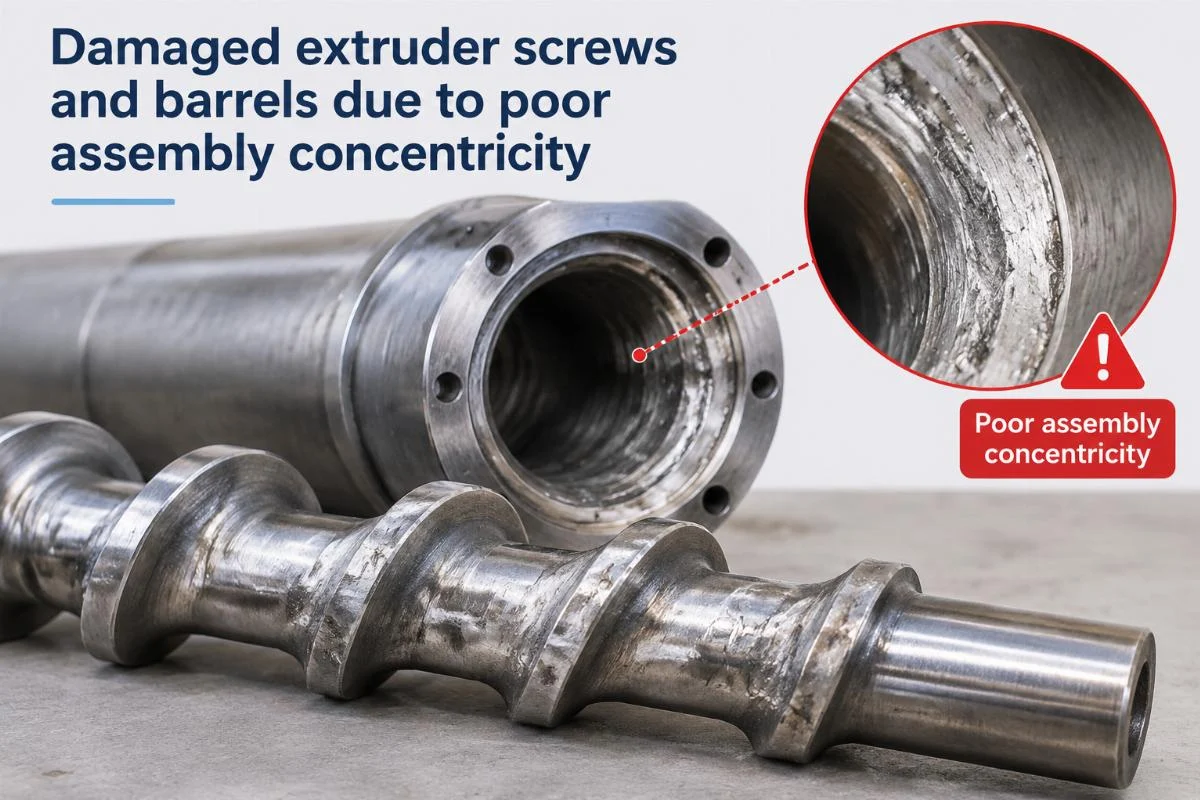
Early in my procurement career, I tried to slash a budget by sourcing loose screws and barrels for a DS70 extruder from various small workshops. When we finally assembled the machine, the concentricity was completely off. Within half an hour of startup, the motor burned out, and the extruded snack pellets came out as useless crumbs. The entire line was halted for weeks. Now, based in Jinan and supplying machinery across multiple regions, I constantly see startups trying to piece together their own OEM lines from scattered parts. I always use that failure as a warning: core host precision cannot be pieced together. Purchasing a complete turnkey line or commissioning a full-line OEM directly from a manufacturer is ultimately far more cost-effective when factoring in scrap rates and downtime.
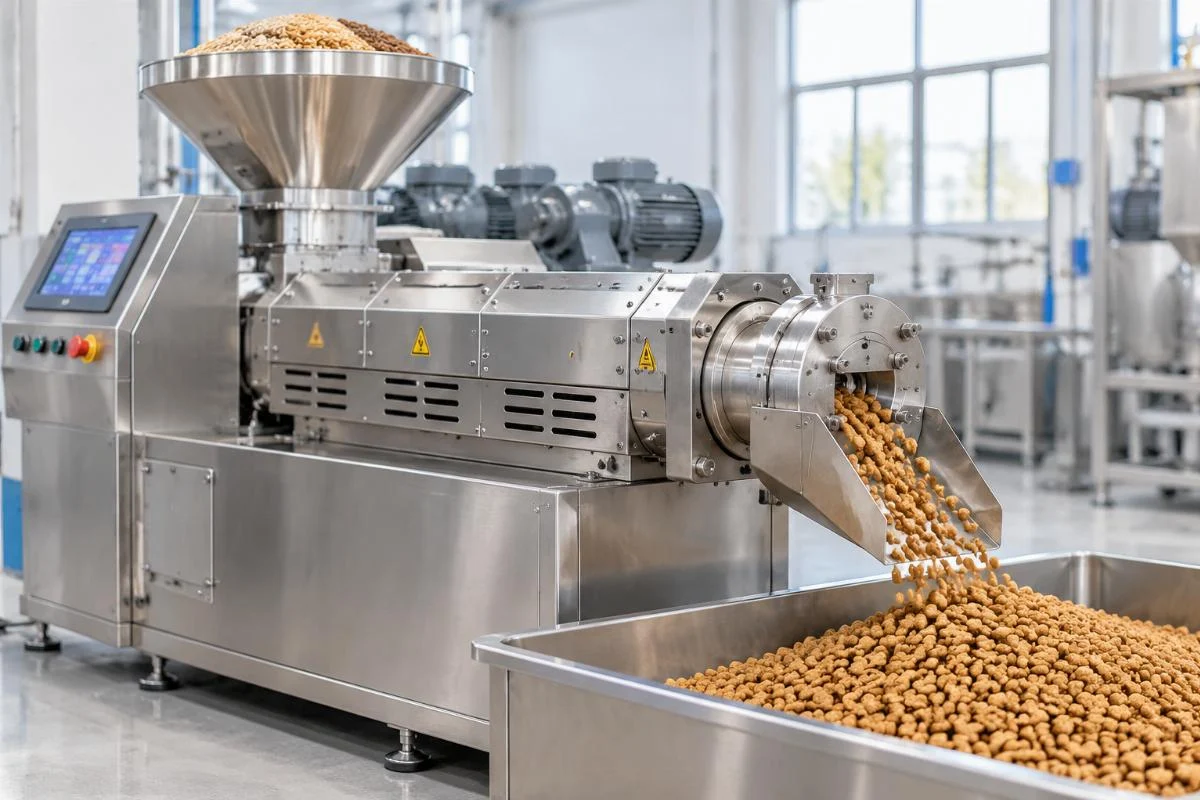
Transitioning from fragmented assembly to integrated manufacturing requires understanding the true economics of the make vs buy snack pellets debate.
What Are the Hidden Costs of Buying Pre-Formed Snack Pellets?
Procuring external pellets severely restricts shape and flavor customization while introducing massive logistics overhead.
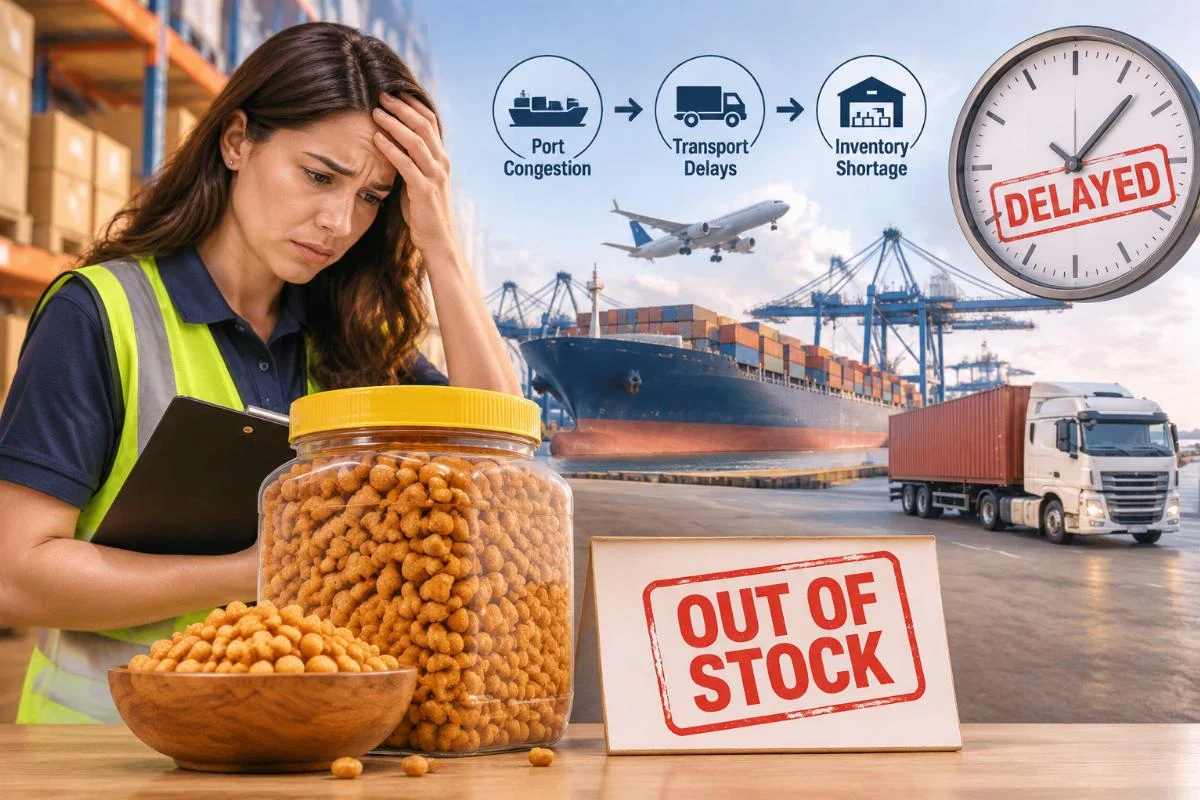
When startups evaluate the make vs buy snack pellets dilemma, they often focus solely on the initial invoice price of the raw pellets. However, the extruded snack pellet production cost extends far beyond the unit price. Relying on external suppliers means you are entirely at the mercy of their supply chain stability. A small producer I consulted recently faced severe supply chain delays because their pellet supplier prioritized larger clients. This bottleneck squeezed their profit margins and left their frying lines idle. Furthermore, buying pre-formed pellets for frying limits your ability to innovate. You cannot alter the internal density or moisture distribution to achieve a specific crunch or oil absorption rate.
Consider a mid-sized factory that previously relied on external pellet forming. They faced constant flavor and shape limitations, which stifled their market differentiation. By switching to in-house production, they eliminated the middleman markup and gained total control over their product matrix. The hidden costs of outsourcing—freight, tariffs, minimum order quantities, and lost sales due to stockouts—often cost several times the savings initially projected.
How Does In-House Extrusion Improve Pellet Quality for Frying?
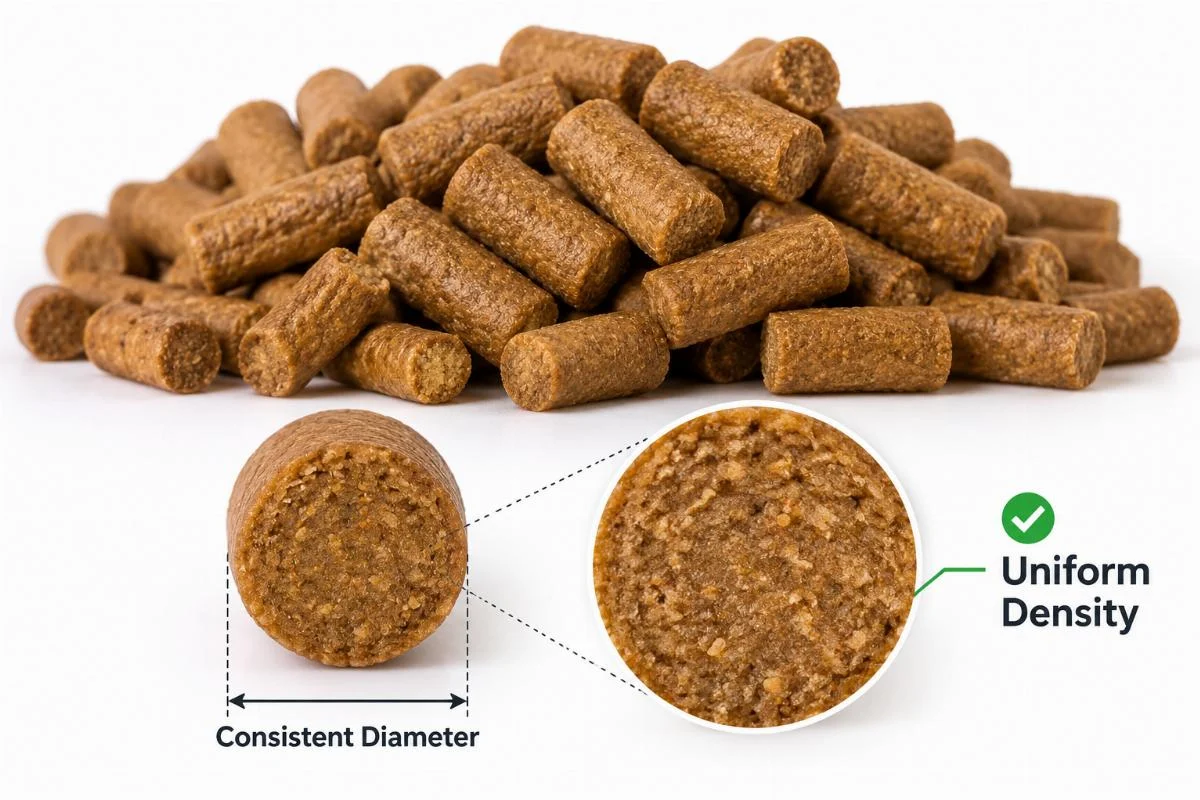
Utilizing a dedicated twin-screw extruder for snack pellets guarantees uniform density and precise moisture control, preventing catastrophic oil absorption issues during frying.
The physical structure of a pellet dictates its behavior in the fryer. If the moisture content is uncontrolled or the density varies across the batch, the pellets will absorb oil unevenly, leading to a greasy texture and a drastically reduced shelf life. A twin-screw extruder for snack pellets provides the necessary shear and thermal profiling to gelatinize starches uniformly. This level of control is impossible to achieve with generic, pre-formed alternatives.
When you make vs buy snack pellets, you are essentially choosing between consistent quality and variable risks. In-house extrusion allows you to adjust the screw configuration and barrel temperature profiles to match specific raw material batches. I have observed facilities where switching to an integrated extrusion process reduced raw material waste noticeably and improved pellet uniformity for frying. The result is a product that fries evenly, retains its structural integrity, and delivers a superior sensory experience to the consumer.
Make vs. Buy: A Cost and ROI Comparison Matrix
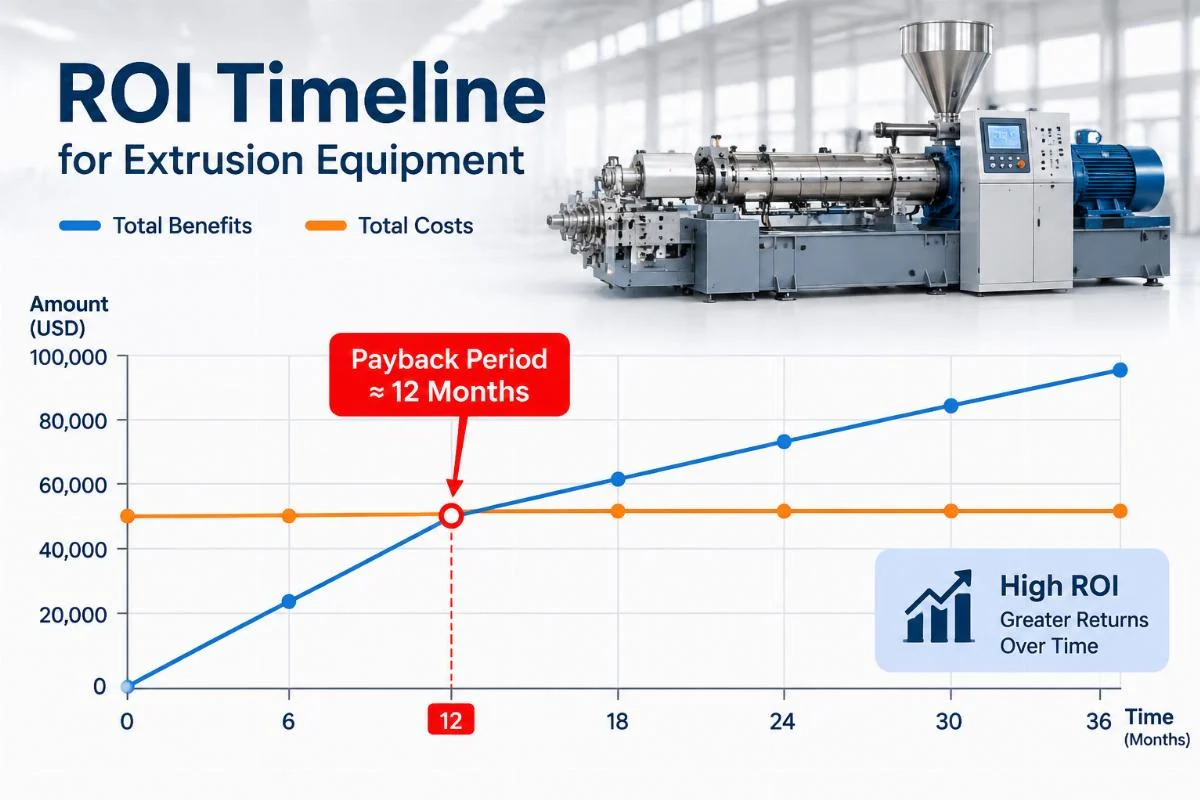
Evaluating the total cost of ownership reveals that capital expenditure on a turnkey line yields a substantially faster ROI than continuous procurement.
To truly understand the make vs buy snack pellets equation, we must look beyond the balance sheet’s immediate liabilities and assess the Total Cost of Ownership. Below is a qualitative comparison of the operational realities.
| Evaluation Factor | Buying Pre-Formed Pellets | In-House Twin-Screw Extrusion |
|---|---|---|
| Capital Expenditure | Minimal initial outlay | Significant initial investment in turnkey line |
| Per-Unit Material Cost | High (includes supplier margin) | Noticeably reduced (bulk raw ingredients) |
| Customization Agility | Restricted to supplier catalog | Full control over shape, size, and density |
| Supply Chain Risk | Vulnerable to external delays | Robust and internally managed |
| Quality Traceability | Self-reported by supplier | Verifiable and fully batch-controlled |
A startup assembling loose parts might think they are saving money, but precision loss causes massive hidden waste. Conversely, investing in a certified, food-grade extrusion line ensures that your extruded snack pellet production cost drops significantly over time. The ROI accelerates as you eliminate the per-unit premiums charged by pellet brokers and reduce the scrap rates associated with inconsistent frying.
Why Assembling Your Own Extruder Parts is a Risky Shortcut
Core host precision cannot be pieced together from scattered components; poor concentricity inevitably leads to motor failure and catastrophic scrap rates.
This brings me back to my early procurement days. The temptation to buy a DS70 extruder as a kit of loose parts from various local workshops is strong for budget-conscious startups. However, the mechanical tolerances required for a twin-screw extruder for snack pellets are exceptionally tight. When you mix and match barrels, screws, and gearboxes from different manufacturers, the concentricity deviation becomes unavoidable.
The result is exactly what I experienced: the motor burns out within minutes, and the output is entirely unusable. The hidden costs of this approach include the replacement of destroyed components, the disposal of ruined raw materials, and the extended downtime required to diagnose the misalignment. A mid-six-figure loss is not uncommon when a poorly assembled line fails during critical launch windows. Purchasing a complete, integrated line from a reputable manufacturer ensures that every component is machined to match, guaranteeing operational stability and food-grade safety compliance.
How to Choose the Right Extrusion Line for Your Snack Startup
Matching your extrusion capacity with your frying throughput and flavoring needs is critical for a seamless, scalable production flow.
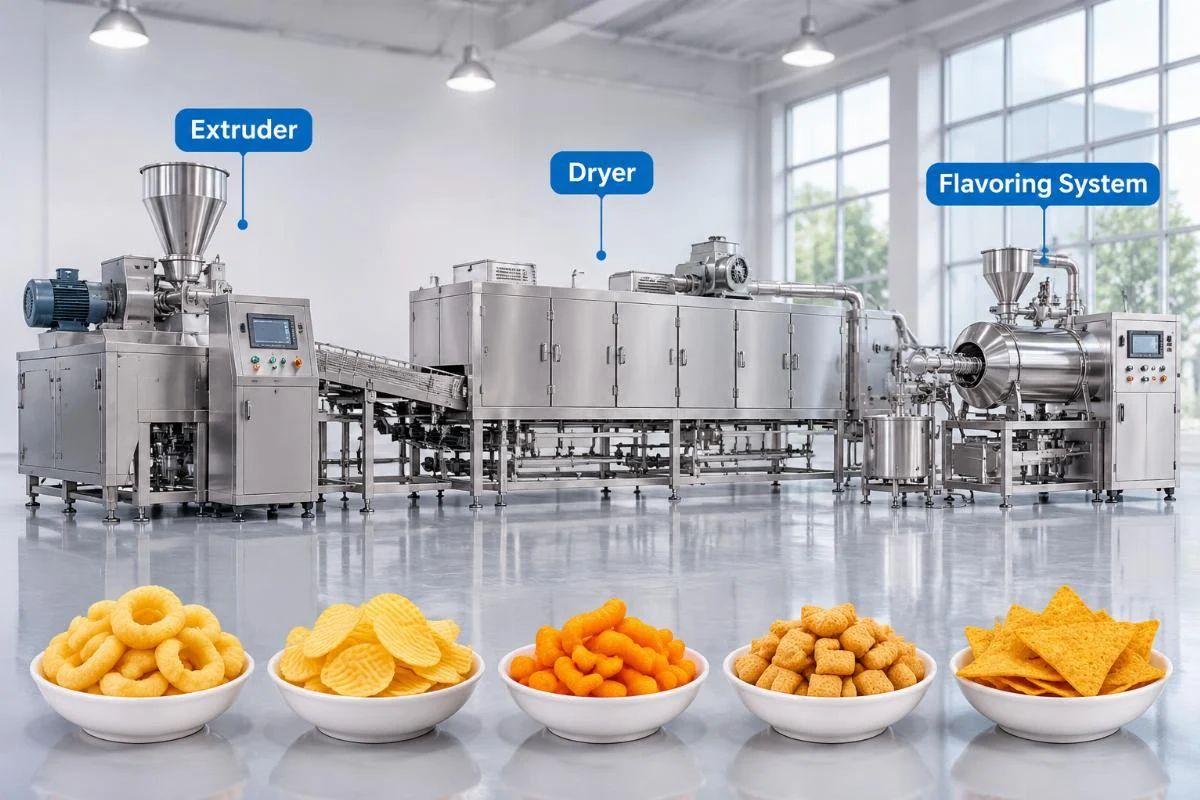
When deciding to make vs buy snack pellets, selecting the appropriate machinery is the final, crucial step. You must align the output of your extruder with the capacity of your frying and seasoning systems. A turnkey line design ensures that the dryer, cooler, and flavor-coating systems are perfectly synchronized with the extruder’s throughput.
Whether you require a compact setup for niche artisanal snacks or a high-capacity line for mass-market distribution, the machinery must be constructed from food-grade stainless steel and meet stringent international hygiene standards. Look for manufacturers that offer comprehensive formula development support and on-site operator training. This holistic approach prevents the bottlenecks that occur when equipment is sourced piecemeal, ensuring your startup can scale efficiently without compromising on product quality or safety.
Conclusion
Mastering the make vs buy snack pellets decision requires prioritizing long-term operational stability over short-term procurement illusions. By investing in a precision-engineered, turnkey extrusion line, manufacturers eliminate the hidden costs of outsourcing, secure total control over product quality, and build a scalable foundation for sustainable growth in the competitive snack food market.
Equipment Mentioned in This Article
 3D papad machine
3D Snack Pellet Production Line Fried Extruder Machine
3D Snack Pellet Production Line for Starch-Based Snacks — twin-screw extrusion processes potato, cassava, and corn starch into diverse shapes.… View Machine Details 3D papad machine
Fully Automatic 3D Snack Pellets Extruder Making Machine for Chips
Chips 3D Snack Pellet Extruder Line for 2D/3D Shapes — co-rotating twin-screw extrusion processes potato and cassava starches into papad,… View Machine Details 3D papad machine
2D 3D Snack Pellet Production Line Manufacturer
2D 3D Snack Pellet Production Line for Diverse Shapes from Starches — twin-screw extrusion handles wheat, corn, and cassava. The… View Machine Details 3D papad machine
Automatic 3D Pellet Extruded Corn Puffed Snack Food Production Line
3D Pellet Extruded Snack Food Production Line for Starch Pellets — processes potato, corn, and cassava starch into papad and… View Machine DetailsRelated Applications

Engineering Perspective
An In-House R&D Team Behind Every Line
Jinan MT Machinery develops its process technology in-house. The team concentrates on the four areas that decide pellet shape, expansion and line stability.
- Expansion technology
- Twin-screw extrusion
- Die design
- PLC/MCC automation
Related Articles
 Nov 7, 2026 · Buying Guide
Energy Efficient Snack Pellet Extruder Line Manufacturer for Sale
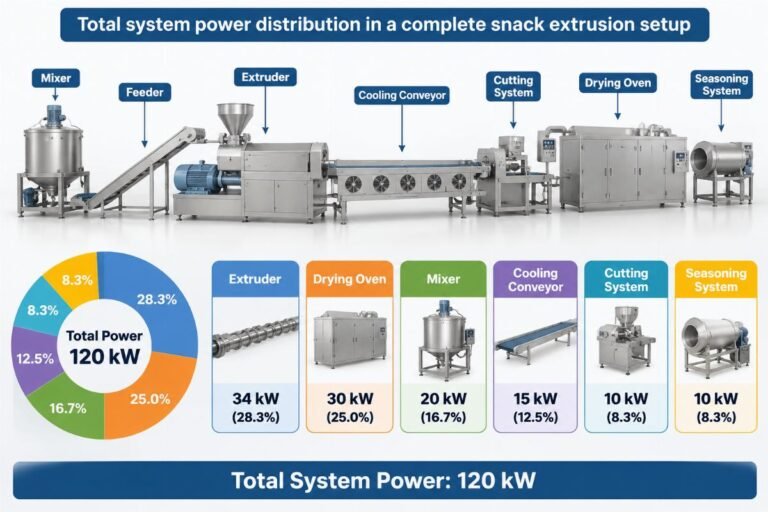
Evaluating an energy efficiency snack pellet production line requires looking beyond single motor ratings to total system power and heat recovery to eliminate hidden… Read This Article Nov 7, 2026 · Buying Guide
De-Oiling Machine for Pellet Chips Fryer Line | Meiteng OEM Manufacturer
A properly matched de-oiling machine for pellet chips controls residual surface oil to extend shelf life and ensure seasoning adhesion without shattering fragile snacks.… Read This Article Nov 7, 2026 · Buying Guide
Twin-Screw Extruder for Snack Food: Wholesale Manufacturer
Selecting a twin-screw extruder for snack food requires matching machine specifications with local factory conditions and raw material intake rather than merely comparing price… Read This ArticleFree Process Check
Send Your Recipe for a Process Check
Jinan MT Machinery engineers review your recipe and return a free process plan within 24 hours. Tell us the product, output, raw material, local voltage and heat source.
Send Your Recipe on WhatsApp