
Snack Pellet Line Installation Cost: Meiteng Turnkey Manufacturer
- By Jinan MT Machinery
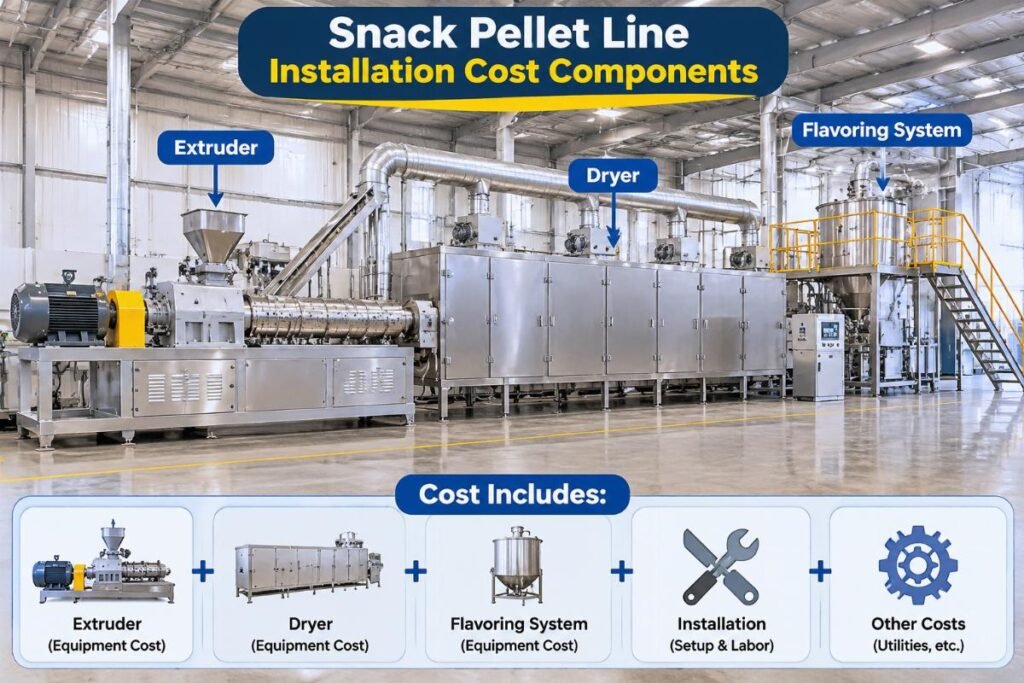
Standalone extrusion machines look remarkably cheap on the initial invoice, yet the final snack pellet line installation cost often eclipses the equipment price difference through invisible on-site modifications.
The buyer typically covers the engineer travel extrusion line expenses under standalone purchases, whereas turnkey snack food machine installation fee structures bundle these logistics, commissioning, and on-site training into a single predictable contract, effectively neutralizing hidden field expenses.
Years ago, when I was on the procurement side, I genuinely believed buying individual machines was the smartest financial move. We shipped a massive batch of puffing extruders to a startup in South Africa. The invoice looked great, but the reality on the ground was a nightmare. The electrical interfaces completely mismatched the local grid, and the foundation requirements were ignored. We had to hire local electricians and civil workers to rewire and recast bases on the fly. The final bill for those local modifications ended up being a mid-five-figure sum, completely wiping out the savings we thought we secured. That painful lesson shifted my entire perspective. Now, managing turnkey extrusion projects here in Jinan, I see buyers making the exact same miscalculations. The initial machine quote is just the tip of the iceberg; the real financial traps are buried in the installation phase. Let us break down this budget reality.

Understanding the true financial commitment requires looking beyond the FOB price and examining the contractual obligations of field deployment.
Who Actually Pays for the Engineer’s Flight and Visa?
Under standard international trade terms, the buyer bears the full burden of the engineer travel extrusion line expenses unless a turnkey package explicitly absorbs them.
When you purchase a standalone twin-screw extruder, the supplier’s responsibility usually ends at the port of departure. The logistics of getting a specialized technician to your facility fall entirely on you. This means you are not just paying for the flight; you are covering visas, daily per diems, local transportation, accommodation, and crucially, hazard allowances if the region requires them.
I recall a project in Latin America where the buyer assumed the turnkey snack food machine installation fee would be a nominal add-on. Instead, they were hit with daily billing rates for the engineer, plus all travel logistics. Because the local infrastructure was not pre-assessed, the engineer stayed on-site for several extra weeks, turning a manageable travel budget into a massive overrun. The core issue is that standalone contracts treat the engineer’s time as an open-ended variable.
Conversely, a comprehensive turnkey approach fixes these variables upfront. The supplier calculates the exact time required for mechanical assembly, electrical integration, and thermal profiling, bundling the travel and accommodation into the fixed project cost. This shifts the risk of delays from the buyer back to the manufacturer, who is now financially motivated to finish the job efficiently.

Clarifying who holds the financial risk for personnel deployment is the first step in controlling your total expenditure.
What Are the Hidden Costs of DIY Installation?
Attempting a DIY installation to save on the turnkey snack food machine installation fee almost always triggers severe secondary expenses related to utility mismatches and structural corrections.
The most dangerous illusion in procurement is assuming that local general contractors can seamlessly integrate specialized food extrusion equipment. They cannot. Extruders require precise load-bearing foundations, specific voltage phase alignments, and exact compressed air pressure regulations. When these are ignored, the hidden costs multiply rapidly.
Consider a cereal producer in the MENA region who opted for standalone machines to cut initial capital expenditure. The local team attempted to integrate the drying system with the extrusion output. Because the thermal dynamics and airflow requirements were not coordinated at the design stage, they had to fabricate extra piping and install redundant booster fans. This required bringing in multiple specialized local technicians, dragging out the downtime and inflating the labor bill.
Furthermore, electrical mismatches are a silent budget killer. If the control panels are not pre-configured for the local voltage and frequency, local electricians must tear them apart and rewire them. This not only costs a significant fraction of the machine price but also voids the original equipment warranty. The true snack pellet line installation cost is not just about turning wrenches; it is about the expensive corrections required when the machine does not fit the building’s reality.

Local general labor cannot compensate for the lack of specific extruder engineering expertise, making DIY a false economy.
How Does Turnkey Installation Prevent Budget Overruns?
A true turnkey solution eliminates the snack pellet line installation cost surprises by pre-verifying every utility interface and factory-testing all modules before they ever leave Jinan.
The secret to controlling the budget lies in moving the problem-solving from your factory floor to the manufacturer’s assembly hall. When a supplier provides a full turnkey line, they conduct a rigorous utility interface checklist against your facility’s exact specifications. Electrical cabinets are built with your specific local breakers and wiring standards. Motor alignments and belt tensions are set under load in the test facility.
This means when the equipment arrives, it is essentially a collection of pre-validated modules. The on-site work transitions from “fabrication and correction” to “assembly and calibration.” I have watched lines where the mechanical assembly was completed in a fraction of the time it takes for standalone machines, simply because there was no need to chase missing parts or re-machine adapters.
Moreover, the turnkey snack food machine installation fee includes comprehensive operator training. This is a hidden value that prevents costly product waste during the startup phase. Instead of your team guessing the moisture content or screw speed, the commissioning engineers transfer the exact thermal and mechanical profiles developed in the lab. This ensures that the first batch of puffed snacks meets the target density and texture, eliminating the raw material waste that typically plagues DIY startups.

Factory validation transforms on-site installation from a risky construction project into a predictable assembly process.
What Should You Check in the Installation Contract?
To protect your capital, the contract must explicitly define the boundaries of the engineer travel extrusion line responsibilities and the exact scope of the turnkey snack food machine installation fee.
Never sign a contract that uses vague language like “installation support” or “technical guidance.” These phrases are loopholes that suppliers use to bill you for every extra hour spent on-site. You need a granular breakdown of responsibilities.
First, verify the demarcation point for utilities. The contract must state exactly where the supplier’s responsibility ends and yours begins. Usually, it is the terminal block of the main control panel. If the contract is silent on this, you will be billed for running cables from the main transformer.
Second, define the commissioning acceptance criteria. How is the snack pellet line installation cost considered “complete”? Is it when the machine runs, or when it produces a specific tonnage of acceptable product at a defined energy consumption rate? Tying the final payment to a successful production trial, rather than just mechanical assembly, ensures the supplier is motivated to optimize the process, not just bolt the pieces together.
Finally, clarify the accommodation and per diem terms if travel is not fully bundled. Specify the standard of housing, the daily meal allowance, and who handles local transport. Ambiguity here leads to disputes when the engineer arrives and demands upgrades that were not in the original budget.
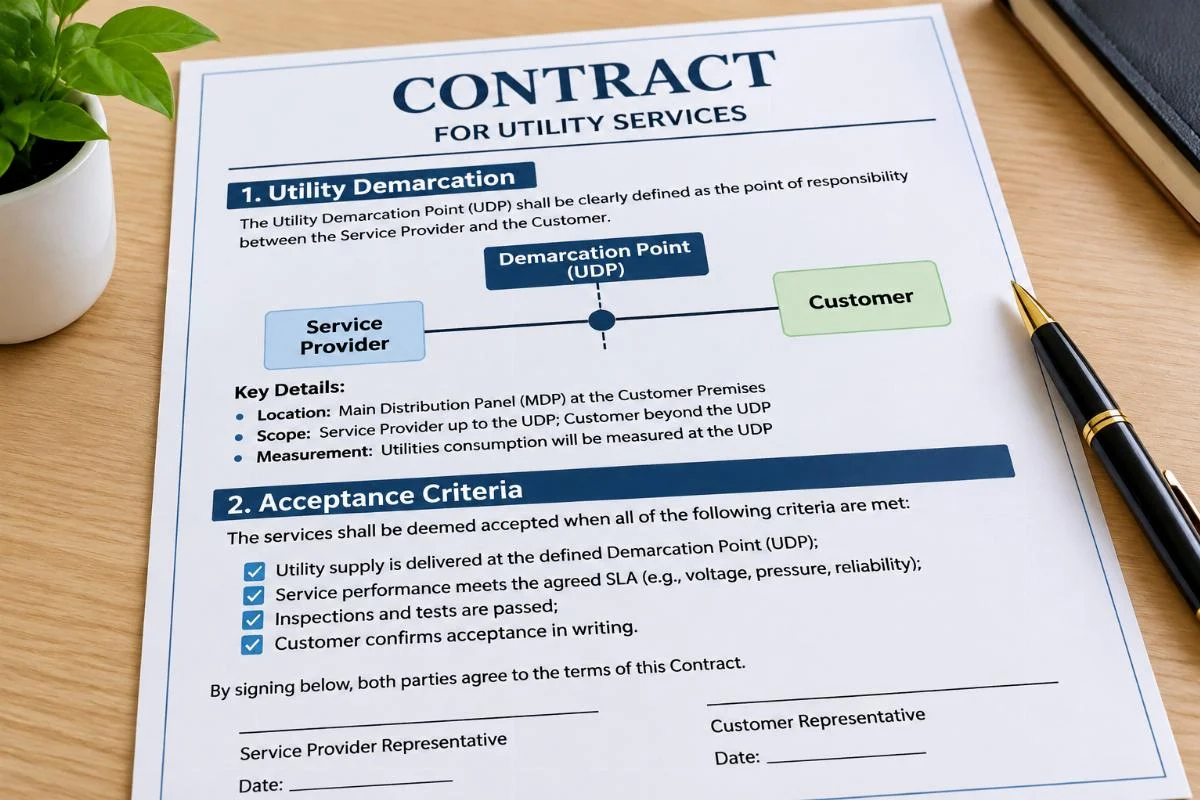
A precise contract transforms ambiguous technical support into a guaranteed, measurable outcome.
Conclusion
The initial price tag of a standalone extruder is merely a down payment on the total cost of ownership. By shifting to a turnkey model, buyers replace unpredictable on-site modifications and open-ended travel expenses with a fixed, validated deployment strategy, ensuring that the snack pellet line installation cost remains a controlled variable rather than a financial surprise.
Equipment Mentioned in This Article
 3D papad machine
3D Snack Pellet Production Line Fried Extruder Machine
3D Snack Pellet Production Line for Starch-Based Snacks — twin-screw extrusion processes potato, cassava, and corn starch into diverse shapes.… View Machine Details 3D papad machine
Fully Automatic 3D Snack Pellets Extruder Making Machine for Chips
Chips 3D Snack Pellet Extruder Line for 2D/3D Shapes — co-rotating twin-screw extrusion processes potato and cassava starches into papad,… View Machine Details 3D papad machine
2D 3D Snack Pellet Production Line Manufacturer
2D 3D Snack Pellet Production Line for Diverse Shapes from Starches — twin-screw extrusion handles wheat, corn, and cassava. The… View Machine Details 3D papad machine
Automatic 3D Pellet Extruded Corn Puffed Snack Food Production Line
3D Pellet Extruded Snack Food Production Line for Starch Pellets — processes potato, corn, and cassava starch into papad and… View Machine DetailsRelated Applications

Engineering Perspective
An In-House R&D Team Behind Every Line
Jinan MT Machinery develops its process technology in-house. The team concentrates on the four areas that decide pellet shape, expansion and line stability.
- Expansion technology
- Twin-screw extrusion
- Die design
- PLC/MCC automation
Related Articles
 Nov 10, 2026 · Procurement & Trade FAQs
Snack Pellet Line for UAE: Twin-Screw Extruder Manufacturer & Turnkey Service
Buying a snack pellet line UAE requires engineering systems that survive extreme heat and voltage fluctuations, not just finding the lowest price. You must… Read This Article Nov 10, 2026 · Procurement & Trade FAQs
Fast Replacement Pellet Dies from China Manufacturer Meiteng
Minimize extruder downtime by understanding that replacement pellet die delivery time relies on precise formula matching and custom compression ratios rather than just express… Read This Article Nov 10, 2026 · Procurement & Trade FAQs
Snack Pellet Line for Poland & EU: Meiteng Twin-Screw Extruder Manufacturer
Importing a snack pellet line into Poland and the EU requires navigating strict CE machinery directives, EORI customs registration, and adapting equipment to local… Read This ArticleFree Process Check
Send Your Recipe for a Process Check
Jinan MT Machinery engineers review your recipe and return a free process plan within 24 hours. Tell us the product, output, raw material, local voltage and heat source.
Send Your Recipe on WhatsApp