
Fried Pellet Chips Extruder Manufacturer: Fix Uneven Expansion
- By Jinan MT Machinery
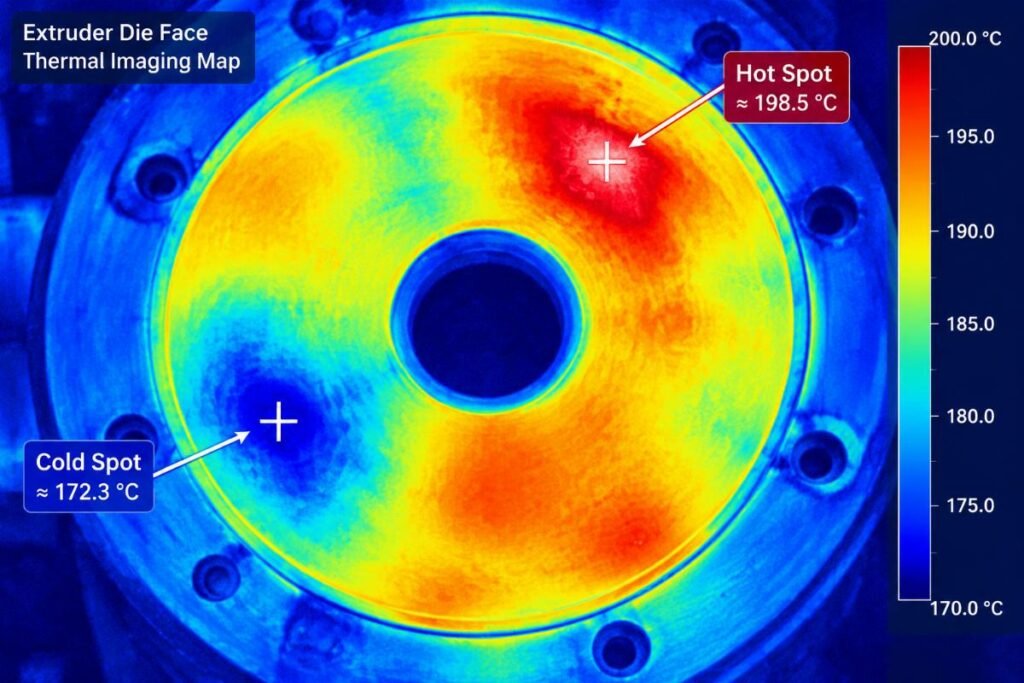
Most operators blame the recipe when the product fails to puff correctly, but the real culprit is almost always mechanical installation deviation or thermal inconsistency.
When troubleshooting uneven expansion fried pellet chips, the immediate answer lies in verifying die temperature sensor alignment, inspecting screw wear patterns for pressure drops, and standardizing pre-conditioning moisture, rather than tweaking the ingredient formula.
I still remember the规矩 set by my master back in the Jinan assembly workshop: uneven puffing is rarely a formula issue; it is an installation flaw. Years later, during a commissioning trip for a tapioca chip plant in Indonesia, the fried output was half scorched and half raw, nearly causing a total batch rejection. I spent days crouching by the machine, eventually discovering that the die temperature probe was offset by a fraction of an inch, creating severe localized overheating. When troubleshooting uneven expansion fried pellet chips, you must look at the physical hardware before touching the mixer. Mechanical deviations disrupt the thermal dynamics required for consistent gelatinization and expansion.
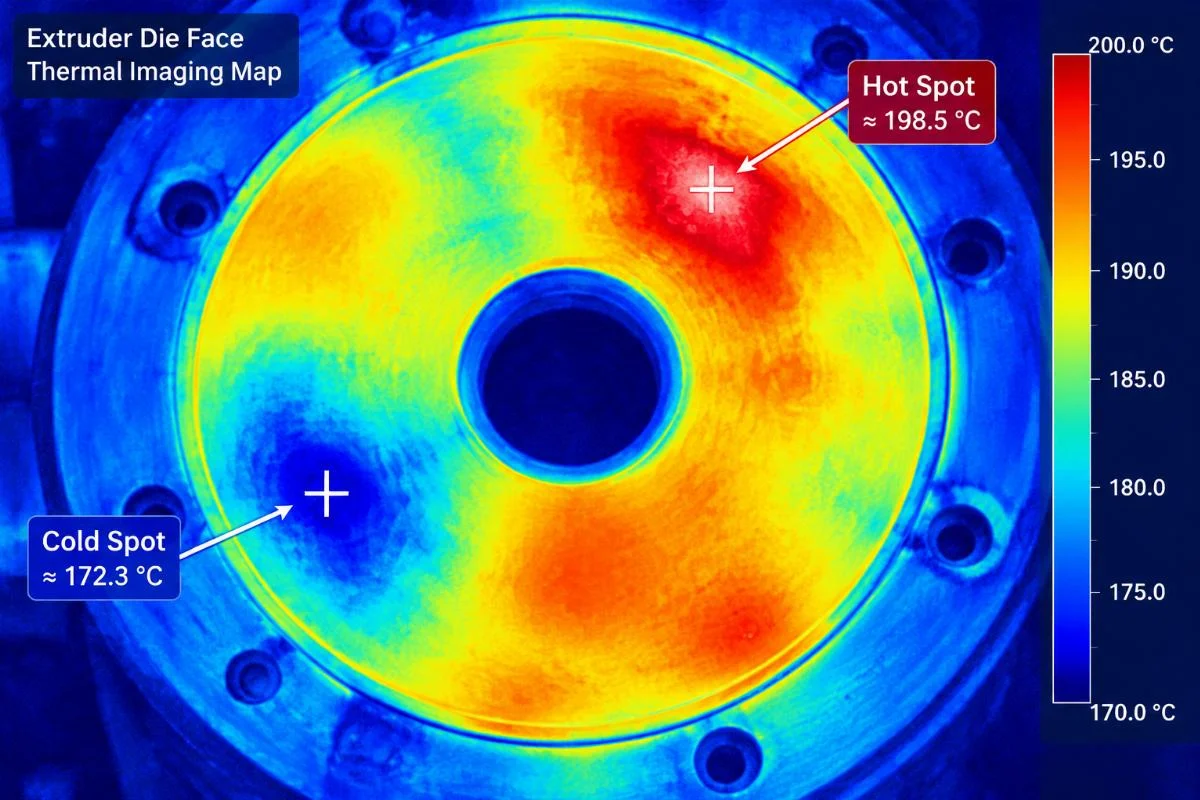
Let us break down the systematic field checks required to restore product consistency.
Why Are My Fried Pellet Chips Expanding Unevenly?
The root causes of inconsistent puffing lie in mechanical installation tolerances and uneven thermal distribution, not just the raw material blend.
When you start troubleshooting uneven expansion fried pellet chips, the first instinct is to adjust the flour-to-water ratio. However, academic research and field data consistently show that mechanical factors dominate the defect rate. If the material does not experience uniform shear heat and pressure before exiting the die, the moisture flash-vaporizes unpredictably, resulting in a mix of dense, under-puffed pieces and oversized, burnt ones.
Increasing the overall barrel temperature is a common mistake that actually worsens the defect. It causes the outer layers of the pellet to scorch while the core remains ungelatinized. Targeted zone calibration and mechanical alignment are the only real fixes. In my experience overseeing turnkey line designs for snack producers across multiple regions, the majority of puffing complaints trace back to sensor misalignment or worn conveying elements. The machinery must deliver precise thermal dynamics, which is why food-grade stainless steel construction with tight machining tolerances is non-negotiable for stable extrusion.
How to Check Die Temperature Sensor Alignment?
Verify probe seating and thermal contact to eliminate localized cold or hot spots on the die face.
Proper sensor alignment is the most critical step when troubleshooting uneven expansion fried pellet chips. If the temperature probe does not sit flush against the die metal, the control system receives false readings, leading to erratic heater cycling.
- Power Down and Cool: Ensure the extruder is completely depressurized and cooled to a safe working temperature.
- Extract the Probe: Carefully remove the thermocouple from the die thermowell. Inspect the probe tip for carbon buildup or physical damage.
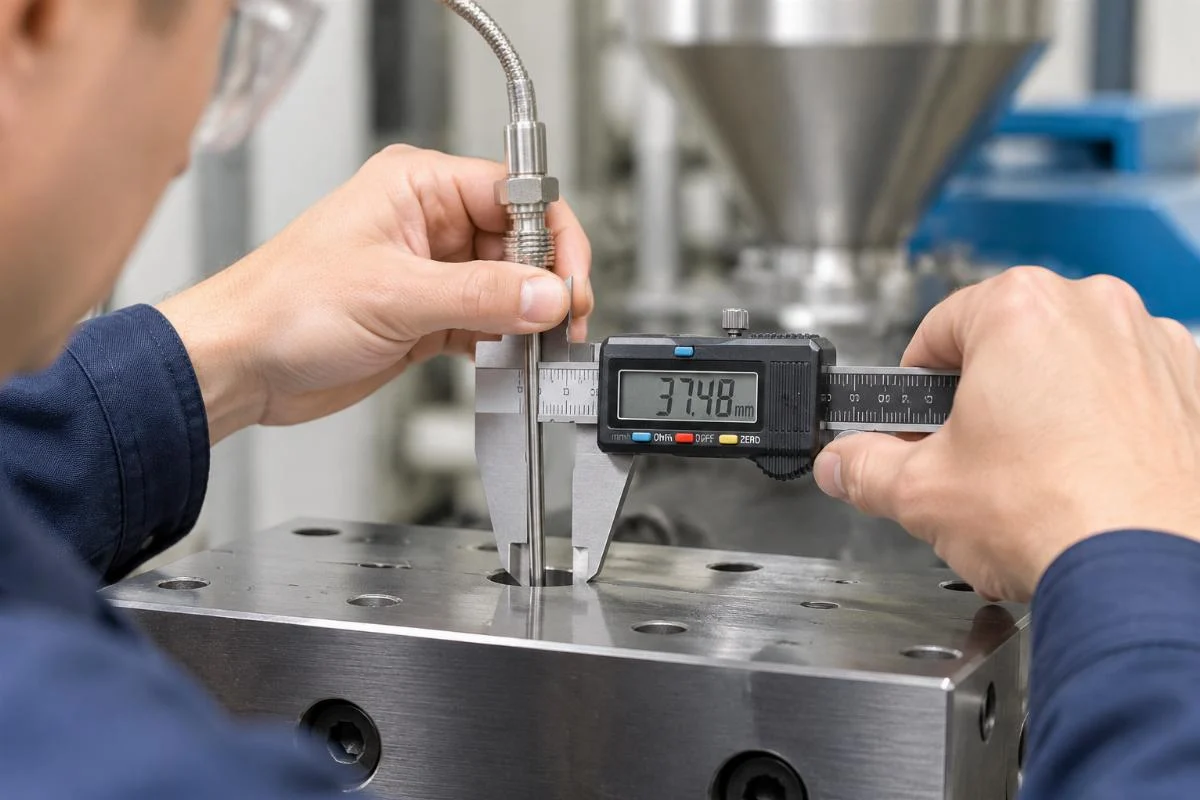
- Measure Seating Depth: Use precision calipers to check the sensor seating depth. The tip must make direct metal-to-metal contact with the die body. Even a minute gap acts as an insulator, causing the controller to overcompensate with excess heat.
- Clean the Thermowell: Remove any debris or oxidized material inside the well to ensure optimal thermal conductivity.
- Re-seat and Verify: Reinstall the probe, ensuring it is tightened securely without cross-threading. Run a diagnostic cycle and compare the sensor reading against an independent infrared thermal gun aimed at the die face.
During a recent installation commissioning for a startup snack brand, our technicians found that a misaligned sensor was causing a massive temperature variance across the die. After recalibrating the probe seating, the thermal mapping showed a uniform profile. This level of precision is standard in our on-site installation and operator training protocols, ensuring your team can maintain these critical alignments long after we leave the facility.
What Mechanical Wear Causes Pressure Drops?
Inspect screw elements and barrel liners for uneven material conveying that leads to pressure fluctuations.
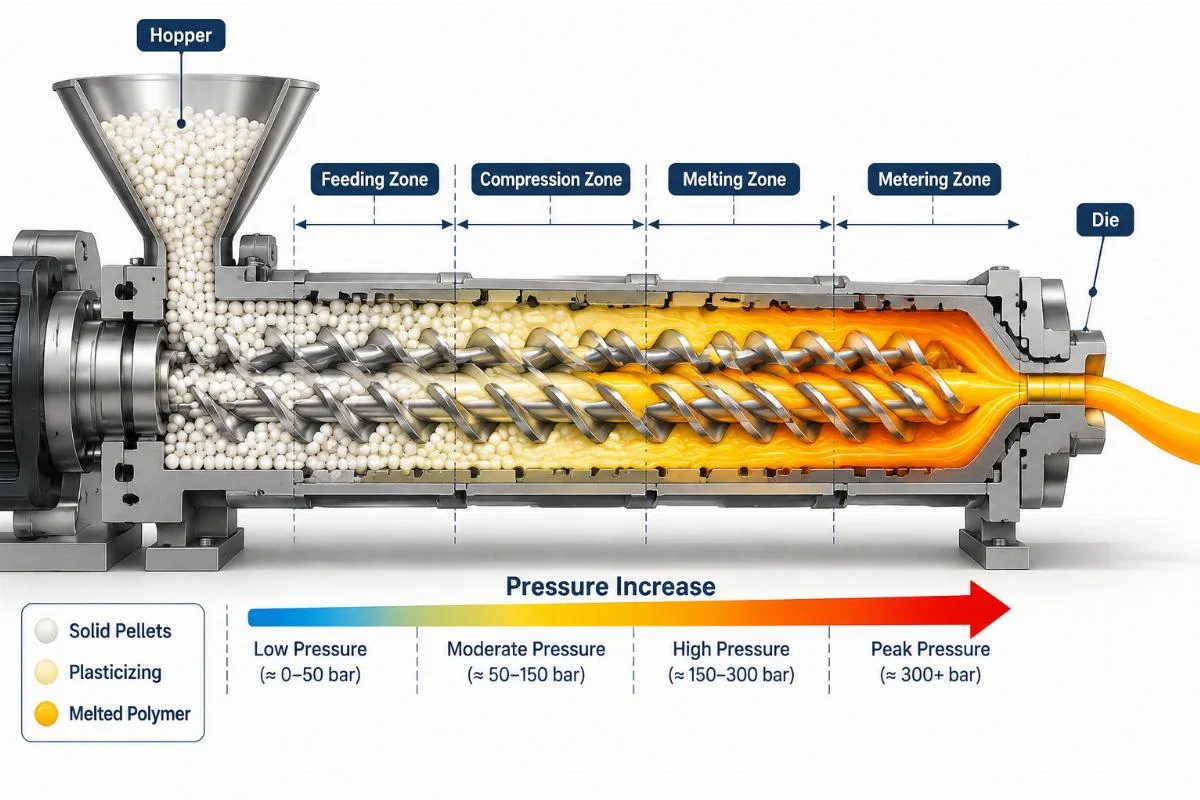
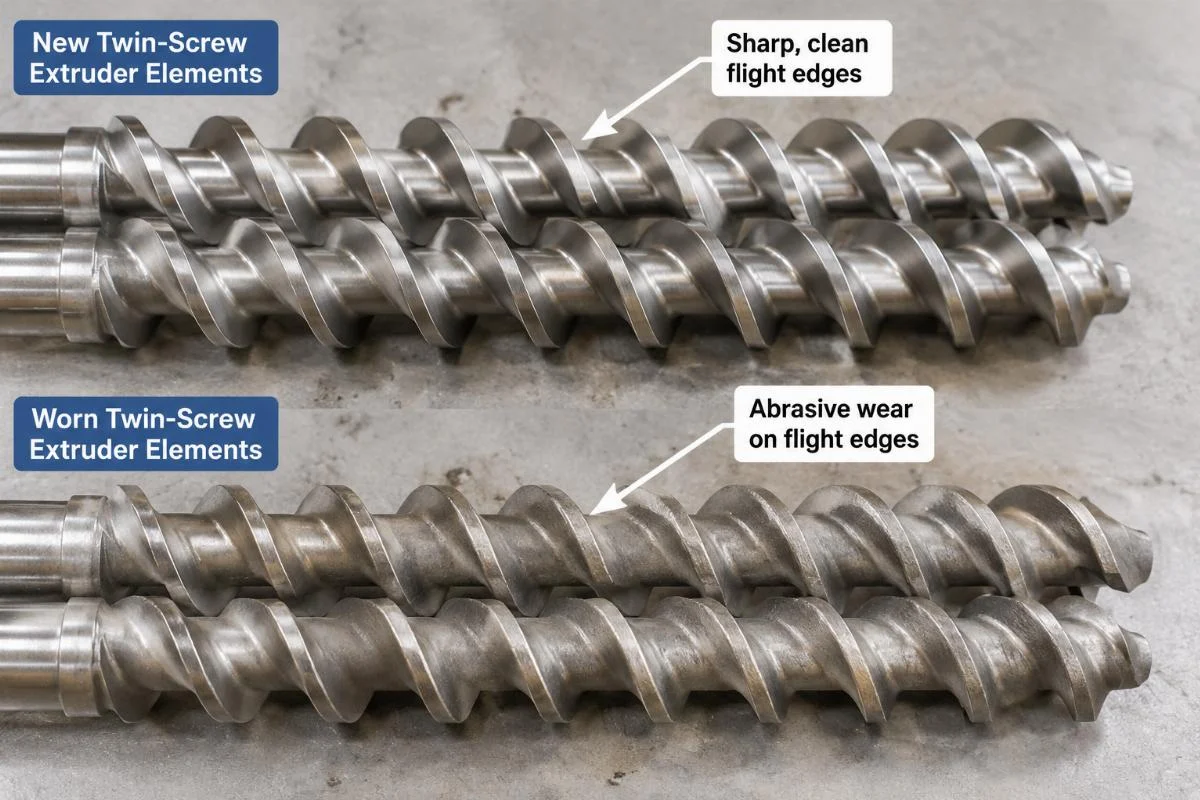
Mechanical wear is a silent killer of product consistency. When troubleshooting uneven expansion fried pellet chips, you must evaluate the internal conveying mechanics. The twin-screw configuration relies on precise clearances to build the necessary pressure for proper starch gelatinization.
Over extended service life, the flight edges of the screws and the inner surface of the barrel liners experience abrasive wear. This wear creates channels where material slips rather than being pushed forward, causing localized pressure drops. The result is a mixed output of fully cooked, highly expanded pellets and raw, dense lumps.
To diagnose this, monitor the main motor torque and the head pressure at the die. If you notice torque fluctuations or a gradual drop in head pressure without any changes to the feed rate or recipe, internal wear is the primary suspect.
A contract manufacturer in Latin America faced severe batch rejection rates due to mixed raw and cooked outputs. They assumed it was a pre-drying issue. However, a thorough inspection revealed severe wear patterns on the screw elements, causing uneven material push. Replacing the worn components with precision-machined parts restored the pressure profile. Utilizing durable, food-grade materials designed for stable thermal dynamics and wear resistance is essential for minimizing these mechanical deviations and extending maintenance intervals.
How to Standardize Pre-Conditioning Moisture?
Ensure uniform moisture distribution before extrusion to guarantee consistent puffing and expansion ratios.
Even with a perfectly aligned die and unworn screws, uneven expansion will persist if the raw material enters the extruder with inconsistent moisture levels. Standardizing pre-conditioning is the final pillar when troubleshooting uneven expansion fried pellet chips.
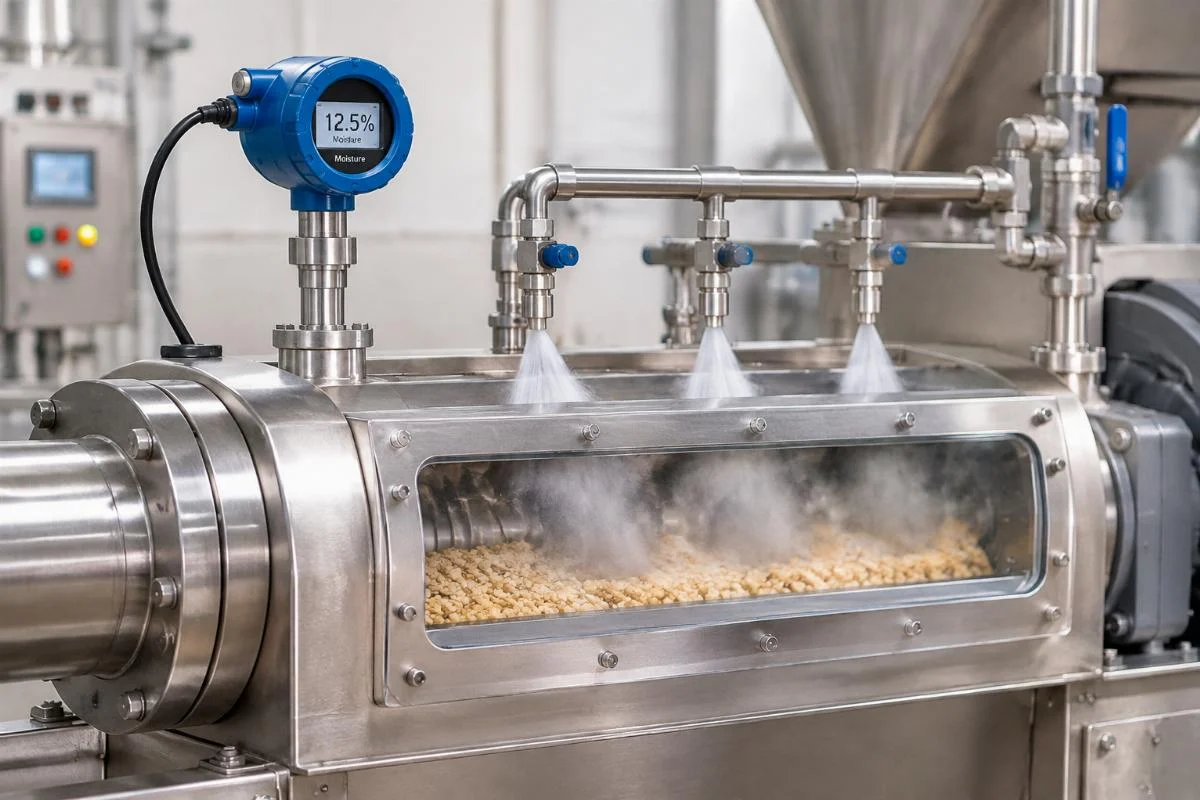
Moisture acts as the plasticizer and the eventual blowing agent. If the pre-drying or pre-conditioning process leaves moisture pockets—where some particles are too dry and others too wet—the extrusion process cannot homogenize the dough effectively. The dry particles fail to gelatinize, while the wet particles cause localized steam explosions, destroying the pellet structure.
- Calibrate Moisture Sensors: Ensure the inline moisture meters in the pre-conditioner are clean and accurately calibrated.
- Optimize Retention Time: Adjust the pre-conditioner residence time to allow sufficient heat and moisture penetration into the core of each particle.
- Monitor Steam Injection: Verify that steam nozzles are not blocked and are distributing vapor evenly across the material bed. Uneven steam distribution creates the exact moisture gaps that ruin expansion.
- Sample and Test: Regularly pull manual samples from the pre-conditioner discharge and test them in a laboratory oven to verify the inline sensor accuracy.
A startup cereal producer struggled with inconsistent puffing despite having a premium recipe. The issue was traced back to an uncalibrated moisture sensor in the pre-conditioner, leading to a massive moisture percentage gap between batches. After implementing strict moisture standardization protocols during our operator training sessions, their batch rejection rate dropped noticeably. Consistent puffing requires consistent inputs, and your pre-conditioning stage is where that consistency must be locked in.
Conclusion
Fixing puffing defects requires looking past the recipe and focusing on mechanical precision and thermal uniformity.
Troubleshooting uneven expansion fried pellet chips demands a systematic approach: verify die sensor alignment to eliminate thermal gradients, inspect screw elements for pressure-robbing wear, and standardize pre-conditioning moisture to ensure uniform gelatinization. By prioritizing mechanical installation quality and rigorous maintenance, manufacturers can achieve the consistent expansion required for premium snack production.
Equipment Mentioned in This Article
 3D papad machine
3D Snack Pellet Production Line Fried Extruder Machine
3D Snack Pellet Production Line for Starch-Based Snacks — twin-screw extrusion processes potato, cassava, and corn starch into diverse shapes.… View Machine Details frying chips machine
Industrial Deep Fryer Machine Manufacturer Banana Potato Chips French Fries
Industrial Deep Fryer Machine for banana and potato chips features automatic basket lifting and oil filtration. The electric heating system… View Machine Details frying chips machine
100-2000L Tank Deep Fryer Commercial Chips Frying Machine
100-2000L Tank Deep Fryer for Snack Pellets and Chips — handles continuous deep frying and de-oiling for potato, cassava, and… View Machine Details frying chips machine
Electric Batch Frying Machine for French Fries Fast Food Chicken Wing
Industrial Batch Fryer for Fried Snacks and French Fries — features electric or gas heating with automatic basket lifting for… View Machine DetailsRelated Applications

Engineering Perspective
An In-House R&D Team Behind Every Line
Jinan MT Machinery develops its process technology in-house. The team concentrates on the four areas that decide pellet shape, expansion and line stability.
- Expansion technology
- Twin-screw extrusion
- Die design
- PLC/MCC automation
Related Articles
 Nov 17, 2026 · Installation & Maintenance
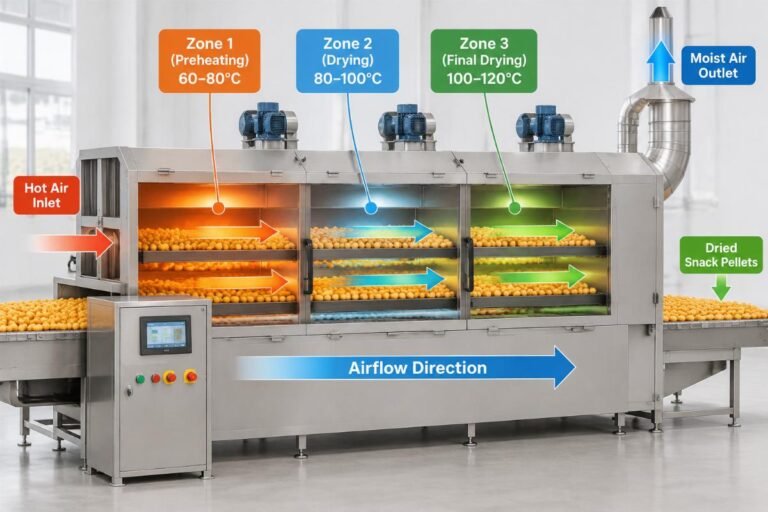
Fix Snack Pellet Cracking in Drying: Twin-Screw Extruder Manufacturer
Snack pellets cracking during drying is rarely an extrusion fault but a thermal bottleneck caused by rapid surface moisture evaporation. Implementing a multi-zone gradual… Read This Article Nov 17, 2026 · Installation & Maintenance
Snack Pellet Dryer Maintenance: Belts, Fans & Heating Elements Manufacturer
Effective snack pellet dryer maintenance prevents hidden moisture pockets and localized scorching by addressing belt tension, fan airflow, and heating element decay. Master precise… Read This Article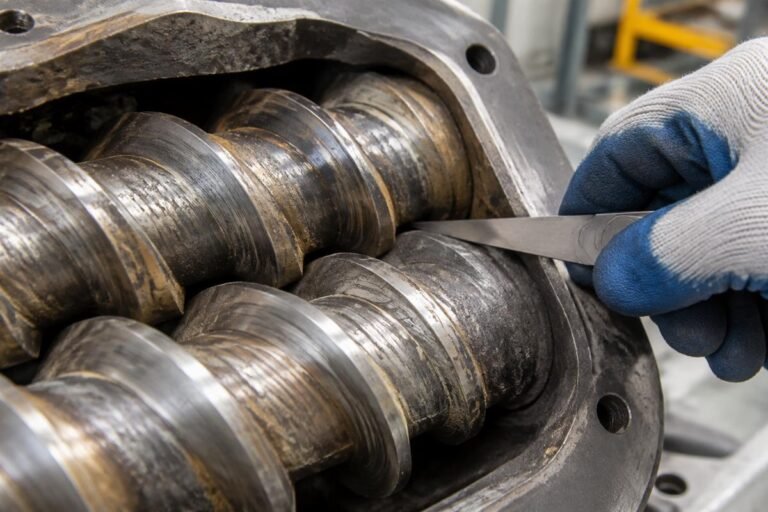 Nov 17, 2026 · Installation & Maintenance
Extruder Screw & Barrel Wear in Pellet Lines: Replacement Guide from Manufacturer
Detect extruder screw and barrel wear early by tracking motor amperage spikes before internal clearance expansion ruins pellet quality and triggers costly downtime. Replace… Read This ArticleFree Process Check
Send Your Recipe for a Process Check
Jinan MT Machinery engineers review your recipe and return a free process plan within 24 hours. Tell us the product, output, raw material, local voltage and heat source.
Send Your Recipe on WhatsApp